
You are currently browsing the category archive for the ‘Institutional’ category.


Okay, Jeff Barnett-Winsby did not aide and abet anyone.
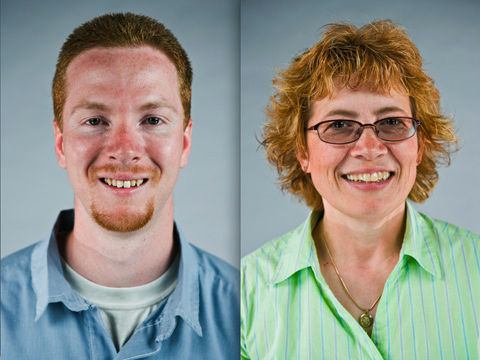
He was, however, indelibly tied to a fugitive pair of lovers – one an inmate, the other a prison volunteer. Winsby had done a couple of photo series at Lansing Correctional Center, Michigan. He knew – and photographed – both John Manard and Toby Young before Young drove a van out the prison with a dog-crate in the back. Manard was in the dog-crate. They were on the run for twelve days until the authorities caught up with them in Tennessee.
All the details about the police hunt and climactic high speed car chase, car crash and return to custody can be found here.
Toby was the founder and coordinator of the Safe Harbour Program, and John Manard, a dog-handler and Young’s escort within the prison. She was vulnerable, he was hopeful, they were close. Manard did most of the planning. “By the time he brought me in to what he was doing, I was in love with him and I couldn’t say no,” Young said. “I was not in a safe and sane place in my life, but I still could’ve said no, but I didn’t.” It seems like a straight up case of manipulation; a true power imbalance.
This tale is like something out of a movie. Jeff has muttered things about making a movie. We’ll see. At the very least, we can all look forward to his book Mark West & Molly Rose published J&L Books. Mark West and Molly Rose were Manard and Young’s aliases.
Barnett-Winsby dissects events as he experienced them over at Feature Shoot:
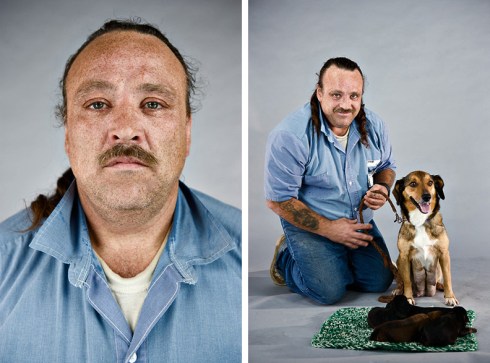
Barnett-Winsby’s gloss portraiture is pretty atypical of prisoner representations. It’s very giving.
The accompanying images of prisoners and their dogs work as a foil to the straight portraits. Instantly, our response to the inmate changes. Barnett-Winsby plays on visual dissonance. He exposes our inbuilt prejudice and softness toward animals: “If someone loves an animal they can’t be violent, right?”
As well as Safe Harbor, Barnett-Winsby also photographed the objects in single occupancy cells for his project Marks of Intention (below).
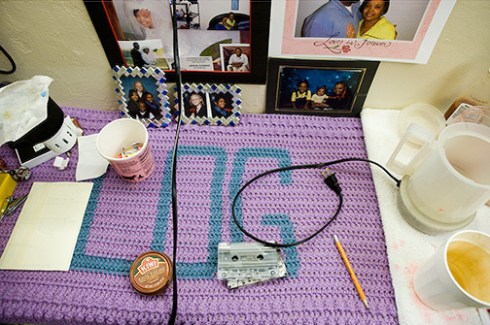
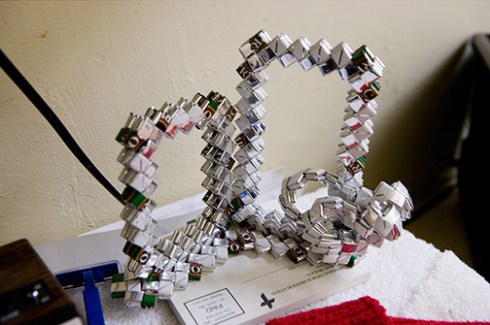

Barnett-Winsby has collapsed Safe Harbour and Marks of Intention along with images from the Mark West and Molly Rose story; it is a wide-reaching anthology of the Lansing facility and two lives that temporarily escaped its control.
You could say Barnett-Winsby had luck photographers only dream about when hunting for a good story.
Mark West and Molly Rose is published by J&L Books. The owner of J&L Books Jason Fulford was recently interviewed at Too Much Chocolate as was Jeff Barnett-Winsby.

Benjamin Drummond and Sara Joy Steele have been in the news recently for their Facing Climate Change initiative. They were featured by PDN as photographers who cared and secured a $10,000 Grant4Change.
I was super happy then, to see them diversify and change focus from massive global issues to the environmental issues of our region here in Washington State.
They teamed up with Dr. Nalini Nadkarni, Evergreen State College and The Sustainable Prisons Project (which I have talked about before) to produce a 7-minute multimedia piece with a gorgeous mix of inmate, staff, student and academic volunteer voices. They also deliver the goods for the stills gallery.
__________________________________________________________
The Sustainable Prison Project has proved that environmental justice, social justice and fiscal conservatism can be delivered all in the same package. I teach in a prison and the resolve to try new programs and learn new skills is not something left wanting.
Drummond and Joy Steele’s documents make it clear more than ever that prisons often are not – and really never should be – the intimidating “neverwheres” that media (often TV and film) depict them as.
I have just watched Ghosts of Abu Ghraib, an HBO documentary made in 2007 by director Rory Kennedy.
It interviewed all the military police involved and prosecuted for the abuses, with the exception of Specialist Graner who remains in prison. It also features John Yoo, law and military scholars and Mark Danner.
It provides a voice to the military police who were portrayed as “bad apples” on the Abu Ghraib night-shift. It does not allow the military leadership off the hook.
The close of the film concentrates on the fact that no investigation followed the chain of command to the Pentagon, from where Rumsfeld’s Department of Defense had signed off on the most brutal interrogation techniques in US history.
In the first round of Pentagon memos, Rumsfeld questioned why the standing stress position would be limited to ONLY four hours!

Rumsfeld is a worm and you can quote me on that.

During 1981, there were two hunger strikes – the culmination of a five-year protest during The Troubles by Irish republican prisoners in Northern Ireland.
Ten men died.
28 years ago today, 3rd October, the strikes were called to an official end.
Klavdij Sluban and Jim Casper of LensCulture talked about Klavdij’s photography workshops in juvenile prisons across the world.
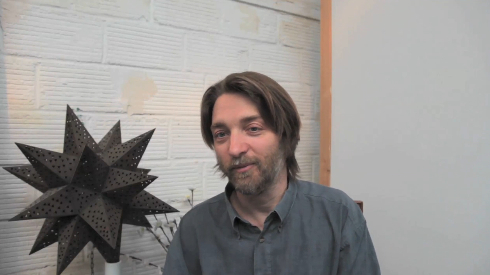
Early in the interview, Klavdij discloses his personal sadness that prisons exist. This emotion may be raw but it is not naive; Klavdij is balanced and realistic about what he can achieve with a camera in these specific distopias. He also says in seven words what I established this blog to say “Jails are a world to be discovered.”
He went to the prisons not as photographer, but as a concerned citizen. He realised if he were to go inside it would need to be with some reciprocity … so he took cameras and used them.
In terms of engagement and commitment to a population – the youth prison population of the world – Klavdij Sluban could and should be considered a ‘Concerned Photographer’. He deserves that loaded epithet.
The San Jose Mercury News which, for as long as I can remember, has been the standard bearer for Bay Area reporting on prison issues produced a short multimedia piece on Monday.
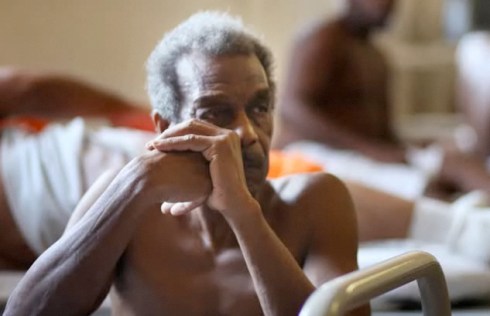
The presentation is mainly a prison official’s description of the conditions, needs and startling figures at California Institute for Men, Chino. This facility was the scene of riots in August. It is also the CDCr Reception Center for Southern California, which means all new men processed into the system will first go here, before given security classification and shipped elsewhere. Of course, the mix of over-population, diverse and historically antagonistic groups, and non-permanence leads to a tense institution.
My main problem with the piece however is that I – unlike the California Correctional Peace Officers Association (CCPOA) – cannot ignore recent history, lobbying, political action committee millions and the resultant harsh sentencing.
Since the 1980s, the CCPOA – the prison guards union – bolstered its membership from 2,600 to over 45,000, drew in union fees to swell its coffers and began hurling them at victims rights groups, tough on crime politicians and public fear campaigns.
The CCPOA grew year-on-year as well as any corporation. It’s shareholders however were not a disparate public, but a 30,000 strong (comparatively) homogeneous group within a burgeoning prison industry and a Napoleon-complex.
Prior to the mid 80s the CCPOA had virtually no political capital. They were a small union in a small state sector … and they were largely ignored. By 1992 the CCPOA operated the state’s second largest PAC. By the year 2000 the CCPOA was the pariah of the union community in California. The CCPOA bankrolled and won ballot initiatives that meant increased prison funding and construction. Other unions, particularly the teachers, were not blind to this boom in incarceration … all the while public education funds dwindled.
All of this is very difficult for me to forget.
When Arnold Schwarzenegger tried to legislate to put a cap on union spending during his first year in office, he was in fact only interested in controlling the rampant CCPOA. It wasn’t a classic anti-labour Republican maneuver but rather the absolute necessary move if California was to reign in prison spending. In some respects it was the politics of a progressive! Schwarzenegger failed doubly. The initiative was heavily defeated and he forced the CCPOA and other unions closer together by virtue of a shared enemy.
The CCPOA took advantage of the situation and stepped back into line with the agendas of other unions. For years it had unilaterally forced its agenda through. But the CCPOA could see the ‘good times’ were coming to an end. No new prisons have been built in California since 1998. That figure explains the overcrowding, but also reflects recent political and public rejection of yet more warehousing without rehabilitation (as has been the norm).
So while we can all share in a dismay, even disgust in the failure of government to provide adequate housing or programs for those it takes into custody, we should all be sharing in the knowledge of how this situation came about. Don’t let anyone tell you otherwise; the CCPOA are guilty as hell – the rank and file change, the leadership less so, but the organisation remains the same.
This is what I think of when I see correctional officers under stress and duress … I think that their union sold them out a long time ago.
The CCPOA made it’s bed.
UC Berkeley’s Dept. of Governmental Studies provides this brief but comprehensive history of the CCPOA.
The San Jose Mercury News has its own Photoblog.
Marvin Heiferman pointed me in the direction Tim Padgett’s Time article about news outlets’ adoption of Mug-shot galleries. Padgett remarks, “Mugshot galleries are increasingly popular features on newspaper websites, which are on a crusade for more page views and the advertising revenue that accompanies additional eyeballs.”
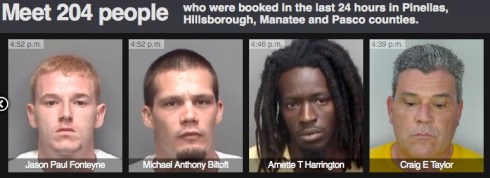
The example offered is that of Mugshots at TampaBay.com of the St. Petersburg Times. The site even breaks down the prior sixty days of bookings into the age, height, weight and eye colour statistics of those arrested.
This exercise is as artless as one would think. The laziness of the filtering of information via an automated platform is matched by the disclaimer regarding mugshots’ accompanying text.
The news group has recognised this and produced these ridiculous FAQ‘s in advance of those booked being disappointed … or worse, misrepresented.
I was arrested but cannot find my mug shot. What gives? Our goal is to provide a complete profile for individuals booked into jail in Pinellas, Hillsborough, Manatee and Pasco counties. A complete profile on Mug Shots constitutes: name, photograph, booking ID, height, weight, age, gender, eye color, birth date, booking date and booking charge.
The majority of arrest records from the county sheriff’s sites have no problems, and we store them and make them available. However, on rare occasions, the photo we receive from the sheriff’s office is flawed, or sometimes the site does not make a photo available. We skip the records that do not have photos attached. You can always search for an individual on the sheriff’s site, but just because you were booked doesn’t mean you’ll necessarily show up on Mug Shots.
I was released and my record was cleared. Will you take down my mug shot? A sheriff’s office Web site maintains publicly accessible arrest records regardless of the disposition of any particular case.One principle behind Mug Shots is to mirror the sheriff’s office Web site policies closely. We provide links from every individual’s profile page to the detail page at the corresponding sheriff’s office site, which contains instructions about how to follow up on any particular case. Much like a county sheriff’s office, there are very few instances in which we would remove a mug shot from the Web site.
Will you fix incorrect biographical information? What if the sheriff does? One guiding principle is to mirror the collective sheriff’s office sites closely. However, sometimes the sheriff’s office site contains a typo or another form of incorrect data. We don’t alter the information that we gather. We do provide links from individual’s profile page directly to their detail page at the corresponding sheriff’s office site.
Continually-updated mugshot galleries continue a long tradition of crime-obsessed media and publics. They are the latest step toward the eradication-of-reason when interfacing with social transgression.
Internet “news” mugshot galleries now dominate a new, middle-ground of visual consumption; that wasteland lies somewhere between the dark pathology (and allure) of Weegee‘s world and the instant digital delivery of crime related stats (think Comp-Stat and the Sex Offenders Registry). They are bland.
These galleries are continuous, and unnecessary, visual feeds of societies’ constructed “bogey-man”.

AP Photographer, Brennan Linsley has visited Guantanamo twelve times in the past four years. Why? “My goal is to come back from each trip with a couple of shots that will allow me to paint more of a picture of this place'” says Linsley.
A journalist’s visit to Guantanamo is a frustrating experience – newsmen have a constant escort on a preplanned itinerary and must read and follow the fifteen pages of ground rules provided by the US military.
To offset these limitations Linsley chose repeated visits as a a tactic. In an attempt to humanise the detainees, he has weaved a photo-essay in-spite of Guantanamo’s milieu which is counter to all notions of free speech, experience and objective fact-gathering.
The British Journal of Photography has a brief but interesting interview with Linsley about his project.
This sequence of interactions between a Chinese detainee and photographers (described by Linsley) exemplifies the minutiae with which the US military must control the flow of information out of Guantanamo.
Just to get the juices flowing, Linsley closes the interview with this position, “The Golden Age of photography has been over for a long time. It died somewhere between the Vietnam War and the Gulf War.”
Discuss.
_______________________________________________________________
BJP’s interview coincides with Linsley’s work showing at the 2009 Visa pour l’Image at Perpignan.
For more images and links on Guantanamo see Prison Photography‘s Directory of Visual Sources.

 Prison Photography