
You are currently browsing the category archive for the ‘Rehabilitative’ category.
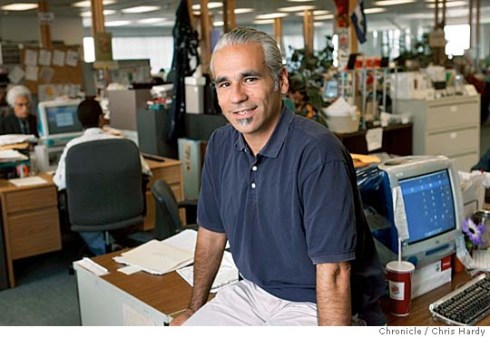
In 1996, David Inocencio began writing-workshops to youth detained in S.F.’s Youth Guidance Center. A zine developed and The Beat Within was born. It is the nation’s biggest weekly publication of incarcerated youth writing.
The first publication followed the murder of rapper Tupac Shakur as young people sought ways to publicize their feelings of loss. Originally, The Beat Within was a 6-page magazine. Today the full-fledged weekly magazine is at 70 pages.
For some contributors, The Beat Within is the first positive recognition they have ever received that they have a voice worthy of an audience.

The Beat Within staff and volunteers hold weekly workshops in many California county juvenile halls: San Francisco, Marin, Alameda, Santa Clara, Santa Cruz, Solano, Monterey, and Fresno. The Beat workshop model is replicated in Maricopa Arizona, in San Bernalillo New Mexico, Miami Florida, and Washington DC.
Each week, The Beat Within serves up to 700 detained youth and the San Francisco office provides internships and social services to more than a dozen formerly detained youth.
David Inocencio and I spoke about what it means to give juvenile prisoners a voice.
LISTEN TO OUR DISCUSSION AT THE PRISON PHOTOGRAPHY PODBEAN PAGE.
Below is To The Streets, a piece of writing by Lady Streetz, from Alameda, CA. It featured in Volume 16. 18/19 (p. 6) of The Beat Within.
It is a difficult read but it gives us an unmistakable view of some of the serious problems incarcerated youth, and particularly incarcerated women face.
Dear Streets
I want to write this letter to tell you how ashamed of you I am. How could you ever raised your hand to a female, what I want to know is what did I do so wrong that you had to lay your hand on me for the last months and months?
Why would you beat me, kick me out of my own car, and make me walk home bare foot? Where the hell do they do that at? I can’t believe you had the nerve to beat me in front of your friends and then make me sit out in the cold in my little dress.
Who gave you the nerve to take my keys and my phone? Did you buy my car, no! Did you buy my phone, hell no! Someday I hope to forgive you for all the shhh you did to me. Someday I will forgive but I will never forget.
I will never be the same since you happened to me. I stride to try to trust the black men staff here, but I’m scared they’re going to hurt me. I’m always scared someone is about to abuse me. Why? Because of you, because of all the times you beat me and left me bleeding. I hate you, You’ll never change women beaters.
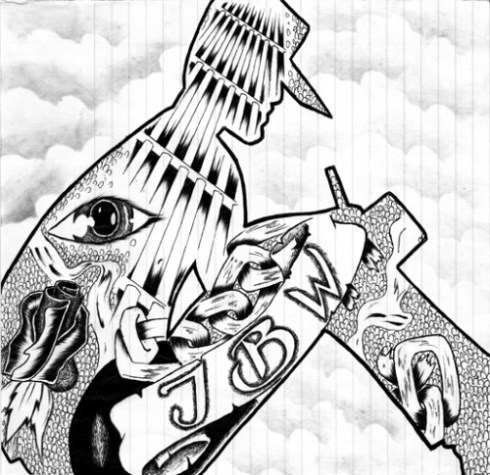
Artist unknown © The Beat Within

Magnum photographer, Mikhael Subotzky has made available a print at the $1,000 funding level of my Kickstarter project Prison Photography on the Road.
It is a framed photograph made by a student during one of his photography workshops in South African prisons.
Photographer: Incarcerated student of Mikhael Subotzky
Title: Maplank in the Workshop, Pollsmoor Prison, 2005
Year: 2005
Print: B&W, silver gelatin print on fiber paper, 35x50cm (frame approx 50x65cm)
Edition: # 1/9
Print, PLUS postcard, mixtape and self=published book = $1000. BUY NOW
A NOTE ON THE PRINTS SALE
As with all the unsold prints if Mikhael’s doesn’t get snapped up, it’ll return to its maker, and possibly a darkened drawer.
There is one week left of fundraising. Even though I’ve passed my fundraising target, I don’t want to see the figure stop rising as I have very special plans for the extra dough in the form of spin off projects (the scope of which all depend on who much extra is secured).
Please visit this page for all the details on available prints. Tell all your loaded photofolk friends to pay a visit and pick up a print.

INTRODUCTION
Los Angeles based photographer, Adam Amengual says of his series Homies:
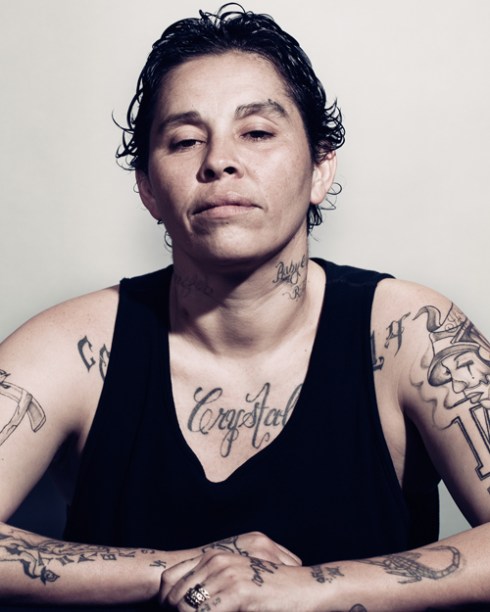
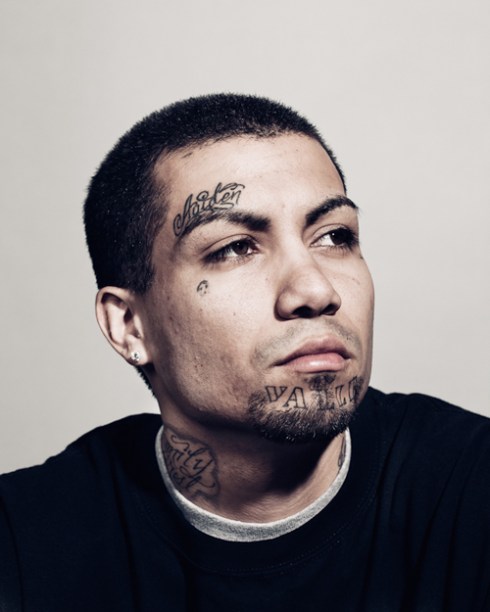
“Through the help of the non profit Homeboy Industries I photographed people who have made the decision to change their lives for the better. The people in these images are current or former gang members and most had spent time incarcerated before walking through the doors at Homeboy Industries. Through a variety of services, Homeboy Industries helps these men and women redirect their lives and provide them with hope for their futures.”
Homies is very striking; the unorthodox subjects under studio lighting both captures and confuses the imagination when reading the portraits. Not surprisingly, Homies has done the rounds recently, appearing on Wesley, Kate and Joerg‘s blogs. I wanted to find out more about the community at Homeboy Industries, about Adam’s decision-making and about his reception at Homeboy when he turned up with his gear.
CONVERSATION
Prison Photography: Were you invited along to Homeboy Industries or did you approach them?
Adam Amengual: I approached them. The subjects are a mix of employees, active and non-active gang members who are seeking one of the many services that Homeboy provides.
I heard a story on NPR about Rev. Greg [Boyle] and Homeboy Industries, which sparked my interest to explore the story photographically. It was a six month process, stemming from my initial contact, to the shoot, and then finally the follow up interviews.
PP: Why were you motivated to make this series?
AA: I have been interested in gangs and cults for a long time. I am very interested in why people join these kinds of groups. Simply put, they are looking for love and a sense of family. Gangs, for example, take advantage of people who have emotional needs that were not fulfilled at home. That is not the case with every single person that joins a gang, but definitely the majority.
Tim Hetherington talked about how his documentary pictures came from a place of personal curiosity. It was a way to locate himself in the world. I relate to that. I use photography as an excuse to meet people or to answer questions that I am interested in. Homeboy turned out to be a venue for me to fulfill my interests in gangs through pictures. Additionally, the current and former gang members have a very distinct looks; I knew it would make for a visually interesting project.
I’m very interested in how people can break a family’s misfortune or shake an inherited “curse” such as addiction, racism, or gang affiliation. It’s very easy for children to repeat a parent’s mistakes. It takes so much effort, courage, and persistence to take a stand and say, this will not happen to my children. After interviewing a few of the people in my pictures I came to understand that the majority of them are trying to be a better example for their kids.

PP: Describe the reputation of Homeboy Industries in Los Angeles and how it relates to the particular gang culture and the cycles of crime that exist in LA. I’m asking what the public know and think of this type of program. Are they supportive/proud? Do they care?
AA: Unfortunately, I do not think that most Angelenos are all too aware of Homeboy Industries and the great work that they are doing. I often have to explain what the organization is when I am talking about my project. But, I will say that most people are very interested when I explain how the organization works and what it’s all about. So, that is certainly a very good thing.
As for the people that have heard of Homeboy, they are very supportive, but usually they just think it’s a place for job training. People are pretty blown away when I list all the classes, counseling, tattoo removal provided by Homeboy. Don’t get me wrong, job training is a huge part of what they do there and it makes the biggest difference, but all the other services in combination with the job training make Homeboy very effective.
PP: Is Homeboy Industries distinctly Angeleno?
AA: Homeboy Industries is distinctly Angeleno. You hear that right out of the mouths of the people who work there, as well as from those that use their services. People travel from all over the country and the world to study what Rev. Greg has created. Time and time again you will hear people say that there is only one Homeboy Industries. They don’t mean “we’re better than you”, they’re just speaking to the fact that it is such an incredibly unique place.
PP: Your work was recommended to me by your former instructor Stephen Tourlentes. I have featured his work on Prison Photography before. Tell us about your education, your philosophy and what you think are the responsibilities of photographers.
AA: I really appreciate Steve sending you my work. I was a teaching assistant for his lighting class. I studied fine art photography at Mass Art in Boston.
I did not plan on studying fine art photography specifically, but I fell into it; I actually rebelled against it for a number of years. Even while I was in school, I wanted to be a commercial photographer, and at that time I had it in my head that Mass Art was cheating me out of something that other more commercial programs were offering.
Little did I know that the ideas professors Stephen Tourlentes, Nickolas Nixon, Abelardo Morell, and Laura McPhee were instilling in me would mold me into the artist and photographer that I am and continually strive to be.
At Mass Art I was schooled in what it meant to be a visual artist and that makes more sense to me now than it ever did before. It’s like the lessons your parents teach you when you’re a kid that you totally don’t get at the time.
Photography is a like trade in a lot of ways; a metal worker can just make guide-rails for stairs or she can be a sculptor. Both take a lot of talent and training, but they are very different mindsets. I’ve learned a lot over the last seven years by assisting commercial photographers – great technical skills, work ethic, and business sense, but all of that, in a sense, I got paid to learn. My professors at Mass Art taught me a way of thinking that’s a lot harder to learn outside of an academic setting. Unless you have an amazing circle of artist friends that are constantly talking about your work and its’ context to the world, you will have a hard time seeing your work from a fine art point of view. I’m not sure if I always had that in me, or if a seed was planted and it took a bit of schooling and time to mature, but I see myself as an artist first and a photographer second.
Photography is very important as a document, a reference for viewers to understand the past and people & places that they’ll not interact with in person.
As for the responsibilities of photographers, that is a hard one. I know what I feel to be my responsibility, especially with my personal work, and that is to make honest pictures. I have a lot of friends in both the fine art world and the commercial side of photography, and I like that. I enjoy discussing the strengths and weaknesses of both worlds, but commercial photography (advertising and editorial) tends to not ask as many questions.
You can compare the world of cinema to the world of photography. There is documentary film-making like Restrepo, moving narratives like in The Kings Speech, or popcorn-mindless-fun like Transformers. There’s a lot of variety and they’re all entertaining on some level. It really depends on the viewer to make the choice on what they want to consume because if there is an audience someone will produce for it.

PP: You’ve said that in the future you would like to photograph juveniles sentenced to life without parole (LWOP). Why this particular group?
AA: Juvenile lifers are a group that I am really drawn to “putting a face on”. A lot of times you hear statistics, particularly ones that relate to the prison system, and it upsets people or makes them feel like something is wrong. But, truthfully, those statistics are just a bunch of words and numbers. When you actually see a person that is affected by the system, then the meanings within the issue make lasting and meaningful impressions.
I had heard some statistics about LWOP juveniles and asked who are these kids? What is their story?
I saw a documentary When Kids get Life on PBS, it was informative but it only covered a few stories in Colorado. Many other states impose this sentence, and I would like to show more broadly who these people and families are. One of the men I photographed and interviewed for Homies was sentenced to life at 17. He spent 27 years behind bars. Why did he end up there? The easy answer is a violent crime, but the harder question to answer is why did he commit that crime in first place? I’m sure that if you took a look at 50 people serving time in prison you could find a lot of similarities in their formative years.
Furthermore, the idea of youth in our culture, what most people envision as the best years of your life, is the opposite of being stuck in prison. I think this is an idea that could be understood in a visual manner and could make a strong point when looking at a portrait of someone in that position.
PP: What are your general thoughts on the prison systems in the US – from your own perspective and also the perspectives of those you’ve photographed.
AA: Prisons are an example of what American culture does best, we look for the quick and easy way to “fix” anything. Get fat, get plastic surgery, something you bought breaks, throw it out. We have a hard time looking at the source of problems and want to just sweep many away.
I am currently reading Gabor Mate’s book In the Realm of Hungry Ghosts. Gabor talks about how at one point it was thought that genes made you a drug addict and this was accepted so quickly because as a society we want to say that a person was messed up from the get go, had no chance, that there was nothing we could do. As it turns out, genes have only the slightest effect on how a person develops negative issues in life. How a person is raised and early life experiences is what really determines the kind of functioning role they will have in society. Treating society with preventative medicine, to make sure people do not commit crimes, join gangs, etc. is a lot harder to do.
Almost every person I talked to at Homeboy, that had done any kind of serious time, said that prison just makes you an even worse criminal. To quote one of my subjects, “You go in there with the weed problem you come out strung out on dope…” Another thing that I was told is that the longer you are in there, the more you have to adapt to being in prison and learn to survive. Then you have to re-adapt to “normal society” once released. If you do not re-adapt and most do not, that prison mentality will cause you to end up right back in there.
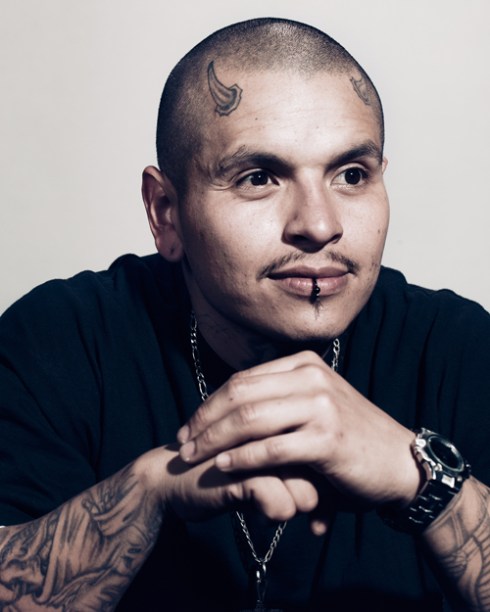
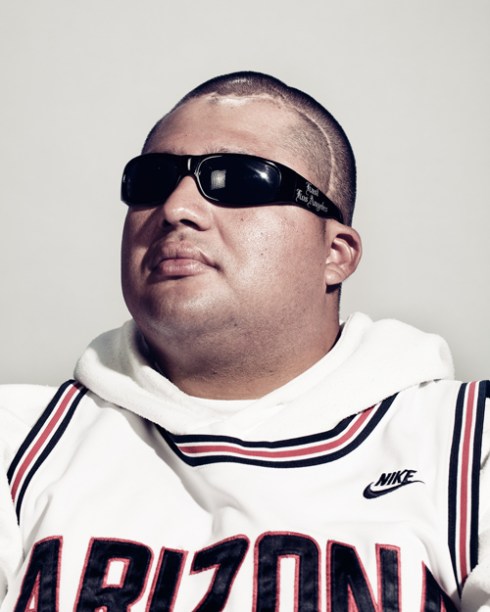
PP: I don’t usually ask about techniques or lighting (I am not a photographer), but your Homies portraits have a particular look. Explain your choices in setting up the portraits.
AA: A few of my biggest influences in photography are Thomas Struth, Rineke Dijkstra, and Stefan Ruiz. All three have worked in the portrait style that I chose for this series. Studio portraits satisifed both logistic and aesthetic concerns.
When I first approached Homeboy Industries, I wanted to photograph a subjects in their home environment, but it was made fairly clear from the start that I would not be able to do that. I was told that if I was more than welcome to shoot on Homeboy’s premises. I knew I did not want the Homeboy facility to overpower the individuals I was making portraits of, and to do that I needed to visually remove the environment.
When shooting a studio style portrait I sometimes like to use a bit more of a hyper-real light source, nothing over the top, but a light that has a physically descriptive character to it. It cannot be too distracting. I don’t want the viewer paying more attention to the lighting than the actual subject.
For three reasons, I wanted these pictures to be a tighter crop. One, I have always been really into Flemish Portrait paintings from the 17th century. The lighting and chest up crop was, in my opinion perfected by painters like Van Dyke. Two, I wanted to focus on the face as well as the hands; tattoo culture is such a big part of their appearance that I really wanted to show those details. Three, shooting in this style begs a comparison to a mug shot. A majority, if not everyone in this series has had a mug shot taken of them at one time in their past. I feel I have flipped that old image of them showing them as proud and iconic. It is a visual metaphor for the transformation they are bringing to their own lives.
PP: Did you give your subjects direction? What did they want to convey through your photographs.
AA: I gave them only a few cues. Everyone that I photographed were all proud to be at Homeboy and proud of why they were there. They know that they are taking steps in the right direction, and I really wanted to capture that. I mentioned old painted portraits, pride and stoicism, to make sure they got the idea that I wasn’t looking to make a smiley Sears portrait. I photographed them digitally so I was able to show them exactly how their pictures were going to look and feel. I think this really helped with the collaboration.
When first photographing someone there is always a trust to be gained, this can take anywhere from a few seconds to an hour, even more sometimes. After the first few people at Homeboy saw how the images were going to look, more and more people then wanted to be photographed. I believe they felt it was a chance to document and celebrate this positive action in their lives. It was an incredible experience to be a part of.

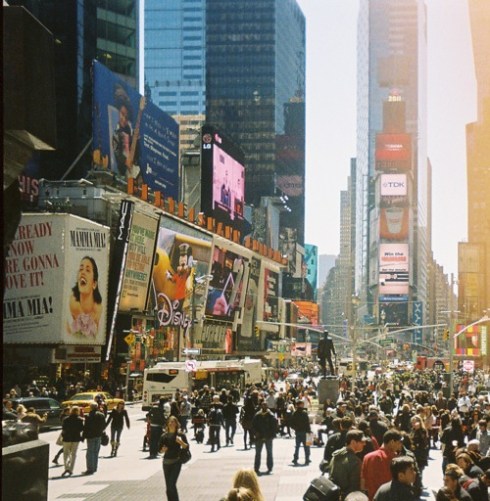
© Dane Jones/Center for Employment Opportunities
What happens after incarceration? What does life look like; how does one operate? More to the point what does the world look like?
With the development of Released the Center for Employment Opportunities (CEO) in New York has tackled these queries with a multi-media-headed-hydra of photography and narrative.
Released “produced to offer a rarely seen perspective of those returning home from prison or jail” was set in motion by Cara Shih, Marketing Director at CEO. It consists of two parallel projects.
Firstly – to describe what life looks like – she contracted three young photographers to capture, produce and tell the stories of CEO’s clients as they left prison and built new lives.
Secondly – to describe what the world looks like – Shih enlisted CEO clients to self-document their re-assimilation into society.
The result are two very different sets of valuable works.

© Dane Jones/Center for Employment Opportunities
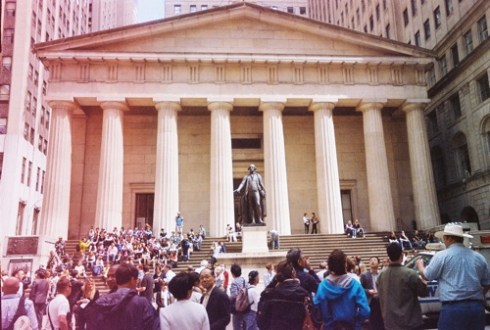
© Darryl Allen/Center for Employment Opportunities
© Darryl Allen/Center for Employment Opportunities
The main body of work for Released is the collection of nine slideshows of nine individuals (youtube/embeddable) by photographers Jeyhoun Allebaugh, Michael Scott Berman and Bryan Tarnowski. There’s no narration but the subjects’ own, and that’s everything that’s needed. These are real characters. Kudos to Allebaugh, Berman and Tarnowski for getting out the way of the stories.
It was Allebaugh who first contacted me about the project and so I fired him back a few questions. Before that, let me mention the second element of Released.
As you know though I have high expectations of prison arts education and the prospect of self-rehabilitation through photography, so when Allebaugh explained the ‘Snapshot Project’ within the Released project I knew I wanted images made by the six former prisoners on disposable cameras to feature here on Prison Photography. Allebaugh understood.
I speak more on ‘Snapshot Project’ after the Q&A.
JEYHOUN ALLEBAUGH Q&A
PP: How did you come across this project?
JA: Released was the brainchild of Cara Shih. She wanted to create an honest and genuine portrayal of the experience of her participants in a creative and artistic way.
PP: Had prison improved or set back the lives of the nine subjects you followed?
JA: Hmm. That is a difficult and complex question. While incarcerated, one of my subjects, Revond Cox, had to attend his son’s funeral in shackles and a DOC jumpsuit while his other young son sat graveside. I’m not sure any person should have to go through something like that. To call it a “setback” would certainly fall short. However, in his piece on the site, he says, “[prison] saved me from death because the way I was running, it was just a matter of time.” He clearly has his head on very straight about the type of father he wants to be and I do think some of that epiphany is directly related to his very difficult time in prison.
PP: Do you think the systems for employment, reintegration are fair for those formerly incarcerated?
JA: Life is extremely difficult for formerly incarcerated people coming home. The line between a new life and their old lives is razor thin and just as sharp. It is often much more complex than just coming home and doing right. Coming back to families and the stigma of finding a job as an ex-con make it very difficult. That said, I think organizations like the Center for Employment Opportunity are a very effective way to balance these things out, but many go without services such as these.
PP: What’s your biggest take away from the project?
JA: When we started this project, one of the key ideas behind Released was to show that when the formerly incarcerated come back home, it is often not to the “clean slate” that many of us imagine it to be. We wanted to show that there are new and different obstacles these people must face and I believe the project highlighted these well, showing some of the areas where the aid of an organization like CEO is imperative.
I believe what ended up being great about the project, however, was that more than the differences, the similarities between what the subjects and normal people go through on a day to day basis was what was most evident. I think this is what was really special about seeing photographs taken by the subjects themselves in addition to the ones we took as professional photographers.
The nine individuals we documented over three months are some of the best human spirits I have come across; absolutely amazing people. I hope you’ll spend a couple minutes getting to know them by watching the short videos on the site.
I’ve very much enjoyed staying in touch with these great people since the project. Listening to them talk about the continual triumphs and struggles of this great life we are given has truly been a gift and is a great inspiration to me.
© Jose L Padilla/Center for Employment Opportunities
© Jose L Padilla/Center for Employment Opportunities

© Jose L Padilla/Center for Employment Opportunities
‘SNAPSHOT PROJECT’, RELEASED, CEO
The snapshots are the daily details, daily grind and efforts and situations that don’t make it onto an outsider’s camera or off the cutting room floor. If Allebaugh et al. provided the over-arching narratives of empowerment and improvement, these are the chapters, pages and phrases.
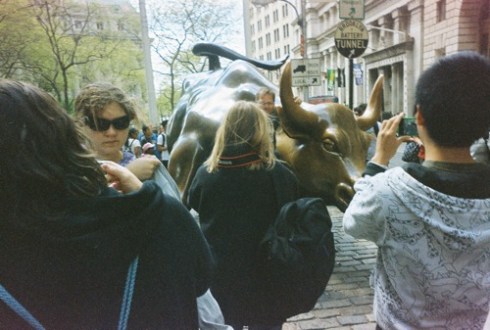
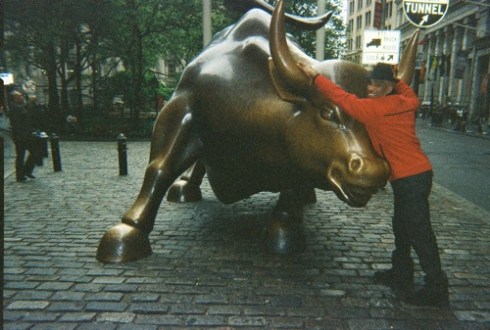
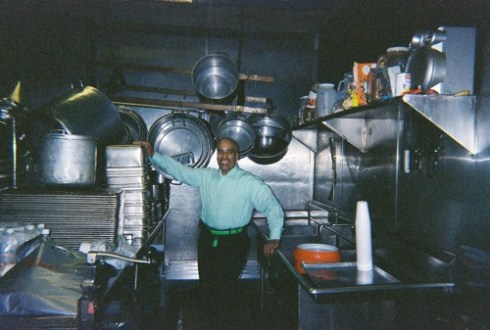
As Allebaugh stated, the snapshots show off the same foibles we all have – Jose Padilla‘s fashion savvy, big smile and willingness to perform for the camera; Dane Jones‘ wonder with the street and his omission of self; Lewis Epps‘ focus on the activities, training and environments to keep him on track; Dwayne Allen‘s tourist shots of Manhattan’s Financial District; Chester Boston‘s preoccupation with portraiture and the family; and Michael Hunt‘s meanderings about his new or old neighbourhood.
Too often we can get caught behind the idea – and support of – a large goal without stopping to think about the many tiny, terrifying steps needed to achieve the goal. These images reveal those steps. Due purely to the equipment, the ‘Snapshot Project‘ is overlaid with naivety. But there is also good intentions, massively important small victories and the promise of networks that will help these men achieve a life outside prison permanently.

© Lewis Epps/Center for Employment Opportunities
© Lewis Epps/Center for Employment Opportunities
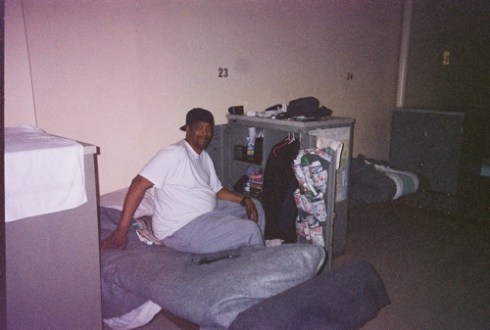
LEWIS EPPS ON LIVING IN A SHELTER, PHOTOGRAPHY, AND HIS MOTHER
If you want to know more about Lewis Epps, CEO has published a Q&A with Epps on their blog. Here’s my choice of quotes:
I was happy that I was doing [The Snapshot Project] and engaging in a project that would reflect my life. You know how you want to leave a legacy? I want people to say, “Yeah, Lewis he’s a good guy.” You know, I was doing something good to help me, and to help others, and also to be thankful to CEO for the opportunity.
I feel like I am ashamed to be in a shelter, I have never been in one my entire life. I had no place to live, so they released me to the shelter.
I have a tight, helpful family and we’re all very close. I lived in the Bronx, that’s where my criminal activities came from. My mother is elderly and I don’t want to bring that back to her … My family is very supportive. I go every Saturday to my mother’s to do painting, backyard, do work for her. Sundays I go to church.
I’m about to move from a shelter into a room of my own. I save my checks. I hide my money when I cash my checks, so I’m not tempted to spend it. I’ve been saving for three months since I started working and I’m almost ready. I also have family support. Finding a suitable place is tough. I can’t afford a room yet but I’m doing better than I’ve been in the past. I need a permanent job so I can retain my income and keep being able to afford a place of my own.
It stays in front of me, being re-incarcerated. Once I stop being good, I could be back. I’m too old to go back, I’ve got to move forward and think positive. CEO is helping me strive, and I know I’ve got to keep my focus. Once I don’t keep focus that could be it. One mess-up, that’s all it takes. I’m not going to do that again. I’m going to stay around people who are trying to help me.
Shih informs me a similar Q&A with Jose Padilla is next.
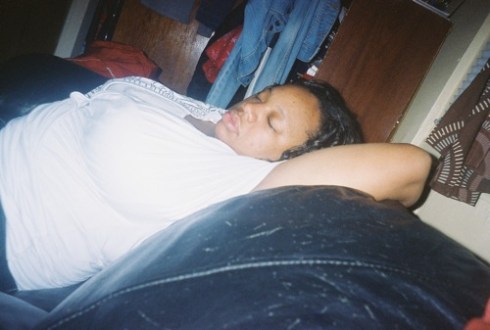
© Chester Boston/Center for Employment Opportunities

© Chester Boston/Center for Employment Opportunities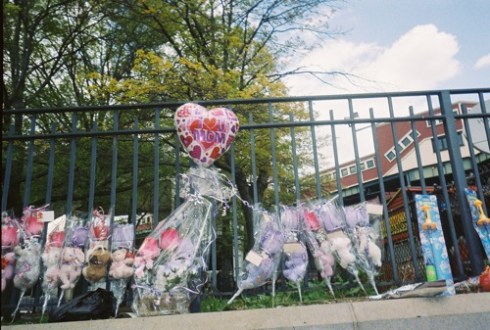
© Michael Hunt/Center for Employment Opportunities
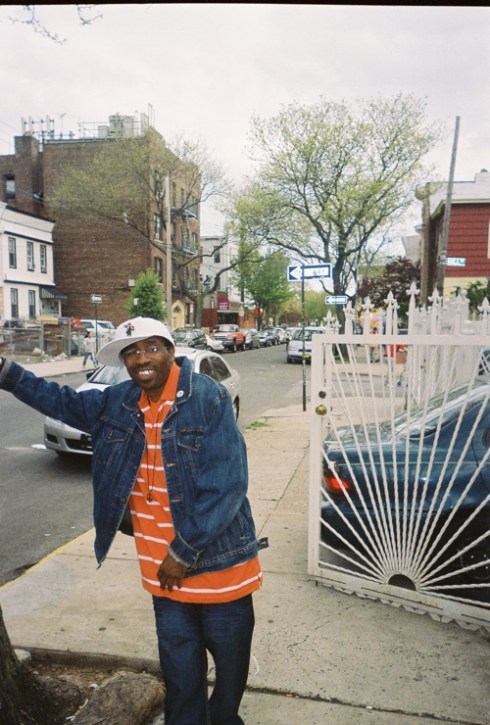
© Michael Hunt/Center for Employment Opportunities
SNAPSHOT PROJECT PARTICIPANT-PHOTOGRAPHERS
Dane Jones, 26, lives in the Bronx with roommates. His challenges to re-entry include obtaining employment, education, financial management and housing. When asked what is the most challenging part of his daily life, he says “fitting in and conforming to the norms of society.”
Lewis Epps, 49, resides in a shelter. Currently he works on the transitional job sites while searching for permanent employment. His biggest challenges to re-entry are obtaining full-time work and permanent housing. He has a very supportive family who is helping him succeed in the re-entry process.
Darryl Allen, 46, lives in Queens with his father, brother and nephews. He has three daughters (including a pair of twins), and his eldest daughter is a lawyer. His biggest challenge to re-entry is obtaining employment. Darryl says the most challenging part of his daily life is “being a friend and father to my children.”
Chester Boston, 34, lives in Queens with his uncle. His biggest challenge to re-entry is obtaining employment. He has a five year old daughter, whom he named after his mother. He says fighting for custody is a daily challenge and not seeing her is very hard.
Jose L. Padilla, 47, lives in Brooklyn. After completing Life Skills Education and becoming Job Start Ready, he landed a full-time job and now comes to CEO for retention services. To him staying punctual is the most challenging part of his day. He has a certificate in construction.
Michael Hunt, 48, lives in Brooklyn. His biggest challenge to re-entry is finding stability in his life, and “being able to be myself and become employed at the same time.” His certificates include carpentry, electrical technician, fire guard and maintenance.
If you would like to hire CEO participants please contact Mary Bedeau at 212 422 4430 x345.
‘RELEASED’ PHOTOGRAPHERS BIOGRAPHIES
Jeyhoun Allebaugh is a freelance photographer who specializes in documentary, sports and portraiture photography. He is based in New York City and North Carolina. As a Turkish-American and avid fan of Hip-Hop and Bluegrass music who has spent his college years in the mountains of North Carolina as well as South Africa, Jeyhoun brings a diversity of taste to all aspects of his life. His work has appeared in GQ, PDN Emerging Photographer, USA Today, UK Guardian, SLAM Magazine, HOOP Magazine, The Durham Herald-Sun, The Durham Independent Weekly, NBA.com and SI.com.
Michael Scott Berman is a photographer specializing in food and portraits. His past clients include the New York Daily News, the Guardian, PNC Bank, and the AARP. He was the recipient of two grants from the Brooklyn Arts Council and has exhibited his work at the Leica Gallery in Manhattan and at Brooklyn Borough Hall. He earned a Bachelor of Arts in English from New York University and a Master of Business Administration from Georgetown University. Besides taking pictures, Michael also produces video and writes stories for his food blog, pizzacentric.com.
Bryan Tarnowski grew up in North Carolina and moved up to New York City to pursue photography in 2008. He assists with a number of the best fashion, commercial and portrait photographers in the world and has worked on shoots for top magazines and worldwide ad campaigns. Focusing on social documentary subjects of a wide variety, he likes to shoot what interests him, often to learn more about a subject and to quench his thirst for greater knowledge of the world. His work has appeared in The Wall Street Journal, Vibe Magazine, PDNedu among others.
Last month, Allebaugh, Berman and Tarnowski exhibited their work at the CultureFix Gallery on the Lower East Side. CEO has a Flickr set of the opening.
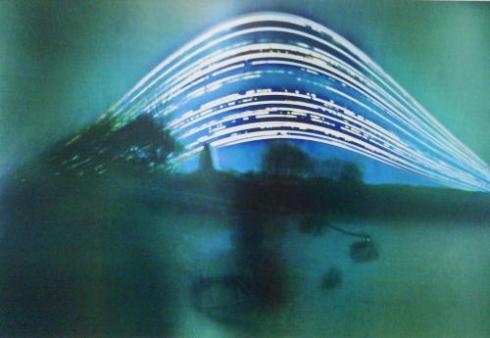
Photographer Mark Woods-Nunn and FLACK, a charitable social enterprise which works with homeless people in Cambridge, UK have put together an intriguing project.
Varsity Mag says, “the attachment of beer-cans to assorted lamp-posts is not another example of misguided modern art. A thin sheet of photographic paper was placed in each can, exposed to the world by only a tiny pin-hole, silently and vulnerably capturing an image.”
Good stuff.
Found via British Photographic History Blog.

The funeral of Horacio Bau a montonero militant from Trelew in the Argentine patagonia. He disappeared in La Plata in November 1977. His remains were found and buried nearly 30 years after. © João Pina
About this time last year, LENS blog featured João Pina’s ongoing project Operation Condor (since renamed Shadow of the Condor). Daniel J. Wakin wrote, “Operation Condor was a collusion among right-wing dictators in Latin America during the 1970s to eliminate their leftist opponents. The countries involved were Brazil, Argentina, Chile, Paraguay, Uruguay and Bolivia.”
João Pina has broken up those six countires into three segments and is currently raising funds via Emphas.is to complete the first focusing on Brazil.
Pina has already interviewed victims and families in Brazil:
In Recife in northeastern Brazil I interviewed and photographed Elzita Santa Cruz, a mother of ten who is now 97 years old. In 1964, when Brazil’s military dictatorship began, several of her children were arrested for political reasons on different occasions. In 1974, one of them, her son Fernando, became Brazil’s first politically “disappeared” person. Since then, Elzita has been demanding that the Brazilian authorities open their archives and explain what happened to Fernando and the other victims of the twenty-one-year dictatorship.
Having worked across South America for six years already, Pina will, as he intends, be able to create a “visual memory”, but as for making evidence for “use by a number of human rights organizations which are still trying to bring those responsible for Operation Condor’s repression to justice,” well, that’s an ambitious goal. Nevertheless, as a documentary project the subject is ranging and imperative. Good luck to him. I’ve stumped up some cash, so should you.
See the Emphas.is project page for Shadow of the Condor and see Pina’s video pitch.

Photojournalist Vance Jacobs talks about teaching a workshop in a maximum security prison in Medellin, Colombia.
PREVIOUSLY ON PRISON PHOTOGRAPHY
In November 2009, I described Jacobs’ prison workshop as an exercise in self-documentation overturning stereotypes and the ‘exotic fetish’.

After working closely with his legal team for more than three years, Alan Crotzer feels alone as he sits in the CNN spotlight for his first live solo television interview, days after his release. “The whole world is out there and I am all alone.” Photo Credit: Vance Jacobs
There’s a thorough Q&A with photojournalist Vance Jacobs at Photographers on Photography.
Vance covers his work in Medellin Prison with Colombian prisoners (which I’ve dissected before) and talks about his compulsion toward friendship with Alan Crotzer, a man who was exonerated after serving 25 years for a crime he did not commit, and the subject of Jacobs’ Exonerated: Alan Crotzer.
“From a purely journalistic standpoint, it was hugely fulfilling to be able to draw a line between a story about Alan that appeared on the front page of the Miami Herald and the car a local doctor decided to donate to him after reading about his plight or to see how one three-minute appearance on Wolf Blitzer’s show on CNN led a total stranger to give Alan a nice apartment in a safe neighborhood to live in at a very discounted rate.”
“But at the end of the day, I felt my responsibility was to help Alan in any way I could—not just to take pictures and I think that can be at odds with what some people think of as the journalistic oath not to intervene—just to witness and document. I ended up spending over 30 days with Alan and I spent a vast majority of that time just trying to help him set up his life. Whether it was his first cell phone, first bank account, first driver’s license, first apartment, first job and so on …”
I read this on the same day the New York Photography Festival opens and co-curator Elisabeth Biondi says:
“There are no more discoveries to be made. Anyone can take a picture now, so it’s forced documentary photographers to have a more personalized vision.”
Within the field of prison photography, it is my observation that the best projects incorporate elements of collaboration with prison inmates, staff and/or volunteers. Have we moved toward a norm where the photographers’ story is the story; that personal perspectives are what the audience wants?
If photojournalists are getting personally involved with the people in front of the lens – especially if they’re making positive contributions that no-one else provides – then so be it.

 Prison Photography