
You are currently browsing the category archive for the ‘Visual Feeds’ category.
THE BACKGROUND
In one of modern politics’ most outrageous adoptions of Doublespeak, Governor Arnold Schwarzenegger – in 2004 – renamed the California Department of Corrections the California Department of Corrections and Rehabilitation.* You can see videos – here and here and here – of the press conference announcing not only a change in name, but a supposed change in the management philosophy of the CDCr.
At that time, legal challenges were being made over the adequacy of healthcare. Following the 2004 criticisms and despite the 2004 promises, consistent constitutional healthcare was not provided to the prison population of California.
The CDCr failed to deliver on both medical care and meaningful rehabilitation. To prove the emptiness of the rhetoric we can look to John Gramlich’s report for the PEW Center’s Stateline last month. Gramlich made the point, that shortly after Schwarzenegger’s rebranding the “administration cut funding for prison rehabilitation programs by about 40 percent.”
THE PUSHBACK
It’s just as well for you and I, a diligent group of California citizens have for 17 years challenged the claim on the CDC acronym and since 2004 reclaimed entirely the discarded California Department of Corrections name. The CDC works to put right misleading messages, empty words and muddy communication.

Founded in 1994, the California Department of Corrections (CDC) describes itself as “a private correctional facility that protects the public through the secure management, discipline, and rehabilitation of California’s advertising.”
Above is the CDC’s latest correction of fact and assault on complacency. From their website:
The California Department of Corrections (CDC) has unveiled a new campaign of bus shelter ads to celebrate America’s assassination of Osama bin Laden.
Released prior to July 4th, a total of ten ads in MUNI bus shelters throughout San Francisco were apprehended, rehabilitated and discharged without incident. The ten liberated ads represent each year in the long decade spanning the declaration of the War on Terror by President Bush and the eventual demise of al-Qaeda’s elusive leader.
Joining in celebration with millions of US civilians after the demise of bin Laden, the red, white and blue advertisements not only pay patriotic tribute to our country, but also celebrate the unsung history of American assassinations.
The rehabilitated advertisements are currently at liberty and seem to have successfully readjusted to public life. However, these ads will remain under surveillance by department staff to prevent recidivism and any potential lapse into prior criminal behavior.
You gotta love direct action. View more works here.
* You may have noticed I always refer to the Golden State’s prison system as CDCr; using a lowercase “r” is an simple text-based slight but it makes the point.
(Via the ever-wonderful Just Seeds Blog.)

© Marjorie Jean-Baptiste/Fotokonbit
After my extended commentaries on photography in Haiti after the January 2010 earthquake, I’d like to bring attention to a non-profit producing and teaching photography workshops and putting cameras in the hands of Haitians.
FotoKonbit is a non-profit organization “created to empower Haitians to tell their own stories through photography. […] Inspired by the Creole word “konbit” which can be defined as the coming together of similar talents in an effort towards a common goal, we use our skills as photographers, educators, and artists to make a positive difference, through photography. By partnering with established Haitian organizations, FotoKonbit is uniquely positioned to inspire hope through creative expression and provide Haitians with the opportunity to document their reality and share it with the largest possible audience.”
The FotoKonbit team is made up of Frederic Dupoux, Ralph Dupoux, Maggie Steber, Marie Arago, Noelle Theard, Tatiana Mora Liautaud and Edwidge Danticat.
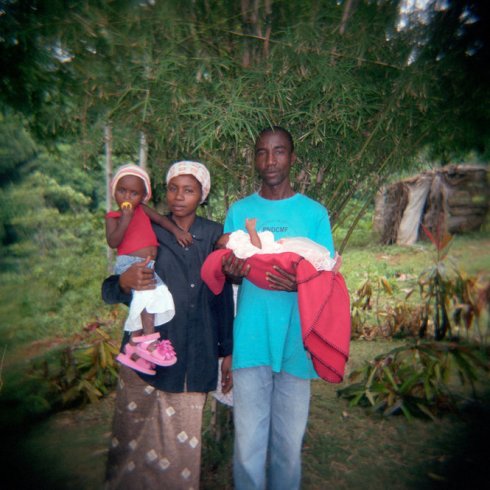
As TIME notes:
One of the most innovative uses for the photographs has been as documentary evidence for aid organizations. During three recent workshops for teenagers and younger adults living in tent communities, participants were asked to photograph aid efforts that they thought were successful, and to demonstrate needs that had not yet been met. Fotokonbit’s partnership with the American Embassy helped to get the work seen by the international aid community in Haiti.
In addition to these laudable humanitarian uses of Haitians photographs, is the simple fact that these images represent something distinctly different to the majority of Western media. How often have we seen naked, entranced worshipers prostrate in the waterfalls of Saut d’Eau? And how often are photographs from Haiti wrought with some outsider hyperbole or gratuitous pain? I don’t want to vilify photographers, especially as many such as Jonas Bendiksen and Louis Quail are committed to nuanced story telling.
Just to say that perhaps the mundane serenity of the landscape photograph below probably would not appear in our mainstream media.
And the market shot is just beautiful.


More images at TIME LightBox.
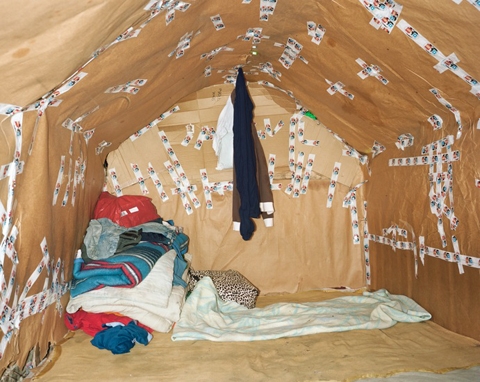
From the series Shelter by Henk Wildschut. From a shortlist of six photographers’ projects, Wildschut won the 20,000 Euro DUTCH DOC AWARD.
Last weekend was the Dutch Doc Festival.
The theme for this years Dutch Doc Festival is the slow type of journalism, which “focuses on long-term projects that frequently involve a strong personal commitment and steer clear of passing fashions. Projects that revisit a (pre-documented) subject in a sequel or to create a new sequence in follow-ups after set periods of time.”
Photoblogging duo Mrs. Deane were involved in the festivities and asked other bloggers and I to pitch in. They emailed:
To underline the relevance of the online community in shaping the contemporary debate, we would like to invite a number of what we consider ‘distinct voices’ to contribute to the festival via our presence. We would tremendously appreciate it, if you could select three photographic projects that you feel should be considered when discussing what’s needed right now, what people should be looking at, what has been forgotten, or what new projects are leading the way in the field of documentary photography (especially the kind that is also moving within the confines of the fine art galleries).
Ignoring the last criteria, I unapologetically picked three very political projects. Mrs. Deane posted my response over there, and I cross-post here for good measure.
THREE NEEDED PROJECTS
At a time when images rifle across our screens and retinas usually serving the purpose of illustration or corporate propaganda, the resolve of photographers to create bodies of work that deal with politics — and often large narratives too — can be read as either foolhardy or enlightened. I’ll pick the latter.
Kevin Kunishi’s work in Nicaragua, Joao Pina’s documentary in South America and Mari Bastashevski’s documents from Chechnya explore to varying degrees, “what has been forgotten.” Photography is art and art should be political. If we considered remembering and memory the first act in resistance against injustice then these three projects are high art.

From los restos de la revolucion © Kevin Kunishi
Kunishi’s Los Restos de la Revolution is a poignant look at the remains and the survivors of the Nicaraguan civil war. The portraits feature both former Sandanista rebels and former US-sponsored Contras. The mundane everyday details alongside deep psychological scars following conflict can be easy to turn ones back on when the bombs stop lighting up the skies. And it is easy to forget the US’s imperial policy and meddling in this conflict. One wonders if Afghanistan will ever have a cushion of a similar period of peaceful time to be part of a similar look back at the experiences and actions of its citizenry amid conflict.

From File 126 © Mari Bastashevski
Mari Bastashevski’s File 126 documents spaces previously inhabited by abductees who were “disappeared” during the Russian/Chechen conflict. Bastashevski says, “the abducted are incorporeal, as if they never were. They are no longer with the living, but they are not listed among the dead.” This is a particularly brave project given the state forces complicit in the departures are still in power and their reactions to Bastashevski’s inconvenient conscience are unknown.

From Operation Condor © Joao Pina
Joao Pina’s Operation Condor expansive work across South America, wants to both document and “provide evidence” for ongoing memory and trials into cases of of extrajudicial torture, kidnap and murder by the various Right-wing Military Juntas in South America during the 1970s and 80s. Like Nicaragua [and Kunishi’s work] the US had a strong influencing hand in either establishing or propping up many of these hardline governments. The crimes of thirty years ago are barely on the radar of the Western world however. How quick we forget! Pina is currently raising money for the next phase of his project at Emphas.is.
Colin and Joerg’s Selections
Mrs. Deane got a couple of other expert opinions.
Colin Pantall selected Third Floor Gallery, Timothy Archibald and Joseph Rock.
Joerg Colberg plumped for Brian Ulrich, Milton Rogovin and Reiner Gerritsen.
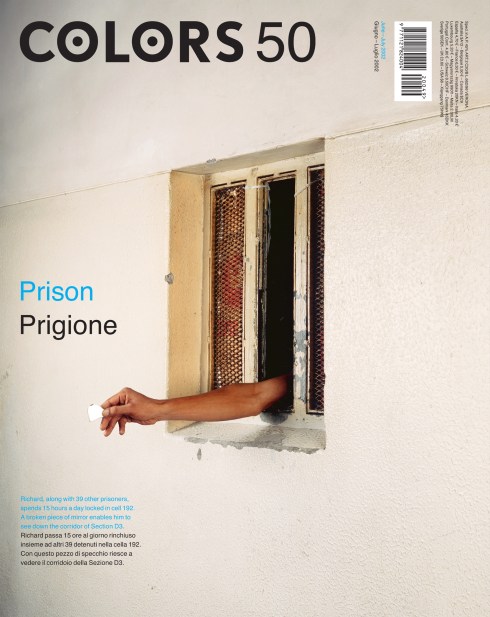
Front cover
COLORS magazine first fell onto my radar last year when reviewing Broomberg & Chanarin’s work. It cropped up again in March when I delved into Stefan Ruiz’s early career. All three were creative directors in COLORS continually rotating roster of aesthetic leadership.
Based in the north Italian town of Treviso, COLORS is part of the publishing activity of Fabrica, Benetton’s communication research centre. Benetton’s searing brand-making hit my young retinas with its controversial United Colours of Benetton (billboard) ad campaign of the early nineties.
Besides Saatchi and Saatchi, Benetton was the only time in my childhood I was aware of the names behind billboard products. That is an assumed level of cultural penetration, but I’m working from precious memory too much to determine its significance.
[As an aside, Enrico Bossan Head of Photography at Fabrica and Director of COLORS Magazine was co-curator for the 2011 New York Photo Festival. He also founded e-photoreview.com in 2010, which delivers without no-nonsense video interviews with photographers.]
The 50th edition of COLORS (June 2002) focused specifically on prisons. From the introduction:
With over eight million people held in penal institutions the prison population is one of the fastest growing communities in the world. In the United States, a country which holds 25% of the world’s prison population but only 5% of the world population, prisons are now the fastest growing category of housing in the country.
For COLORS 50 we have visited 14 prisons in 14 countries and asked a difficult question: Is it possible to rehabilitate a person back into society by excluding them from it? We spoke to murders, rapists, pedophiles, armed robbers, thieves, frauds, drug dealers, pick pockets, high-jackers and prison wardens. In most cases the stories we heard confirm one thing. That prison does not work. In COLORS 50 we ask the inmates themselves to suggest alternatives.
The magazine is 90 pages of portraits and interior landscapes. I came to this collection of work late (in my research here at Prison Photography) and in many ways it challenges many of my former presumptions. This edition is a precursor to the “VICE-aesthetic” celebrating the battered and broken, and I’d be happy to dismiss it if it weren’t for the long-form statements made by the prisoners, which are printed with care and without censorship.
The issue includes bodies of work by photographers I was previously unaware of including Juliana Stein, Vesselina Nikolaeva, James Mollison, Charlotte Oestervang, Suhaib Salem, Federica Palmarin, Mattia Zoppellaro, Ingvar Kenne, Kat Palasi, Dave Southwood, Gunnar Knechtel, Pieter van der Howen and Sye Williams. I will be featuring selections of these photographers over the next few weeks.
I bought the paper edition, but you don’t have to as the entire Prison/Prigione Issue 50 can be viewed online.
Above all, while browsing the images and stories of the magazine, I am really pressed into thinking about the ease with which a commentator can politicise and argue against the prison system in America, but be flummoxed when asked to appreciate prison systems elsewhere. Benetton uses the common theme of incarceration to raise questions, but I am at a loss to think of common answers to tackle the pain, blood and damage done to individuals in their lives before, during and after imprisonment.
At a surface level this is car-crash photography; a look inside worlds we’ll never know, but at its heart it is a call to think about the nature of humanity and to think about the capacity for humans to kill, to survive, to get addicted and to repair and to forgive.
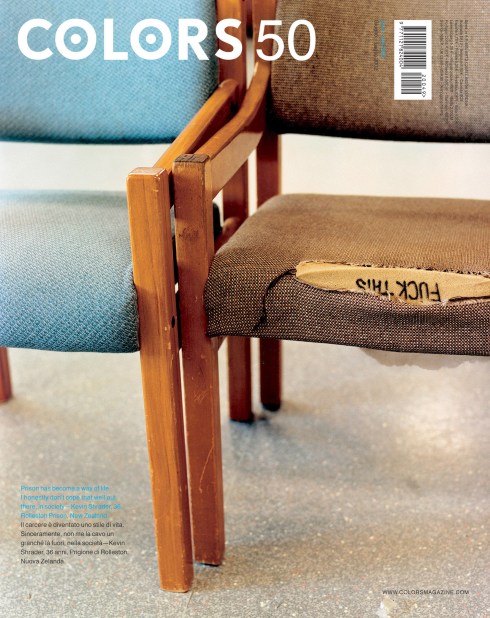
Back cover
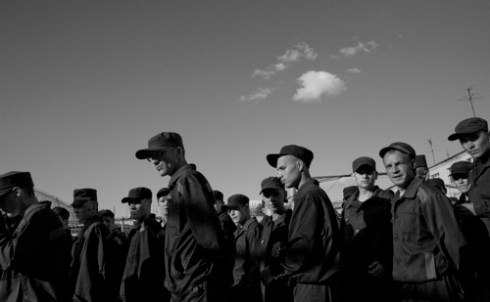
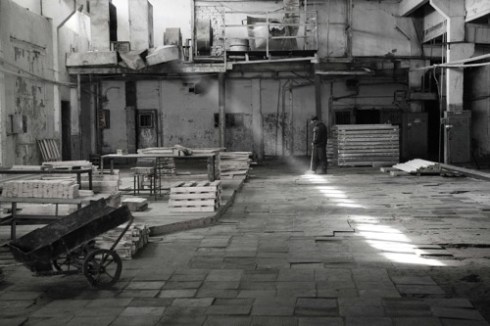
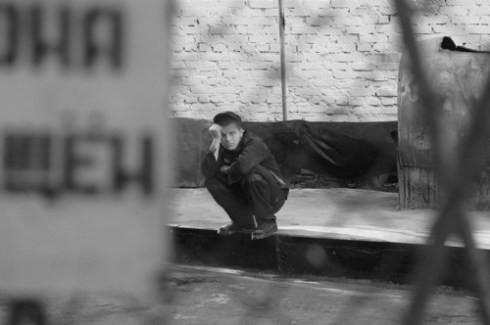
The title for this post comes from Dostoevsky’s famous 1862 novel House of the Dead. The book is full of imagery of malnourished, edgy prisoners who are corralled through the harsh drudgery of the Siberian prison camp. For me, it is almost impossible not to think of Dostoevsky’s bleak interment when looking at photographs from Russian prisons. Much of the imagery I’ve seen from the former Soviet bloc (Als, Alvarez, Atwood, Krauss, Nachtwey, Vasiliev, Payusova) has depicted cold, hardened wretches. This may or may not reflect reality, but here I want to emphasise the prevalence of this type of imagery.
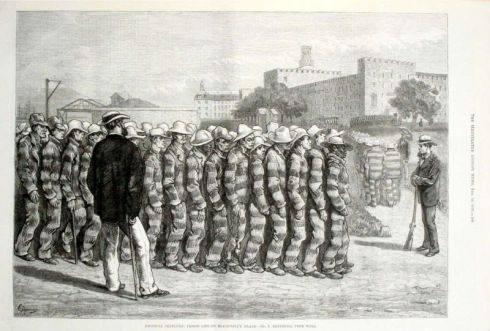
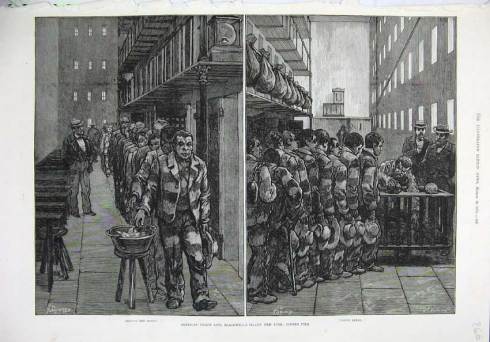
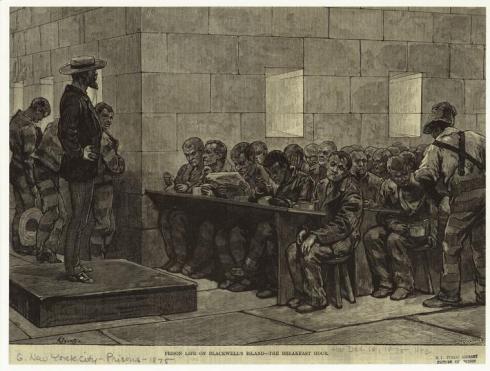
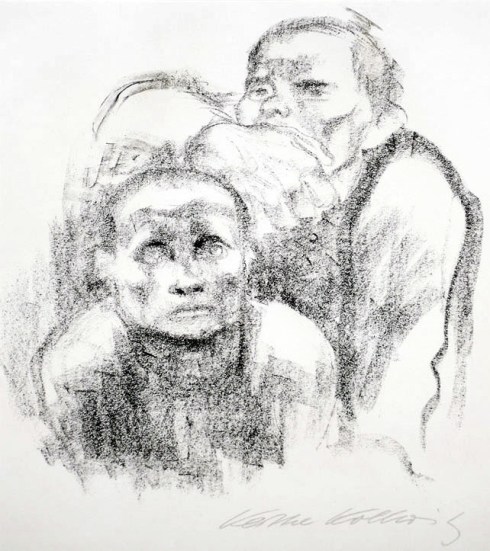
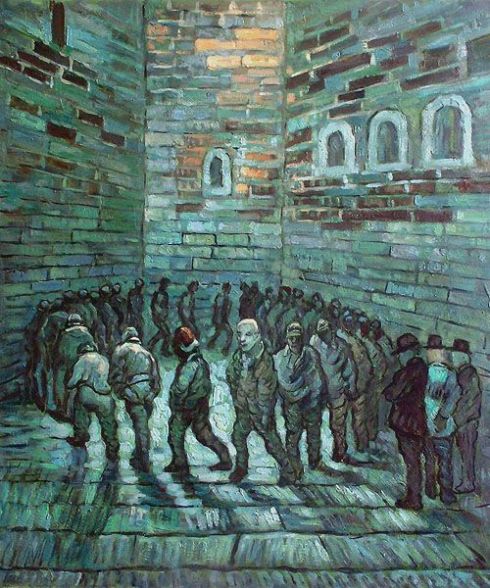
All photographs here in this post are by Sebastian Lister. I’ve taken the liberty to feature a small portion of his images and I’ve peppered them between famous etchings and paintings from art history to illustrate the persistence of marching, ordering, misery and boredom in prison imagery. America, Germany and England all feature in the historical images so we can acknowledge that this type of treatment and mood has existed in prison systems across the world.
Could it be that Russian prisons are persistently depicted as backward, brutal and stuck in the past? Is this the reality?
If you’ve not guessed, I’m setting something up here. I posit that, sometimes, these types of photographs are what we expect. Tune in on the blog later today to see a contrasting view.









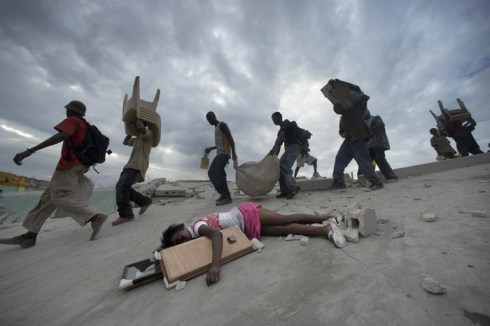
The lifeless body of fifteen-year-old Fabienne Cherisma lies on the roof of a fallen building in downtown Port-au-Prince on January 19, 2010. Photo by Lucas Oleniuk / Toronto Star
Canadian photographer Lucas Oleniuk has been awarded a National Newspaper Award in Canada for his image of Fabienne Cherisma dead on a Port-au-Prince roof-top, one week after the Haiti Earthquake.
Eight weeks ago Paul Hansen won a national award in his home country of Sweden. In March, I wrote about Hansen’s and other photographers’ awards for coverage of Fabienne’s death – Brouhaha in Sweden following Award to Paul Hansen for his Image of Fabienne Cherisma.
That’s now five photographers recognised for their images made within the space of an hour on a Tuesday afternoon.
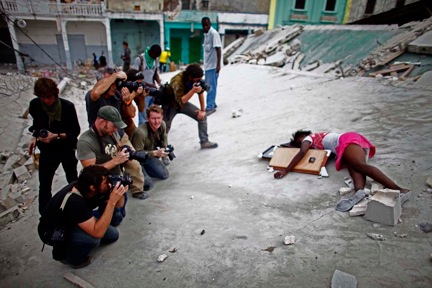
Photo: Nathan Weber
ALSO IN THE ‘PHOTOGRAPHING FABIENNE’ SERIES
Part One: Fabienne Cherisma (Initial inquiries, Jan Grarup, Olivier Laban Mattei)
Part Two: More on Fabienne Cherisma (Carlos Garcia Rawlins)
Part Three: Furthermore on Fabienne Cherisma (Michael Mullady)
Part Four: Yet more on Fabienne Cherisma (Linsmier, Nathan Weber)
Part Five: Interview with Edward Linsmier
Part Six: Interview with Jan Grarup
Part Seven: Interview with Paul Hansen
Part Eight: Interview with Michael Winiarski
Part Nine: Interview with Nathan Weber
Part Ten: Interview with James Oatway
Part Eleven: Interview with Nick Kozak
Part Twelve: Two Months On (Winiarski/Hansen)
Reporter Rory Carroll Clarifies Some Details
Part Fourteen: Interview with Alon Skuy
Part Fifteen: Conclusions (04.08.2010)
Fabienne Cherisma’s Corpse Features at Perpignan (09.07.2010)
Brouhaha in Sweden following Award to Paul Hansen for his Image of Fabienne Cherisma (03.23.2011)
Well, well, well. All sorts of commentary on the importance of photographs surrounding the assassination of Osama bin Laden and President Obama’s announcement in the East Room with reenactment of his speech for the still cameras.
From the White House Situation Room (now with added memes) and Reuters’ bloody gallery (WARNING: Graphic images of corpses) to whether we deserve or need to see bin Laden’s bullet-riddled head. Then there’s Senator Scott Brown’s faux-pas over a hoax photograph. Not to mention the reported different versions of the actual event.
For all the best articles click on the links over on Raw File Blog’s twitter feed, where I’ve been compiling them all day.
There’s still one photo – to be precise its caption – that is bothering me. And it’s this one:

White House photographer, Pete Souza, captioned the image thus: “President Barack Obama and Vice President Joe Biden, along with members of the national security team, receive an update on the mission against Osama bin Laden in the Situation Room of the White House, May 1, 2011.”
Except everywhere I’ve seen it used, the inference is that the White House team are watching a live feed of the raid on bin Laden’s compound.
They might be, but I want a SOURCE.
It seems to me this image may have been interpreted as one thing at an early stage and because it the narrative tied to the body language is so seductive, no-one has chosen to question it.
I think the reading of the image is massively altered depending on whether you think they’re watching murders in progress or whether they are, for example, waiting nervously for the screen to boot up.
Ryan Singel for Wired.com’s Epicenter blog went as far to say the White House “officials watching what one presumes is the livestream of the Navy Seal raid on Osama’s hideout in Pakistan.”
For all the hullabaloo about this image, no-one is actually sure about what is on THAT screen.
So, does anyone have a solid source saying that they are viewing a live feed of the operation?
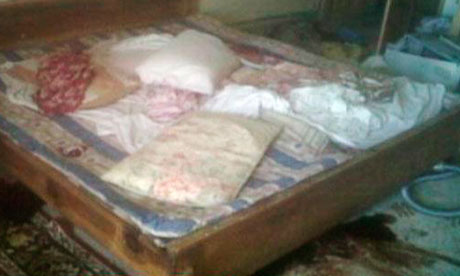
Screen-grab from ABC newsreel footage, as featured in the Guardian‘s front-page slide show.
Osama bin Laden wasn’t in mountain caves. He was in a mansion in Abbottabad, a major Pakistan city two hours north of the country’s capitol, Islamabad. Bin Laden had been there for more than six months.
Part evil-lair, part self-imposed prison, part luxury – the mansion is a major part of the story and questions about “who protected Osama bin Laden over the past decade” will no doubt follow.
There’s a few things going on here, so let’s start with the most simple. “You made you bed, now you must lie in it die in it.” Anyone? No? (To be clear, I don’t know if this was OBL’s bed, or even if he was killed in this room).
Nonetheless, the blood on the floor tells us this bedroom is a site of ambush; the bed is an object of a stormed house. Yet, this image is not distinguishable in any meaningful way from all the other images of house raids in America’s 21st century wars.
THE VISUAL CULTURE OF BEDS
Contemporary concerns have been about sex (the discarded condoms of Tracey Emin’s My Bed proved her as honest as she is crass) and violence (or maybe Rauschenberg was just about disorder?)
Historically, the image of the bed has been co-opted for highly political purposes. And interestingly, the bed played a central role in the dissemination of images of Arabic regions round Europe in the 17th and 18th centuries.
Artists under patronage painted aristocracies, noble beasts, mythologies, and Christian narratives. The boudoir was rarely mentioned; acts of the bedroom hidden. For titillation, commissioned artists were sent abroad. Orientalist Art has little to do with the distant lands it “depicts” but most to do with the obsessions of artists and patrons with harems and the sexual behaviours of people of colour.*
Without wanting to over-simplify, Orientalist Art is – at both conscious and subconscious levels – the projection of suppressed sexual desire upon an “Other” group. The subject has little or no means to correct the misrepresentations. Furthermore, any corrections by the subject would disrupt the self-serving narratives of the distant audience.
Centuries of visual manipulations and stubborn visual usury between the West and the rest, with the bed as the visual anchor to the lazy indifference, are wrapped up in the unorthodox war photograph above. If the image does indeed depict the bed of Osama bin Laden (the personification of cultural antagonism, violent opposition, the most distant of “Others”) then, I at least, identify some irony therein.
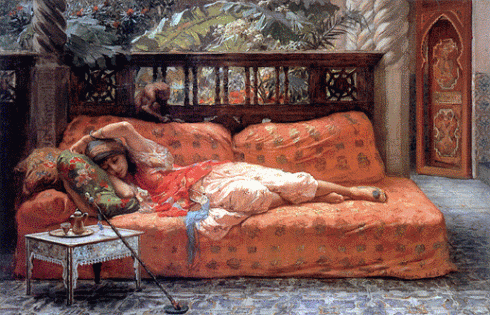
“The Siesta,” by Frederick Arthur Bridgman (1847-1928), oil on canvas, 11 ¼ by 17 inches, 1878, private collection, courtesy of the Spanierman Gallery, New York
One final thing. A bed is a place of rest, a grave is a final resting place. Western allies worried any grave would become an extremists’ pilgrimage site, so Osama bin Laden’s body was buried at sea. But have they avoided the problem? Might this Abbottabad mansion and this bedroom not become places of pilgrimage?

 Prison Photography