… or put another way, the apparently unassailable problem that is Guantanamo only amounts to 2% of the actual problem.

guardian logo

This is only one of the many astounding facts I learnt from following the Guardian’s Slow Torture series.

I particularly valued this half hour podcast in which an expert panel of legal professionals discuss the cyclical, “odious” and often ludicrous procedures for trials based on ‘secret evidence’. Clive Stafford Smith has many valuable things to say about American legal protocols. He has represented detainees at Guantanamo Bay and says that, in the overwhelming majority of cases, ‘secret evidence’ used against terrorism suspects does not stand up to judicial scrutiny.

The majority of the Slow Torture series looks at British ‘secret evidence’ trials, how it affects the lives of terror suspects and the consequent erosion of Britain’s legal reputation:

The UK government’s powers to impose restrictions on terror suspects – without a trial – amounting to virtual house arrest have been condemned as draconian by civil liberties campaigners. In a series of five films, actors read the personal testimonies of those detained under Britain’s secret evidence laws and campaigners and human rights lawyers debate the issues raised.

Basically, the same problems embroiled in the acquisition and control of “sensitive” evidence exist on both sides of the Atlantic and are ultimately putting our societies at more of a long-term risk.

Photography alone is worthless. Interviews, think-pieces, investigation, theatre, video, debate, political fight and direct action make issues reality.

What are we to do with our Gitmo preoccupations when the real problem has been moved to Bagram, Afghanistan by President Obama?

I am away from the computer for the next week. Joseph Rodriguez will occupy much of my thoughts during that time. As I have said before, I’ll be returning to his work and method.

In the meantime, read his interview and watch his multimedia piece over at RESOLVE blog.

Rodriguez

NCN

No Caption Needed (NCN) is a bubbling blog-broth of visual politics and opinion that swills about their own cast-iron-think-piece cauldron. Last year, NCN (Robert Hariman & John Louis Lucaites) posted thoughts on America’s Prison Industrial Complex.

NCN began by stating, in my opinion, an irrefutable fact, “The prison system in the United States gives a hard meaning to the adage ‘out of sight, out of mind’.”

2008. Copyright: Andrew Lichtenstein

2008. Copyright: Andrew Lichtenstein

Specifically, NCN was reacting to the formidable work of Andrew Lichtenstein who has documented for many years America’s sites of incarceration. In 2006, he was a Soros Documentary Photography Grant recipient.

The words that stuck with me from NCN’s post The American Gulag were those that lamented Democrat and Republican obstinacy and mutual blindness to shared agendas. NCN suggests both major parties have ideological roots which should inform progressive positions on prison reform and thus the down-scaling of US reliance on custodial sentencing:

The US has the highest incarceration rate in the world; the causes include both excessive income inequality and the disintegration of the family. Given that both conservative and liberal arguments are proved correct, you might think that a strong bi-partisan effort could be made to keep millions of Americans out of prison. Think again, for why would anyone bother to fix something they never see?

NCN’s brand of commentary on this type of pariah-issue is in stark comparison to the empty promises of politicians to reach across the aisle.

Scott Langley is slowly building a portfolio of portraits which feature famous folk stating their political opposition to execution in the US.

From L to R, Top to bottom: David Strathairn, actor, Boston, MA, June 2007; Ani DiFranco, folk musician, Raleigh, NC, December 2004; Steve Earle, musician, Boston College, June 2001; Eve Ensler, author, activist, Boston, MA, June 2007; Michael Moore, documentary filmmaker and author, Boston, October 2000; Bill Pelke & George White, Founders of ‘Journey of Hope … from Violence to Healing’, Somewhere along Hwy 40, Indiana, November 2000;  Martin Sheen, actor, Boston, MA, March 2008; Sam Reese Sheppard, Boston College, Boston, MA June 2001; Kurt Vonnegut, author, New York, 2006; Howard Zinn, author, historian, professor, New York City, NY, June 2006.

Scott Langley has orbited the protests, prison protocols and politics of execution for over ten years. Judged by sheer coverage, his activism with the camera is without equal.

Capital punishment is one of the major failings of the US criminal justice system – it also remains one of the most divisive. Prison Photography was grateful to pick Scott’s brain about America’s current death industry, the legal landscape and his personal involvement.

1

We agreed that it would be wise to focus on Scott’s coverage of Troy Davis’ stay of execution.

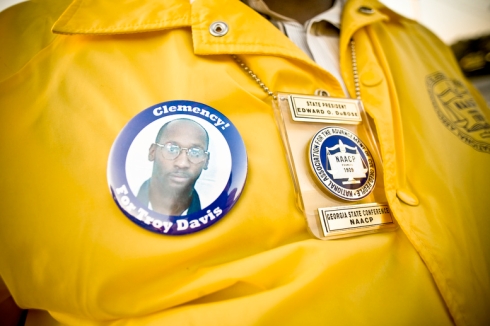
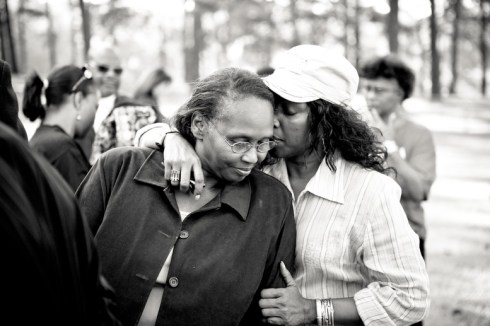
Troy Davis‘ case is currently the most high-profile death penalty case in America. It has become a focus for anti-death penalty activists not only because a man’s life is on the line, but also because so many doubts have been brought to bear on the original jury verdict. Through Davis’ case, society is realising that juries are fallible, eye-witness testimonies are unreliable, proceedings can be flawed and fatal errors have been made … continue to be made.

Prison Photography: What were you first, a photographer or an activist against the death penalty?

Scott Langley: I was first a photographer, working for my college newspaper and yearbook. I didn’t become active on the death penalty until a human rights class my senior year that challenged me to use photography as a tool to report on the death penalty.

PP: Your portfolio of images documenting executions, prisons, vigils, families and celebrities is the most comprehensive of any photographer currently working in the United States. Did you envisage your project would become so large, and important?

SL: I never thought it would get this far, cover so many facets, and continue for so long (over 10 years now). As I said, it started as a class project, but I quickly realized the importance of such historical documentation and the effect it could have on an important issue.

PP: This work is obviously borne of your political position, but you also work as a freelance photographer to earn a living. Are your conflicted or compromised by pressures of time and money?

SL: I am proud to say I am not compromised by pressures of time and money. I live a very non-traditional lifestyle, for the sole purpose of maintaining an emphasis on my political activism on a number of human rights issues. I do work for pay as a self employed photographer – picking up news assignments, weddings, and other photo jobs as they come up. But those take up minimal time. Of course working for pay “as it comes up” requires living a bit more simply than the average person. I run my car off of used vegetable oil. I grow much of my own food. I do all my shopping at thrift stores, yard sales, dumpsters. All these things greatly reduce the need for money, which in turn allows me to work on the death penalty photo project and my political action full time, and neither of those pays much, if anything.

PP: You are particularly well connected with the capital punishment abolitionist movements of Texas, Massachusetts and North Carolina. Describe those territories and the current legislative and cultural situations in those states.

SL: My work in North Carolina is the most in-depth and extensive. I was only there two years, but it was two years engrossed full-time in the death penalty debate. North Carolina obviously is a southern state. And it is the southern states that leads in executions and death sentencing. At the time I was there (2004-2006), North Carolina was the number two executing state, only behind Texas. And the death row was 6th largest in the United States.

But the momentum there has shifted. There hasn’t been an execution there in almost 3 years now. And more people have been found innocent on death row. And right now, as I sit here, NC is considering the Racial Justice Act, a bill that provides those on death row the ability to appeal their case due to race discrimination at the time of trial (which is a huge, huge problem in the south).

North Carolina has come close to legislatively putting a moratorium on executions. There is real hope of ending the death penalty in NC in the near future.

In Texas, where my work began, it is a whole other world. Texas executes by far the most people – more than most countries combined. There are some great organizations and activists in Texas, but there is little hopeful movement in the legislature to end or limit the death penalty. In fact, Governor Perry just oversaw his 200th execution. And to think, the media gave Bush a hard time about 152 executions back when he ran for president in 2000.

Massachusetts is in a whole different position. The Commonwealth ended the death penalty in the 1980s, and hasn’t had an execution since the 1940s. Capital punishment came close to reinstatement back in the late 1990s, but has since seen a decline in support in the Governor and legislative bodies. It will be a death penalty free state as far as I can see, although there is the real threat of federal capital prosecutions there.

2

4

3

PP: Explain precisely your opposition to the death penalty. Is it a religious, moral, political, ethical or philosophical stance?

SL: It started as ethical. I first learned about the death penalty through a human rights history class, where we also studied the holocaust, genocide, war… all those gruesome atrocities carried out by governments – even democratically elected governments. I learned right away the grave danger of giving the state the power to kill – to choose who lives and who dies. The class took me down many roads since then, and so my opposition covers all facets – religious, philosophical (arguments I love, but can never wrap my mind around on my own), moral, political… the whole gamut of reasons. It is now to the point where I just cannot fathom how anyone, for any reason, could justify the taking of a human life.

PP: Bill Richardson recently signed in a moratorium of the death penalty in New Mexico, joining 14 other states to ban the death penalty. How much of a victory is this?

SL: It is a huge victory. It made what happened in New Jersey the year before not just a random occurrence dependent on a liberal governor or a certain regional mentality, but part of a movement and a trend. It will cause waves of effect – and it has. Colorado, Montana, Maryland, Connecticut, North Carolina … they are all very close to drastically changing the way the death penalty will be used – or hopefully, not used.

PP: In banning the death penalty, Governor Richardson put aside his personal opinion (support) for the death penalty cited a lack of trust in the cogs of the criminal justice system to act as “the final arbiter when it comes to who lives and dies”. The death penalty is actually a procedure of criminal justice that affects a small minority of convicted criminals. What are your thoughts on the prison system as a whole.

SL: The whole prison system is a complete failure. We’ve got the majority of people locked up for harsh sentences for mere drug possession. We’ve got a system that has no policy or effort to rehabilitate. We’ve got a system that spits people back out into the exact same environments that put them in prison in the first place. And meanwhile, there is extreme racism, abuse and torture within the whole system and the walls of the prisons. Not to mention that the taxpayers are funding all of this. It is just maddening that we don’t have a better way of doing things. It is obvious that it is not working. We have a higher per capital imprisonment rate than any other country in the world, including China. Prison in the U.S., as it is, serves no positive function for the vast majority of those who go through it.

PP: Describe from personal experience the attitudes toward capital punishment in the US compared to other nations you’ve visited.

SL: During the summer of 2000, I spent six weeks backpacking through Western Europe, with camera gear in tow, to photograph sites connected with the death penalty issue in Europe’s history. This was the summer of the heated U.S. presidential race between Al Gore and George W. Bush. Because of the impending election and Bush’s history with state sanctioned killing, the Texas death penalty had become the forefront of much political conversation. When I met folks in Europe and mentioned that I was from Texas (born and raised), the first thing that always came out of their mouth was something about the death penalty. They just could not fathom how a nation, so “advanced” and “great” as the USA, could go about with a barbaric and failed practice of exterminating prisoners – at a rate of nearly 2 per week. It was a stigma that was held against me everywhere I went.

I acknowledge that not all Europeans are whole-heartedly anti-death penalty. There is ongoing talk about whether executions should resume, but it is a real minority view at this point.

5

6

7

PP: Your project is over 800 pictures deep and touches upon many stories of those affected by the death penalty, but here we have focused on the case of Troy Davis. You were present to document his most recent stay of execution. Give us your thoughts on the case.

SL: Troy Davis‘ case is particularly disturbing. People who support the death penalty are starting to ask questions about this case. Even a former Georgia official publically stepped up to question why there hasn’t been a hearing of the new evidence to prove Troy’s innocence. When you have 7 out of 9 trial witnesses saying they lied, and were even coerced into lying by the police, you have to stop and say there is a problem here. It just baffles (and depresses me) that the courts just won’t hear the new evidence. The system is so caught up in judicial process that there is no humanity whatsoever. But remember, it is human life we are talking about. Real people with real family. The courts need to hear this case, desperately, because it stands for so much that is wrong with our broken system. If we, as a country, fail with the Troy Davis case, we have failed justice, failed humanity and failed all good that could possibly come out of a system designed to right wrongs and keep society safe.

PP: It seems this activism will be with you for life. Is that a fair assumption?

SL: I hope that my activism remains with me for life. There is a great need for people to always be on call to step up and do the right thing. Sometimes that might be little things like challenging the status quo by collecting used grease to run one’s car, and sometimes it might mean crossing a line to risk arrest to stop a greater harm from being done.

PP: What are your hopes for, and activities in, the future?

SL: I hope for an end to the death penalty soon. I hope to always have opportunities to educate people – through photos, through words, and through actions – about these issues of injustice. I have projects in the works to expand the death penalty documentary project and am planning for a cross-country trip in the winter 2010 to make photos in a wider variety of states.

I will continue to follow the Troy Davis case, using my camera as a tool when the opportunity arises.

8

View all of Scott Langley’s work here. Scott has also spoken out against sites of incarceration used in America’s global war on enemies. He has presented at the University of North Carolina, partnered with the Innocence Project, worked with Amnesty International, North Dakota Human Rights Coalition, Unitarian Universalists Against the Death Penalty and many, many more. He has also recently started working with video.

This post is to salve the disappointment of thousands of visitors to Prison Photography that are tempted by the post titled View Inside Guantanamo: Video only to find that the Guardian’s rights to the three minute “tour” video have expired.

guardian.guantanamo.expired

There exists a bristling irony in the Guardian’s curt and formal explanation of circumstance: the erasure of evidence based upon ‘rights’ pertaining to the command is an insulting reminder of the powerlessness of detainees whose lives are manipulated at will.

Paradoxically, in this case, it is the denied party that is the apologist for the US military’s enforced expiration and unavailability of material. It seems the controlled release of this footage has been trumped by its controlled withdrawal.

Paolo Pellegrin/Magnum Photos

As a worthy (and non-governmental) alternative, Magnum offers Paolo Pellegrin’s 11 minute slideshow ‘Guantanamo. There are a few interesting things about this piece none of which are the actual photographs. The prints are steeped in morbid detachment and the unsurprising truth that the photographer was also controlled throughout this military prison.

The slideshow’s early description of Guantanamo as a small American town is sinister; the edited audio interviews of former UK detainees, family members, detainee lawyer and psychologist are very successful. The follow-up portraits of former detainees that Pellegrin later completed in Afghanistan are very strong.

Paolo Pellegrin/Magnum Photos

Paolo Pellegrin/Magnum Photos

All photos copyright of Paolo Pellegrin/Magnum Photos

Please, refer to my earlier post, for a comprehensive directory of photographic resources for Guantanamo including Bruce Gilden’s subtle flash-bulb mockery of Guantanamo’s rank and file. (Search within Magnum archives as deep-linking is impossible).

“Those walls aren’t there just to keep me in, but to keep you out.”

Tyrone W. (Prisoner and student)

Providing meaningful education in sites of incarceration is a difficult task. How do educators get inside the walls?

  Inmates taking an Adult Basic Education class at the Norco prison include Paul Rodriguez (left), Jobentino Romero (front), Felipe Ramos (right) and Marco Tielve (back). Chronicle photo by Michael Macor  Photo: Michael Macor / SFC

Inmates taking an Adult Basic Education class at the Norco prison include Paul Rodriguez (left), Jobentino Romero (front), Felipe Ramos (right) and Marco Tielve (back). Chronicle photo by Michael Macor Photo: Michael Macor / SFC

In 1994, the Clinton Administration withdrew Pell Grants and thus all funding for college education in US prisons. Prisoners were deemed unworthy of tertiary education. The disaster of this legislation (law was amended to omit prison populations) immediately impacted the prospects for tens of thousands of men and women, but also it crippled America’s critical thinking and cultural landscape.

With the stroke of the president’s pen, education – a cornerstone of the American dream narrative – was denied to a stipulated group by popular consensus. It was, and remains, discrimination defined.

Since that time, any college courses taught within US prisons have been supported entirely by non-profit organisations, brave foundation funding, volunteer hours and volunteer skills.

With this in mind, I’d like to bring to your attention some of the venerable organisations providing education despite innumerable legal and practical obstacles.

Prison Education Organisations

Recently, I took on a teaching role at Washington State Reformatory, one of four facilities at the Monroe Correctional Complex, WA. I teach in the University Behind Bars project, one of the programs run by the Prisoners Education Network (PEN).

PEN

PEN is a fledgling organisation that has just taken on an expanded curriculum, new teachers and a two year strategic plan for sustainable growth. It is the only college education provided to any inmates in the state of Washington.

In order to inform our growth we’ve been scrutinising other education programs across the United States.

Insideout

Temple University, Philadelphia runs the Inside Looking Out program which pairs prisoners with students as peers to develop educational goals. For background, view this video by Tiffany Kimmel which describes the work at Oregon State Penitentiary.

PUP

The Prison University Project at San Quentin is the model program for the state of California.

PrisoneReentryInstitute

John Jay College, New York runs the Prison Reentry Institute.

pep_boston

Boston University administers the Prison Education Program.

bpi

Bard College operates the Bard Prison Initiative.

Partakers

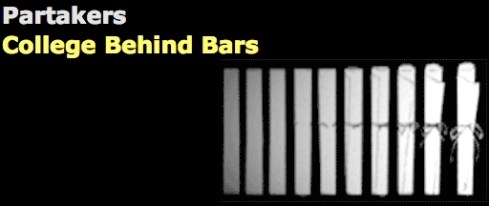
Faith-based group Partakers in Massachusetts calls for sponsors to support its College Behind Bars program.

TexasPEP

And, last but not least, is the business oriented Prison Entrepreneurship Program (PEP) in Texas.

If you have a spare hour watch PEP’s director Catherine Rohr talk about the inspiration provided by the students and how they overturned her prior apathy and self-confessed ignorance to the needs of prisoners.

These are a mere selection. I’d be very happy to hear of more prison education programs from any corner of the US and beyond

Onward.

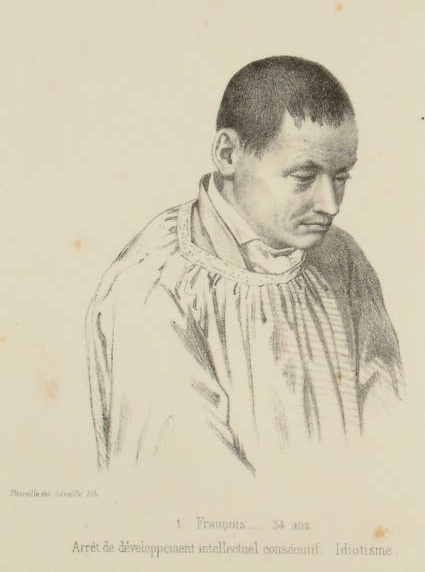
"Francois. 34 ans. Arret de Developpement intellectuel conscentif. Idiotisme." From ‘Traites des Degenerescences', by Morel (1857)

"Francois. 34 ans. Arret de Developpement intellectuel conscentif. Idiotisme." From ‘Traites des Degenerescences', by Morel (1857)

Green Hill, 2000 (C) Steve Davis

Green Hill, 2000 (C) Steve Davis

A couple of comments that have blown me away in the last 24 hours.

Convergence

From Patrick McInerney;

The similarity between Steve’s photographs and the scientific studies of psychiatric inmates the mid nineteenth century asylums is striking. (For a particularly good example see pictures of psychiatric inmates in Benedict Augustin Morel’s 1857 ‘Traites des Degenerescences: physiques, intellectuelles et morales de l’espèce Humaine

And its interesting that they have a similar effect today as the early images did in the past, i.e. they encourage us to read the prisoner’s “true” character in their faces, with all the difficulty that incurs. It was obviously not Steve’s intent to mimic 19th c. scientists but maybe its quite understandable he feels that the style has become a bit jaded … it has after all been around for some time!

Steve was jaded not only by the limits of the portrait to communicate but also by the disconnected agendas viewer brought to his works, “People respond to these portraits for their own reasons. A lot of the reasons have nothing to do with prison justice. Some of them like pictures of handsome young boys; they like to see beautiful people, or vulnerable people, whatever. That started to blow my mind after a while.”

It is a serious issue within photography that we are all lazy viewers. The less curious and less open we are, the more likely we are to fall back on pleasing, self-affirming bias.

Memory

Three months ago I posted some images of the Prison Ship/Torture Museum, The Success

Wooden Coffin / Wooden Maiden / Iron Maiden?

Wooden Coffin / Wooden Maiden / Iron Maiden?

Today, I received this;

I believe it was around 1944 that a prison ship, maybe it was The Success came to Cleveland Ohio at Lake Erie. I remember seeing the torture devices and one sticks in my mind to this day. I was told it was called the ‘Iron Maiden’, but your photos call it the ‘Wooden Coffin’.

Although I saw it as a child the memory stays with me to this day.

Age following age has propagated its own fascination with the macabre and majority-assigned human defect. From “scientific” research to childhood memory the will to understand difference has played out (and continues to play out) the shifting – and ultimately false – parameters of normal.

EMAIL

prisonphotography [at] gmail [dot] com

Prison Photography Archives

Post Categories