Refugee Hotel

It was great to see Obama take on a liberal agenda yesterday with promises in his inauguration speech to improve equality for gays and lesbians and to reform immigration policy.

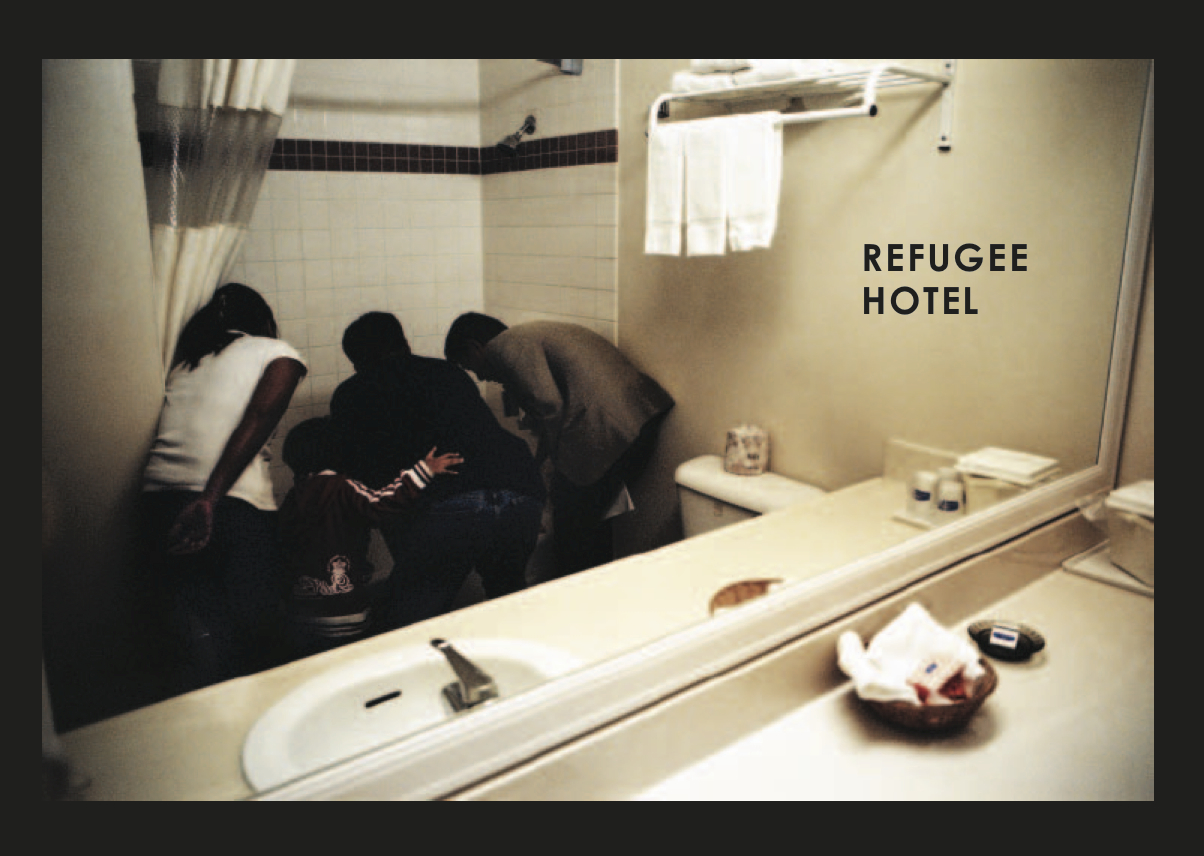
On the topic of immigration, or more precisely one arm of immigration – refugees and asylum seekers fleeing political or religious persecution – have you seen Gabriele Stabile and Juliet Linderman‘s new book Refugee Hotel?

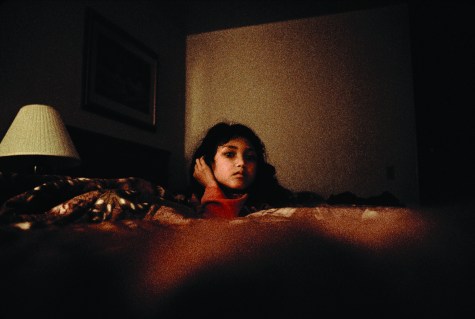
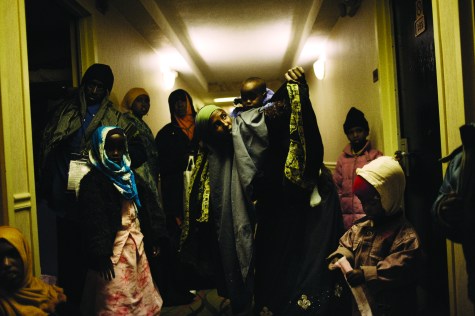
Refugee Hotel is a collection of photography and interviews that documents the arrival of refugees in the United States. Stabile’s images are coupled with testimonies from people describing their first days in the U.S., the lives they’ve left behind, and the new communities they’ve since created.

noticed the work as the book was in planning 18 months ago. Good, now, to see it massaging its message in people’s hands.

gs_fader_essay_019_CMYK

The press release details the following testimonies:

Psaw Wah Baw was forced to flee her village in Burma amidst armed conflict. She describes how her family left their village with just five cups of rice, beginning an arduous journey toward resettlement that would take them through Bangkok, Tokyo, Illinois, and Texas.

Pastor Noel fled the civil war in Burundi in 1972 for a refugee camp in Congo. When war erupted in Congo in 1996, Noel was once again forced from his home. He now lives in Mobile, Alabama, and is a central figure in the African refugee community as he pursues citizenship.

Felix joined the rebel army in South Sudan as a teenager but was forced to flee to a refugee camp in Kenya when fighting within the army threatened his life. After long delays and identity theft by a fellow refugee, Felix now lives in Erie, Pennsylvania, where he works for Habitat for Humanity to assist African refugees in purchasing their own homes.

_M1G1096_CMYK

_M1G1297_CMYK

Refugee Hotel is the latest project by Voice of Witness, a small San Francisco-based non-profit, founded by author Dave Eggers and physician/human rights scholar Lola Vollen.

Voice of Witness uses oral history to illuminate contemporary human rights crises in the U.S. and around the world by publishing book series that depict human rights injustices through the stories of the men and women who experience them. The Voice of Witness Education Program then takes those stories, and the issues they reflect, into high schools and impacted communities through oral history-based curricula and holistic educator support.

Published by McSweeney’s, you can buy Refugee Hotel here.

Read more about the project on FADER and Miss Rosen and TIME LightBox.

recepits101a_CMYK

View a large PDF of the Refugee Hotel Press Release

Published by McSweeney’s, you can buy Refugee Hotel here.

4

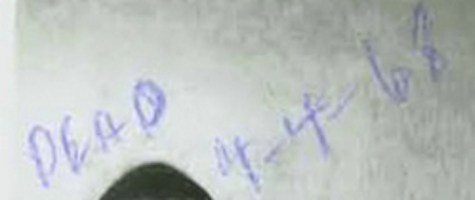
I’ve seen Martin Luther King’s mugshot many times (last year, on MLK Day I posted this same mugshot), but I had not noticed the scrawls upon it. Robert Gumpert pointed them out to me.

Someone accessed the police archive following MLK’s death to struggle with a biro pen in writing the date of his assassination.

1

We all know the famous photograph by Charles Moore of MLK’s arrest in Montgomery, Alabama and perhaps one or two photographs of MLK imprisoned in Birmingham Jail; MLK’s letters and the civil rights education have made the narrative and context for MLK’s arrests well known.

That is why I think an intimate tale into the biography of this mugshot would be fascinating. Through whose hands has it passed? How has it’s meaning changed? Is the copy with the scrawls the only original copy? Where are the original prints now archived?

The answers are probably easy to find and I’m just thinking out loud here.

THOUGHTS ON MUGSHOTS

This blog-post is just yet another seedling to a potential chapter of a potential book on mugshots.

I don’t think I’m the one to write a book about mugshots but a few trends make it a visual territory in rapid flux. The current racket and sleazy business opportunities they afford; the mugshot as ubiquitous as Facebook profile pics; their role as photobook Objet d’art; and mugshots’ new-found glory as consumer items, all point toward changing ideas toward – and uses of – this old photographic form.

2

Delivered with some gusto, Cornell West explains why the use of Martin Luther King’s bible during President Obama’s inauguration was ill-advised.

Obama might be trying to fix economic inequality in free society, but West brings up at the half way point the role that the prison industrial complex has in punishing the poor.

Furthermore, the Obama administrations expanding drone program and the crimes against humanity in Iraq, Pakistan, Afghanistan and Guantanamo means Obama can not legitimately claim to be a righteous inheritor of MLK’s non-violent message.

What do you think? Was the use of MLK’s bible clumsy? Worse? Conceited? Obama has always been cast as a sharp-minded fellow, able to see beyond platitudes and any entourage of yes-men, but perhaps Obama and his inner-circle have started to believe their own hype?

What would people have said if George W. Bush had asked to lay his hand on MLK’s bible during his inauguration? He and Obama fought and are fighting the same wars abroad.

murmann

© Mark Murrmann, from the series, Invitation To A Hanging.

Two very potent articles published in Guernica Magazine have impressed recently.

First up, Ann Neumann details the heavy-handed force-feeding procedures by prison staff in response to the longest ongoing hunger strike in America.

The Longest Hunger Strike: American courts recognize rights to refuse life-saving treatment. So why won’t the State of Connecticut let William Coleman die?

“Staff turned off the video camera typically used to record medical procedures. They strapped Coleman down at “four points” with seatbelt-like “therapeutic” restraints. Edward Blanchette, the internist and prison medical director at the time, pushed a thick, flexible tube up Coleman’s right nostril. Rubber scraped against cartilage and bone and drew blood. Coleman howled. As the tube snaked into his throat, it kinked, bringing the force of insertion onto the sharp edges of the bent tube. They thought he was resisting so they secured a wide mesh strap over his shoulders to keep him from moving. A nurse held his head. Blanchette finally realized that the tube had kinked and pulled it back out. He pushed a second tube up Coleman’s nose, down his throat, and into his stomach. Blanchette filled the tube with vanilla Ensure. Coleman’s nose bled. He gagged constantly against the tube. He puked. As they led him back to his cell, the cuffs of Coleman’s gray sweatshirt were soaked with snot, saliva, vomit, and blood.”

““I have been tortured,” he would say later. And it was enough to make Coleman start drinking fluids again. For a while. When he stopped a few months later, the prison force-fed him again, and twelve more times over the next two years. By last year they could no longer use Coleman’s right nostril. A broken nose in his youth and repeated insertion of the tube have made it too sensitive.”

– – – – – – – – – – – – –

Secondly, S.J. Culver writes about his discomfort visiting Alcatraz, discussing the problems that plague all sites of dark tourism.

Escape to Alcatraz: Notes on prison tourism.

“Alcatraz Island, understandably, does not bill itself as a place to spend twenty-eight dollars to get really depressed about a country’s piss-poor priorities regarding human rights. […] I begin to think that, if the point of an authentic tourism experience (if such a thing exists) is to understand another condition closely, the Alcatraz cellhouse tour fails. The punishing repetitiveness of incarceration is utterly absent in the carefully paced rise and fall of the yarns on the recorded tour. Worse, there’s no mention of how the Alcatraz cellblock, with its dioramas meticulously re-creating midcentury prison life, might resemble or not resemble a contemporary working U.S. prison. Plenty of the visitors around me seem to think they are witnessing “real” incarceration. I sense my initial impression had more truth than I realized; what we’re taking in is closer to a film set than to county lockup.”

The gulf between the realities of prison life and museum prison narratives are sometimes more pronounced than the differences between the realities of prison life and photographs of prisons in the media.

– – – – – – – – – – – – – – – – – – – – – – – – – – – – –

While we’re on the topic of prison museums, a mention of Mark Murrmann‘s photographs of Invitation To A Hanging is long overdue. You might know Murrmann as the kick-ass photographer of punk. He is also the very kind and engaged photo editor at Mother Jones.

‘Prison museums?’ I hear you say. There’s more than you think.

Prison museums and dark tourism on Prison Photography

19th Century Museum Prison Ships
Roger Cremers: Auschwitz Tourist Photography
Daniel and Geo Fuchs’ STASI – Secret Rooms
Steve Davis visits the Old Montana Prison
Hohenschönhausen, Berlin: Stasi Prison Polaroids
Philipp Lohöfener at the Stasi Prison Museum, Berlin
San Pedro Prison, Bolivia: As the Tourists, Dollars and Snapshots End the Riots Begin

– – – – – – – – – – – – – – – – – – – – – – – – – – – – –

Thanks to Bob for the tip.

P1030784

Did you take your first photographic image when you were young? Ever thought it could go in a show?

Early Works, curated by Laura Moya and Laura Valenti Jelen, will bring together examines the naive imagery made by contemporary photographers when they were kids.

This seemed like an obvious concept for a photography exhibition, until I realised I can’t think of a similar show from the past. I’m intrigued. It’s a simple premise and in one-fell-swoop will probably cut through the bull crap that you get in a lot of artistic practice (and artists’ statements). Lovely. Simples.

“These early images often reveal surprising talent, visual intuition, and honesty,” say Moya and Valenti Jelen. “Kept for many decades in shoeboxes and faded albums, the images are often cherished belongings that play a key role in defining the self as artist. This exhibition will be a close look at photographers’ earliest works, paired with personal narratives about the images.”

Early Works will be hosted by Newspace Center for Photography and Rayko Photo Center.

There is no entry fee. The deadline to submit is February 4th, 2013. DO IT!  Here are some examples of format for entries.

kikuchi_ef2013

A couple of months ago, I was contacted by the Magnum Foundation (MF) and asked to nominate six photographers who were pursuing projects of social importance. The MF was readying itself to disperse the 2013 Emergency Fund grants.

Today, in conjunction with TIME LightBox, the Magnum Foundation announced the 10 chosen photographers and their bodies of work:

Adam Nadel, Getting the Water Right
Alex Welsh, Home of the Brave
Giulio Piscitelli, From There to Here
Jehad Nga, Unmasking the Unthinkable
Mari Bastashevski, State Business
Olga Kravets, Radicalization
Rafal Milach, The Winners
Tanya Habjouqa, Occupied Pleasures
Philippe Dudouit, The Dynamics of Dust
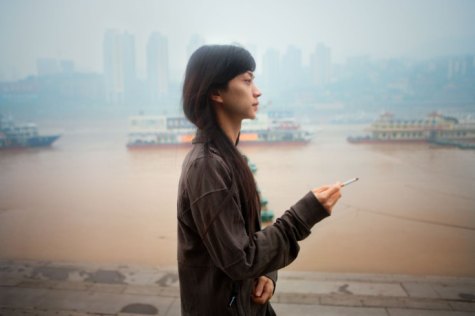
Tomoko Kikuchi, The River

Two of my nominations won support. That’s a one-in-three strike rate; better than the current form of Blazers’ guard Wesley Matthews.

Nominations by myself and 14 others resulted in a pool of 100 photographers. From that 100, a three-person editorial committee – Philip Gourevitch, contributing writer for the New Yorker and former editor of Paris Review; Marc Kusnetz, former Senior Producer of NBC news and Consultant for Human Rights First; and Bob Dannin, former Editorial Director of Magnum Photos, and professor of history at Suffolk University – chose 10 projects.

10 grants have been dispersed. Regional photographers who live and work near their homes each received between $4,000 and $7,000, while the photographers working internationally secured grants between $7,500 and $12,000.

The EF 2013 grantees are a group of talented photographers, working internationally and within their home regions. All of the projects anticipate emerging issues that are underreported and show great promise to reveal new perspectives through a range of visual styles and approaches. […] The selected projects address a range of pressing issues including human impact on one of the world’s most delicate ecosystems, systemic roots of violence in vulnerable communities, investigation of human rights abuses, and post-arab spring immigration flows,” says the Magnum Foundation.

Due to the sensitive nature of many of these projects, MF is being careful about the amount of information it shares publicly about the projects’ details and geography. We’ll just have to follow the photographers’ output closely.

Congratulations to all grantees.

See the work at TIME LightBox.

Above image: Tomoko Kikuchi, from the series The River.

Pete Brook selection-5

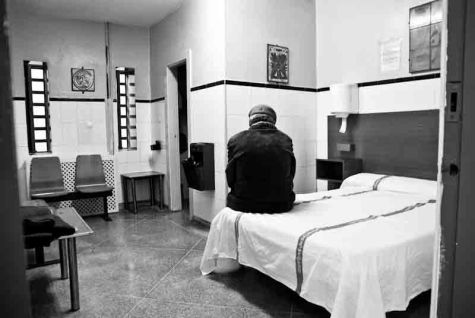
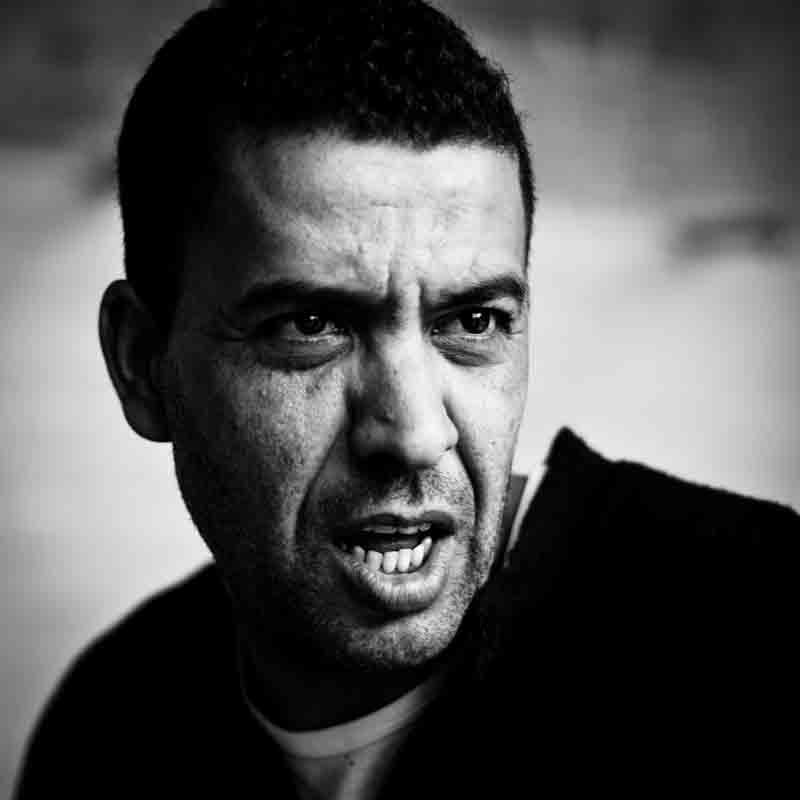
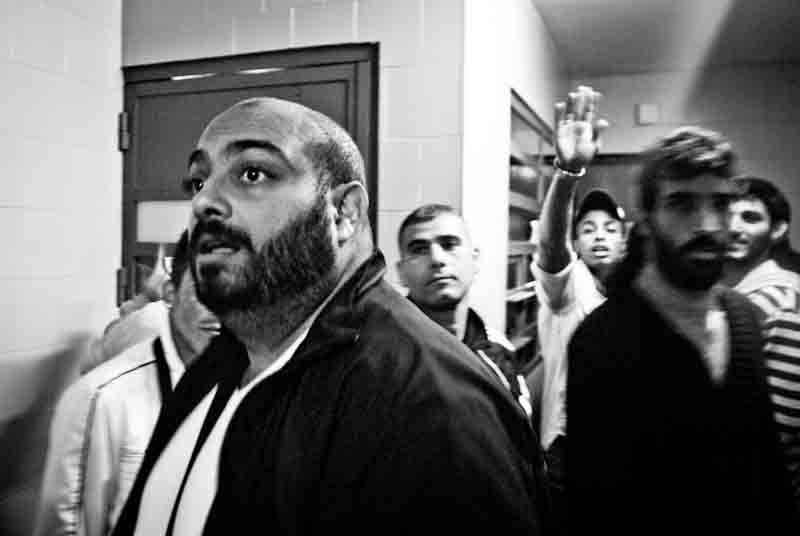
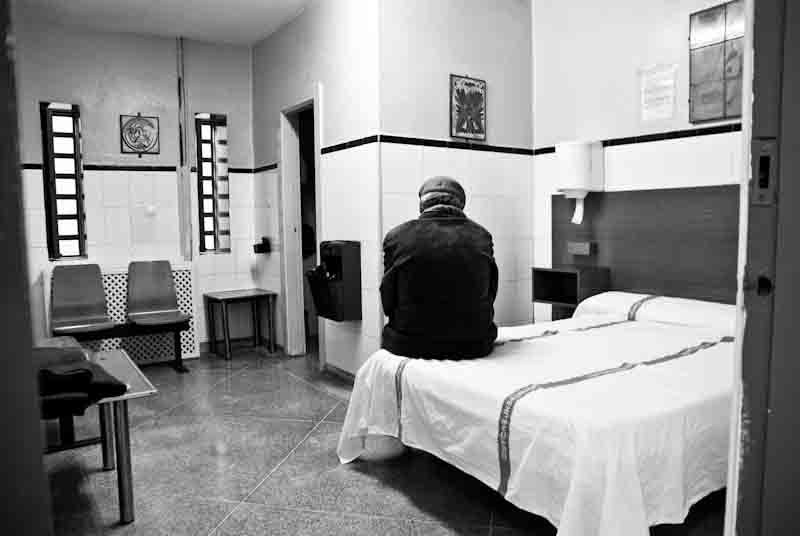
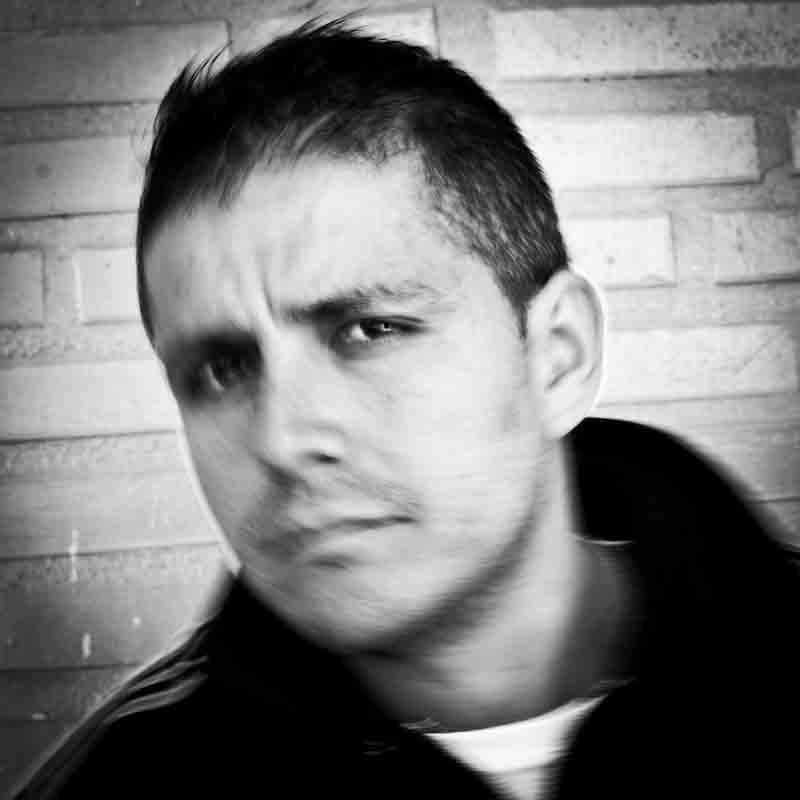
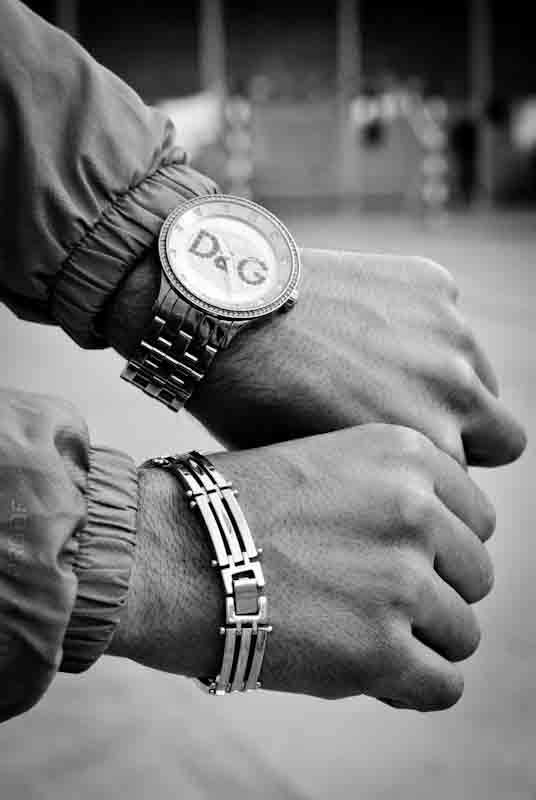
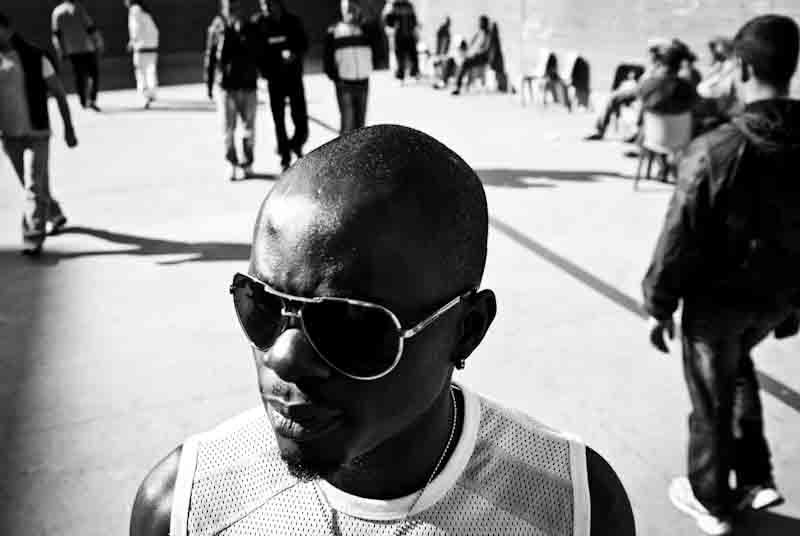
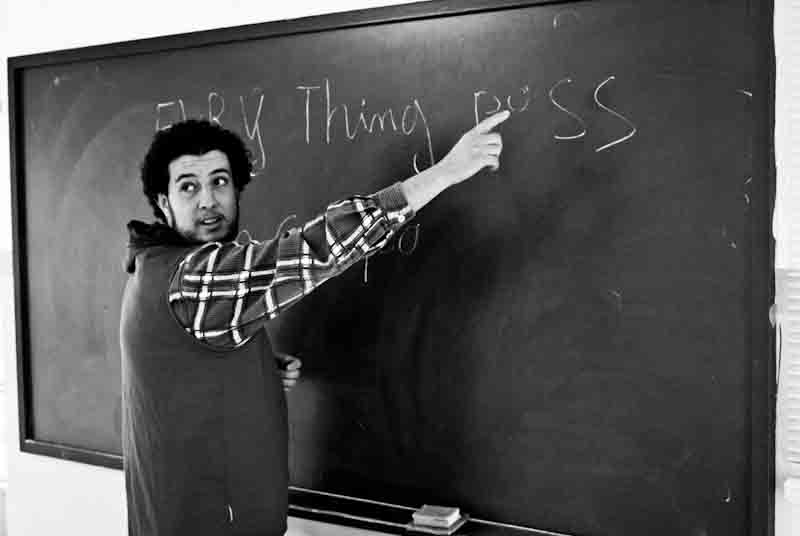
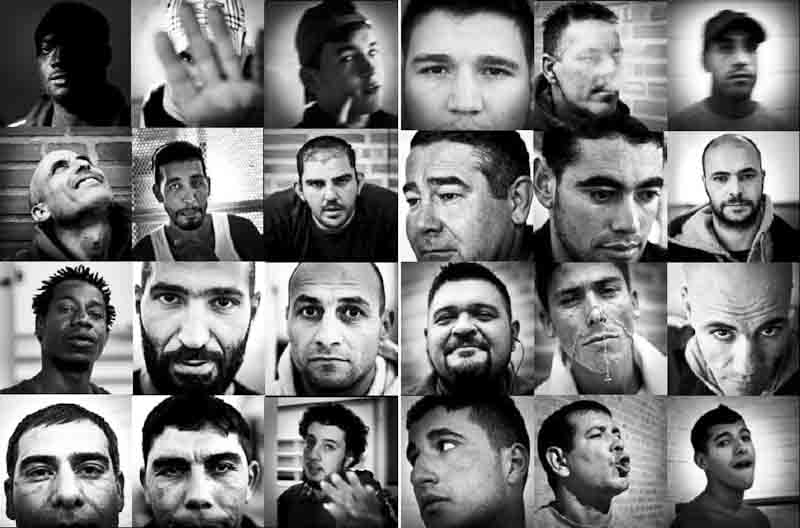
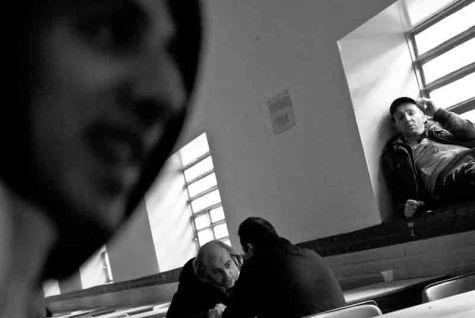
Guillaume Pinon spent over a year negotiating access and photographing inside a prison in Málaga, Spain. He shot exclusively in a single wing called Module 9, in which the majority of prisoners were non-EU citizens incarcerated for drug-trafficking crimes.

Pinon undertook the project as part of his Masters degree, for which he was required to produce a book. You can view the book, Modulo 9 on Issuu.com.

“During three months I was allowed by the inmates of the Module 9 of Málaga prison, to take photographs of their daily life,” says Pinon. “This is an intimate story of what it means to be a pre-trial detainee stuck in the middle the Spanish criminal system.”

Pinon is interested in populations on the margins of society and his past work includes series on children’s disability, hospitals, gypsies, liminal spaces and religious practice. Due to the restricted nature of the prison subject, Modulo 9 was the greatest challenge Pinon has taken on. We first made contact over a year ago, but due to sensitive negotiations with the Spanish authorities we are only able to publish our conversation and Pinon’s image now.

Click any of the images for larger versions. Scroll down to read our Q&A.
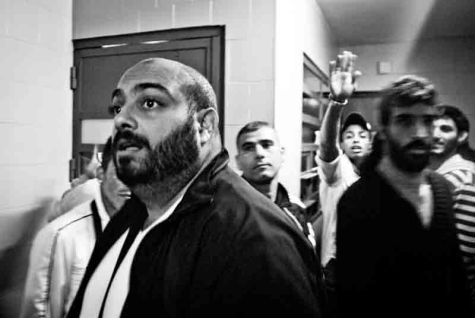
Pete Brook selection

PP: Why the interest in the subject?

GP: I have a great attraction towards entering spaces with very restricted access to document people living within. When I am told, “You will never be able to photograph there,” I am even more convinced about a project.

I have always come across dramatic, painful stories, which has made my activities more motivating and rewarding – as a photographer AND as a human being.

PP: Any prison photographers who’ve sparked your interest?

GP: The starting point may have been Too Much Time by Jane Evelyn Atwood.

PP: Featured in the past on Prison Photography, if I may add.

GP: As the project progressed, I looked at the portfolios of many photographers from different time periods. I watched movies and documentaries on the prison subject – two impressive examples are A Prophet by J. Audiard and Prison de Fleury, les images interdites, an Envoyé Special by France 2.

PP: The detainees in Málaga Prison are awaiting trial. Did you deliberately want to photograph in a facility that had prisoners “in limbo” and awaiting judgment?

GP: Initially, I wanted to work with three different types of prisoners; those not categorized by their legal position, but those that captured more my own interests. I wanted to explore the situation of female prisoners, the “gitanos” (gypsies), and the Maghrebian prisoners. The prison of Málaga principally incarcerates remand prisoners. It was not a deliberate choice of mine; I took what was available to me.
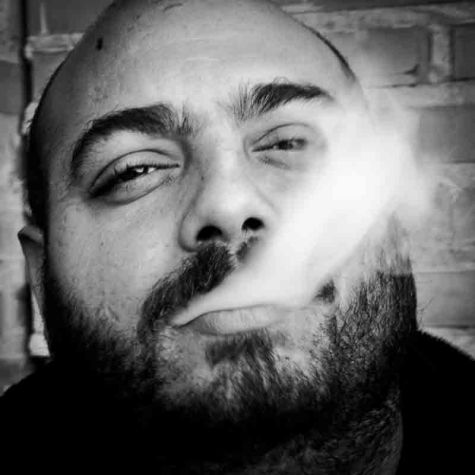
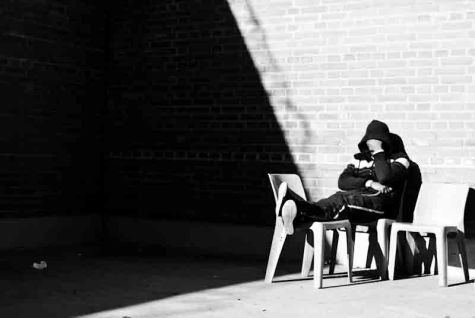
Pete Brook selection-2

Pete Brook selection-7

PP: MODULO 9 is your MA thesis project for the London College of Communications MA in Photojournalism and Documentary Photography. Tell us about your experiences on the MA.

GP: I am a father of two young boys. The oldest, because of his disability, requires much of the time and presence. In the circumstances, an online MA was the perfect opportunity; it suited my complex family life.

The LCC MA in Photojournalism and Documentary Photography taught us all the issues surrounding the moments before, during and after pressing the shutter. With this I mean to find a story, to do a research on the topic, to sort out all the administrative aspects, to approach and tell the story, to edit photographs and finally to present the completed work. I realized that photography is not only about the “click” if you want to achieve a good project.

However, nothing can replace a face-to-face conversation, even Wimba [which the class uses for class webinars and crit]. I am not sure whether I could be able to recognize Paul [Lowe] or John [Easterby] if I was in the same room! Which is a bizarre feeling. Overall, my MA has been a very beneficial and enriching experience.

PP: I was told you received a 3-month deferral for the submission of this work because of problems with access. Can you explain what happened?

GP: It is complex story, but I’ll cut it short. To be allowed to work inside of the prison came with very strict conditions. One of them was to take photographs only when I was accompanied by a nominated staff-person. However, that person had his own work to do and, therefore, could not dedicate as much time as had been initially agreed. So, in December, during a board examination where the evolution of my work was assessed, I received the extension. By that time, roughly, only the portraits had been completed.

PP: Apart from the delay, did you face any other hurdles?

GP: To work in such environment is a great and unique opportunity; however, it is very difficult, even more for a photographer with little experience like me. On many occasions I found myself upset and frustrated with the situations or the people.

I kept my mouth shut and with a smile because I was aware of how rare the opportunity was “to be inside” with the camera. Even though life inside the prison was structured on routines, each day there appeared to be a new challenge. Life was always disturbed by external and internal factors of the Modulo 9 – the mood of the guards, a newcomer to the module, a conflict, an inspection of cells, the weather. Insignificant details could have a snow ball effect within minutes.

PP: I presume each prisoner signed a model release?

GP: A signed model release from each prisoner appearing on my photographs was another unbending condition of the authorization. I eventually managed to get more than fifty signatures.
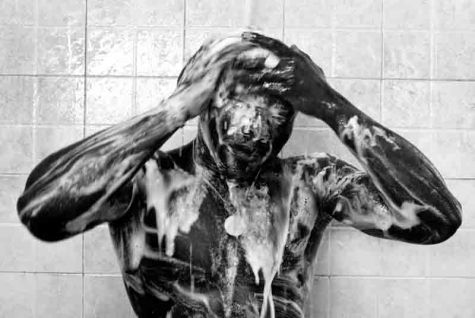
Pete Brook selection-12

Pete Brook selection-10

Pete Brook selection-8

PP: What did the prisoners think of your presence and your work?

GP: I came across all kinds of reactions during the three months, from suspicion (“You’re from Interpol”) to hope (“Help me to get free”).

None of them knew that the work was part of the MA. I purposely never mentioned it thinking that I would lose some credibility.

Mostly, they asked about the reasons of me doing this work and how I was going to present the work. They didn’t like the idea of a publication in a newspaper or magazine, but on the other hand a book seemed to be a more attractive format to them.

PP: What did the staff think of your presence/your work?

GP: Again, varied reactions. Mostly, the prison authority supported the project and it is pleased with the final result. However, the staff of the Modulo 9 perceived my presence with the camera as another source of potential problems which meant more work and pressure for them. They were mainly protecting the reputation of their module and the rights of each of the prisoners. Eventually, we managed to spend the three months without a major outburst and occasionally I did receive unexpected help.

PP: Your photographs depict a stark but violence-free environment. Is this the reality in Málaga Prison?

GP: My photographs only document the daily reality of the Modulo 9. The prison of Málaga is divided into 14 modules. Each of them has its own type of prisoners  – foreigners, females, youth, Muslims, remand-prisoners. Therefore each module has its own routine, problems and activities.

I can only share what I experienced within Module 9, which has greatly improved in recent years. Improvements have come about for two main reasons: first, the willingness of some staff to improve the quality of life inside of the module and, second, the fact that the majority of the prisoners now are Muslim.

Because of the Islamic faith, you sense great respect between prisoners. Moreover, most of them are in jail for the same reason (drug-trafficking), and they’re under the same conditions (no family living in Spain, no money, no friends, no knowledge of the language). They try to help each other.

Nevertheless, as a module of remand prisoners, the population changes quickly and therefore an established but fragile stability can be quickly jeopardized. During my last visit, a year later, I barely knew the prisoners. Talking to some of them and looking around, I could feel a change; Modulo 9 was not the same any longer, and may be not have been for the best.

Pete Brook selection-4

Pete Brook selection-9

Pete Brook selection-13

 PP: What are the attitudes of Málagans and Spanairds generally toward prisons?

GP: Sometimes, the Málagueños are like me; life inside of a prison creates a sense of curiosity. They want to know if what they see on TV is the same in the reality. However, at present, there are other overruling problems, such as the current financial crisis, which take all the attention. As a consequence, the situation in prisons is generally ignored.

PP: Why photograph in black and white?

GP: I have always felt more comfortable photographing in black and white. To think about colour in the process of taking a picture it is not yet an instinct I have. It generally distracts me from the subject.

PP: It is a large book with a diversity of images. Tell us about your editing choices.

GP: I have mixed feelings about editing. On the one hand, I enjoy the process of selecting and playing with the photographs in order to tell the story. But on the other hand, the process relies too much on my mood of the day. It is very difficult, for me, to come up with a pragmatic selection and order the pictures in the ways I have seen great professionals do.

Módulo9 was my first experience editing. Throughout the process I regularly shared privileged conversations and received very useful comments from Paul Lowe (course director) and Ed Kashi (project tutor).

I ended up with two edits. The first, used a geographical and linear approach – the buildings of the prison, the corridors, the access to the module and finally inside of the module.

The second, which was presented as the final result, was elaborated with the support of Chema Conesa, a Spanish photographer and editor. It no longer focused on location but more on the emotions of being confined in a hostile environment where it is difficult to keep contact with reality.

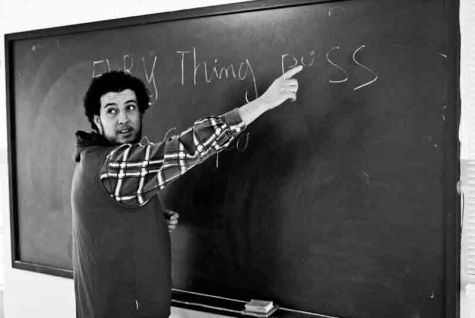
Common to both editions were the double pages with the portraits and the separate chapter focusing on the story of Mouhcine.
Pete Brook selection-3

Pete Brook selection-11

PP: Why follow Mouhcine? Why did he stand out?

GP: Throughout the first month, each morning was dedicated to interviewing inmates. The first recorded conversation with Mouhcine lasted around 35 minutes. Only after just 11 minutes, asking him about his first night in the prison, he could not control his emotions and broke down into tears. I suggested having a break for him to recover.

By the end of the interview, I became conscious of his sensibility and his eagerness to share with me. So our relationship, day after day, conversation after conversation, grew into something more personal. On some occasions, I felt concerned about leaving him alone being aware of how depressed he was.

Apart from being deeply tragic, Mouhcine’s story emerged to be, on some aspects, optimistic. His faith in God and his willingness to learn Spanish, to work, to be involved with the life of the module helped him to handle the daily challenges of the prison. I felt privileged to be allowed to witness, share and document those moments.

PP: What do you hope your photographic study of Málaga Prison will achieve?

GP: At the beginning of the project, my only hope was to get a good grade for the MA!

Now, after showing the photographs, listening to people’s comments and with a higher confidence in the work, my plan is to go back to the prison of Málaga. This time I would focus on the female module. I’d change the concept and aim for a deeper involvement with the prisoners. And then, taking into account the best options, I hope initially to diffuse the work in and around Málaga.

PP: Final thoughts?

My intention has never been to criticize the prison system. Though, from my short experience into “the remand prisoner world” and having interviewed magistrates dealing with criminal cases, some suggestions should be made in order to improve the conditions.

I want the viewer, after looking at the photographs, to go home keeping in mind the feelings of being restricted in harsh conditions. I want the viewer to sense what it means being a remand prisoner, with his fears and anxiety, inside of Module 9.

pinon1

Pete Brook selection-6

– – – – – – – – – – – – – – – – – – – – – – – – – – – – – – – –

Thanks to Ciara Leeming for the tip.

two-beers-for-haiti-1

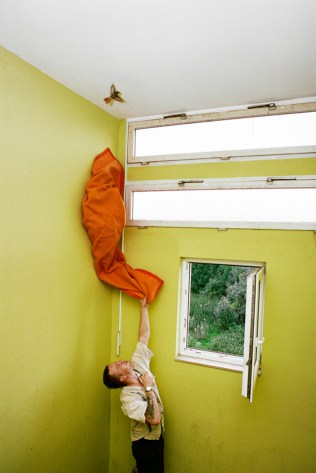
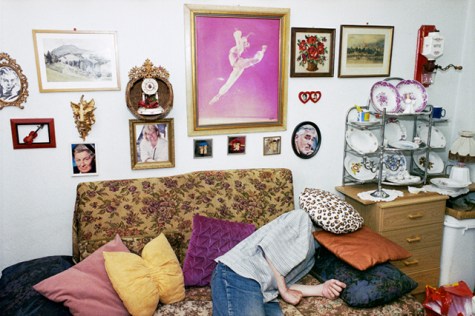
I’m intrigued by Nathalie Mohadjer‘s project Zwei Bier Für HaitiI hope you will be too. First, you’ll need to get past the idea that Zwei Bier Für Haiti is about, or in benefit for, Haiti. It is, in fact, a body of work about the residents of a homeless shelter in Weimar, Germany. Mohadjer made the images between 2006 and 2010. She explains the title:

“When an earthquake shook Haiti in January 2010, Margitta, one of the inhabitants, started a fund-raising campaign among her neighbors in the homeless shelter, which she called “Two Beers for Haiti.” The idea was for every resident to drink two beers less a day. She collected a total of 15 euros.”

I’m always intrigued by long-term photo studies of institutions on the margins and those within them – Peter Hoffman’s Bryan House and Maja Daniel’s Into Oblivion are two top-notch examples. Mohadjer’s Zwei Bier Für Haiti/Two Beers For Haiti fires the same visual intrigues. Good stuff.

two-beers-for-haiti-11

two-beers-for-haiti-9

Mohadjer has nine days left on her crowdfunding effort for the book. It’ll be published by Kehrer Verlag regardless but every penny donated will be a penny less out of her pocket. See the crowdfunding page here and the video-pitch on vimeo here.

1

EXHIBITIONS

Works by Nathalie go on show today at the Museum Sala Galatea, Cordoba, Spain (January 16 – February 24, 2013) and works from Zwei Bier Für Haiti go on show at the Heussenstamm Gallery Frankfurt, Germany for the Abisag Tüllmann Prize Exhibition (February 19 -Mars 15, 2013).

EMAIL

prisonphotography [at] gmail [dot] com

Prison Photography Archives

Post Categories