
You are currently browsing the tag archive for the ‘Prison Obscura’ tag.

Prison Obscura got a nice review by Carolina Miranda in the Los Angeles Times.
An excerpt from Gut-wrenching photo evidence from Brown vs. Plata in ‘Prison Obscura’:
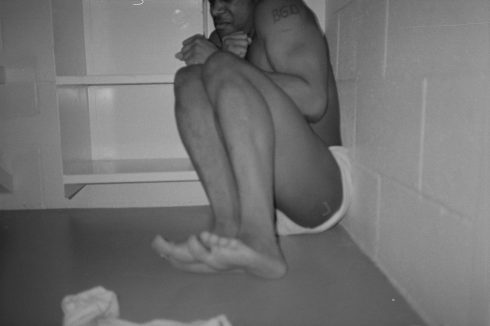
Perhaps most gut-wrenching is the series of pictures generated as evidence for the case of Brown vs. Plata, a class-action lawsuit against the state of California, related to issues of access to medical care and serious overcrowding in the state’s prisons. The case made it all the way to the U.S. Supreme Court, which ordered California to release 46,000 inmates in order to relieve conditions.
[…]
“[Prison Obscura] is aesthetically beautiful and challenging, and it’s didactic without being patronizing,” says Juliet Koss, who is the director of the Humanities Institute at Scripps. “But it also ties into what we are doing in the Institute. The theme for the semester is ‘silence’ and this was an interesting way of exploring that: of people who have been silenced or the general silence that there is about this topic.”
An absolute honour to have the attentions of critic Carolina Miranda, whose writings and focus on the vernacular, on everyday creativity and on pursuits of beauty and meaning beyond the restrictive parameters of the art market, I have long admired.

^^ That’s me ^^, last Tuesday, after two days of installation.
Today, Prison Obscura officially opened in the Clark Humanities Museum at Scripps College in Claremont, just east of Los Angeles. If you’re in the area pop by and have a peek. I’ll also be down there on the 2nd October to deliver a lecture ‘Prison Silences‘ and to attend the opening reception.
Thanks to Kirk, T, Amy, Linda, Juliet and the staff at the Humanities Institute for their welcome, work and support.
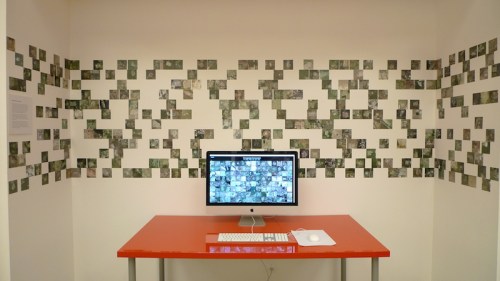


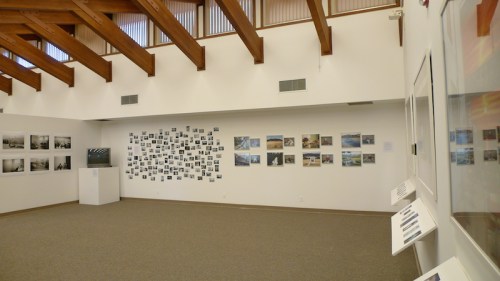

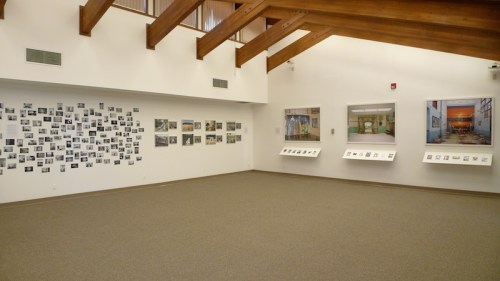
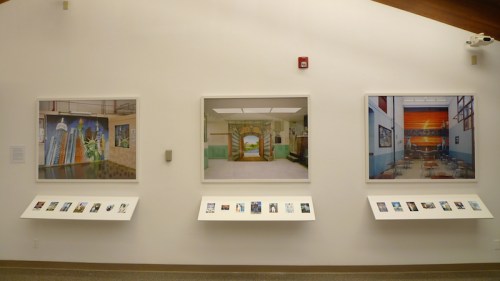

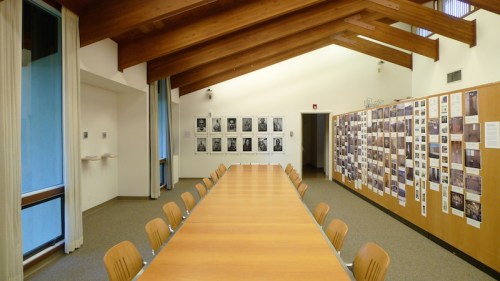

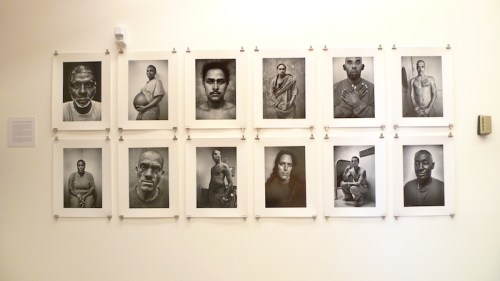
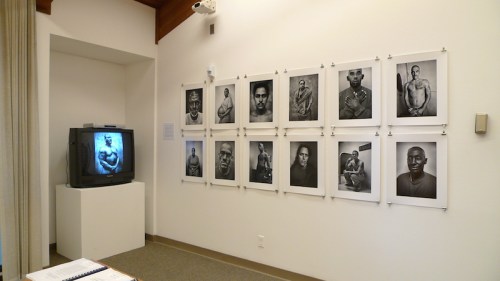
All photos: Matthew Seamus Callinan
TALKING HEAD
The kind folks at the Cantor Fitzgerald Gallery at Haverford College wanted to make a video to accompany Prison Obscura. So, we sat down with camera and I talked for an hour. It’s a blessed relief for you all that they managed to distill it down to 3 minutes. Much more bite-size than the essay.
Vimeo link. Also available on Youtube.
PRESS
Photo Exhibit Offers Look Into the Lives of Prisoners (Philadelphia Inquirer)
Prison Obscura: A Look Into the Cell of Self (Bi-College News)
Prison Obscura at Haverford’s Cantor Fitzgerald Gallery (The Art Blog)
Shedding Light on a Dim Situation in Prison Systems (The Temple News)
5 Intriguing Things: Thursday, 1/23 (The Atlantic)
‘Lives Lived Behind Bars are Too Often Invisible’ (In These Times)
Prison Obscura, Curated by Pete Brook (aCurator)
Exhibition: Prison Obscura (No Caption Needed)
Installation shots here and here.
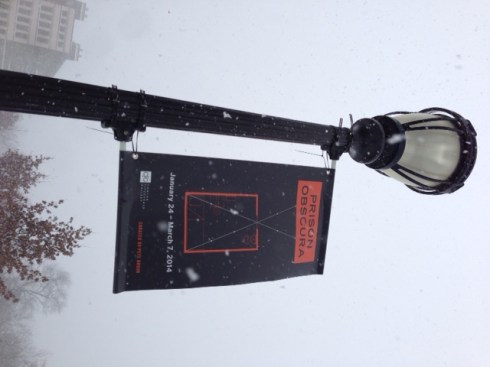
Just a quick post to say …
It happened. Prison Obscura opened. With a fantastic turnout. Gallery was crammed for the curator’s talk and people said many nice things. I pulled my usual trick, clocking silly hours until the early hours most of last week during install. Matthew Seamus Callinan, the Associate Director of Cantor Fitzgerald Gallery and Campus Exhibitions at Haverford College did the same. I cannot thank Matthew enough for his support throughout the creation of the show. Legend. More thanks to so many people.
I haven’t any pictures of the opening because my head was spinning. There’s some on Facebook. I’m sure others have some too (send ‘em over!) but I wanted to do a quick post with some installation shots. Taken at different points during the week during install and may not reflect exactly the final layout. (Buckets and hardware not part of the show).
Prison Obscura is up until March 7th at the Cantor Fitzgerald Gallery at Haverford College, just outside Philadelphia, PA. All you need to know about the exhibit is here.


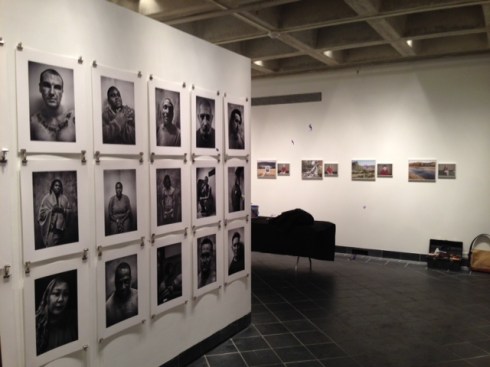


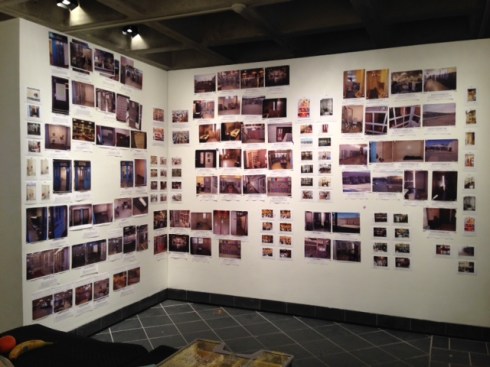


It is with giddy, air-punching pride and mammoth-sized gratitude for those that helped me along the way that I announce the imminent opening of Prison Obscura.
This exhibition is my first solo-curating gig and reflects my thinking right now about images of and from American prisons. Prison Obscura includes works, approaches and genres that — after 5-years of looking at prison photographs — I consider most informative, responsible, challenging and useful.
Prison Obscura is on show at Haverford College’s Cantor Fitzgerald Gallery from January 24 through March 7. The CantorFitz built a remarkable Prison Obscura website to accompany the exhibition, at which you can find a lengthy 5,000-word essay as to why I have shied away from traditional documentary work and focused instead on surveillance, code, vernacular snaps, prisoner-made photographs and rarely-seen evidentiary images.
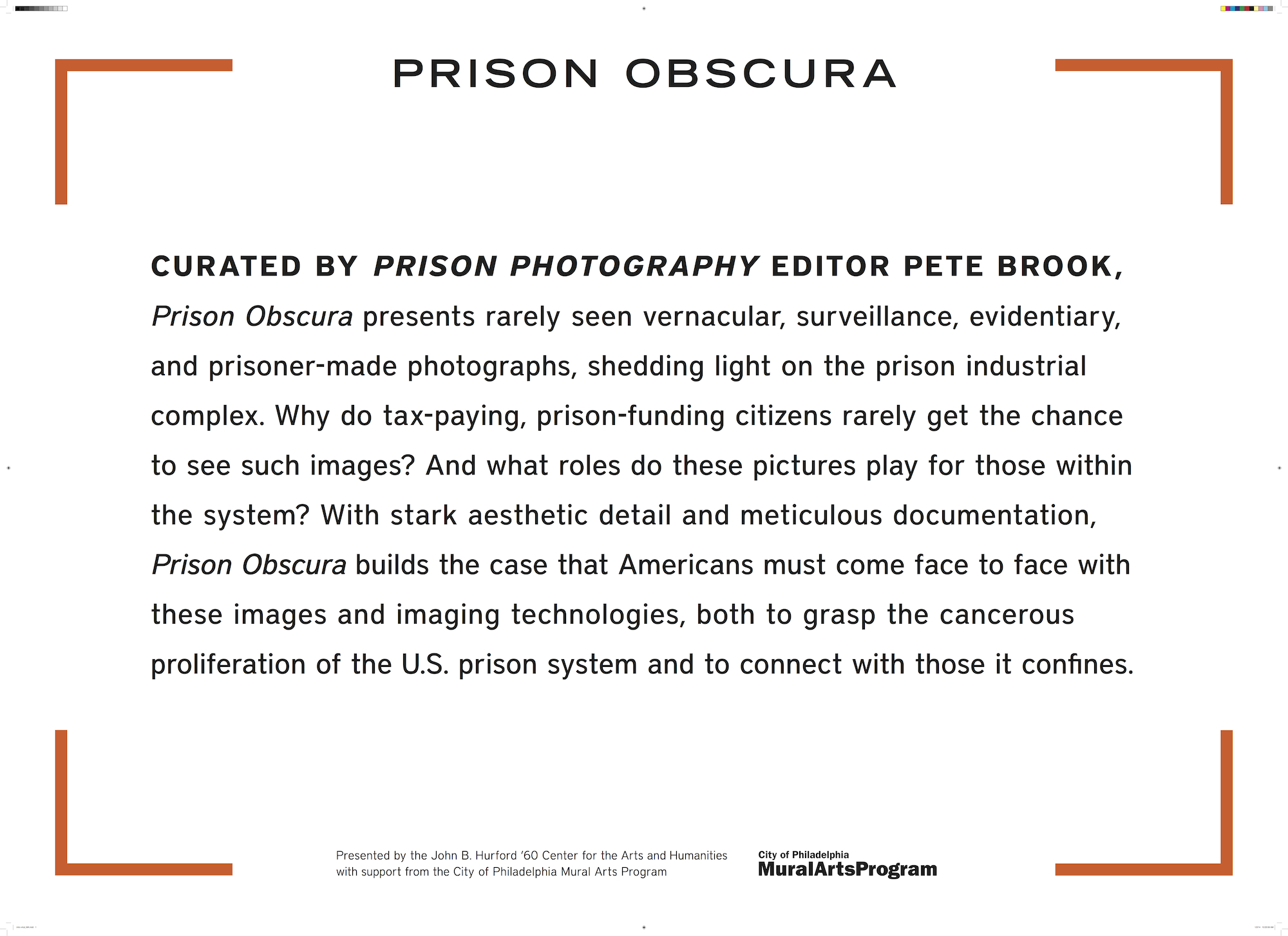
I posit that certain images can more accurately speak to political realities in America’s prison industrial complex. I also celebrate photographs that were made through processes of collaboration with prisoners and with intention to socially engage the subjects and educate audiences. I want you to wonder why you — a tax-paying, prison-funding citizen — rarely gets the chance to see inside prisons, and I want us to think about what roles existing pictures serve for those who live and work within the system.
Scroll down to learn more about the Prison Obscura artists.

Photographer Unknown. Clinical contact holding cage, Administrative Segregation Unit (ASU), C-Yard, Building 12, Mule Creek State Prison, California. August 1st, 2008. Used by law firms representing imprisoned plaintiffs in class action lawsuit against the State of California in the Plata/Coleman vs. Brown cases.

Photographer Unknown. Group holding cages, C-Yard, Building 13, Administrative Segregation Unit, Mule Creek State Prison, August 1st, 2008. Used by law firms representing imprisoned plaintiffs in class action lawsuit against the State of California in the Plata/Coleman vs. Brown cases.

Suicide watch cell, Building 6A, Facility D, Wasco State Prison, California (August 1st, 2008). This photograph document was submitted as evidence in the Brown vs. Plata class action lawsuit (Supreme Court of the United States, May 2011). Photo: Anonymous, courtesy of Rosen Bien Galvan & Grunfeld LLP.

Photographer Unknown. Reception Center Visiting / Clinician Office Space, North Kern State Prison, July, 2008. Used by law firms representing imprisoned plaintiffs in class action lawsuit against the State of California in the Plata/Coleman vs. Brown cases.
PRISON OBSCURA ARTISTS
Alyse Emdur’s collected letters and prison visiting room portraits as well as Robert Gumpert’s recorded audio stories from within the San Francisco jail system provide an opportunity to see, read, and listen to subjects in the contexts of their incarceration.
Juvenile and adult prisoners in different workshops led by Steve Davis, Mark Strandquist, and Kristen S. Wilkins perform for the camera, reflect on their past, describe their memories, and self-represent through photographs.
Prison Obscura will also feature work made in partnership with the City of Philadelphia Mural Arts Program. Men from Graterford Prison who are affiliated with both its own Restorative Justice Program and Mural Arts’ Restorative Justice Group are collaborating to create a mural for the exhibition.
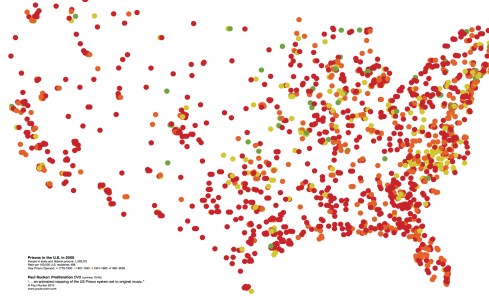
The exhibit moves between these intimate portrayals of life within the prison system to more expansive views of legal and spatial surveillance in works like Josh Begley’s manipulated Google Maps’ API code and Paul Rucker’s animated videos, which offer a “celestial” view of the growth of the prison system.
Prison Obscura builds the case that Americans must come face to face with these images to grasp the proliferation of the U.S. prison system and to connect with those it confines.
Scroll down for media, details and events.
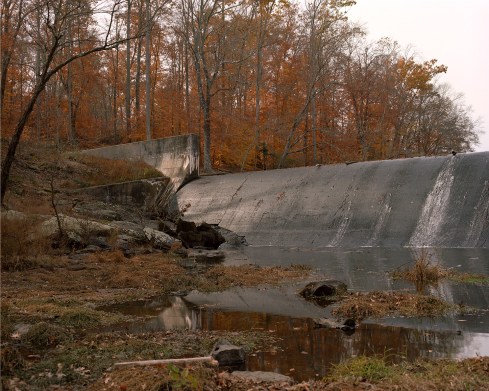
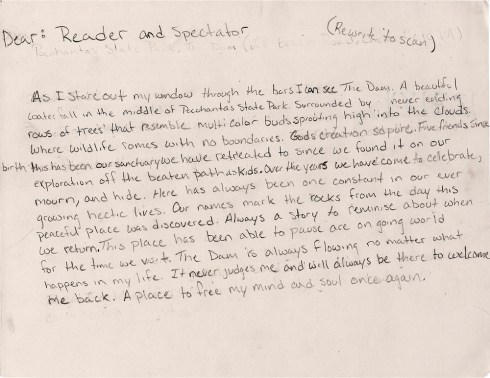
Mark Strandquist. Pocahontas State Park, Picture of the Dam. One Hundred and Thirty Days (top); text describing the scene written by a Virginia prisoner (bottom). From the series Some Other Places We’ve Missed.
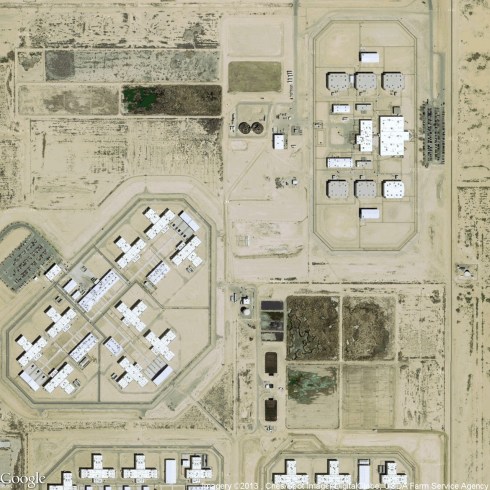
Josh Begley Facility 237. From the series Prison Map.

50 of the 5,393 facilities imaged by Prison Map, a data art project which automatically “photographs” every locked facility in the U.S. by gleaning files from Google Maps with use of code modified from the Google API code by artist Josh Begley.
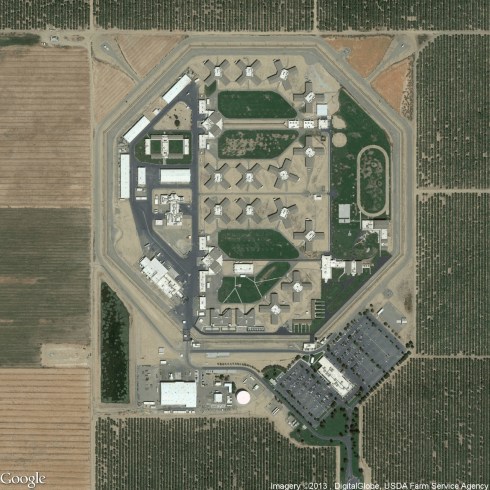
Josh Begley Facility 492 From the series Prison Map.

Photographer unknown. Incarcerated girls at Remann Hall, Tacoma, Washington, reenact restraint techniques in a pinhole camera workshop, 2002. Photo: Courtesy of Steve Davis.
Photographer unknown: Untitled, Green Hill School, Chehalis, WA. Photo: Courtesy of Steve Davis.

Photographer unknown: Steve Davis Untitled, Green Hill School, Chehalis, WA. Photo: Courtesy of Steve Davis.

David Wells, Thumb Correctional Facility, Lapeer, Michigan. From the series ‘Prison Landscapes (2005-2011).’ Photo: Courtesy of Alyse Emdur.

Alyse Emdur. Anonymous Backdrop Painted in Woodbourne Correctional Facility, New York. From the series ‘Prison Landcapes’ (2005- 2011)

Robert Gumpert. Tameika Smith, 9 July 2012, San Francisco, CA. From the series ‘Take A Picture, Tell A Story.’

Robert Gumpert. Michael Johnson, 15 August, 2009, San Francisco County Jail 5, San Bruno, CA. From the series ‘Take A Picture, Tell A Story.’

Kristen S. Wilkins. Supplication #17 (diptych). “It might be hard to find, but it’s called Trapper Peak near the Bitterroot Valley.” From the series ‘Supplication.’

Kristen S. Wilkins. Supplication #17 (diptych). “It might be hard to find, but it’s called Trapper Peak near the Bitterroot Valley.” From the series ‘Supplication.’
EVENTS
I’ll be giving a curator’s talk in the gallery on Friday, January 24, 2014, 4:30-5:30pm, followed by the opening reception 5:30–7:30pm.
Additionally, poet C.D. Wright will be on campus for a Tri-College Mellon Creative Residency in conjunction with the exhibit, and on January 31, at 12 noon in the Cantor Fitzgerald Gallery, Wright and I will host a dialogue about Prison Obscura.
DETAILS
Prison Obscura is presented by Haverford College’s John B. Hurford ’60 Center for the Arts and Humanities with support from the City of Philadelphia Mural Arts Program.
Part of the John B. Hurford ’60 Center for the Arts and Humanities and located in Whitehead Campus Center, the Cantor Fitzgerald Gallery is open Monday through Friday 11 a.m. to 5 p.m., Saturdays and Sundays 12 p.m. to 5 p.m., and Wednesdays until 8 p.m.
Haverford College is located at 370 Lancaster Avenue, Haverford, PA, 19041.
SPREADING THE WORD
View and download press images here. For interviews or variant images contact me. Here’s a big postcard.
For more information, please contact myself or Matthew Callinan, associate director of the Cantor Fitzgerald Gallery and campus exhibitions, at (610) 896-1287 or mcallina@haverford.edu
Cantor Fitzgerald Gallery on Facebook (including installation) and Twitter.
Haverford College on Twitter.
Hurford Center for the Arts on Twitter.

 Prison Photography