
You are currently browsing the category archive for the ‘Amateur’ category.
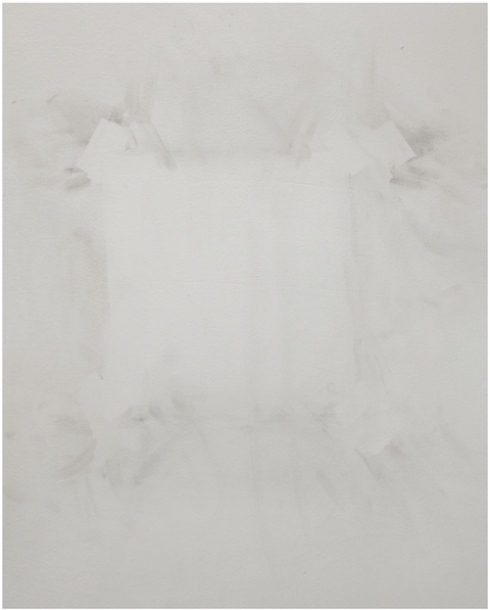
Today, Daylight Digital published a presentation (online and iPad App) of Amy Elkin‘s project Black Is The Day, Black Is The Night.
Black Is The Day, Black Is The Night (BITDBITN) is a collection of images, texts, letters, objects, quotes and ephemeral queries borne of Amy’s correspondence with men on death row and in solitary confinement. It is a project I know well having interviewed Amy about it in 2011 and curated it into the exhibition Cruel and Unusual in 2012. I’ve keenly followed the development of BITDBITN. In some cases, Amy and I bounced ideas back-and-forth about it when we lived in the same town. Amy and I are close friends and she once invited me to guest curate at Women In Photography. When Daylight asked me to write an essay to accompany the images and audio it was a no-brainer.
BITDBITN is about execution, time on death row, solitary confinement, sensory deprivation. It is also about the most invisible parts of America’s prison industrial complex. Amy grew up in California, the state that was first to operate a specialised solitary confinement facility at Pelican Bay State Prison. This past summer, as I was writing the piece, the California Prisoner Hunger Strike in protest of conditions in Pelican Bay and other SHU, IMU and solitary facilities was in full swing.
Amy’s work is our entry into this highly contested political territory; a territory that remains, for all intents and purposes, hidden. It is hidden because solitary makes people insane and is psychological torture.
Daylight Digital’s presentation includes the words of Freddy (spoken by Rafael Ramirez) who was sent to prison as a 13 year-old, has spent the last 20+ years of his life in solitary confinement, and with whom Elkins corresponded for four years.
I’m proud to have been invited to join this multimedia collaboration. See the images, listen to the testimony, read the words.

Photo: “Me & Myself” by an anonymous student of photography workshop at the Rhode Island Training School, coordinated by AS220 Youth.
ONO ŠTO SE VIDI A NE ČUJE
If you happen to be in Belgrade, Serbia over the next couple of weeks, I encourage you to head to the Kulturni Centar Beograda (KCB) and see Seen But Not Heard, an exhibition I’ve curated of photographs from American juvenile detention facilities. The show features photographs made by incarcerated youth in photography workshops coordinated by Steve Davis in Washington State and by As220 Youth in Rhode Island, as well as well known photographers Steve Liss, Ara Oshagan, Joseph Rodriguez and Richard Ross.
The invite to put together Seen But Not Heard — which is my first international solo curating gig — was kindly extended by Belgrade Raw, an impressive photo-collective who have operated as guest exhibition coordinators at the KCB’s Artget Gallery throughout 2013. Belgrade Raw called it’s year long program Raw Season. and it was 10 exhibitions strong, including Blake Andrews, Donald Weber and others. Here’s Belgrade Raw’s announcement for Seen But Not Heard.
I’ll update the blog next week with installation shots and a loooong list of acknowledgements (the hospitality, skills and hard work of everyone here has been so overwhelming.)
Beneath, is a long essay I wrote for Seen But Not Heard . Beneath that is a selection from the 200+ works in the exhibition. Beneath the works are the details of the photographer and/or program who made them.
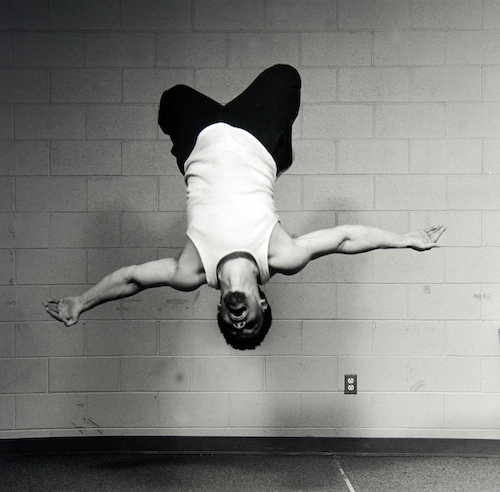
Photo: “Flip” by an anonymous student of photography workshop at the Rhode Island Training School, coordinated by AS220 Youth.
ESSAY
USING PHOTOGRAPHY TO COMMUNICATE NOT CONTROL
“Ten thousand pulpits and ten thousand presses are saying the good word for me all the time … Then that trivial little Kodak, that a child can carry in his pocket, gets up, uttering never a word, and knocks them dumb.”
– Mark Twain, writing satirically in the voice of King Leopold in condemnation of the Belgian’s brutal rule over the Congo Free State. King Leopold’s Soliloquy (1905).
The United States of America is addicted to incarceration. In the course of a year, 13.5 million Americans cycle through the country’s 5,000+ prisons and jails. On any given day, 2.2 million American’s are locked up — 60,500 of whom are children in juvenile correctional facilities or residential programs. The United States imprisons children at more than six times the rate of any other developed nation. With an average cost of $80,000/year to lock up a child under the age of 18, the United States spends more than $5 billion annually on youth detention.
What do we know of these spaces behind locked doors? What do we see of juvenile prisons? The short answer is, not a lot. However, photographs can provide some information — provided we approach them with caution and an informed eye.
Seen But Not Heard features the work of five well-known American photographers who have taken their cameras inside. Crucially, the exhibition also includes photographs made by incarcerated children on cameras delivered to them by arts educators and by staff of social justice organizations. Many of the children’s photographs are being exhibited for the first time.
Cameras are used by prison administrations to maintain security and enforce order, so when a camera is operated by a visiting photographer — and especially by a prisoner — a shift in the power relations occurs. All the images in Seen But Not Heard prompt urgent questions about what it means to be able document and what it means to be prohibited from documenting. What difference is there between being the maker of an image compared to being the subject of an image? What happens if you put kids behind the camera instead of in front of it? What stories do children tell that adults cannot? Can a camera can be a tool for artistic expression instead of an apparatus of control?
EXPRESSION
“Light Paintings” made by students of the Rhode Island Training School (RITS) prove a camera is essential to the artist’s toolkit. The anonymous RITS students’ images conjure angelic limbs and alter-egos from the dark. The images contain the frustration of incarceration; the longing of a (new) time; the aspirations of youth; the childishness of comic drawing. The photography outreach program taught by AS220, a community arts group of long-standing in Rhode Island, is an extension of workshops taught to teens in the free-world. In fact, children have graduated out of RITS and into the many studio arts programs offered by AS220 Youth in the town and neighborhoods of Providence, RI. An adult would or could never make these images; it is a privilege for us to share in them.
The workshops that Steve Davis coordinated in four youth detention centers in Washington State provide us a window into the incarcerated children’s lives. For legal reasons, at Remann Hall, no images could identify the girls and so Davis made use of pinhole cameras with long exposures. The girls treated the opportunity as one for performance enacting torment, official restraint procedures and bored isolation. The blurry images are eerie and evocative; as if the girls are capturing the moments in which they are disappearing from society’s view.
By contrast, the boys’ photographs are very much embedded in reality; they carried cameras outside of structured class time with instructions to make general images and construct photographs along a weekly theme. The boys had one another as immediate audience. We see unfiltered views of their activities, cells, day rooms, programs and priorities; we see costume, computer games, machismo posturing, childlike play and even boring moments. Accidentally they collectively constructed a visual narrative in which motifs such as t-shirts, playing cards and institutional furniture recur. The photographs would be monotonous were it not for the splashed of life the children provide — perfectly communicating why and how humans kept in boxes is not the natural order, nor the ideal circumstance.
MOTIVATIONS
The photographers in Seen But Not Heard all had different motivations for going inside. After the experience, they all had the same attitudes.
Without exception, the photographers’ experiences had them wide-eyed, sometimes angry, usually frustrated and certainly more conscious of the politics of incarceration. Consequently, they feel a responsibility to share their images and to describe youth prisons to many audiences.
Steve Liss had watched the children of a Texas juvenile prisons perform a choreographed marching routine for then Texas Governor G.W. Bush. After the ridiculous spectacle, the ridiculous Bush gave a ridiculous moral instruction to stay out of trouble. Liss was furious at the patronizing tone of the event and particularly Bush. As a press photographer, Liss had parachuted in and out of that prison as quick as his subject Bush did. He vowed that if Bush ever made it to be President, he’d return to Texas to photograph the children’s lives. Bush would never see those children, but perhaps the world should. It is alarming how often we see very young and tiny children subject to shackles and apparatus designed for dangerous 200+ lb. men. It’s as if the system is blind to the physicality of its young prisoners. That being the case, how can we presume they understand or provide for the more complex psychology of these children?
Joseph Rodriguez was locked up as a young man. He also experienced homelessness, for a time, and was addicted to drugs. He was sent to the infamous Riker’s Island prison in New York twice — first, for a minor charge related to his anti-war protest activity; second, for burglary. His mother could not afford the $500. He spent 3 months locked up awaiting his court date. Post-release, Rodriguez found photography and it gave him a means to process and describe the world. Having seen the inside, Rodriguez empathizes with children who are going through any prison system. More than 20 years after his incarceration, Rodriguez felt it a duty to use his storytelling skills to tell the stories of incarcerated children. In 1999, he photographed inside the San Francisco and Santa Clara Counties juvenile detention centers and followed children through the cells, courtrooms and counseling of the criminal justice system.
Ara Oshagan’s opportunity to photograph at the Los Angeles County Juvenile Hall (the largest juvenile prison in America) was pure happenstance. He met with Leslie Neale a documentary filmmaker for lunch on a Monday. Neale was filming inside the juvenile hall and needed a photographer to shoot b-roll. Oshagan was inside on the Tuesday. He was so moved by the experience that he applied for clearance to return on his own. He followed six youngsters as they progressed through their cases and, in some cases, into California’s adult prison system. Oshagan never felt like his photographs were enough to describe the emotions of the children and so he asked each of them to write poems and presents text and image as diptych. Random circumstance, fine slices of luck, peer pressure and other people’s decisions factor far more heavily in children’s lives than in adults’ lives. Throughout, Oshagan was constantly reminded how his subjects were very much like his own children.
Late in his career and having financial security through a Guggenheim fellowship and teaching sabbatical, Richard Ross turned his lens upon juvenile detention. Ross wanted to give advocates, legislators, educators the visual evidence on which to base discussion and policy. He provides his images for free to individuals and organizations doing work for the betterment of children’s lives.
Repeatedly, Ross met children who were themselves victims; frighteningly often he heard stories of psychological, physical and sexual abuse, homelessness, suicide attempts, addiction and illiteracy. Many kids locked up are from poor communities and a disproportionate number of youths detained are boys and girls of color. Ross observed some really positive interventions made by institutions (regular meals, counseling, positive male role models to name a few) but he saw the use of incarceration not as last resort but as routine.
WHY SHOULD WE CARE?
Unsurprisingly, many have lost faith in the juvenile prison system. Recent scandals have exposed systematic abuses.
In Pennsylvania, two judges accepted millions of dollars in kickbacks from a private prison company to sentence children to custody; in Texas, an inquiry uncovered over 1,000 cases of sexual assault by staff in the state’s juvenile justice system; in New York, on Riker’s Island it has been alleged that young gangs (referred to as “teams”) organized within the jail itself, and controlled and enforced the juvenile wings while the authorities turned a blind eye. The rivalries resulted in fights, stabbings and in one case death. The New York City Department of Corrections denies the allegations, but interestingly it was NYDOC employees that exposed the violence by leaking internal photographs to the Village Voice newspaper.
Nationally, the private company Youth Services International (YSI) inexplicably continues to operate despite being cited for ‘offenses ranging from condoning abuse of inmates to plying politicians with undisclosed gifts while seeking to secure state contracts’ by the Department of Justice and also New York, Florida, Maryland, Nevada and Texas.
Not only is being locked up ineffective as a deterrent in youths who have not reached full cognitive development and don’t understand the consequences of their actions, it can actually make a criminal out of a potentially law-abiding kid. Dr. Barry Krisberg, director of research at the Berkeley School of Law’s Institute on Law & Social Policy, says, “Young people [when detained] often get mixed in with those incarcerated on more serious offenses. Violence and victimization is common in juvenile facilities and it is known that exposure to such an environment accelerates a young person toward criminal behaviors.”
THE FUTURE
Given the lessons from the failed practices of incarcerating more and more children, States are adopting more progressive policies. Certainly, authorities are turning away from punishing acts such as truancy and delinquency with detention; acts that are not criminal for an adult but have in the past siphoned youths into the court system. But more than that, incarceration for youth is widely considered a last resort.
States that reduced juvenile confinement rates the most between 1997 and 2007 had the greatest declines in juvenile arrested for violent crimes. It’s proof that incarceration doesn’t solve crime. And, it might suggest incarceration damages communities. Following repeated abuse scandals in the California Youth Authority (CYA) facilities in the 90s, California carried forth the largest program of decarceration in U.S. history. Reducing its total number of youth prisons from 11 to 3 and slashing the CYA population by nearly 90%, California simultaneously witnessed a precipitous drop in violent crime committed by under-18s.
The U.S. still has a long way to go if it is to reverse decades of over-reliance on incarceration, but as the recent Supreme Court ruling banning Life Without Parole sentences for children suggests, it seems Americans hold less punitive attitudes when it comes to youth’s transgressions, as compared to the apathetic attitudes to adult prisoners.
We need to expect and applaud photography that depicts imprisoned children as they are — as citizens-in-the-making, as humans with as complex emotional needs as any of us, as not lost causes, as victims as much as they may have been victimizers, as our future, as individuals society must look to help and reintegrate and not discard. Photography can help us appreciate the complexity of the issues at hand. Used responsibly, it can bring us closer.

Photo: “Cash Rules Everything Around Me” by an anonymous student of photography workshop at the Rhode Island Training School, coordinated by AS220 Youth.
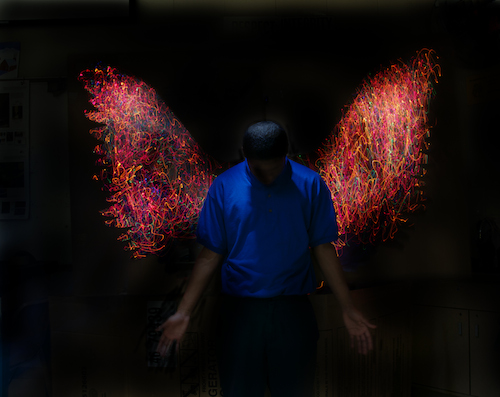
Photo: “Icarus” by an anonymous student of photography workshop at the Rhode Island Training School, coordinated by AS220 Youth.
AS220
AS220 Youth is a free arts education program for young people ages 14-21, with a special focus on those in the care and custody of the state. AS220 Youth provides free studio-based classes in virtually all media including photography. Staff including photography coordinator Scott Lapham and photography instructor Miguel Rosario (who I met when I visited in 2011) help students build a portfolio with help from a staff advisor. AS220 Youth maintains long-term, supportive relationships with youth transitioning out of RITS and the Department of Children, Youth and Their Families (DCYF) care, and offers mentoring, transitional jobs, and financial support. AS220 Youth works to connect youth with professional opportunities in the arts — through exhibitions at the AS220 Gallery and others; through publication in the AS220 quarterly literary magazine called ‘The Hidden Truth’; and through securing photo-assistant jobs on commercial photo shoots for students.
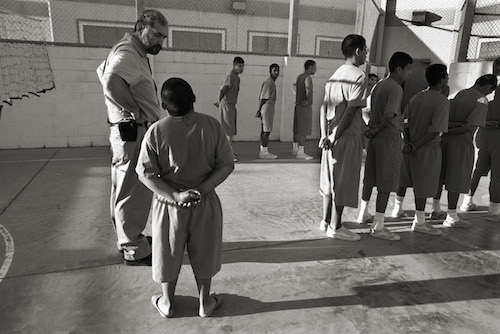
Photo: Steve Liss. Prisoners, ages 10-16, wait in line to march back to their cells in the exercise yard at the Webb County Juvenile Detention facility.

Photo: Steve Liss. 10-year-old Alejandro has his mug shot taken at Webb County Juvenile Detention following his arrest for marijuana possession. Every day the inmates get smaller, and more confused about what brought them here. Psychiatrists say children do not react to punishment in the same way as adults. They learn more about becoming criminals than they do about becoming citizens. And one night of loneliness can be enough to prove their suspicion that nobody cares.
STEVE LISS
Steve Liss photographed in Texas 2001-2004. His book No Place For Children: Voices from Juvenile Detention (University of Texas Press, 2005) won the Robert F. Kennedy Journalism Award in 2006.
Steve Liss worked as a Time Magazine photographer for 25 years, assigned to stories of social significance involving ordinary people. Forty-three of his photographs appeared on the cover of Time Magazine. For his work on juvenile justice, Liss was awarded a Soros Justice Media Fellowship (2004) for my work on domestic poverty he was awarded an Alicia Patterson Fellowship (2005). Recently, Liss received the Pictures of the Year International (PoYI) ‘World Understanding Award.’ Liss has taught graduate photojournalism at Columbia College, Chicago and Northwestern University.

Photo: Ara Oshagan, from the series ‘A Poor Imitation Of Death’
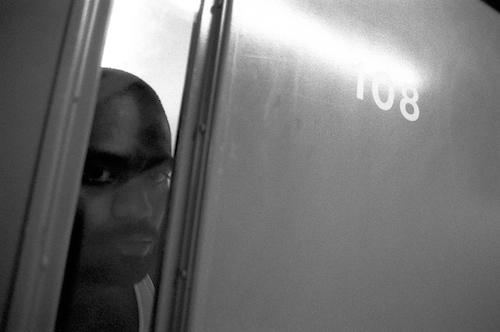
Photo: Ara Oshagan, from the series ‘A Poor Imitation Of Death’
ARA OSHAGAN
Ara Oshagan photographed inside the Los Angeles County Juvenile Hall and the California prison system. Oshagan’s book of this work A Poor Imitation of Death is to be published next year (Umbrage Books, 2014). Oshagan is twice a recipient of a California Council on the Humanities Major Grant for his documentary work on diaspora groups in Los Angeles.
Interested in the themes of identity, community and bearing witness, much of Ara Oshagan’s work focuses on the oral histories of survivors of the Armenian Genocide of 1915. Since 1995, Oshagan has been creating work for iwitness in collaboration with Levon Parian and the Genocide Project. Father Land, a book project made with his father, well-known author, Vahe Oshagan was published in 2010 by powerHouse books.

Photo: Steve Davis. ‘Tiny, Green Hill, 2000’

Photo: Anonymous student at Green Hill School. Photograph made in response to the prompt “Vulnerability” as part of photography workshop led by Steve Davis.

Photo: Anonymous student at Green Hill School. Discussing photographs made during workshop led by Steve Davis.
STEVE DAVIS
Steve Davis coordinated photography workshops in four facilities in Washington State (Maple Lane, Green Hill, Remann Hall and Oakridge) between 1997 and 2005. Simultaneously, Davis made portraits and photographs for his own series Captured Youth.
Davis is a documentary portrait and landscape photographer based in the Pacific Northwest. His work has appeared in Harper’s, the New York Times Magazine, Russian Esquire, and is in many collections, including the Houston Museum of Fine Arts, the Seattle Art Museum, the Santa Barbara Museum of Art, and the George Eastman House. He is a former 1st place recipient of the Santa Fe CENTER Project Competition, and two time winner of Washington Arts Commission/Artist Trust Fellowships. Davis is the Coordinator of Photography, Media Curator and adjunct faculty member of The Evergreen State College, Olympia, WA. Davis is represented by the James Harris Gallery, Seattle.
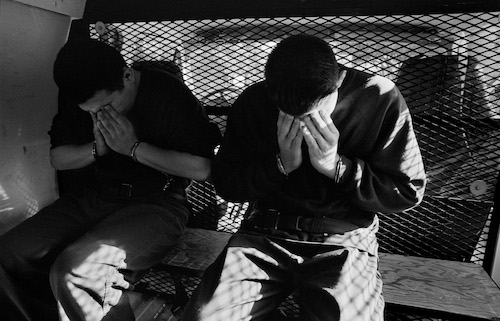
Photo: Joseph Rodriguez, from the series ‘Juvenile’

Photo: Joseph Rodriguez, from the series ‘Juvenile’
JOSEPH RODRIGUEZ
Joseph Rodriguez photographed in the San Francisco County Jails 2001-2004. The work is collected in his book Juvenile (PowerHouse Books, 2004)
Joseph Rodriguez is a documentary photographer from Brooklyn, New York. He studied photography in the School of Visual Arts and in the Photojournalism and Documentary Photography Program at the International Center of Photography in New York City. Rodriguez’s work had been exhibited at Galleri Kontrast, Stockholm, Sweden; The African American Museum, Philadelphia, PA; The Fototeca, Havana, Cuba; Birmingham Civil Rights Institute, Birmingham, Alabama, Open Society Institute’s Moving Walls, New York; Frieda and Roy Furman Gallery at the Walter Reade Theater at the Lincoln Center; and the Kari Kenneti Gallery Helsinki, Finland. In 2001 the Juvenile Justice website, featuring Joseph Rodriguez’s photographs, launched in partnership with the Human Rights Watch International Film Festival High School Pilot Program. He teaches at New York University, the International Center of Photography, New York. Rodriguez is the past recipient if Alicia Patterson Journalism Fellowship in 1993 photographing communities in East Los Angeles.

Photo: Photo: Richard Ross. Los Padrinos Juvenile Hall. Downey, California.
RICHARD ROSS
Richard Ross is a photographer and professor of art at the University of California, Santa Barbara. Juvenile-In-Justice (2006-ongoing) “turns a lens on the placement and treatment of American juveniles housed by law in facilities that treat, confine, punish, assist and, occasionally, harm them,” says Ross.
A book Juvenile in Justice (self-published, 2012) and traveling exhibition continue to circulate the work. Ross collaborates with juvenile justice stakeholders and uses the images as catalysts for change. For Juvenile-In-Justice, Richard Ross photographed in over 40 U.S. states in 350 facilities, met and interviewed approximately 1,000 children. Juvenile-In-Justice published on CBS News, WIRED, NPR, PBS Newshour, ProPublica, and Harper’s Magazine, for which it was awarded the 2012 ASME Award for Best News and Documentary Photography.

Photography has innumerable uses, but one of its greatest qualities is it’s ability to tell stories. Sometimes that is through direct description of events and sometimes through evocation of emotion through colour and form.
In the rare cases when photography is used as a rehabilitative artistic tool for incarcerated peoples, straight documentation may be effected (even manipulated) by control and access privileges put in place by a prison administration. In the case of incarcerated youth, the essential and appropriate legal control which prevents identification of a child means that photo-education must be purposefully designed.
That is why when projects of light painting emerge from detention facilities such as the Rhode Island Training School (RITS), I applaud the invention and persistence of AS220, the Providence-based arts non-profit that conducts the program.
Writer and photographer Katy McCarthy published a gallery of the AS220/RITS’ light paintings on the excellent JJIE Bokeh blog recently.
“In the striking images from AS220‘s If These Walls Could Talk, the magic made is not an illusion. Like a surrealist painting, the manipulated photos employ metaphor and symbol,” writes McCarthy.
The images are like electric bolts from the darkness; not something we’d necessarily expect but that is because our imagination may not soar like those of imprisoned children.
Photography has glorious potential to unlock the emotional needs of locked up youth. (A few weeks ago, I featured the work of those locked up in New Mexico, enrolled in the Fresh Eyes Project.) However, given the dearth of photo-education in juvenile detention facilities in the U.S., I can only conclude that the sensitivities to publication/distribution, and the road-blocks to getting a potentially security-threatening camera inside any prison inhibit the development of programs such as those run by AS220 at RITS and The Fresh Eyes Project in NM.
Are we missing massive opportunities to connect by not embracing the camera as we would embrace, say, a pen or paintbrush? Clearly, much more goes into helping children through emotional and behavioural difficulties — rounded and relevant education, vocational skills, counseling, substance abuse help — yet propping up these efforts is the need to steady emotional and self-esteem needs says Anne Kugler, AS220 Youth Director.
“Unless you address underlying emotional issues you can put all the services in place that you want and it doesn’t mean that they’ll necessarily be able to move through adolescent development in a positive way. That’s where I think self-expression and creativity come in. Unless children have the experience of being recognized for doing something creative and good it’s a hard road; inside in their heart they must feel there’s a purpose to moving forward with education and counseling,” says Kugler.
Youngsters are responsible for the lion’s share of the 1.3 billion images made everyday worldwide. It seems a little perverse to deny photo-based activities and visual literacy to incarcerated youth, no? Especially as it’s so relevant.
“When you watch young people with cameras they immediately want to use them,” says Kugler. “They know how to do so. They want to get their hands on the camera and they want to take pictures of themselves and they love being able to see — especially with digital cameras — their pictures right away. It’s fun and very accessible. Bear in mind, there are some children who — because of self-esteem issues — feel a sense of horror if you ask them to write a poem or draw a picture, but I think a photo in particular has accessibility that works great out there.”
Bravo to AS220. And let’s see more programs for incarcerated youth like AS220’s If These Walls Could Talk! A special shout out to Scott Lapham and Miguel Rosario who coordinate and teach the If These Walls Could Talk program.
Check out Young Incarcerated Photographer Make Magic In Photos

All photos: Courtesy of students of the AS220 RITS photography program.

Photo: Karen Ruckman/PhotoChange
In 1981, freelance photographer Karen Ruckman stepped inside the notorious medium-security Lorton Prison to teach prisoners photography. Lorton was a sprawling barrack-like institution nestled in a rural pocket of the Virginia suburbs. Lorton, a Federal facility, closed in 2001. For decades it was where Washington D.C. sent its convicted felons. Initially, the administration didn’t think the program would last more than a few sessions and the students were cautious. Ruckman successfully won grants, donations from Kodak, cash from private donors, and support from then Mayor’s wife Effi Barry to support the photography workshops. Ruckman taught at Lorton until 1988.
When I recently learnt about Ruckman’s work, I was floored. For the longest time I have said that photography workshops inside of American mens prisons ended in the late seventies and mass incarceration had precluded the mere chance. Ruckman’s work at Lorton has forced me to reevaluate my timeline. I hope Ruckman’s work also brings you encouragement.
In 1985, Ruckman invited cameraman Gary Keith Griffin to film the class at work. Now, she and Griffin are working on a documentary about this unique moment in prison arts education. Ruckman and Griffin have followed some of the men since their release and the film, tentatively titled InsideOut, is slated for release in 2015 — the 30 years after Gary made those first reels.
Ruckman has routinely worked with populations considered to have less of a voice in our society – battered women, the poor, and at -risk youth for example. She also taught photography in the D.C. women’s jail, but that single summer program doesn’t feature in the film.
Karen Ruckman and I spoke about her access, the program’s successes and obstacles, the need for diverse image-makers in criminal justice and the lessons the project contains for us all three decades on.
Scroll down for our Q&A.

Photo: Calvin Gorman. © Karen Ruckman/PhotoChange + Calvin Gorham
Q&A
Prison Photography (PP): I wasn’t aware of any prison photography workshop programs after the 70’s and so to find your work at Lorton is a revelation. It’s 25 years since the program ended, so let’s start with the basics, how did you get involved? Where did the idea come from?
Karen Ruckman (KR): I was doing work for the Volunteer Clearinghouse here in D.C. and they sent me to the prison to photograph volunteers who were tutoring inmates. I went to Lorton with George Strawn, the head of volunteer services and he asked if I’d be interested in teaching a class. I hadn’t really thought about it, but it happened to coincide with the funding for proposals coming in to the D.C. Arts Commission and I applied for a career development grant and I got it, much to my surprise.
I went down once a week and taught photography with a focus on career development. I approached it as a basic photography class and I brought in guest speakers, photographers from various newspapers, friends of mine in the community who were photographers. It went very well. The men worked hard, so after that I applied for another grant. Actually, D.C. had a category called ‘Arts in Prison’ during the 80s. I got my later funding through that grant category.
PP: Which photographers visited the class?
KR: Craig Herndon, from the Washington Post; Bernie Boston, from The Los Angeles Times, Gary Keith Griffin who works primarily in video and is working with me on the feature documentary now. I had executives from NBC who came in too, as well as local artists and fine arts photographers.
PP: What other arts program were being taught in D.C. prisons at the time?
KR: There were several theater programs and a woman who taught painting. That’s pretty much it.

Photo: Bernard Seaborn. © Karen Ruckman/PhotoChange + Bernard Seaborn
PP: How did the program develop over the 8 years? Did the funding, scope or size of the class change?
KR: I had a cap on how many students I could have but I ended up doing two classes. Prisoners who had been in the earlier classes then became mentors to the new guys. Over time, I became more of a facilitator: bringing in supplies, bringing in expertise, working with them, training them and then they took on the job of mentoring each other.
They also ran the dark room when I wasn’t there. We built a dark room in a closet that was in the prison school where classes took place. I had a teaching assistant, Chuck Kennedy, who came with me from the community but I also had a prisoner who was a teaching assistant so the guys could work during the week. The program grew with more men participating, more prisoners developed skills. The inmates took on more of a teaching role; it was always my goal that they would.
PP: How many students would you say you taught over the seven years?
KR: I tried to figure this out once some years ago! More than 100 but less than 200. We had new intakes for each class and some guys stayed in year after year. They’d been charged for felonies in D.C. Some had written bad checks, others had been charged for murder.
PP: Lorton is now closed?
KR: It was closed in 2001. It was a rather controversial move. The prison was actually located in Virginia on hundreds of acres of land. There were different facilities there including two youth centers, Central, the medium security facility where I taught, and maximum. Virginia had been wanting that land for quite some time.
Lorton’s buildings needed a lot of work, and rather than renovate, they closed it. The Federal government transferred the land to Virginia and now D.C. prisoners are farmed out across all of the country.
PP: Ouch! That can’t be good for rehabilitation.
KR: It’s terrible, yes. And so there’s no programing, and they’re in federal facilities all over the country.

Photo: Sidney Davis. © Karen Ruckman/PhotoChange + Sidney Davis
PP: What was the reaction and the response from the prison authority? Today, of course, these programs don’t exist and often the language-of-security is used to deny all sorts of things within prisons, and the camera in particular is quickly labelled as a security hazard. What was the feelings of the Lorton authorities at that time?
KR: I had to take on the job of educator. Many didn’t understood the need for the men to go outside the classroom to photograph, and the usefulness of exhibitions. They understood the photo class but part of that, part of each class was doing a show. We always did one in the community and one in the prison — it was a massive job of educating staff about how we could go about producing the program successfully.
I was very fortunate because Effi Barry, the mayor’s wife, had just opened an art gallery and I had her support. I always went top down. It took me a lot of time to go through the necessary channels and to get the permissions. The administrator at Central Facility, Salanda Whitfield, was a really nice guy who supported the program. He died some years ago.
Mr. Whitfield let the program come in, he let us break the rules, because of course cameras weren’t allowed, and of course inmates were not allowed to take photographs. Even with his backing I still had lots of paperwork to do in order to make the classes function well.
I found some resistance from the guards who felt like the inmates were getting something that was too nice, that wasn’t fair, that they shouldn’t get. So, my real problem when I had problems was always from the guards.

Photo: Michael Moses El. © Karen Ruckman/PhotoChange + Michael Moses El

Photo: Calvin Gorman. © Karen Ruckman/PhotoChange + Calvin Gorham
PP: Before you began the project, did you consider yourself an activist in that field of criminal justice?
KR: No, I was an activist generally but not particularly in prison reform.
PP: Did you ever have visitors that were inspired by the program and wanted to replicate it elsewhere? Or were you working in a bubble?
KR: I guess I worked in a bubble. I mean, I had visitors and help from others. I had photographers come in, other artists as well, but, no, I didn’t have anyone that wanted to replicate it.
PP: Did you understand at the time that you were doing something very pioneering?
KR: I don’t think so. I mean it was a really interesting time. Many of us were doing things in the community and were trying to think sideways, and I felt like it was something exciting. I had a passion about taking the camera to people who couldn’t normally tell their stories. By giving the men in my program this powerful communication tool, it was an opportunity for them to tell people who they were, it was a humanizing agent.
For the documentary, and since 2001, we’ve followed up with two of the men who were in Lorton and the program.
Michael Moses El had a fascination with guns. He found that when he came into the program that he was able to transfer this fascination with guns to the camera. It was a very exciting thing for him.
Calvin Gorham is an artist. He’s a singer; a soulful person and he used photography as an artistic tool to communicate how he felt. He said he saw a lot of dark things in the prison and he photographed to express that.
PP: And so there’s no doubt in your mind that photography is a rehabilitative tool?
KR: It’s a powerful rehabilitative tool. There are so many levels one could do with it as a storytelling device. Now, with digital imaging, possibilities are unlimited. Yes, absolutely. I worked with other groups in the city. In 1988, I also worked with women at D.C. Jail, then in the 90s with women at a pre-release halfway house. Also, women in various shelters and at-risk kids.
PP: And so tell us about the documentary, it’s been thirty years since you’ve been doing this work, how and why did you decide a documentary was necessary?
KR: In 1985, Gary Griffin, a friend and colleague, bought his first TV camera. Gary thought it would be valuable if we could do video about the program. So I got permission again, days of paperwork, but we went in with a crew for a week in 1985.
Some of the footage in the trailer is from ’85. We never were quite sure what it was going to be. We did put together a fundraising piece because I was always having to raise money.
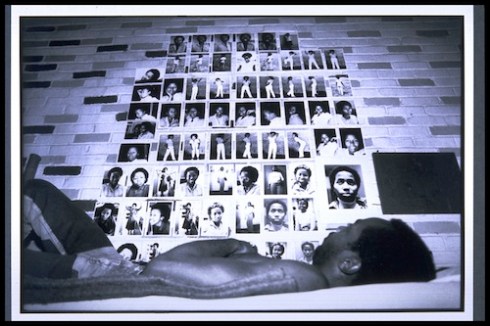
Photo: Michael Moses El. © Karen Ruckman/PhotoChange + Michael Moses El
PP: Right, you were constantly communicating with free society how important your work was and asking for help?
KR: To do the programing, I had to constantly write proposals and fundraise. I was somewhat burnt out by the end of the 80s. The funding for the prison program became very difficult to get. I went on to work with other groups and do different things. The guys would stay in touch with me, they had my business phone and they’d call me when they got out of prison and tell me what they were up to.
But, I still have the wonderful images. I was at a workshop in Santa Fe in the late 90s and showed some of the images to National Geographic photographer Sam Abell. I also had an audio tape from one of the graduations that I put with the images and it was a very powerful slideshow (of sorts) — one of the men at one of the graduations gave a marvelous speech about photography.
Sam was excited by the images and very supportive. He said. “You’ve got to do something with this.”
I decided along with my video production friends to do a reunion. We knew Lorton was closing. I tracked down as many of the guys as I could. We had about 20-25 at the reunion. Gary documented the reunion and then we documented some of the men periodically. We later settled on following Michael and Calvin.

Photo: Calvin Gorman. © Karen Ruckman/PhotoChange + Calvin Gorham
PP: Why Michael and Calvin?
KR: Number 1, they were interested in participating. Number 2, they’re very interesting people — Michael is business-oriented, very focused about his life. Calvin’s a musician, we have a lot of footage of him singing. We’ve seen them almost every year since 2001. Gary and I think 30 years is a good amount of time. When we get this feature documentary completed by 2015 it will have been 30 years since Gary began filming.
PP: The documentary is a few things, it seems? A record of a moment; the on-going stories of Michael and Calvin; and a call to action asking people to think about photography’s relationship to educational and rehabilitation?
KR: It is. It’s a character study that presents the power of photography, the power of art, and how important both can be in changing lives.
Only a few of the men now make pictures professionally, but they all make pictures still. The documentary is about the program and how the learning experience has stayed with the participants throughout their lives; how it continues to resonate and define their world view in a positive and powerful way.
The discipline required working in the dark room was critical. For example, one participant, David, spent two years learning how to make a good print. And he ultimately made beautiful prints. Two years. It was very impactful.

Photo: David Mitchell El. © Karen Ruckman/PhotoChange + David Mitchell El
PP: Can you give us your thoughts of storytelling, self-representation and empowerment?
KR: It was always their story to tell. I came in, I gave them cameras. I didn’t take a lot of pictures. I was there as a facilitator. I gave them the tool to tell their stories. I think that’s enormously important.
During that period — and even now — there’s something that is bothersome to me when people go in and take pictures of powerless people. It’s important for people to tell their own story; that doesn’t just shift the viewer, it shifts the person telling the story.
PP: It does seem obvious that if one puts a camera into the hands of someone in the community that you’re trying to bring new information about and to the wider world, but there’s still so many people in the photo world who reject that.
KR: Yes. This is off topic, but probably the most amazing experience I had when I took exhibitions to the community was when I hung a show by women at a shelter for victim’s of domestic violence. We did a show of their work at the D.C. library, in the mid-90s. Visitors would ask me who took the photographs, and when I explained the women photographers were survivors of domestic violence, people would just stop and walk out of the room.
How do we relate to issues that we’re uncomfortable about? Do we not want to see these individuals?
PP: Well, what were attitudes like then about crime? What was the reputation of Lorton? What was the general community’s view of Lorton prison?
KR: Lorton and the D.C. community were very connected in the eighties. So many people from the city were incarcerated there that Lorton was just like a subset of the community. So, there wasn’t as much stigma with prisoners as I encountered among other groups that I worked with, at least in D.C. at that time.
Lorton was considered a very dangerous place. The facilities were old even when I was there. The men lived in dorms and there was one guard per dorm at night so you can imagine that there was some violence. I personally, I didn’t get too involved in that. I tried to go in and do my program with them without judgement.

Photo: Karen Ruckman/PhotoChange
PP: And then tell me about the dark room? Were there any issues with taking chemicals and other apparatus in?
KR: The dark room was fabulous! I brought the supplies and the men ran the dark room. Kodak gave me film and photographic paper. I bought chemicals. We had lots of applicants, but I could only take so many, so it was considered a reward for someone to get into the photography program.
PP: On what criteria did you decide admission?
KR: They had to have good behavior to be allowed in the program. When it started out I only admitted men that were within three years of parole because the lessons were about career development; it was my hope to actually help guys get jobs once they got out. After a while, we relaxed that rule and a few guys still had a lot of time to serve.
PP: And could students be removed from the program at the whim of the warden or the staff?
KR: Well, I lost a few people because they misbehaved in prison and were sent to the hole (solitary confinement), or to another prison. That happened.
PP: When you release the documentary have you got any plans for distribution. How do you plan to reach audiences?
KR: I’m taking that a step at a time. We are going to finish a 30-minute short this winter that we’ll take to film festivals. A local organization, Docs In Progress, is hosting a showing of the trailer. I’ll contact our local PBS station, but with the feature-length film I have to plan a more structured distribution plan. It’s very important to get it out. I’ve stayed in connection with people in the D.C. community, people like Marc Mauer at the Sentencing Project and others who care about the issue.
PP: What’s your personal position on prisons? What role does incarceration play in our society?
KR: There are people who commit violent crimes and they belong in prison. Some of the men that I worked with said that being in prison gave them an opportunity to really look at themselves and take a timeout and to correct their behavior. There is a role for prison if they have rehabilitation programs.
Of course, we all know that there are way too many people that are incarcerated and there are people that are incarcerated that just shouldn’t be there, so it’s very frustrating. Things haven’t changed all that much since the eighties except we’ve incarcerated more people.
D.C. incarcerates an enormous number of people. With the poverty and lack of good public education here. That’s the story of the documentary. Calvin’s son went to prison and Michael’s son went to prison. So, we talk about that story, it’s that legacy that’s just, it should be broken. Marian Wright Edelman‘s work with the Children’s Defense Fund deals with this issue, and has a program called the Cradle to Prison Pipeline.

Photo: Karen Ruckman/PhotoChange
PP: Do you think the American public gets reliable information on prisons?
It’s my sense that most people aren’t interested in prisons. When I tried to raise money for the program it was very hard. There’s little compassion. Around drugs and drug culture there’s some alternative sentencing programs happening but by and large, I don’t think people are interested. I mean, now, we have for-profit prisons which is even more atrocious because now we have to maintain the population so that profit lines can be maintained.
PP: I ask because, to my mind, if there were more photography programs like yours occurring in our prisons today, there would exist a more nuanced view of prisons; prisoners’ views. We’d all be in a better place in terms of being informed.
KR: Yes, absolutely. The program had a humanizing effect, both on the participants and in how they were viewed by the community. It provided a bridge, and it didn’t cost the tax payers much. I secured small grants and fundraised and so it was for tax payers a really good deal. That’s true of most arts programming.
PP: Often program funding is based on measurable impacts but a lot of time with prisons you can’t measure those so easily because some people are not getting out for ten or twenty years. You can’t correlate arts rehabilitation with recidivism because the prisoners don’t get out in any short space of time. So, what stories do you have about your students? Any stand out stories that convince you of the efficacy of a photography program?
KR: The men would be the ones to tell you. Sadly, a lot of the guys die; they don’t make it. Some of them die soon after they get out.
I think about Calvin and Michael — the program gave them discipline and an opportunity to evolve productively. Michael told us about a time soon after his release when he was very tempted to commit a violent act against another man. Something stopped him. It was, he said, it was the discipline and working relationships that he had developed during the program. He didn’t want to end up back at Lorton.
A couple of the guys do a lot of professional photography. It’s very hard to answer that question because people want to ask, “Okay, well how many guys got a job as a photographer?”
PP: How many people generally get jobs as photographers!
KR: Actually, Michael was hired by US News and World Report to shoot a cover story on poverty, and he took some amazing pictures. They were going to use one of his photos for the cover but when they found out he was an ex-offender they wouldn’t run his photo. He’s still very bitter about that.
PP: What’s his past history got to do with the suitability of a photograph?
KR: It was many years ago; it was the late 80s.
PP: But that’s complete discrimination.
KR: I was told by several photographers at the Post that they would be uncomfortable to have ex-offenders there because they would be afraid that they would steal equipment. These are the attitudes that make it really tough for ex-offenders to get jobs in fields other than construction or the food industry, though a few of them do get jobs driving Metro buses.
PP: Is there anything I’ve missed?
KR: I appreciate you finding and highlighting the work. We’re excited about finishing the film. The project has ended up — without me realizing it — a life work.
FOLLOW
You can follow Karen and Gary’s development of the film via the InsideOut website, on its Facebook page, Tumblr page and via Karen’s Twitter.
TRAILER

At Photoville this year, you’ll find me and a team of pen-pushers in a container amassing The Depository Of Unwanted Photographs a crowdsourced archive of images and stories. We need your help and we need your submissions.
What is The Depository Of Unwanted Photographs?
The Depository Of Unwanted Photographs (TDOUP) is a few things: part social engagement, part fun, part an investigation of quality but mostly an opportunity to share our thoughts on how and what we think about our own photographs.
CURATORIAL STATEMENT
My explanation lifted straight from the The Depository Of Unwanted Photographs sparkly website of why I have conceived of TDOUP:
When asked to pick out a single image they absolutely treasure, people generally don’t hesitate. A snap of their children, a Polaroid of their parents, a formal pose from precious life event, or perhaps even a photograph with the prescribed artistic balance of composition, contrast and exposure. Whether the choice is dictated by emotional memory or technical concerns, the question “What is your best photo?” is not an unusual one.
But what about the question, “What is your worst photo?” To put it another way, what photograph of yours is obsolete, worthless, old news or just plain bad? Which single photograph of yours would you like to officially state on the record as unwanted?
During Photoville, submissions will be rotated in and out of display for public viewing. When the festival ends, the Photoville team will compile the images and create a reference book of “Unwanted Photographs”. The debate about what is good and bad in photography is as old as the medium itself, but what are the debate’s current touchstones? If we’re looking for good photography, we’ll find plenty of suitors in photobooks, galleries and publication, but where do we find a legitimate and well-researched presentation of bad photography? Does our discussion of what is good not also rely on a shared knowledge of what is bad, unwanted and unloved? Images do not exist in a vacuum, but emerge from contexts and histories. We think that your photos and stories are as relevant as the stories in news-photo exclusives and famous documentary images — your stories are central to discussions about how we consume and use photography. Therefore, we ask that each submitted image is accompanied by 50+ words on why it is not wanted by you, and not needed in the world.
We create and circulate millions of images every week. Many of these never exist beyond digital formats; stuck in our phones or transferred to computers on their way to social media sites. We are constantly employing choices, consciously and subconsciously, to share or overlook images. If we accept the mantra that ‘we are all photographers’ then aren’t we all photo-editors too?
There might be many of your images that you could trash, but by asking you to choose only one, we hope you’ll take the opportunity to think about the proliferation of images in society and your relationship to the ever-increasing number. Photoville will officially recognize your image as Unwanted with a numbered certificate and unique catalogue code. One-by-one, as the images interrelate and build the Depository, new meanings will emerge. The arbitrary definitions brought to the project by you the public will amount to a unique view. The Depository Of Unwanted Photographs is an unpredictable interrogation of quality that crucially is made by the public, not by the dominant voices of those in the media or culture industries.
HOW TO SUBMIT YOUR UNWANTED PHOTOGRAPH
During Photoville, you may make walk-in submissions at the TDOUP container which will be equipped with a scanner and computer to download, copy and catalogue your printed photographs and digital files.
For those of you who are unable to attend the event:
– Download the form (PDF)
– Attach a photograph and fill out the form
– Return the form for processing. You may either:
A. Scan the form and email it to receivables@unwantedphotographs.org
B. Place it in an envelope and mail it to 111 Front Street, Suite 204 – Brooklyn, NY 11201, USA
SHARING IS GOOD: #TDOUP
Please share the project and the www.unwantedphotographs.org URL far and wide. Please send us your jpeg and share your story.
Please use Facebook, Twitter and Instagram to hashtag your thoughts, observations and photos. We are #TDOUP
See you in NYC on Thursday!

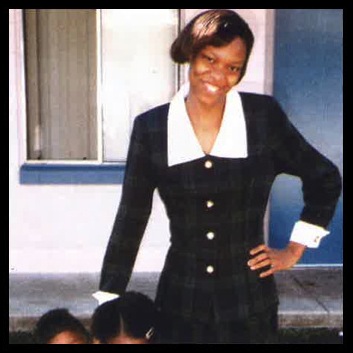
Elainaise Mervil. Source: The Tallahassee Project via VICE
I was recently speaking with an advocate who visited women’s prisons in California to learn about their circumstances and build cases for release. She said to me, “There needs to be more media in prisons. The women with whom I have conversations totally complicate peoples’ ideas about who a criminal is.”
Unquestionably, photographic media plays a role in telling stories. Some photographs better than others. If storytelling is about connection and about empathy, then what better photographs than the family snap or the amateur portrait?
This week, the unavoidable ordinariness of prisoners’ portraits was in evidence on VICE.
Jamie Lee Curtis Taete did us the service of republishing images from the book The Tallahassee Project: One Hundred Prisoners Of The War On Drugs, by John Beresford, M.D.
“The majority of the women shown in the book were charged with ‘conspiracy’ based on the statements of informants who spoke to authorities in exchange for reduced sentences,” says Curtis Taete.
From a woman whose old phone, still in her name, was used by a drug dealer to a women who drove drugs across state lines. Yes, there may have been a poor decision or lack of inquiry involved but there was also coercion (usually by a male friend or family member) and the result is a long, long mandatory-minimum sentence. Such is the War On Drugs which has been largely responsible for an eightfold increase in the female prison population in the U.S.
It’s likely many women implicated in drugs investigations are mere runners and may not even possess the information needed to bargain with the authorities. The result is destroyed families and ruined lives. 16 years, 24 years and even life for a failure to cooperate with authorities. How do these numbers even make sense? They don’t. They are shameful.
Below, I include a particularly insightful contribution to The Tallahassee Project book [my underlining] by Elainaise Mervil (pictured above).
Inmate ID Number: 20982-018
Sentenced to 20 years for conspiracy to possess with intent to distribute cocaine base and cocaine hydrochloride .
Estimated release date: 08-07-2014
I am a Haitian lady who has left 4 minor children behind to do this mandatory sentence. I have no criminal history. I am a first-time non-violent offender. It seems the government is tearing families apart and the children are the ones that are really made to suffer for this “War on Drugs.” P.O.W.
I fell into the wrong crowd in Orlando, Florida. I have never had any problems with the law and only am now learning to read and write the English language. I am a native of the beautiful country of Haiti. I love America, but I believe that the judicial system needs some change and review.
Conspiracy is such an all-encompassing category that if no other charge may be brought forth, one is charged with conspiracy and subjected to the 10-year mandatory minimums which increase rapidly in direct proportion to hearsay evidence whether true or not true. It appears that a person who is found in possession of narcotics will receive less time than a person who was not found in possession of anything, since conspiracy seems like the only viable charge.
Conspiracy was originally designed to target “king pins” who are usually sheltered by runners, etc. But what has happened instead is that the king pins are the ones who receive the most favorable deals since they have the most to provide to the government for substantial assistance motions as they possess many many contacts. The “little man” who does not know as much suffers since his assistance is not as valuable; hence, falling victim to the harsh treatment under the law by being required to serve a decade-plus in prison.
I applaud this use of photography. Let’s see more activists and journalists in prisons gathering such image and word to amplify the voices of those callously thrown away by our society.
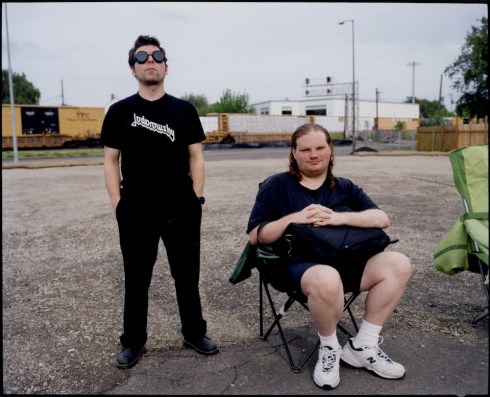
Bryan Wolf, “Eclipse watchers” (Grid M9).
On Saturday, my article The Grid Project: A Photo-Survey of Portland was published in The Oregonian. It was my first ever piece for The Oregonian, a paper which was founded in 1850 and predates official Oregon statehood which came about in 1859.
I wrote: “In 1995, Christopher Rauschenberg assembled a team of a dozen photography enthusiasts. Together, they sliced up a AAA map of Portland into square mile segments and resolved to hit the streets of each corresponding square and photograph, once a month, until no more squares remained. By 2004, they had documented all 89 squares within the city limits. At that time, the only thing to do was to start over. In September of this year, the Grid Project will complete its second full photo-survey of the Rose City.”
I wrote the article because The Grid Project is raising Kickstarter cash to replace its old, limited-function website with a new-spangly site with full on search, more images and happy-wide-eyed-users. With four days to go, just over $600 more is needed, so it looks like it’s going to make it.
When I arrived in Portland 18 months ago, folks at the Grid Project were some of the first I wanted to meet. Even though I don’t shoot photographs they let me join them for a meeting and look over images. Many of the Gridders are now friends.
The Grid Project is amazing. Here’s why:
1. It’s all about community.
2. It’s done for the love of photography; no one’s getting paid.
3 It’s a simple premise, but collectively 20 or so photographers have documented a changing Portland over nearly two decades. The estimated 40,000 images they’ve made is an incredible resource.
4. The Portland Grid Project invented the formula. The methodology has since been repeated around the globe in towns and cities such as Bradford, England; Toronto, Canada; Vancouver, WA; Victoria, BC; Rome, Italy; Providence, RI; Eugene, OR; Central Oregon; Napa Valley, CA; Philadelphia, PA; Forest Grove OR and Santa Fe, NM.
If you fancy a fancy print you should throw some money in the pot. Here’s some fine Grid Project images to stroke your eyeballs

Ann Kendellen, Pendleton Park, SW 53rd and Iowa, January 2011 (Grid N6).
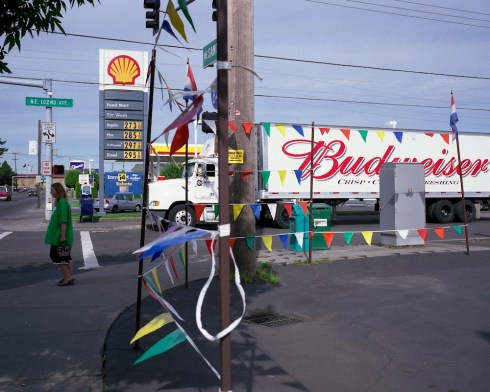
BlakeAndrews, 2007, (Grid J12).
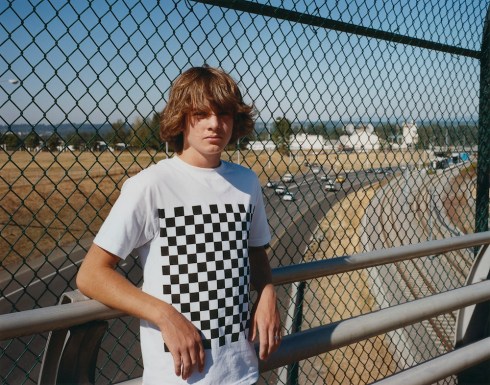
Bruce Hall, Kid on the Sandy Blvd overpass for the 205 freeway, (Grid J12).

Carole Glauber. “Frankie’s Franks” SE 82nd, 2011.

Christopher Rauschenberg, SE 15th Avenue, 2008 (Grid L9).
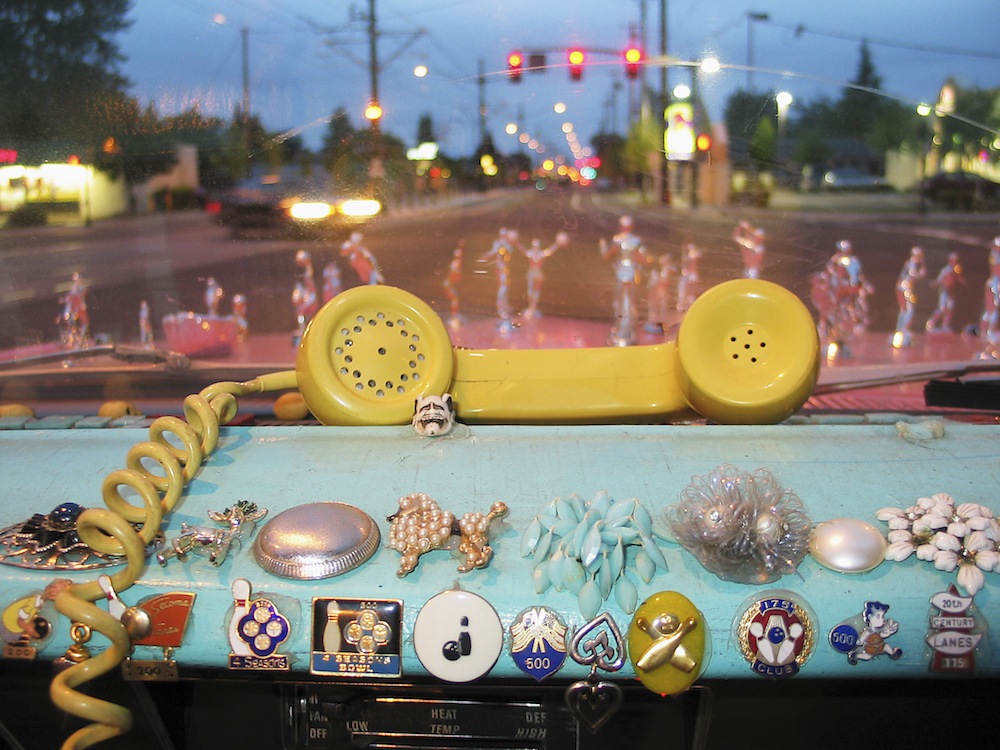
David Potter. “Inside of Marci MacFarlane’s car” North Interstate Avenue and Going Street, May 29th, 2005 (Grid J8).

Lisa Gidley. NE 42nd Avenue near Sumner Street, September 2011.

Nancy Butler, “Untitled” (Grid N9).
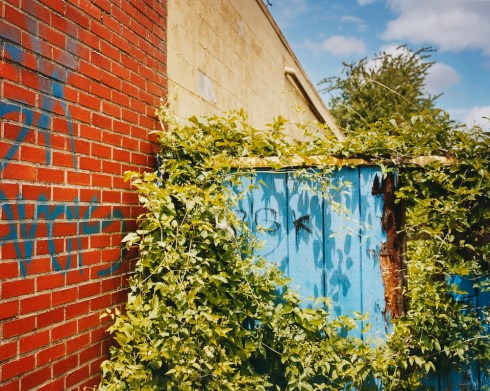
Bruce Hall, Off NE Fremont, (Grid K11).
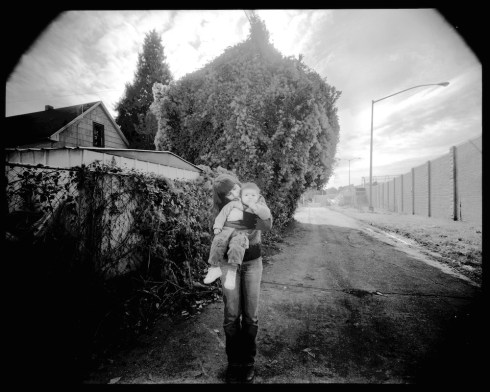
Mark Barnes, “Jessie”

Mark Barnes, “Foster Rd”
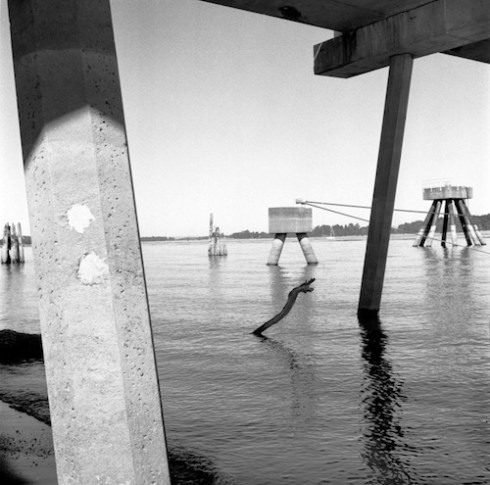
Rich Rollins
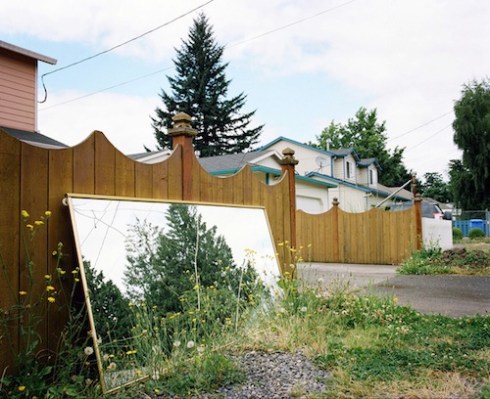
Lisa Gidley

Ann Kendellen
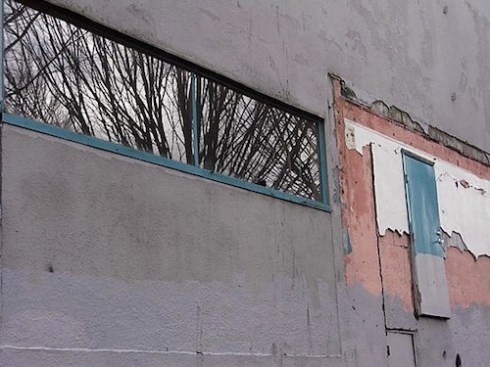
Ann Kendellen

Faulkner Short

Barbara Gilson

Alexis Pike
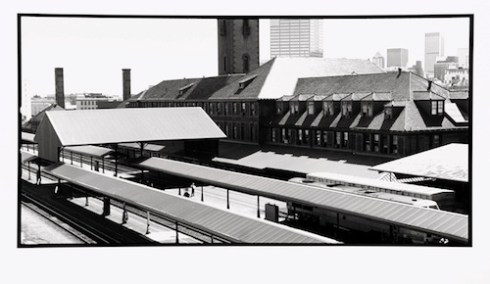
Patrick Stearns (one image in a set of three) (Grid K8, 04/99).

David Potter, (M14, August 2000).

George Kelly
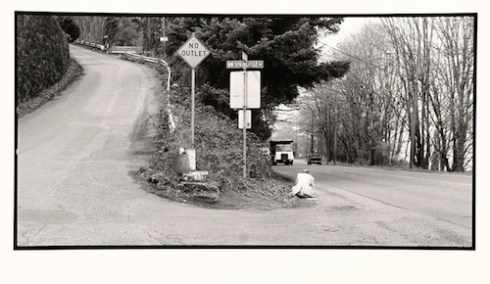
Patrick Stearns (one image in a set of three) (Grid G4, 04/00)

Faulkner Short
Eye On PDX is an ongoing series of profiles of photographers based in Portland, Oregon. See past Eye On PDX profiles here and here.
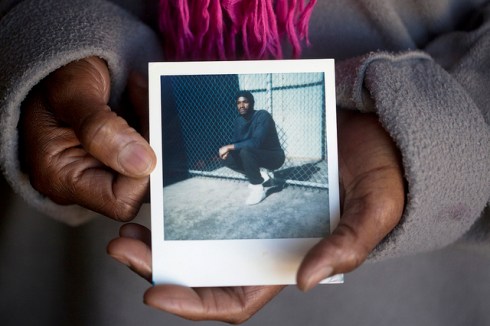
Marie Levin holds a photo of her brother, Ronnie Dewberry, taken at San Quentin State Prison in 1988. Until recently, it was the last photograph he’d had taken. Photo credit: Adithya Sambamurthy/The Center for Investigative Reporting
STARVED OF THEIR OWN IMAGE
We are now into the second week of the California Prisoners Hunger Strike. It is difficult to get firm figures on the number of participating prisoners. The Los Angeles Times reports 30,000; CNN reports 12,000 and Yahoo reports 7,000+.
I’m inclined to trust the figures sourced by Solitary Watch:
The hunger strike began on July 8th with participation of approximately 30,000 people in two-thirds of California’s prisons, as well as several out-of-state facilities holding California prisoners. In the first days of the hunger strike, approximately 3,200 others also refused to attend work or education classes as a form of protest in support of the hunger strike. As of Sunday, there are an estimated 4,487 still on hunger strike.
Still, formidable numbers.
INVISIBLE AND UNPHOTOGRAPHED PEOPLE
Last week, in conjunction with the initiation of the mass peaceful protect, Michael Montgomery for the Center for Investigative Reporting published an excellent article California Prisons’ Photo Ban Leaves Legacy of Blurred Identities about the ban on portrait photographs of prisoners held in solitary confinement.
Accompanying the article is the interactive Solitary Lives feature and a Flickr gallery.
The ban resulted from a tension between what a photograph meant or could mean.
For families, a photograph is a tangible connection to their loved one behind bars, but for staff of the four maximum security prisons that upheld the ban, photographs were potential calling cards — circulated by prison gang leaders — both to advise other members that they’re still in charge and to pass on orders.
The ban was lifted in 2011, following the last California prison hunger strike. Montgomery quotes Sean Kernan, the former Under-Secretary of the CDCR
“I think we were wrong, and I think (that) to this day,” he said. “How right is it to have an offender who is behaving … (and) to not be able to take a photo to send to his loved ones for 20 years?” Kernan directed prison staff to ease the restrictions for inmates who were free of any disciplinary violations.
The ban in the four Californian prisons was extraordinary.
“I have never heard of any other prison system or individual prison in America imposing a long-term ban of this kind,” said David Fathi, director of the American Civil Liberties Union’s National Prison Project.
As I have stated frequently on Prison Photography, prison (visiting-room) portraiture is one of the most prevalent types of American vernacular photography.
Until artists such as Alyse Emdur and David Adler began to draw focus to this disparate, decentralised, emotion-laden, and high-stake vernacular sub-genre, prison portraits were kept in wallets, on mantles and in side tables. There’s tens of millions of them out there.
And yet, for over 20 years, thousands of men in California were not allowed images of themselves. The additional ban of mirrors in solitary units meant that many men often did not see images of themselves for years on end. Again, to quote Montgomery’s article:
“I have asked my husband, ‘Do you even know what you look like?’ And he says, ‘Kind of, sort of,’ ” said Irene Huerta, whose husband, Gabriel, 54, has been detained at Pelican Bay for 23 years.
THE PHOTOGRAPH AS AN OBJECT OF DEPLOYMENT
In the free world, photographs are ubiquitous, easily created, shared and possessed. The fact that these seemingly innocuous objects were caught in the tussle of control between prison authorities and prisoners is astonishing, and speaks to the power struggle (real and imagined) between the kept and the keepers.
Michael Rushford, president of the Criminal Justice Legal Foundation, said easing the restrictions on prisoner photographs raised no major security concerns, so long as inmates had to earn them. “It’s not as if there’s been an epidemic of inmate photos on the street,” he said.
I am not sure how Rushford would measure this, or even it would significantly alter the lives of prisoners, specifically now during the hunger strike, and especially now when proven or alleged gang affiliations have been put aside by prisoners in solidarity for improved conditions for all.
In light of recent art market fetishism, it would seem the primary reason anyone would want to gather prison portraits would be to repeat Harper’s Books’ $45,000 hustle and cash in on the images?
As for the families (following the ban lift) the value of newly acquired images is not in any doubt:
Seeing an image of their incarcerated relative for the first time in years has sparked renewed hope and revived dormant family connections. For others, the photographs are a shocking reminder of the length of time some inmates have been held in isolation.
CENTER FOR INVESTIGATIVE REPORTING LINKS
Michael Montgomery’s California Prisons’ Photo Ban Leaves Legacy of Blurred Identities
Interactive Solitary Lives feature.
A BRIEF NOTE ABOUT THE SOLITARY WATCH WEBSITE
I cannot emphasize enough how important the website Solitary Watch is as a resource. Jean Casella, James Ridgeway, and their team of reporters produce high quality journalism — not only for their website but for other news outlets including The Guardian, Mother Jones, Al Jazeera, Columbia Journalism Review and The Nation.
Solitary Watch is an independent media and advocacy project, funded by grants and donations. It is a project of the Community Futures Collective, a 501(c)(3) non-profit. You can support the project here.
I don’t hesitate to say that Solitary Watch has driven much of the critical and visible public discourse about solitary confinement in U.S. prisons and jails.
As Solitary Watch describes, “Solitary confinement is one of the nation’s most pressing domestic human rights issues — and also one of the most invisible,” which is why I have a vested interest in their work; we’re each interested in making solitary and other egregious aspects of the U.S. prison system more visible.

 Prison Photography