
You are currently browsing the category archive for the ‘Documentary’ category.
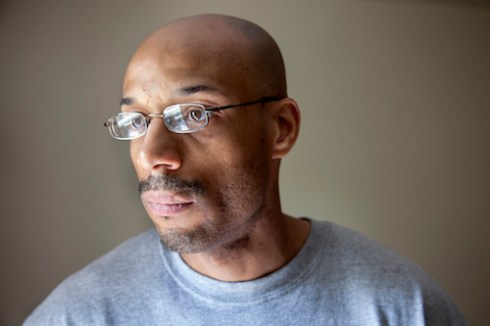
Ronald Day at his home in the Bronx, during a Father’s Day barbeque, held on June 17, 2012 in New York City. © Ed Kashi/VII Photo.
Inside and out of prison, people may think that to keep ones head down, survive America’s overly punitive prisons, and wait for release is enough. Unfortunately, it is not; for those looking to reenter society new struggles emerge. Each year 700,000 men, women and children are released from prisons and jails to face modern day laws and attitudes that marginalize them and limit their abilities to build new lives.
New York based non-profit Think Outside The Cell, a young but impressively effective organization, is bringing light to the struggles of former prisoners.
“The issue of stigma is not discussed enough but it is the issue of our time. The effects are so widely felt,” says Sheila Rule, Think Outside The Cell co-founder. Convicted felons are routinely denied employment, housing, access to college, the right to vote, and public benefits.
“The oppressive legal barriers and sanctions that undergird the stigma are the building blocks of modern-day inequality, keeping millions of deserving Americans on the fringes of mainstream society,” writes Think Outside The Cell.
Think Outside the Cell has partnered with the renowned VII Photo Agency to produce a multimedia campaign that will raise public awareness and educate media and policy wonks with persuasive storytelling.
“I knew about VII and their credibility,” says Rule. “It was a natural fit. We are both driven by storytelling. Stories change hearts and minds.”
Below is the trailer of the VII campaign video. The full 10 minute video can be seen here.
__________________________________________________________
In September 2011, Think Outside The Cell hosted A New Way, A New Day, a national symposium about mass incarceration. Speakers included Dr. Khalil Muhammad, director of Schomburg Center; Jason Davis, former Bloods gang leader and community activist; Jumaane Williams, New York City Council-member; Hon. Cory Booker, Mayor of Newark, NJ; Michelle Alexander, author of The New Jim Crow; Jeremy Travis, President, John Jay College of Criminal Justice; and Yolanda Johnson-Peterkin, director of operations, reentry services, Women’s Prison Association, among others. (View videos of the panels and presentations here.)
In the audience was Kimberly Soenen, a recent hire and Director of Business Strategies at VII Photo. Soenen knew that the issues of families, communities, criminal justice and inequality were of paramount interest to VII photographers. Rule, a retired New York Times journalist who knows the power of well-told and widely distributed stories, was open to Soenen’s approach to partner.
Soenen and VII focused on the immediate area and assigned New York and New Jersey based photographers to tell the stories of Ronald Day and Mercedes Smith. (With further funding, VII hopes to extend the campaign to other states.)
Mercedes Smith was released from prison two years ago. She begins college in January 2013 and although she struggles to find housing due to the rules of her parole she is making progress toward a stable life.
Ronald Day, 43, was incarcerated for 12 years, serving time in five NY institutions. Since his release, he has studied steadily, is employed connecting other former prisoners with access to services, is enrolled in the Criminal Justice PhD program at CUNY/John Jay College, and teaches criminal justice to graduate students at John Jay College.
Both Day and Smith have excellent relationships with their families.
Ronald Day’s story is not the typical tale, but that was precisely the point. VII and Think Outside The Cell wanted an optimistic view of how people can succeed in spite of the system.
“We’d always thought we’d follow someone as they were released and see them through the first weeks and months of difficult readjustment in the free world,” says Rule. But after some thought, Joseph Robinson, co-founder of Think Outside The Cell, Rule’s husband of 8 years, author, and current prisoner in Sullivan Correctional Facility, NY, suggested featuring someone who was, for all intents and purposes, succeeding, “Someone who everyone would think is doing okay, but who we could still show was facing Stigma,” posited Robinson.
While both imprisoned, Day and Robinson met at a National Trust for the Development of African American Men event. And, to this day, Rule often calls upon Day’s “dependable” organization skills to help plan Think Outside The Cell events. He was an obvious “messenger”.
However, for Day, the scrutiny of photojournalist cameras not surveillance cameras was a new experience.
“I’m not used to being followed by cameras continually. I guess that what reality TV is like. Children in the neighborhood called Ed and Ron ‘the Paparazzi.’ I thought that was hilarious!” says Ronald. “It’s good to know that my initial discomfort was a means to a higher purpose.”
Day’s motivation and higher purpose was to advocate for others.
“I want people to have a greater opportunity. You need to convince others that someone involved in a system has potential provided they’re given a chance. We need to take a second look at the individual, at the system, and the policies in ways which is fair and in ways which will change the laws,” explains Day. “I went online and looked at VII’s model for producing media. I realized it was a powerful way of producing journalism.”
And the issue is pressing.
Over the last 20 years, the number of major employers who screen for criminal records has grown to 90%. Laws that prohibit voting by people who have felony convictions deny an estimated 5.85 million Americans a visit to the ballot box. For people convicted of a drug felony, Congress has passed federal laws that place a lifetime ban on food stamps and cash assistance through Temporary Assistance for Needy Families (TANF). While states can opt out of or modify the ban, most states enforce it in full or in part, says the Think Outside The Cell website.
Discrimination in the workplace is no better described as the experience of a young man who lived in D.C. and worked at a temp agency. “He was so diligent he was bestowed the Temp of the Year Award and the firm wanted to hire him full time, but when they found out he was formerly incarcerated, they fired him,” says Rule.
Furthermore, this story reflects how the stigma and laws disproportionately effect people of colour.
“Trying to figure out ‘Why’ is common to the African American experience. Was it race? Often it’s not always clear, but in some instances the reasons reveal themselves,” says Rule.
The daily limitations on former prisoners leads directly to cycles of incarceration, Robinson believes.
“It’s a cycle of stigma, collateral consequences, exclusion, and recidivism,” says Robinson. “The collateral consequences are enormous and they are not theoretical; millions are effected and it results in social, political and emotional exclusion.”
“People on parole, probation and even people 10 or 15 years out encounter difficulties achieving the basic things needed to live life – things central to being American, such as working and supporting oneself,” he says.
“High hopes and dreams can often lead to disappointment,” says Robinson. “You may have a guy who has developed a business plan, but when he goes to the bank they won’t give him a loan. There are hundreds of business licenses felons are barred from. Prisoners acquire skills in electrics, masonry, metalwork, but they can’t get construction licenses so they’re relegated to working off the books. [They are not permitted] licenses in accountancy or real estate even if their crime had nothing to do with money.”
Imprisoned for 21 years and four years from eligible parole, Robinson says he has lots of time on his hands to “develop creative ideas around social entrepreneurship.” Rule puts them into practice on the outside.
“I wouldn’t be where I am, if it weren’t for Joe,” says Rule. Although physical separated, Robinson says he and Rule are “joined at the hip” in their values.
“Social entrepreneurship is not a profit driven enterprise,” says Robinson. “I’m not saying making money is a bad thing, but the goal of social entrepreneurship is to achieve maximum impact while caring for ecology, society, people. If we focus only on profit, we can do more harm than good. NGOs, businesses, councils and governments can collaborate in social entrepreneurship.”
Specifically, Think Outside the Cell has launched a End The Stigma/Break The Cycle campaign to involve incarcerated and formerly incarcerated people; probation and parole officials; legislators and government officials; civil and human rights advocates; business leaders; labor union members; private and public employers; nonprofit administrators; students; and teachers.
Robinson and Rule are also keen to engage print and screen advertisers, which shows a canny regard for how social attitudes are shaped.
“While we are building a coalition of those who effect what we decide – legislators, officials, voters – we also want to involve people who decide what we think – those in media and advertising,” says Rule.
Meanwhile, the onus is on imprisoned individuals themselves. Day often quotes to a 19th century saying he discovered in Scott Christianson’s book With Liberty for Some: 500 Years of Imprisonment in America.
‘Very few individuals are ever rehabilitated in prison, and none are truly rehabilitated by prison. But some may rehabilitate themselves in spite of prison.”
The key to Day’s shift in fortunes was education and it is a subject he speaks passionately about.
“One intervention in the cycle of crime is access to education,” he says.
But access was curtailed in 1994 when Federal law prohibited prisoners from access to Pell Grants. State laws replicated the Federal laws. And there are other laws to reverse, too. Mandatory minimum sentencing, particularly for drug crimes, was hugely damaging. Day describes the sentences resulting from new 3-strikes laws in the 1990s as “cruel” and “disproportionate” punishment.
“The war on drugs failed,” says Day. “As Michelle Alexander points out, if you put someone into a drugs program instead of imprisoning them, you get better results. You can’t incarcerate your way out of the problem. Even conservatives recognize that. This is an ideal time; this is the most pressing of times.”
His role as a VII photographers’ subject is not without its complications for Day, but the ensuing wider conversation is worth it. His students and fellow PhD classmates do not know of his former incarceration.
“Once the VII Photo begins its series, there’s a chance they’ll find out and then we’ll have that conversation,” he says. “Often people say, ‘I’d never had guessed’ and then pepper me with questions. I often find I become a resource and that really effects the conversation.”
Bring on the conversation. With wide-eyes and courage.
“Society likes to imagine these problems don’t exist. Out of sight, out of mind. We have to deal with this. Yes, these are people who have breached the social contract, but we need to think about how we treat people after they’ve served time in prison and their debt to society,” concludes Robinson.
Rule and Robinson both acknowledge their work is in its infancy but have faith in, and knowledge of, how to tell compelling stories.
“It’s been a long and enriching experience. I have no illusions, but when most people hear our stories, they say, ‘I didn’t know’. I hear it over and over again, and then I hear, ‘What can I do to help?'” says Rule.
“Some people hold the ‘Once a convict, always a convict’ attitude, but others – and I’d say this is the majority of people – don’t know about the issues for the formerly incarcerated,” says Rule. “Think Outside the Cell campaigns and describes experiences creatively. The standards methods have no effect; creativity moves the dial.”
Ultimately, VII Photo is continuing Think Outside The Cell’s track record of telling stories with compassion.
__________________________________________________________
Editor’s note: This article is the first of a five-part Prison Photography series which will examine the nature of the VII Photo/Think Outside The Cell partnership, canvas the photographers’ thoughts and hopefully add to the push toward a fairer treatment of former prisoners.
Part Two: A Conversation With Ron Haviv
Part Three: A Conversation With Ed Kashi
Part Four: A Conversation With Jessica Dimmock
Part Five: A Conversation With Ashley Gilbertson

In the kitchen of his Brooklyn home, Ruiz flicks through his “portfolio” of prison images.
Stefan Ruiz has made photographs inside San Quentin State Prison, Soledad Prison and the notorious maximum-security Pelican Bay State Prison. His photography from within California’s prisons was not accomplished by conventional methods; at no time was Ruiz on press assignment; making documentary work or running a photography workshop.
Ruiz worked for seven years as an art instructor at San Quentin, during which time he regularly made photographic records of individual artworks. He took some portraits of his students on the side. He got inside Pelican Bay as a court-appointed photographer making photographs for use as trial evidence.
It’s a bit of a family affair. Ruiz’s mother, a professor at UC Santa Cruz, was teaching art at Soledad. Ruiz had studied Islamic art in West Africa and went to deliver a talk to Muslim prisoners at Soledad. He delivered the same lecture later at San Quentin, at which time he was introduced to the art program coordinated by the William James Association.
Ruiz’s father is a criminal defense attorney, who in the mid nineties represented a prisoner at Pelican Bay. Ruiz was the case-for-defense’s chosen photographer, documenting conditions the of client’s confinement.
In addition to his photography, Ruiz made sketches, collected his students’ artwork, and acquired objects typical of prison culture. When he showed me a photograph of a DIY prison tattoo gun, I asked, “Is that something an inmate showed you or is it something that had been confiscated?”
“It’s something I have,” Ruiz replied.
The first photos Ruiz made inside were portraits of Soledad prison-artists holding their work. He took six rolls of film. At the age of 23, Ruiz began teaching art at San Quentin. One of his students had been a student of his mother’s at Soledad years prior. Prison-art hangs in Ruiz’ house and he has collected mug-shots for years.
In the mid-nineties, Ruiz cobbled together a photo “notebook” of his pictures of people and vernacular art. He keeps it in an old Fujifilm box bound with packing tape. “I used to take this with me everywhere; it was my portfolio.”
From humble and organic beginnings, Ruiz is now one of the most respected portrait and editorial photographers in America. Until recently he had never spoken about his experiences in California’s prisons. We sat down in his kitchen to unpack his memories and his homebrew portfolio.
Q&A
PP: Your mother introduced you to prison-life?
SR: My mother organized exhibitions of the prisoners’ artwork. I helped out by taking photos of the artwork and making slides of their work. Some of that would go to William James Association to help them appeal for funding or for entry into competitions. That’s how I got cameras into the prison at first. Whenever I took a camera into a prison it was legal, and it was generally to photograph some type of art object.
PP: Of your prison work, it is your portraits that are known, however minimally, in the public sphere. I wasn’t aware of them until you were featured on VICE TV’s Picture Perfect.
SR: There are more photographs than just portraits. I taught at San Quentin for so long, and my boss had such a good relationship with the officials that gave access, that we were allowed to do quite a few things.
The first portraits I did were of the guys in my mother’s art class at Soledad who were to be involved in an exhibition. The way we were allowed to make portraits was to say, since they couldn’t make it to their show, their portrait would.
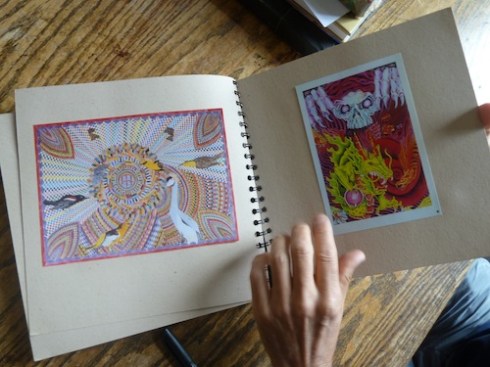
Prisoner art

Prisoner art
PP: Describe the art program.
SR: My boss played bass and the main emphasis of the art class was music but there were two visual artists who taught and I was one. The other was Patrick Maloney, who I guess is still teaching there. Patrick would also teach on Death Row. Sometimes, I would fill for him or accompany him on Death Row.
PP: How did you find working on death row?
SR: You move along the tiers and talk [through bars] to students individually, whereas on the mainline they come out their cells and they come to you.
There are two different sections of death row. In the first, there are a couple of tiers of just death row inmates. You’d need the key to get on the tier, and then you’d go from cell to cell, depending on who was part of the program. There might be three or four guys on a single tier. They had to buy their own supplies but through William James we also gave them supplies. Mostly you’d spend time talking to them. Each day, they might get half an hour outside their cell.
In the other section, the prisoners could leave their cells and go to a common space with some tables. There you could have two or three people in the class. That seemed like a better place to be on death row. The tiers are quite dark. Five tiers. And the other side is just open. One of our students was executed. He had killed a shopkeeper and his wife robbing a store in Los Angeles. He was a good student.
PP: Your mother was a professor at Santa Cruz, teaching art classes at Soledad. Those two institutions have a long and significant relationship going back to the protests and counter culture of the late sixties, Black Pantherism, and the book Soledad Prison: University of the Poor (1975) which was a collaboration between UCSC students and prisoners at Soledad.
PP: You gave a talk to Muslim students at Soledad, then to Muslim students at San Quentin and then you began in the art program. That trajectory explains your path but not your motivations. Why did you decide that leading arts education with prisoners was something you wanted to commit to multiple times a week, and eventually over seven years.
SR: Because it is interesting. I have to say; I think I learnt more from them than they learnt from me.
My father is a lawyer in criminal defense and labor law. His family is Mexican and he’s pretty liberal, so I grew up with that element too. Teaching art in prison was an activity that brought together both sides of my family.
PP: A context in which prison teaching is not a radical act?
SR: My mother was more or less a hippie. My father couldn’t really be one, he was just trying to assimilate, but he was definitely liberal. Growing up in Northern California at that time it was more of a norm than not to be on the left. To do things such as teaching in prison was not considered wild. There was no whole movement about victims’ rights as there is now.
Fair enough. There’s a lot of bad people in prison and some people who deserve to be there but …
When I was a kid, my parents were involved in a free school. We grew up in the country growing organic food. That was way before the trends of today. We composted everything; we weren’t allowed to have plastic bags for lunch. We had wax paper and baked our own bread.
The thing is the prison was interesting to me. At San Quentin they allowed me to take keys. The room where I taught art used to be a laundry room. There was a bunch of people that got murdered there, I guess in the seventies or eighties so they closed it down and eventually opened it up as an art room.
There was never a guard in our room. It was two levels but we would teach on the lower level. The closest guard was in what we would call the max-shack – a checkpoint, probably about 30 yards outside the door. I was really young when I was teaching there and a lot of the guys were way bigger than me. It was interesting to learn how to navigate that. There were anywhere from 5 to 15 people in my class. 15 would be a little bit hectic. Often we’d just get someone from the yard and have him come and sit. Students who wanted could draw him, and if not, they could work on other projects.
PP: Were any of them reluctant to paint or draw other prisoners? My experience teaching art in prison was that collectively they decided it was “suspect”, for want of a better term, to spend the time and energy painting another prisoner. Most of them made portraits of wives, girlfriends or children in a devotional way so to paint another prisoner made no sense to them and was in fact considered strange. They felt other prisoners would misconstrue it as a gesture of adoration or romantic attraction to the subject and that is something most guys wanted to avoid.
SR: No, most of them were into it. They didn’t have to do it but one thing is that since cameras aren’t allowed in prison you can make money if you can draw well, by drawing portraits, usually by copying photographs of prisoners’ family members. If you’re good you can make money. It’s like a throwback to an era before the camera; I can draw fairly realistically and that kind of saved me when I was in there because …
PP: … there’s a lot of respect attached to that ability.
SR: Yes. They’d give me a lot of shit and then we’d start drawing and it’d be fine. I generally had quite a few lifers in the class, because they are the ones who are more serious – eventually they decide to try and use their time. Young guys, who were only in for a little while, might joke around. The older guys kept the class in order.
PP: At what other times did you use your camera?
SR: There’s some really famous murals in San Quentin. I photographed them all.
PP: Was that the San Quentin administration that asked you to do that, or was it William James or was it self-initiated?
SR: My boss, Aida de Arteaga and I, decided it was a good thing to do. There are four dining halls. It used to be one huge one but it was divided because they were worried about riots. Three walls. Six sides on which the murals were painted. A Mexican-American inmate who had been busted, I think, for selling heroin painted the murals in the fifties. When I was still there, he came back to San Quentin, for the first time since his incarceration.

Photos from the San Quentin Prison dining halls. One of Ruiz’ students stands in front of the famous murals.
PP: In Photographs Not Taken you close with a bittersweet statement in which you said while you managed to take photos you still thought about the ones you weren’t allowed to take in such a “visually rich environment.” Did the staff or inmates think of their environment as visually rich?
SR: Obviously, most of the prisoners wanted to be out of there. I’m sure quite a few of the guards would like to have taken photos. Some did. Various guards had cameras for different reasons.
PP: What reasons?
SR: To photograph events. I photographed some of those too. We had concerts in the main yard, which is pretty impressive at San Quentin when you are down there with all the inmates. One time we had Ice Cube come in. On that billing, they had a white performer, a Hispanic performer and Ice Cube was the black performer. The administration has to play it like that.
Ice Cube performed in one of the dining halls and that was pretty crazy. You could see the guards were quite nervous. Some of the inmates were getting fired up. I don’t think they had another concert like that.
The prison liked the art program quite a lot and there were some guards who were supportive of our classes. Guards will either make things easy or hard for you. Basically, I think we were lucky for a lot of the time; we had people who were kind, trusted us, let us do more.
The thing about being there for so long is that you got know people fairly well. Especially being in a classroom when you’re with students for three or four hours at a time just drawing and talking. The thing that struck me was that I had a few guys who were lifers and had been in for 20 to 25 years; that’s a pretty crazy concept, especially now given all the changes that have happened, specifically with technology. I am sure – unless they were using them with their jobs within the prison – none of them had used a computer.
PP: Did you ever think there was an opportunity for you to do a photography workshop?
SR: The administration didn’t want us to do that at all. Even toward the end, they started to question me taking drawings out of the prison because many of them were realistic to the point that you could identify people in the drawings!
PP: What did the administration think of the portraits you did manage to take?
SR: They didn’t see most of them. They had signed-off on me doing photography, but they didn’t necessarily see the photographs. We got releases form the guys too. Guards might follow me round for a while, but I can take photos for days and bore the shit out of anyone. [Laughs].
I’ve probably got one of the best [records of the murals]. They were done on 4×5. I even did some on 8×10. I got in there at different times. Once, I’d used a Linhof 617 lens and camera on a commercial job, then I got access and so I used it in the prison.
PP: Did I hear that the Smithsonian has come to some sort of agreement, where by if and when San Quentin is demolished, they’ll remove and preserve the murals?
SR: They’ve been saying that for years, but I don’t know. The murals depict the history of California. The prisoners love the cable-car because the perspective is right so as you walk around it works.

“This guy before he took his shirt off warned me that his tattoos were considered some of the most racist in the prison. There’s the SS helmet skeletons.” Tattoos read ‘100% Honky’ and ‘Aryan’.

Ruiz used a chalkboard as a backdrop, “I liked the color and I liked the reference to education.” Some prisoners shaved their heads ready for the shoot. “They knew I was bringing in the camera so they prepared,” says Ruiz.
PP: It seems like the prison administration’s policy toward camera use was ad hoc?
SR: I photographed in Pelican Bay and Tehachapi, but I actually did that through a court order. My father was representing a prisoner who the CDC said was one of the heads of the Northern Mexican mafia and that he was ordering murders from his cell in Pelican Bay.
In Pelican Bay I had to use the prison’s cameras; they wouldn’t let me take in any of my own equipment, except film. This was 1995. They held on to the film, processed it, and then gave everything to me, negatives and all. The images are a bit … the lenses were a bit crazy. It’s not what I would’ve used but it was fine.
In Tehachapi, I got to use one camera and one lens. Both were mine.
PP: What was your brief for the court order?
SR: I had to photograph the cells and so the reason these photos are joined together is that they only allowed me the one lens.
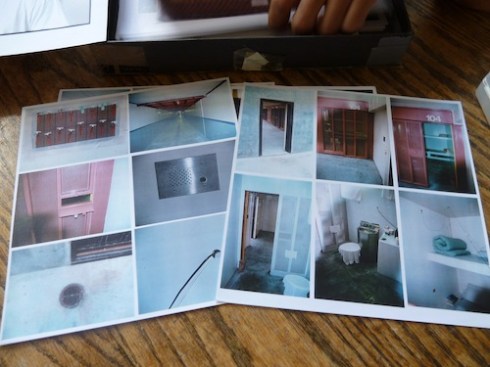
Ruiz photographs of Pelican Bay State Prison, CA made in 1995 for use as court evidence.

4/4/95, Pelican Bay – “The defendant was in one of these cells.”
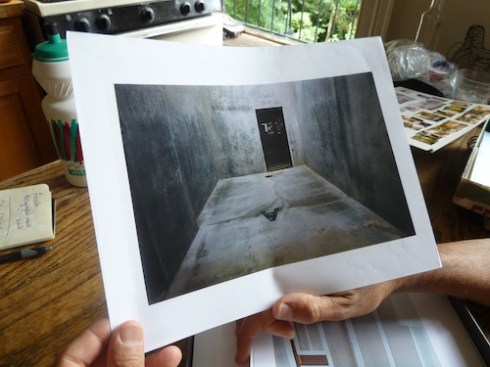
“Pelican Bay is obviously freaky.”
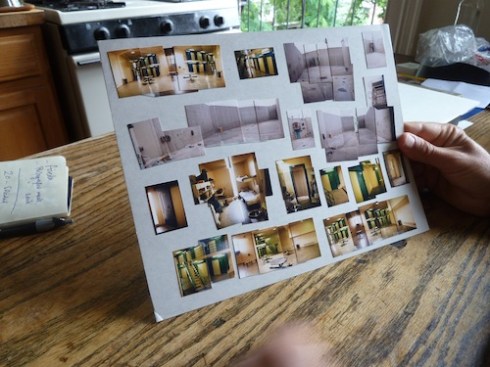
“This is the yard at Tehachapi. This is a common area, these are the cells.”
PP: It’s because of the connection through your father that you got the court ordered gig?
SR: As a defense attorney, he was allowed to bring in his own photographer. As an art teacher, I’d actually spent more time inside of prisons than my father had. Normally, he would only go to a visiting room where he would talk to his client. Whereas, I used to go on tiers, I went in cells. There were times at San Quentin when I was totally unsupervised and there were times it felt a little freaky.
PP: Were any limits placed or pre-agreements made by the courts on your photographs to limit their circulation, or are they just yours?
SR: They’re just mine.
PP: Is there a reason why you’ve not shared them widely yet?
SR: There are some that I considered might be a bit sensitive and I didn’t want to get my boss into trouble in any way. The photographs from Pelican Bay and Tehachapi are fine. The ones from San Quentin; she’d help me get the camera in. We had an understanding. I wasn’t going to screw her over.
It’s more important for me to be cool with her than it is to profit from the photos. I’ve done fine with photography without having ever shown these. I probably could’ve done a book with these and with some of the writing and artwork I have a long time ago, but I’ve never been about just promoting myself at all costs without taking others into consideration.
By now, enough time has passed. I’m going through everything. I think I have enough for a book. I have boxes of stuff that just accumulated.
PP: How did all of this work and exposure across three Californian prisons inform the rest of your career?
SR: I always knew I was going to do art. I didn’t know I was going to do photography. I always thought I’d be a painter. The thing that I learned? I learnt that if I couldn’t take any photos, I would collect things!
I took my portfolio everywhere. I got jobs off of the stuff but I never let it out of my hands. You’re the first person to have photographed it, with the exception of the VICE crew who put it in their video. I’m okay with that now. I always guarded it.
I met the guys who were doing COLORS magazine in the late nineties and it definitely influenced them. It influenced their ‘Prison’ issue (June, 2002). I was actually supposed to go to Gaza for COLORS, but the Israelis had bombed the prison right before I was due to leave, so the trip was cancelled. So, I’ve definitely used this stuff to my advantage.
PP: Did you ever give prints to the prisoners?
SR: I’d give them stuff but we kept it low key because I didn’t want any trouble for the program.
PP: Did the guys you taught appreciate that San Quentin had more programs than most prisons?
SR: They liked San Quentin. It’s an old prison. It has a lot of nooks and crannies. There are weird things that go on there that you wouldn’t get in a modern prison.
There was the old hospital built in the 19th century and out of brick. It was structurally unsound after the earthquake and left empty. They’d let certain prisoners go in there at their own risk. The deputy warden or someone in authority allowed one of my students to set up an art studio in there. And he had it for a couple of years! You wouldn’t get that at a lot of other places.
PP: Your photographs form a weird mix.
SR: I’ve always thought it was valid because it was about what I could get and how I could get it.

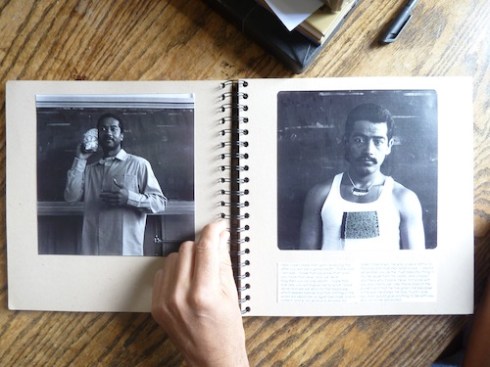
Soledad prisoners.
PP: Do you think prison systems in the U.S. are racist?
SR: If 11% of California’s population is Black but then at least 36% of the prison population is Black something’s not proportional. That says something about this society. Obviously the system can be racist, but it is also classist. You have a hell of a lot more poor people in prison than you do wealthy people and that’s because wealthy people can afford lawyers.
There weren’t many well educated guys in my classes. They’re obviously smart guys who could do all sorts but they weren’t well educated. I had a blonde white guy who I asked him to read something one time, not even thinking that he didn’t know how to read. It was a horrible thing for him and, of course, for me. I didn’t expect it at all. After that he started taking some of the high school classes and learnt to read.
Prisons are a control thing. [Upon release] if you have people who can’t travel, can’t get housing and can’t vote you can keep a whole population controlled. You can keep a whole population one little step away from being thrown straight back into prison.
PP: So the prison system is failing?
SR: I definitely think some people should be in prison.
There was a child molester who was quite collectible. People like to collect his art. He creeped me out. He made drawings of the kids he had killed from newspaper clippings. I took photographs of them, but I didn’t know that’s what they were until he explained them to me later. He had a scrapbook and the first 20 pages were pictures of Hillary Clinton smiling and then after that it was all these pictures of kids. Innocent pictures – many of them from National Geographic, but when you know what he was about, it’s pretty disturbing.
There’s some fucked up people in the world.
But I also saw, all the time, guys in prison for stupid drugs convictions and I think that is just a waste. The three strikes law was foolish. Keeping someone in prison, which at the time cost something like $30,000 – I’m sure it’s more now – is just a waste of money. You can give people education with that money to help them get better jobs.
I used to go to the visitor center a lot. You’d see the damage being done when families would come up from Los Angeles for the day. Wives would go in and the kids would stay in the guesthouse for the day. The separation of families when they have to travel so far [to where loved ones are imprisoned] is harsh.
Obviously, I believe in education over other things. Otherwise, I wouldn’t have done what I did.

Stefan Ruiz
Ruiz was born in San Francisco, and studied painting and sculpture at the University of California (Santa Cruz) and the Accademia di Belle Arti (Venice, Italy). He took up photography while in West Africa, documenting Islam’s influence on traditional West African art. He taught art at San Quentin State Prison from 1992-1998, and began to work professionally as a photographer in 1994. He has worked editorially for magazines including Colors (for whom he was Creative Director, 2003-04), The New York Times Magazine, L’uomo Vogue, Wallpaper*, The Guardian Weekend, Telegraph Magazine and Rolling Stone. His award winning advertising campaigns include Caterpillar, Camper, Diesel, Air France and Costume National.

Dana Ullman, a Brooklyn-based photographer, has in recent years traveled back-and-forth to California; to Los Angeles’ Skid Row, to San Francisco’s Tenderloin, and to the San Joaquin Valley. The series’ title Another Kind Of Prison references the fact that many hardships of prison continue post-release and, furthermore, new challenges emerge. Ullman followed several women as they left prison and readjusted to life on the outside. For Ullman, the choice to go to California was logical.
“California is home to the world’s two largest women prisons and has an annual corrections budget of 10 billion dollars, the highest in the country, yet has limited reentry programs,” she says. “In California, there are about 12,000 women on parole. Unprepared once on parole, without money, housing or resources, institutionalized and isolated, these women find it difficult to regain hold of their lives.”
Over the past 15 years, the number of incarcerated women in prison increased by 203%, as compared to 77% for men. With such a rapid increase in prison populations, services within prisons have inevitably suffered. Ullman reports a lack of training, preparation and rehabilitation for the women she photographed.
Ullman is also keen to emphasize the common factors particular to female prisoners.
“62% of women in prison have children under 18. Many suffer from mental illness and have histories of sexual and physical abuse – 73% of women in prison have symptoms or are diagnosed with a mental illness compared to 55% of men in prison. 65% of women in state prisons are incarcerated for nonviolent drug, property, or public order offenses. Nearly one in three reported committing their offense to support a drug addiction. Many are battered women serving time for crimes related to their abuse,” Ullman writes.
But it’s not all doom and gloom. Ullman wants to communicate the strength of the women who – at a particularly difficult junctures in life – have kindly let her into their lives.
“While some women have had difficult transitions, others have become inspirational community leaders – I want to show both sides in an effort to break stigma associated with incarceration.”
Dana Ullman and I share a belief that prisons are increasingly defining our society and economy.
“Another Kind Of Prison is more important then ever in exploring new strategies to better address the complex needs of present and former women prisoners who are often left out of the conversation,” says Ullman. “These stories, the needs and dreams of each woman in their own voice, illuminate the ‘revolving door’ created by poor public policies and lives fragmented by ignorance, poverty and by years, even lifetimes, of abuse. They will also help the public understand who these women are.”
Scroll down for a brief Q&A and a dozen more images. All images and captions by Dana Ullman.
Top image: LaKeisha Burton, 38, a poet and reentry advocate, was convicted as an adult at the age of 15. Ms. Burton served 17 and a half years in prison for shooting a gun into a crowd at the age of 15. She was convicted as an adult for attempted murder and received life plus 9 years. No one was killed or injured. The victim (with whom LaKeisha reconciled while both were serving time in prison), who killed someone, was released from CIW after 9 years. LaKeisha’s story represents the beginning of the disturbing increase in juveniles being tried as adults when many are completely capable of rehabilitation.

Above: On any given day women are paroled in California with a box of personal items, $200 or less in “gate money” and a bus ticket to Skid Row. Unprepared once out on parole, with no income, housing or resources, institutionalized and isolated, many women find it difficult to regain hold of their lives independently.
Q & A
Prison Photography (PP): Clearly the success of a former-prisoner reentering society has a lot to do with their experience while locked up, but I feel in the past – for most people – dialogue about prison reform issues have been lumped in with dialogues about re-entry issues. That is to the detriment of both. It does seem though that, recently, re-entry has been recognised as its own vital step with its own set of issues to be explored. I’m thinking here of Convictions, Gabriela Bulisova’s excellent work in Washington D.C. and the forthcoming VII Photo’s documentary project and partnership with Think Outside The Cell.
Dana Ullman (DU): I am aware, too, of the increased focus on reentry [in photography] that really wasn’t there a few years ago. It is a difficult, complex and fragile issue to document because there are so many factors that lead to former prisoners’ success and failure, especially depending on where they live.
I am really happy to see Another Kind Of Prison getting some light because reentry is where one sees the emergence of all the issues that were not addressed while serving time, the societal factors that underline much of the mass incarceration today – sheer poverty, histories of abuse, racism and mental health. Once men and women are locked up and out of society, they are simplistically labeled “criminals” and the stigmas attached to poverty, abuse, race, mental health and crime are once again enforced.
PP: What are your hopes for the work?
DU: I envision, with some support, that Another Kind Of Prison will travel as an exhibition in community spaces such as libraries or ideally in county jails/state prisons where so many of these women (with very little support) are planning their release. There is one woman I interviewed who had no plan for even a place to sleep the night she got out. It was a random TV show featuring a transitional house that she saw one night, not her parole officer or a reentry prep class, that connected her to where she is now living. Women outside can really speak to those inside about their experiences. I have been making audio recordings of each woman’s story. I want the project to create a forum for discussion, rather than merely point out the problem.
PP: What’s next?
DU: I am not done with the project by any stretch. Documentary photography is tricky (and I am not a master of it by any means). I am following several, very fragile lives over time and waiting patiently for that “visual” moment that doesn’t always come. There is also so so much more I could do with some kind of funding, but that has been difficult, so I have to work with what I can. So for now, I hope to increase awareness of this experience shared by thousands of women in the USA with the general public and keeping plugging away at it making the work stronger.
In San Francisco, I was working very closely with the California Coalition of Women Prisoners who have used my work to support their own causes. I was very happy about that because the CCWP do a lot of direct services and support for these women. In New York, I am expanding the project to look a young 28-year-old upstate woman’s reentry process after being incarcerated at the age of 14 to try and get a younger person’s perspective.
I am going to Uganda this Fall where I will be working with the organization African Prisons Project documenting women in prison. I’ll also be collecting stories of people incarcerated and indefinitely-detained for homosexuality (for which the highest penalty is death). My work is quite capable of being a cross-cultural look at women and prison.

Central California Women’s Facility in Chowchilla, California is one of two of the largest women’s prisons in the world; the second, Valley State Prison, is directly across the street.
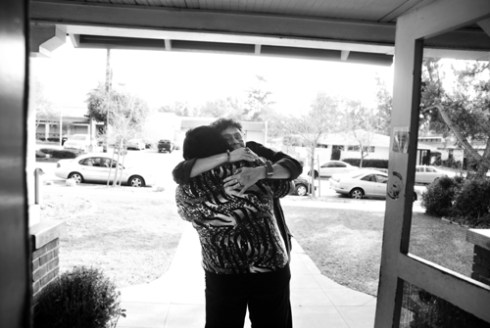
Mary Shields embraces a long-time friend and advocate one week after being released from Central California Women’s Facility. Mary served 19 years for a crime related to domestic violence.

Mary Shields a week after her release from Central California Women’s Facility laughs with a friend after she had trouble understanding how to use a cell phone, which were not widely used twenty years ago.

LaKeisha Burton performs a spoken word piece at Chuco’s Justice Center, which serves as a youth and community space in Inglewood, California. Today, LaKeisha shares her story through spoken word performances and is dedicated to working with at-risk youth susceptible to gangs and the same injustices as she once experienced.

LaKeisha watches a youth group perform at Chuco’s Justice Center in Los Angeles, California. With her infectious optimism and self-determination, LaKeisha Burton displays almost nothing of her past; she lives, works and dates, as any women like her. Yet, these things are exceptional for someone who had lost, some might say had stolen, nearly two decades of the most developmental period in one’s life and with very little preparation thrust out into society. Ms. Burton says when she was released it was as if she were still 15 going on 16.

In the United States over 1.5 million children have a parent who is incarcerated.* 75% of women in prison are mothers and over half have children under the age of 18. Many children suffer lasting emotional effects of a parent’s incarceration, which can affect all areas as they develop into adults.
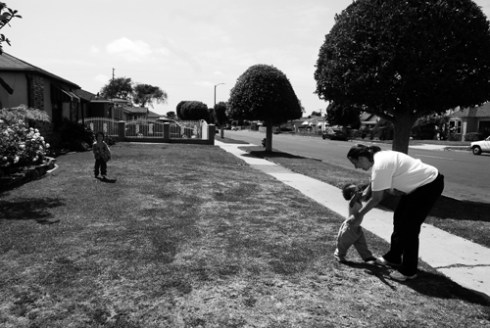
After cycling in and out of jail for crimes related to substance abuse, Jean Waldroup, 39, has found “home” at A New Way of Life, a transitional home for formerly incarcerated women that emphasizes keeping mothers and children together. For the last six months, Jean has maintained both her sobriety and role as mother to her son and daughter. Jean is the primary parent and she maintains a relationship with the children’s father.

A New Way of Life purchases homes in residential neighborhoods, giving a quieter, less institutional environment for families to rebuild relationships that may show signs of wear and tear after experiencing incarceration. Community-based organizations like A New Way of Life operate mostly under the radar with few resources and little public recognition despite their critical role in offering rehabilitation, family reunification and successful reentry.

Following her release, and to give her life structure, Molly volunteers to make lunch for clients at the behavioral health clinic she attends in San Francisco. Molly stills battles with drug addiction.
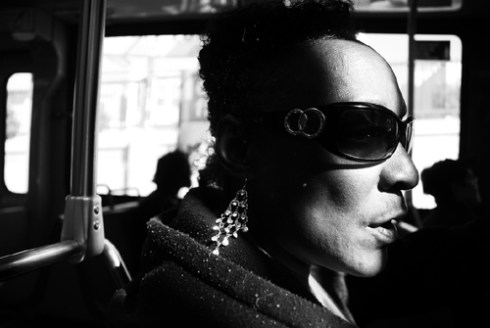
Molly on the bus. To avoid the caustic environment bubbling outside her building, Molly will ride Muni lines between Bayview-Hunter’s Point and Downtown San Francisco for hours. She tends to hide from nouns, that is people, places, and things. Molly’s mental health and substance abuse maintain instability and isolation in her life, some days are good, others hard.

A friend embraces Molly at a local community center.

Molly’s room at the Empress Hotel in San Francisco’s Tenderloin district. The first stable living she has had since the cycle of incarceration began in her life.
– – – –
*The advocacy group Children of Promise estimates the number of U.S. children with incarcerated parents at 2.7 million.
– – – –
DANA ULLMAN
Dana Ullman grew up in Portland, Oregon. She studied photojournalism at the Danish School of Journalism and holds a B.A. in Journalism from San Francisco State University. Dana currently lives in New York City photographing assignments and personal projects.
A New Way of Life Reentry Project is a non-profit organization in South Central Los Angeles with a core mission to help women and girls break the cycle of entrapment in the criminal justice system and lead healthy and satisfying lives.
California Coalition for Women Prisoners (CCWP) is a grassroots social justice organization, with members inside and outside prison, that challenges the institutional violence imposed on women, transgender people, and communities of color by the prison industrial complex. CCWP prioritizes the leadership of the people, families, and communities most impacted in building this movement.
The African Prisons Project (APP) is a group of people passionately committed to improving access to healthcare, education, justice and community reintegration for male, female and juvenile prisoners in Africa.

PHOTOS OF NORWAY’S PRISONS: CONTEXT
Almost without exception, photographs of prisons in Norway featured in international media over the past two years have appeared below a headline featuring the word “luxury” or in simplified articles about the relative comfort of Norwegian prisons. The implication? That no criminals should live in safe, clean, environments and that rehabilitation is folly at best and an insulting waste of taxpayers money at worst.
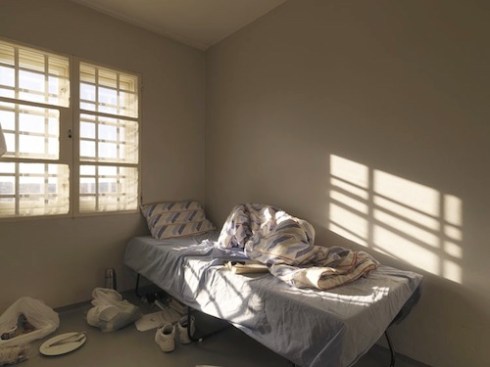
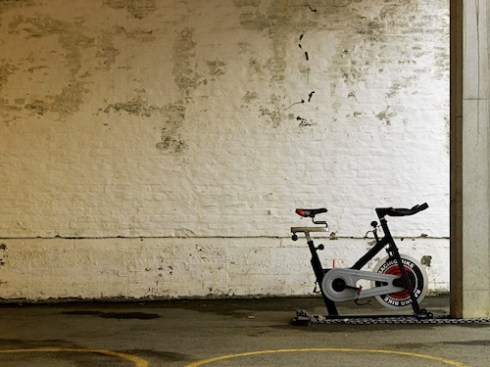
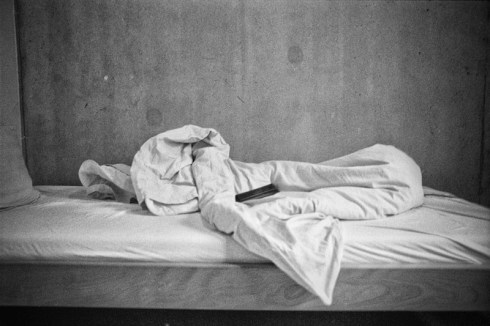
I’d like to recommend a different take. Six of Fin Serck-Hanssen‘s photographs from Normalising Judgement appear throughout this post.
Serck-Hannsen’s view is neither expressly bleak nor expressly sugary. These drab prisons are nothing to get overly-emotive about and as such probably reflect fairly the predictable life in highly-managed institutions that try to redirect the most antisocial adult behaviours. As you click through to the links included herein, please refer back to Serck-Hanssen’s Normalising Judgement to challenge the “rosy” picture that may have been painted of Norway’s prisons in international media.
Completed in 2008, Serck-Hanssen’s Normalising Judgement pre-dates Breivik’s massacre. The Norwegian Ministry of Justice and Public Security was drafting a white paper, and invited Serck-Hanssen to document multiple prisons. As long as privacy was safeguarded and security was not put at risk, Serck-Hanssen was able to work freely throughout the prisons.
Serck-Hanssen told Mono blog, “In my view, Norwegians in general have the idea that prisons are very human institutions. I wanted to find out how much truth there was in this assumption.”
BREIVIK, MEDIA, ATTITUDES AT HOME AND ABROAD
When mass-murderer Anders Breivik was sentenced to 21 years in prison by a Norwegian court, it wasn’t at all clear to me how the verdict related to my efforts here at Prison Photography. The court ruled he was sane, yet I am quite happy to describe his ideas as repulsive and his actions as deranged. His offensive gestures and attitudes played out in the court reflected his right-wing islamophobic motives for the murder of 77 innocents on Utoya Island in July 2011.
Breivik has entered the select company of infamous and clearly unhinged murderers that history unfortunately seems to remember. Here at Prison Photography, my concerns are for the majority of American prisoners who are non-violent, poorly-educated, warehoused and given few opportunities to rehabilitate should they find themselves subject to the unusually long sentences the U.S. hands down. Breivik has zero in common with these men, women and children.
Somewhat surprisingly, there is commentary that is spurred by ideas and images about Breivik’s case and that relates to American prisons. Said commentary revolves around the issue of prison conditions. Namely, it centres on the divergent expectations of people in different nations on conditions for convicted criminals.
Even preceding Breivik’s horrendous crimes, there was a characterisation of Norwegian prisons as being “luxury” (the same characterisation/accusation has been aimed at the prisons of other European nations – Austria springs to mind). Sometimes, the term “humane” was used; a welcome alternative given that the term “luxury” often carries an inferred suspicion and jealousy.
In the week following the Utoya Island massacre, innumerable news sources ran stories about how Breivik would potentially serve his sentence in a “cushy” or “super-lux” or, closer to the truth, “progressive” prison.
As it is the highest security facility in the country, it was understandable that international media assumed that Breivik would be held in Norway’s recently constructed (2010) Halden Fengsel Prison. He is actually being held in Ila Prison, near Oslo (details; 14 photos; and the psychology of solitary).
CIVILITY OF PROCESS: CIVILITY OF PRISONS
Repeated slideshows often feigned dismay and disgust, or intended to stoke up anger. But it was an anger engineered for international audiences, not Norwegians. Norway was busy mourning, getting to grips with introspection and formalising the logistics to carry out one of the most high profile cases in its legal history. This isn’t to say that Norwegians didn’t feel anger, but they also knew they had to meet Breivik’s unparalleled assault with a dignified and civil response.

In the U.S., a country that routinely hands down the death penalty and Life Without Parole, Breivik’s sentence of 21 years seems comparatively tiny, even foolish.* Most American citizens would balk at the notion. And yet, when the verdict was passed, most Norwegian celebrated the fact that Norwegian law had handed down it’s most severe punishment and that the civility of the judicial system had remained in tact throughout despite the extreme heinous nature of Breivik’s crime (I only consumed news-stories on this event in the UK, so narratives may have differed elsewhere).
If societies are to learn and move forward from such horrendous events then they need something to rally around. In Norway, the humane and sensible legal system, in the response to acts of utter criminality, was an obvious ‘something.’ Americans can never rally around the death of someone sentenced to execution. Even in non-capital offenses, how proud can any U.S. citizen be of a legal system that has sentenced tens of millions to broken prison systems and is responsible for 2.3 million prisoners on any given day?
Prison (or the electric chair) shouldn’t be considered the final chapter. Prison should be considered an early chapter toward mending a broken individual and society’s shortcomings that led a given individual to transgress. Prison conditions are key in successfully rehabilitating individuals and successfully relieving society of future crime and the associated financial costs.
Dylan Matthews explains on the Washington Post’s Wonk Blog that Making prison worse doesn’t reduce crime. It increases it:
It turns out there’s a pretty extensive literature on the effects of harsh prison conditions. One finding that is growing more and more accepted is that harsh sentences, if anything, increase recidivism. […] Gerald Gaes and Scott Camp found that higher security levels increase recidivism by about 31 percent. Lawrence Bench and Terry Allen randomly assigned prisoners to medium and maximum security sectors of a prison and found that prisoners in maximum security were no less likely to commit in-prison offenses. […] Geographic isolation increases recidivism. A study from Rafael Di Tella and Ernesto Schargrodsky found that people who are sentenced to house arrest with ankle monitors reoffend at a much lower rate than those sentence to traditional prison. And a wide array of studies have found that in-prison education programs reduce recidivism while improving quality of life. The findings on the effects of prison conditions on recidivism, in short, are a matter of scholarly consensus.
No prison is a cake walk. All prisoners deserve to be safe. I’d argue all prisoners should be as meaningfully engaged in rehabilitative activities and subject to civil attitudes as is possible. But, I also understand why the idea of retribution for some extends to a desire to see prisoners wallow in poor conditions. I hope I’ve made the case here that Norwegian prison are not luxury and that furthermore shouldn’t be the exception. Better prison conditions means less crime in the future. Better prison conditions means improved individuals.


* The maximum sentence possible under Norwegian law is 21 years, although in special circumstances, and Breivik’s certainly one, judges may extend the sentence as it nears an end.
– – –
All images Fin Serck-Hanssen. Get the book Normalizing Judgement here. Via here & now mono blog. Thanks to Robert Gumpert for the tip.

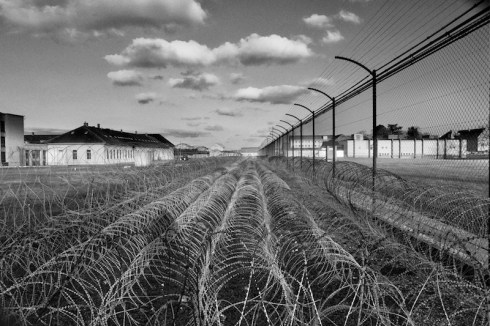
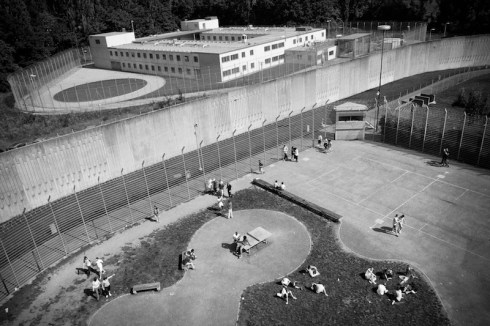
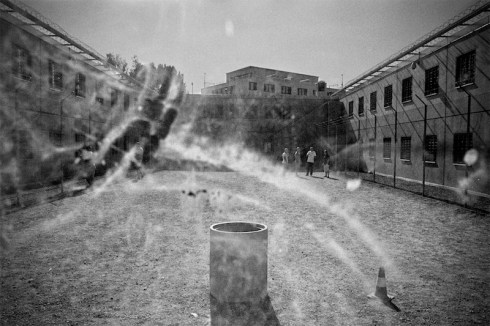
In 2012, Swiss photographer Patrick Gilliéron Lopreno documented – alongside journalist Jean-François Schwab – three prisons: Prison Champ-Dollon and Prison La Brenaz in Geneva and Bochuz Prison in Vaud, Switzerland. The result was the series Puzzle Carcéral.
Two of the prisons were at that time subject to national scandals. Skander Vogt, a prisoner at Bochuz died of asphyxiation after setting fire to his mattress. Prison Champ-Dollon was notorious for its overcrowding. Prison La Brenaz was built purposefully to reduce the population at Champ-Dollon from its bloated 200% capacity, although with mixed results.
I wanted to ask Patrick a few questions about working inside Swiss prisons that were at that precise moment under scrutiny.
How did you gain access to the prison?
Bochuz was closed to journalists because of the recent death of Skander Vogt, a prisoner. I managed to gain access because my work was outside of traditional news media. I was working toward an exhibition in a gallery. I worked in the prison for nearly a year.
How are the prisons in which you photographed characterised?
Champ-Dollon still suffers from overcrowding. Bochuz is for prisoners serving long sentences.
What are attitudes in Switzerland toward criminal justice and prisons?
Swiss prisons are not like Rwandan prisons, but there is a lot of dysfunction. The current trend is to move towards more secure and less social (rehabilitative) prisons.
Can you explain the title Puzzle Carcéral?
Puzzle Carcéral refers to Baudelaire‘s theme of the fragmented body. As a story, this body of work builds like a “photo puzzle”.

What did the staff think of your presence and your photography?
The relationship with management was not always good; there was a lot of mistrust on both sides. Some guards did not help me at all because they did not like my approach, other guards would help.
What did the prisoners think of your presence and your photography?
At first, the prisoners were suspicious of my camera which is normal. After explaining my approach, some were willing to be photographed, others not. Those who agreed to be photographed signed a consent form which explained that the photographs would be seen – on the outside – in a newspaper and in an exhibition.
Puzzle Carcéral was included in Swiss Press Photo 2011 and exhibited at Halle Nord Gallery in Geneva. What was the reception to the work?
The Halle Nord Gallery is a contemporary art gallery. Puzzle Carceral was the first time that this gallery exhibited documentary photography. Television, press and radio still work in this way so for me the story is that documentary is not yet quite dead!
Why choose the documentary approach?
I always use Black & White 400 ASA Tri-X Kodak film. This is not an artistic bias; it’s a practical decision. I love the texture and thickness of the film.


A CONTEXT, OF SORTS
We have all become very familiar with the horror stories of violence resulting from virtual open warfare between the Mexican government and the drug cartels in Northern Mexico. On the topic, I can’t recommend enough Dominic Bracco II‘s work from Ciudad Juarez. That said, Juarez and the US/Mexico border is, in many cases, a long way from other towns and cities across the expansive Northern Mexico deserts. It is through this landscape that the drug trade operates, corrupts, benefits, endows and murders – both individuals and communities.
CE.RE.SO, GUACHOCHI
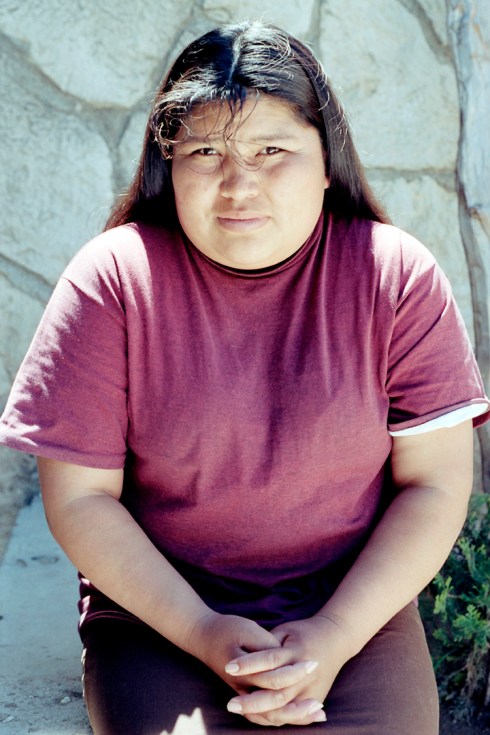
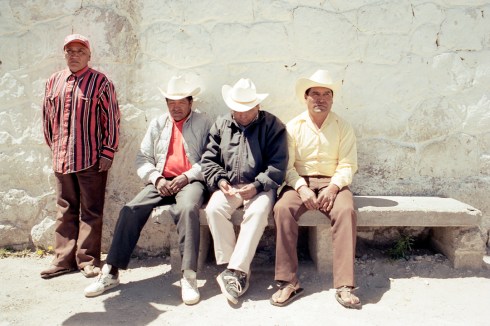
In one such town, Guachochi in the State of Chihuahua, photographer Oskar Landi stumbled across the Centro de Reabilitacion Social (CE.RE.SO). Landi had the opportunity to photograph prisoners in this scorched, sleepy jail during their open-air break.
On the evidence of Landi’s photographs, CE.RE.SO is not a maximum security prison of hardened criminals; oversight seems minimal; male and female, young and old mix; uncertainty hums in the air. If they have anything in common with one another, these prisoners look lost.
Oskar sent me his images, but knowing very little about the town and region, it is only responsible to let his words speak.
“Members of usually non-violent indigenous communities, the Tarahumaras and Tepehuanes, make up the majority of the prison population,” says Landi. “These sober portraits belie the intricate, complex and dramatic history of Mexico’s indigenous community.”
Discrimination is routine.
“The indigenous are often considered inferior because of their dark skin, traditional clothes and customs. As with the rest of the Americas, Mexico’s indigenous population endured invasion, violence and Christianization by the Europeans. This history still haunts their local daily life,” he says.
Guachochi is the largest city in a vast, remote rural region inhabited by both indigenous communities and a relatively much larger number of mixed race people, referred to collectively as mestizos.
“In an area where isolation has helped maintain indigenous culture, extreme poverty and vacant land has also contributed to the spread of illegal drug production as did the birth and collapse of the economic bubble between the late-1980s and mid-1990s,” he says.
“As profits diminished, large quantities of alcohol and weapons were introduced into these isolated communities, soon leading to an increase in violence between the mestizos and the indigenous groups. Honour also plays a central role in the violent conflicts that take place, as intricate circumstances provoke an endless cycle of violence and revenge,” Landi concludes.


OSKAR LANDI
Oskar Landi (b. Italy) has lived and worked in New York since 1998. He attended the International Center of Photography and has a certificate in cinematography from New York University. A successful editorial portraitist, Landi has photographed some of the world’s most renowned artists and innovators. He has worked commercially for Armani, Levi’s, The Village Voice, Bon Appetit, FN Magazine, Style, DDN Magazine, Runner’s Magazine, Wienerin. His personal projects have been recognized by the International Photo Awards and Prix de la Photographie Paris. Landi’s work is distributed by Anzenberger Agency.
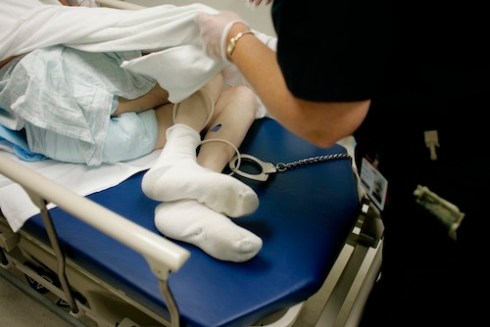
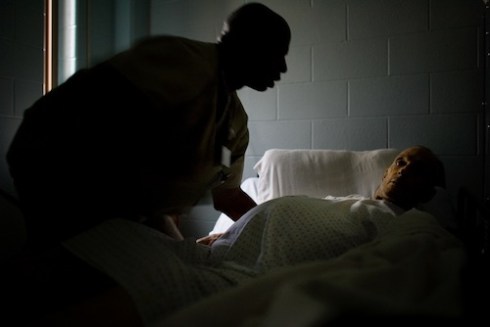
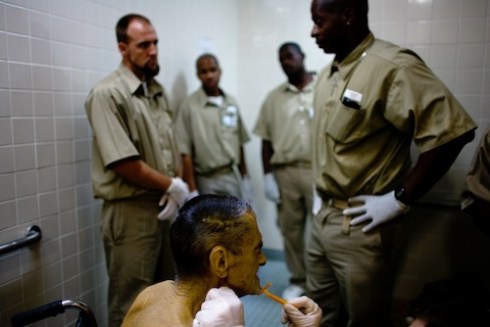
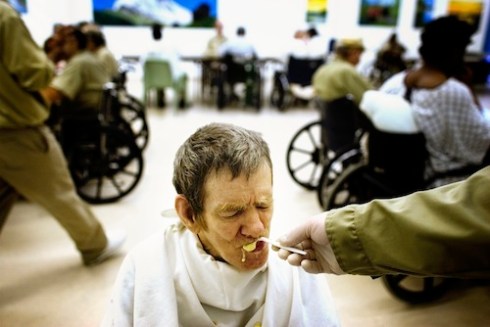
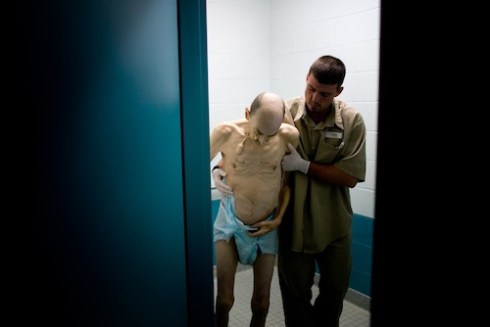
In 2008, Tim Gruber embedded at the Kentucky State Reformatory to photograph in the geriatric wing designated for elderly and terminally ill patients. The result is Served Out, a photography and multimedia project. Here, I featured six images included in the PPOTR/Cruel and Unusual exhibition, but you should check out Tim and Jenn’s website for more stellar images.
Both Tim and his wife Jenn Ackerman worked in KSR the same summer. Tim is unequivocal: their access was down to then-Warden Larry Chandler’s good grace and good sense. Chandler wanted people to see how their tax dollars were spent and understood photography as part of the transparency he insisted on for the institution. KSR even gave weekly tours of its facilities.
Tim and Jenn, after brief training, were given staff-badges and were free to go about their work in the prison. They moved down to La Grange, KY for the summer to make the project and it wasn’t easy; Tim blogged some of the challenges (one, two, three, four, five.)
When we spoke last October, Gruber was in discussion with the ACLU. Last month, his images were used to illustrate the ACLU’s latest report ‘At America’s Expense: The Mass Incarceration of the Elderly‘ (Tim’s announcement.)
Of course, the common knowledge of the problems of incarcerating the elderly shaped our discussion. From the ACLU report:
Over the last 25 years, state corrections spending grew by 674%, substantially outpacing the growth of other government spending, and becoming the fourth-largest category of state spending. […] It costs $34,135 per year to house an average prisoner, but it costs $68,270 per year to house a prisoner age 50 and older. to put that number into context, the average American household makes about $40,000 a year in income.
In 1981, there were 8,853 state and federal prisoners age 55 and older. today, that number stands at 124,900, and experts project that by 2030 this number will be over 400,000, amounting to over one-third of prisoners in the United states. in other words, the elderly prison population is expected to increase by 4,400% over this fifty-year time span. this astronomical projection does not even include prisoners ages 50-54, for which data over time is harder to access.
The U.S. keeps elderly men and women locked up despite an abundance of evidence demonstrating that recidivism drops dramatically with age. For example, in new York, only 7% of prisoners released from prison at ages 50-64 returned to prison for new convictions within three years. that number drops to 4% for prisoners age 65 and older.
But, also, Tim and I talked about the emotions and first-hand experiences statistics don’t capture – the need for alternative imagery of prisoners and their humanity; what it was like to work on the wings, sit with the men and witness death (“Tears would overwhelm me”); compassionate release, prisoner-volunteer medical assistants and how Tim’s imagery may effect change.
LISTEN TO OUR CONVERSATION AT THE PRISON PHOTOGRAPHY PODBEAN PAGE


Police stop teenagers for ID and when one can’t produce it he is put in a police van and driven away. The other has to call his mother who didn’t answer. The police were about to haul him away when his brother showed up and presented ID. © Nina Berman
STOP AND FRISK
The controversial Stop & Frisk procedures of the New York Police Department (NYPD) have been enacted for decades, but due to a phenomenal rise in figures over the past decade, the issue has recently become a hot news topic.
Civil rights advocates point out that Stop & Frisks are disproportionately experienced by minorities. The New York Civil Liberties Union (NYCLU) published a report: NYPD Stop-and-Frisk Activity in 2011/2012.
In 2002, the NYPD made 97,296 stops. In 2011, there were 685,724 stops. Not all stops result in frisks. Of the 381,704 frisks, 330,638 (89.2%) were of blacks and Latinos. By contrast, only 27,341 frisks (7.4%) were of whites.
The NYCLU reports:
“Young Black and Latino men were the targets of a hugely disproportionate number of stops. Though they account for only 4.7% of the city, black and Latino males between the ages of 14 and 24 accounted for 41.6% of stops in 2011.” …
“The number of stops of young black men exceeded the entire city population of young black men (168,126 as compared to 158,406). Ninety percent of young black and Latino men stopped were innocent.” …
“The 2011 data are striking in what they reveal about the large percentages of blacks and Latinos being stopped in precincts that have substantial percentages of white residents. For instance, the population of the 17th Precinct, which covers the East Side of Manhattan, has the lowest percentage of black and Latino residents in the city at 7.8%, yet 71.4% of those stopped in the precinct were black or Latino.“
In total, during the 10 years of the Bloomberg administration, there have been over 4,000,000 stops in New York city. The 524,873 extra stops in 2011 (as compared to 2002) recovered only 176 more guns.
In 2011, of the 381,704 frisks, 330,638 (89.2%) were of blacks and Latinos. By contrast, only 27,341 frisks (7.4%) were of whites.
Blacks and Latinos were more likely to be frisked and, among those frisked, are far less likely to be found with a weapon.
The New York Times reported last month that the NYPD has abused Stop & Frisk policies in recent years but others say the NYPD has – with officers’ routine street stops of minorities – been abusing its powers for decades.
Battle lines have been drawn. In May, NYCLU filed a lawsuit“challenging the NYPD’s unlawful practice of detaining, questioning and searching innocent New Yorkers – particularly blacks, Latinos and other non-whites.” In a counter attack, Mayor Bloomberg has called the NYCLU “dangerously wrong” and dismisses them as “no better than the NRA” for opposing the Stop & Frisk.
The Guardian just published data visualisation of NYC Stop & Frisk.
PHOTOGRAPHER’S INTEREST PIQUED
New York-based photographer Nina Berman has recently taken on the challenge of photographing this sprawling, all-encompassing issue. In the early stages of the project, she has published her forays in a couple (one and two) blog posts.
I realise this is a long conversation (possibly the longest I’ve ever published on Prison Photography) but it’s an important topic emerging in the popular consciousness right now.
Nina and I discuss how to make images of police activities and civil disobedience; talk about Nina’s motivations; pay attention to individual and group activists; and consider why attitudes about Stop & Frisk vary so wildly in the context of such controversial and stark statistics.
CONVERSATION
Why has this become a big issue recently?
Stop & Frisk has been a big issue for a long time in New York’s communities of colour. If you live in predominantly white community in New York you wouldn’t notice it because most white people are not stopped and frisked.
I think it’s a noticeable issue now because the numbers have got so high. There’s been some lawsuits and activist agitation so it has become more talked about. We’ve also seen connections made with other police aggressiveness and killings of unarmed black and brown men.
Is this just in NYC or is this indicative of issues at a national level?
It’s a national issue. A legal aid attorney, who lives in D.C., told me some months ago, that it was her feeling that it was worse in D.C. There is just a super-intense activist community here in New York who have just made it a central issue. And then there’s been lawsuits by the NYCLU and that has helped propel it into news reports. But I’ve been following it since November 2011 – at that time there was very little conversation about it. Now, it’s in the national press nearly every day.
How did it fall on to your radar?
I heard about it two years ago, either through a NYCLU or a Center for Constitutional Rights listserv. I read about lawsuits that have been put in against the NYPD. I thought that’s a huge number [of police stops]; what’s that all about?
Later, I saw a couple Stop & Frisks happen in the Bronx and it was just shocking. I started to follow some activists, who are just so dedicated; they are doing stuff everyday. The more I learned about it, the more I saw the connection between Stop & Frisks and what people are now calling the New Jim Crow; it’s not just the physical violation and potential humiliation of being stopped and searched but all the disenfranchisement that come as a result of that. That aspect has been missing in a lot of the news reports.
For instance, you may be stopped and the police officer may ask you for ID, and you may not have ID. As far as I know, there’s no ID law in New York city, but they may say, “You’re trespassing here,” and then you get a trespassing summons, or if you talk back to the officer, and ask ‘”Why are you stopping me?” you could get a disorderly conduct ticket and summons to court.
These are the kind of things that pile up. I’d like to see compiled statistics in New York city on how many disorderly conduct summons are given out, to whom they are given, and where they are given.
You said that you had witnessed a couple of Stop & Frisks?
I was in the Bronx on another project and I didn’t have my camera out. I saw a man riding a bicycle and a cop stopped him in the middle of the street. He stayed on his bicycle and he just immediately put his arms out in the air, like he knew precisely what position to assume. That’s a whole other thing that interests me; how body language for some people according to their race is a normalized gesture. For white people gestures [associated with Stop & Frisk] would be abnormal gestures.
Last summer, I saw a guy – he looked like he was 17 or 18 years old – in the Bronx and two plain-clothed cops came out and pushed him against a wall and stripped him of everything. It was intense.

What are the figures for stop and searches over the years?
Up to 700,000 in 2011. How many of those stops are also searches is unclear. Each year since 2002, stops have gone steadily up. If you calculate it for 2011, it is more than one a minute!* It is beyond comprehension.
What are the attitudes of the people in these communities who are effected?
There’s one guy in East Harlem I’ve come to know rather well. He’s been stopped and frisked his whole life and has never thought anything of it. One day, he saw his stepson stopped and searched. A light went off in his head; “What is going on here?” In another instance, his stepson was stopped and he was able to record the audio of the stop and the stuff the cops were saying was so abusive. After that, the father decided to get involved in civil disobedience and he’s out there every day involved in jail support, court support and rallying at precincts too. Many of the activists have been arrested.
Where have you been making photographs?
Outside precincts mostly; in Harlem, the Bronx, and Police Plaza downtown. Also, courthouses; mainly the Bronx criminal courthouse, the Manhattan criminal court house.
In the midst of the project, there was a police killing of a young man named Ramarley Graham. So the Stop & Frisk opposition got connected to issues around unwarranted police killings. They see it as part of the same racial profiling issue.
And the impact?
The impact has only been because of enormous amount of pressure – it’s kind of astonishing that you can have an impact at the grassroots level. Walking while Black [is the issue.] Jumaane Williams, a city councilman has stepped up and said, “I got stop and frisked, and I’m a councilman.”
The protestors I have met want an entire new style of policing; the police are not being seen as protectors, but as aggressors. Also, as part of some system – through these stops, this harassment, these summons, these stops – it just keeps people down.
If you speak to some of the parents, their concern is, “Okay, so my kid gets stopped 5 or 6 times for some bullshit thing and let’s see what happens when you seek college loan money. That’s the real fear. One of the fears. I guess the real fear is that a cop might kill your son. If he moves his hand the wrong way or something.
The Department of Justice (DOJ) is just beginning inquiries. The NYPD is not really backing down. As of a month or so ago, Mayor Bloomberg and NYPD Commissioner Ray Kelly were saying ‘This is terrific.’
Michelle Alexander’s characterization of this documenting and disciplining on the streets as well as in the prisons as “The New Jim Crow.” It seems these rapidly rising figures of Stop & Frisk support her arguments. That this racial profiling begins on the street makes the larger, national issue even more terrifying and pernicious. A lot of the time people think it is locked facilities that control populations so vigorously, but here’s evidence that racism begins in free society. Would you agree?
One of my first experiences was photographing some boys who were walking back from the gym in the Bronx. They were stopped, taken to the precinct and their mothers were called. They came to the precinct and the mothers started getting upset. The police wouldn’t let the mothers see them. One of the boys was charged with disorderly conduct because he talked back to the cops and one the mothers said. “That’s it, I sending my kid to the South. I have to protect him from the NYPD.” I learned that there’s this whole reverse migration that goes on when a boy hits his teenage years. Families in New York – and this is not the fist time I’ve heard this – want to send their boys back south to live with relative and to protect them from the NYPD! That blew my mind.
Why has the NYPD taken on this policy which is clearly flawed but also a public relations disaster?
Well, so far it hasn’t been a public relations disaster; not until this year. What kicked it off was a very visible civil disobedience action by Professor Cornell West and a bunch of other in front of the Harlem police precinct. That was the first step. Why the NYPD is doing it? I don’t know if it a money maker which would be an interesting things to find out. All these summonses carry fines.
I personally think New York city has too many cops; it is the most heavily policed city in North America. There’s 40,000 cops so they have to do something. The other factor – and this is what people say on the streets – they are too afraid to go after real gangsters so they hit up these people that are doing nothing, so they can show they are meeting quotas.

Law enforcement says there’s some good in the policy – that gang-bangers don’t bring guns on to the street, because they’re afraid of being stopped; so it is kind of a *preventative* policy.
But statistics (see graph above) don’t really support that argument.
Plus, it’s clogged up the entire court system, the holding cells. Say you’re stopped at 3pm and given a disorderly conduct summons, you may not get to the precinct till 10 o’clock at night … and then they might send you to central booking. Can you imagine what that’d do to a kid, or to anyone? If you’re on a job that says, ‘If you don’t show up you get fired [you loose your job].’ These are real stories; they are not just hypotheticals.
This is what Michelle Alexander would refer to as your way into the system.
What usually happens during a Stop & Frisk?
Legally, if a police officer stops you, you don’t have to say a word. There’s all sorts of “know your rights” trainings all over the city now. And there’s CopWatch groups. Neighborhood people are going out in teams in the community and just watching them.
What you’re supposed to do is ask, “Officer, am I under arrest?” and if the officer says no, you’re supposed to walk away. Does it usually happen like that? No. You’re scared when someone comes up to you. You say something. Each Stop & Frisk handles very differently.
If you refuse to answer questions that might cause problems.
They may throw some charge. They could say you’re obstructing justice. They’re supposed to stop you if they suspect you of something. They’re only supposes to frisk you if they suspect you are carrying a weapon.
I think this policy is going to change. I think there has been a tremendous amount of change. I don’t know what they will then do with all these police officers!?
It used to be when a municipality had budget troubles they’d think about dropping the number of cops. They don’t think that any more. It’s an untouchable.
If they pulled this stuff on 57th Street, Park Avenue or Madison Avenue, can you imagine what would happen? Could you imagine someone walking out of Barney’s New York and the NYPD stopping and frisking the person?
The NYPD does it in neighborhoods where people aren’t going to say anything.
What the most egregious case you’ve learnt about?
In my video, a young man speaks. He’s in his twenties. What was he pulled in for? He was in the subway with his girlfriend going downtown. and his girlfriends sister swiped him through on the subway. He was busted for soliciting. They claimed he asked someone to swipe him through. Well, it’s not illegal to swipe someone through. He spent a whole day in the system because of that. You see some subway stations heavy with police officers. Why? Because they have so much crime? I don’t think so.
Tell us about the groups you’ve been working with and following.
There’s a fluid group of people whop aren’t connected through any specific structure. They find each other at events. Or, someone has a problem and knows one person and they reach out to the group. The group I’ve been following is called Stop Stop & Frisk and it is a mix of Black, Hispanic and White people from Bronx, Manhattan, Brooklyn. They plan to go Staten Island, where there’s lots of problems as well.
Opponents are a mix of working class and middle class, some social workers, legal aid workers, some students and some activists. Wherever there’s some action happening they’ll try to show up and show support. There was recently an action at Lehman High School in the Bronx. Kids were being harassed; it’s a very liquid surge of people who are interested. Go to any neighborhood that is predominantly Black or Hispanic and you’ll find people working on this issue.
The NYCLU has been on the forefront of the opposition?
Yes, and there’s been different organizations that have coalesced. There’s the Police Reform Organizing Project (PROP). There is not one central group and that’s what it so amazing about it. People are waking up at the same time and saying, ‘Hey our neighborhood doesn’t have to be like this.’
How do you plan to pursue the story visually? It’s difficult, no?
I can certainly stake out more Stop & Frisks, and I’d like to do that. There’s also newly emerging surveillance infrastructure. The NYPD will roll these watch-towers into neighborhoods and watch certain places. I’d like to find a way to photograph this landscape that is constantly surveyed. You just have to figure out where these things are because they are moving all the time. And then I’m quite drawn to the mothers – the mothers who feel like they are going to lose their sons.
What do you think about this Pete?
Often material that gets to the heart of the matter is not the photography done by the well-meaning documentary photographers, but the images captured by the surveillance or official cameras. Look at the photos in the appendix of the Supreme Court ruling on the Plata vs. Brown case. The ruling established that overcrowding in California prisons led to preventable deaths, and therefore the conditions of detention for approximately 160,000 inmates was – is – cruel and unusual. Those photos were all taken by the California Department of Corrections itself.
Consider the Collateral Damage wikileaks video; it was US Army footage. The Abu Ghraib images were not taken by a journalist. Many of the photos that are central to expose are taken by those on the inside. It’s very difficult for an outsider to get that sort of access necessary.
So, I am interested in these movable NYPD watch towers. I never knew they existed.
They used them during Occupy. What Happened When I Tried to Get Some Answers About the Creepy NYPD Watchtower Monitoring OWS was a great story by Nick Turse about his encounters with the cops manning the occupy towers. Pete, you’re talking about the Prison Industrial Complex, and there’s is the Military Industrial Complex … well, this is the Homeland Security Industrial Complex. There’s money for new toys and they have to use it. They train police forces on them and they pull them out in every situation.
BUT if you’re in a residential neighborhood and you see one of these watchtowers for a few days, you wonder who’s doing the watching? Am I being watched? Maybe the person behind me is threatening? Is that what’s happening? Or am I being violated? Photographically, it’s not that easy to figure out how to cover these issues, but it’s not impossible. I think you just have to be clever; push yourself further. I feel pretty proud of myself for making the start I have, because you don’t see one photographer touching these things. I’m not patting myself on the back about this but I like the idea of engaging with these communities and the city I live in. I feel that’s important.
A couple of years ago, Fred Ritchin encouraged me to move away from purely historical survey of photography in prisons and think about how the strategies and apparatus of discipline and management developed in prisons have been implemented across free society – corporate parks, high-rise surveillance, riot and protest policing.
Your work from Homeland was subtle in how it connected Americans with the hardware for war and surveillance.
I’ve though of just parking myself in front of central booking in Bronx, in front of the courthouse. I was there for a while the other day when a cop was indicted for the killing of a young boy and I saw kid after kid being walked i n there in handcuffs. I foe want to actually photograph those numbers – and maybe you do that; it takes a day, a week, month – how many pictures can I actually make of Black kids in handcuffs? I’d make thousands.
The challenge is that so much of this you can’t see; you’re prevented from seeing. There is a former prosecutor who has become a big opponent of Stop & Frisk. He says the conditions inside the Manhattan holding cells are worse than anything he’s ever seen in his life, and that they’re designed to make you feel like an animal intentionally.
Criticism of holding cells doesn’t surprise. City jails have a more transient population. There’s a general rule of thumb that the shorter the amount of time someone stays in a cell, the less care they’ll take care of it.
Wouldn’t it be amazing to get a look inside a booking cell. Lawyers don’t even see a booking cell. I’ve thought about getting myself arrested just so I could see it and experience it for myself.
Don’t do that, Nina.
No, I don’t think so. But, it has entered my mind more than once. You see the activists who are doing it more and more. They want to get arrested. They’re so caught up in it. They want the reminder of how fucked up things are.
You said earlier that the courts and booking stations were getting backlogged, possibly because of the civil disobedience also?
Yes, apparently. Frivolous charges are clogging the system. Bobby Constantino, a former [and disillusioned] prosecutor from Boston, writes The Crown blog. He moved to New York, got himself arrested in a civil disobedience action and wrote a whole description of his arrest and booking.
Why have you ventured into video?
I realized the stories people were saying were important and they’d be really hard to capture in just stills. And to give my audience a sense of the cat-and-mouse game played out on the streets. Standing in front of a precinct screaming at police officers? People don’t just do that. People have to get to some sense of rage just to do that.
It would be interesting to speak to the District Attorney (DA) that deals with those cases and see how many cases are brought forward and how many get dropped. Often a DA doesn’t want to waste time and resources on petty charges, especially if the courts are stretched.
The thing is, a cop’s quota is still met as long as he writes the ticket. It’s not based on whether or not it goes through the court. For the cop, he doesn’t care if the case is dropped or not and this is where the reporting needs to come in. The Times, Wall Street Journal, Reuters, Daily News; there needs to be a second level of reporting [from those outlets].
What is the infrastructure driving all of this? It’s not just Michael Bloomberg and Ray Kelly saying this is a crime fighting technique. What are the contradictions? If I was an investigative reporter, that’s what I’d be looking into.
Say you have a couple of disorderly conduct summons against you and you don’t show up to court, you’re going to have a warrant against you! Then you have a record … a real record. It’ll be interesting to see how many people come out for the daily marches. Everyday, more people sign on and it could end up being thousands and thousands of people.
Where do you feel you are at with your coverage of this issue?
I like the video I’ve made and I can certainly go more on it. But how do you photograph racial profiling? Or, furthermore the impulse to racial profile? If you look at some of these situations, in particular police killings – which I think of as the result of racial profiling – the cops are operating with one world view and the communities with another. They’re gulfs apart.
– – – – – –
*There are 525949 minutes in a year. Therefore, in 2011, the NYPD stopped someone every 45 seconds.
– – – – – –
NINA BERMAN
Nina Berman is a documentary photographer with a primary interest in the American political and social landscape. She is the author of two monographs Purple Hearts – Back from Iraq and Homeland, both examining war and militarism. Her work has been recognized with awards in art and journalism from the New York Foundation for the Arts, the World Press Photo Foundation, the Open Society Institute Documentary Fund and Hasselblad among others. She has participated in more than 70 solo and group exhibitions including the Whitney Museum of American Art 2010 Biennial, the Milano Triennale, 2010 and Dublin Contemporary 2011. Her work has been featured on CBS, CNN, PBS, ABC, BBC and reviewed in the New York Times, Aperture, Art in America, Afterimage, TIME, American Photo and Photoworks. She is a member of the NOOR photo collective and is an Associate Professor at the Columbia University Graduate School of Journalism. Berman lives in New York City.

 Prison Photography