
You are currently browsing the category archive for the ‘Fine Art’ category.

I never expected to make comment on the career of Miley Cyrus here on the blog, but then again, I never expected to come across the greatest sketch of Miley Cyrus ever made.
The drawing, titled Miley Twerking, was made by my friend Christian Nagler. It originally appeared in the Fall 2013 Issue of Actually People Quarterly (APQ), an indie print publication based in San Francisco. APQ and Nagler kindly provided permission to share the picture.
There’s not a day that goes by that I don’t see a thumbnail image of Miley Cyrus in the sidebar of some website. Collections of Cyrus-resembling pixels are ubiquitous. In terms of describing Miley-Cyrus-the-person, a photograph is almost meaningless. In terms of describing Miley Cyrus-the-product, a photograph is the perfect hype-spinning money-making tool.
The reason I like Nagler’s sketch so much is that skewers the ridiculous theatre of her MTV Awards twerking AND undermines the grotesque image-driven publicity machine that surrounds her. It lays bare what she is and discards the useless debate of who she is.
Cyrus is, as with all celebrities, almost unknowable. She is not a person, but a product. She is no longer a who, but a what. Photography when it encounters celebrity elevates and promotes the what. Photography may purport to depict the who, but it does not.
This is my reading and not necessarily Nagler’s intent. I think he is genuinely interested in Cyrus; perplexed by the who, the what, and the gap between.
“The reason I think Christian’s picture is amazing is because it leaves space left open,” says APQ founder and editor, Sarah Fontaine. “It doesn’t totally proscribe an opinion on her. There’s a level of investment. A drawing takes time but a photo takes an instant.”
If I could even know Cyrus, I don’t think I’d dislike her. Everyone wants to have an opinion about Cyrus’ conduct. Some think her various states of undress hinder the movement of our culture toward one of gender equality. Often Cyrus is the focus of vitriol and frustration, but perhaps we should be looking at society as a whole? I’ll defer to Gloria Steinem and suggest we hate the game, not the player.
“I think that we need to change the culture, not blame the people that are playing the only game that exists,” said Steinem.
Photography upholds, forwards and fortifies the game. Nagler’s sketch respectfully questions the game. My thoughts on photographing Miley Cyrus? Don’t.
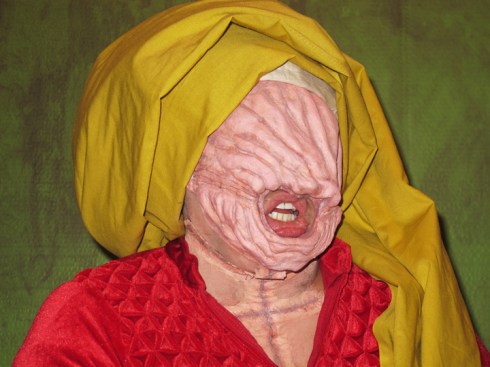
Kansas, MO and Brooklyn, NY based artist Jaimie Warren is the recipient of the 2014 Baum Award for an Emerging American Photographer. This is a curious selection for many reasons — all of them good.
Firstly, I wasn’t aware of Warren’s practice; even though she has a Wikipedia page and a long history with VICE, I had not come across Warren’s work before. I am glad I did.
Secondly, her work is wacky. The meanings of her images are elusive and you’ve got work hard with them. As many photographic artists do, Warren plays with ideas of fantasy, fun, performance and artifice, but she does so in much more aggressive, brazen way. These are not the cool, clinical images of studio assemblages we see from many young (MFA-bearing) image-makers.

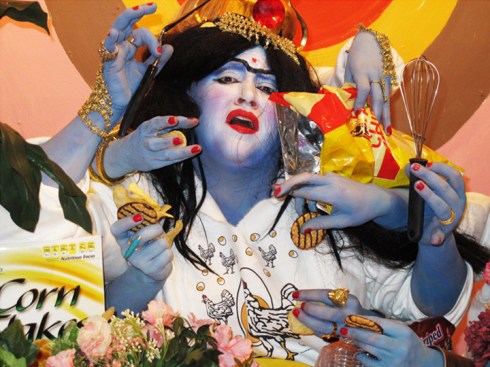
I really, really enjoy Warren’s disfigured portraits and tableaus. They’re pop, they’re a bit grotesque, they cinch perfectly into the shock-visuals of audiences habituated to the Tumblr-driven flow of images. Warren’s work is Peewee Herman meets Carnivale meets that bonkers Halloween party you went to in 1997.
Thirdly, it is great to see an award go to a photographer who isn’t just a photographer. For all the intelligent image detournement in her work, Warren is not operating from a fine art ivory tower. Quite the opposite. Central to Warren’s work is constant collaboration with communities. Her main vehicle for making art is the non-profit community arts initiative Whoop Dee Doo.
Whoop Dee Doo works with communities “to create unique and memorable events that challenge the everyday art venue or community event.” Everything from concept to end product is intended to fit the needs of host communities, and all acts are “truly inclusive endeavors that celebrate differences and unabashed self-expression.”
Probably the best and quickest way to get a handle on the art and performances is to view the Whoop Dee Doo Vimeo Channel.
Whoop Dee Doo has worked with youth programs including Caldera Arts (Portland/Sisters, OR), Operation Breakthrough (Kansas City), the Boys & Girls Club (Kansas City), Big Brother/Big Sister (Kansas City), Girls, Inc. (Omaha, NE), Experimental Station’s Blackstone Bicycle youth Program (Chicago, IL), Urgent, Inc. and the Rites of Passage Program (Miami, FL), Muse 360 and 901 arts (Baltimore, MD), as well as college interns at the University of Central Missouri, Pacific Northwest College of Art, the Kansas City Art Institute, the University of Chicago, Maryland Institute College of Art, Rockhurst University, and the Pennsylvania Academy of Fine Arts.
Impressive.

Jaimie Warren, Self-portrait as Bulls fan in La Jeunesse de Bacchus by William-Adolphe Bouguereau/Michael Jordan basketball painting by dosysod of the Independents, 2012.
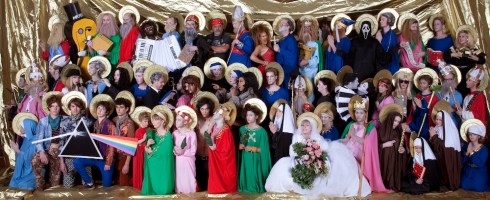
Jaimie Warren, Self-portrait as Nun with some of my Mother’s Favorite Famous People in the Forerunners of Christ with Saints and Martyrs of the Fiesole San Domenico Altarpiece by Fra Angelic, 2014.
From looking over the portfolios, I reckon the folky-rainbow-eclecticism of Warren and her collaborators’ work reflects something close to common feeling. What else could there by except fun, wild variance and complexity when the hands of dozens go into making something?
Breaking down stereotypes and barriers between age, gender, culture and sub-culture is one of Whoop Dee Doo‘s main objectives. The group is open to designing performances and workshops “between unlikely pairings of community members that ultimately blossom into exceptional and meaningful interactions.”
A lot of the time, the use and outcomes of awards can be hard to pin down, but I can’t imagine it’ll be too long before Warren is putting the $10,000 to use making more happenings with communities. Because she always has. Let the merriment continue.


BAUM AWARD
The Baum Award for An Emerging American Photographer is a project established out of the conviction that photography is a powerfully influential medium with the capacity to emotionally connect with audiences in ways that words cannot. This ability to reach people on a visceral level can transform awareness to understanding and lead interest into action – fundamental aspects of a healthy and vital society.
Click here to see previous Baum Award winners.

Memories of the Southern Civil Rights Movement
2014 is the 50th anniversary of the passage of The Civil Rights Act, the landmark legislation that prohibits discrimination on the basis of race, color, religion, sex or national origin.
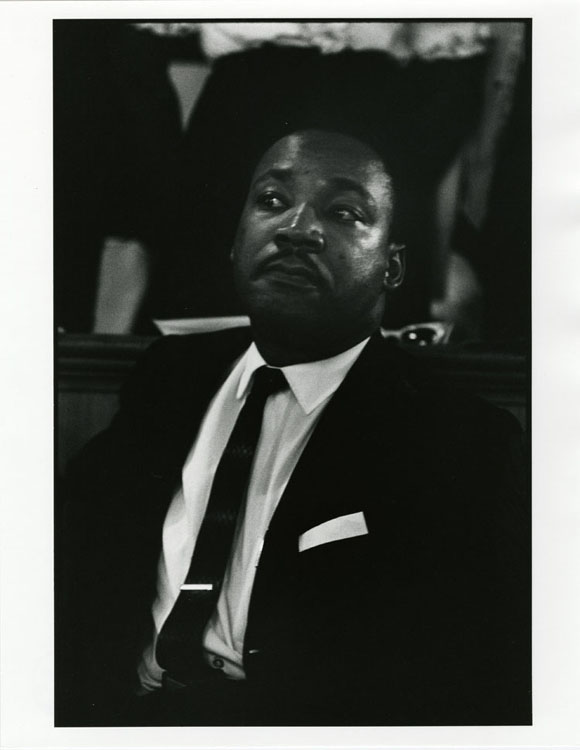
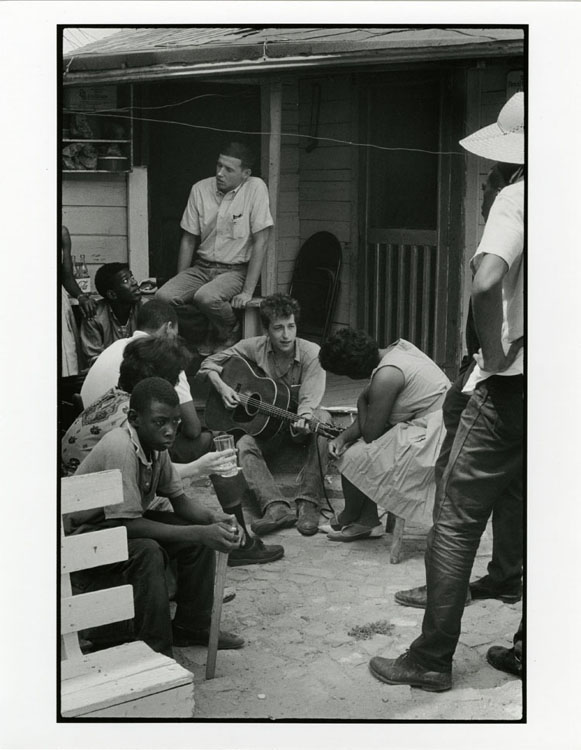
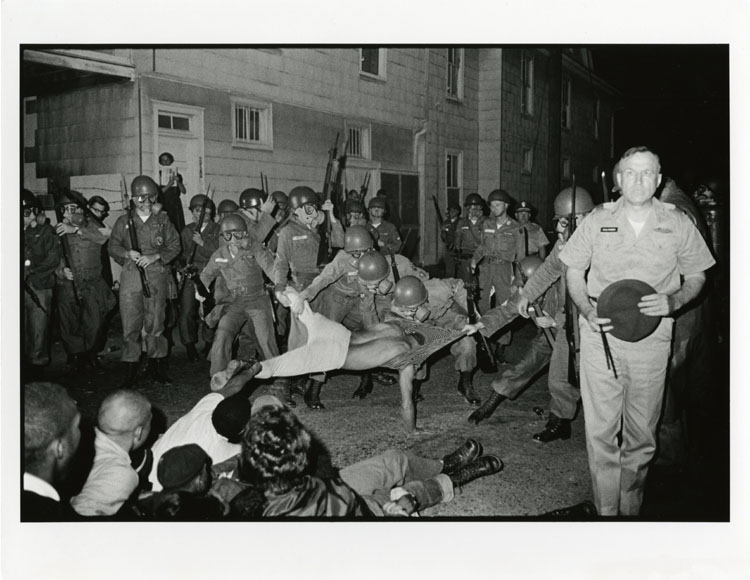
Danny Lyon was the first staff photographer — between 1962 and 1964 — for the Student Non-Violent Coordinating Committee (SNCC). Lyon would go on to make some of the most important bodies of work about the American condition (The Bikeriders; Conversations With The Dead) and as such his very early work as a very young man is often overlooked.
The Etherton Gallery’s exhibition ‘Danny Lyon: Memories of the Southern Civil Rights Movement’ opened on Saturday and shows 50 silver gelatin prints from Selma, Birmingham, and Montgomery, Alabama; Albany, Georgia; and Danville, Virginia. We see images of student protests and mobilization against racism, lunch counter sit-ins, student beatings, tear gassings, the jailing of Martin Luther King Jr., and the unscheduled visit of a young Bob Dylan to SNCC headquarters in Greenwood, Mississippi. Lyon, was harassed, beaten and jailed during his two years as a staff photographer.
SOME THOUGHTS ON AZ
Where better to look back on an era in which society treated people with different coloured skin than in modern day Arizona? The passing of SB1070 in 2010 was a legislative bill that essentially permitted veiled racism and racial profiling. In activism, folks are always on the look out for new allies and for audiences who really need to hear the message. A message of anti-racism message and some historical perspective is vital for residents of Arizona currently. I’m not saying that people of Arizona are inherently racist; I am saying the services and institutions that claim to serve them have procedures that result in racist acts.
There are some fine activists in Arizona (they’ve necessarily and wonderfully organised) and this is particularly true of Tucson and some clever geographer-activist-academics. May Lyon’s photographs play their part in making Arizonans and us angry. Lyon would want nothing more than his show to leave us rageful at our society of inequality.
DETAILS
Etherton Gallery, 135 S. 6th Ave, Tucson, AZ 85701 Tel: 520.624.7370. Email: info@ethertongallery.com.
‘Danny Lyon: Memories of the Southern Civil Rights Movement’ runs through March 15, 2014.
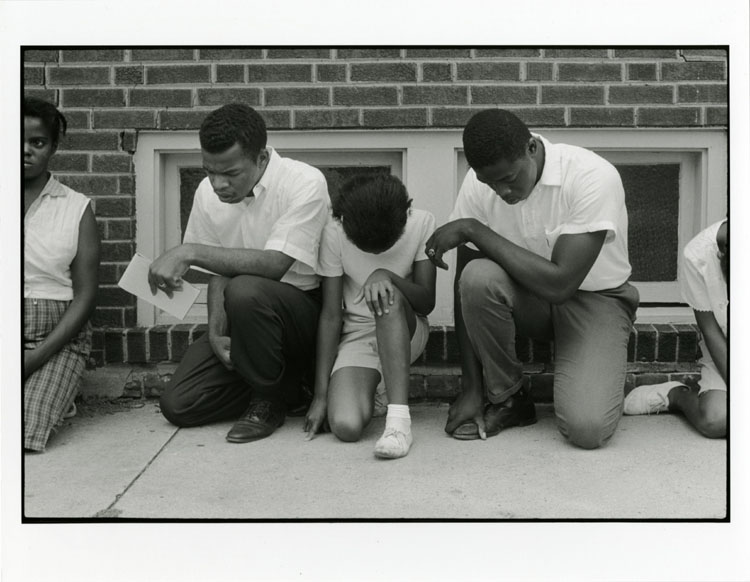

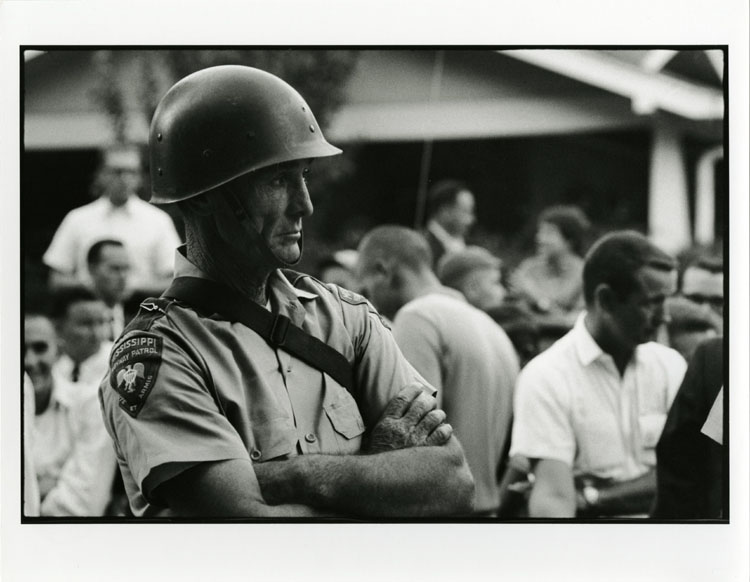

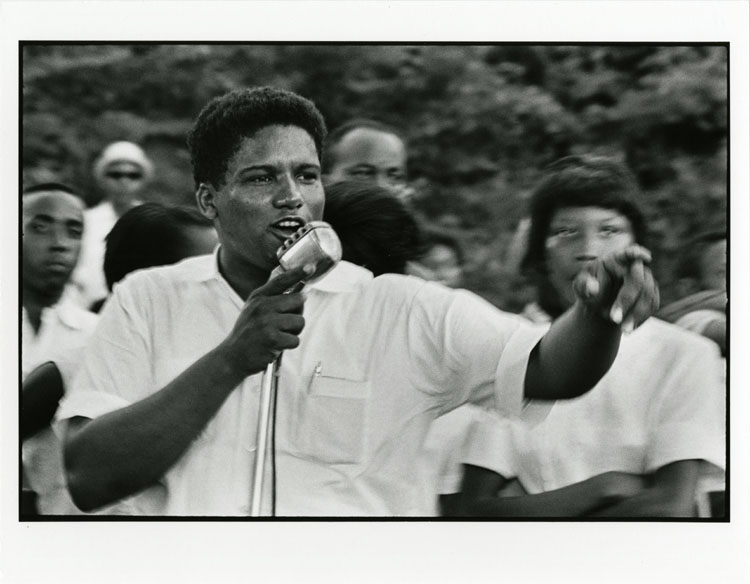
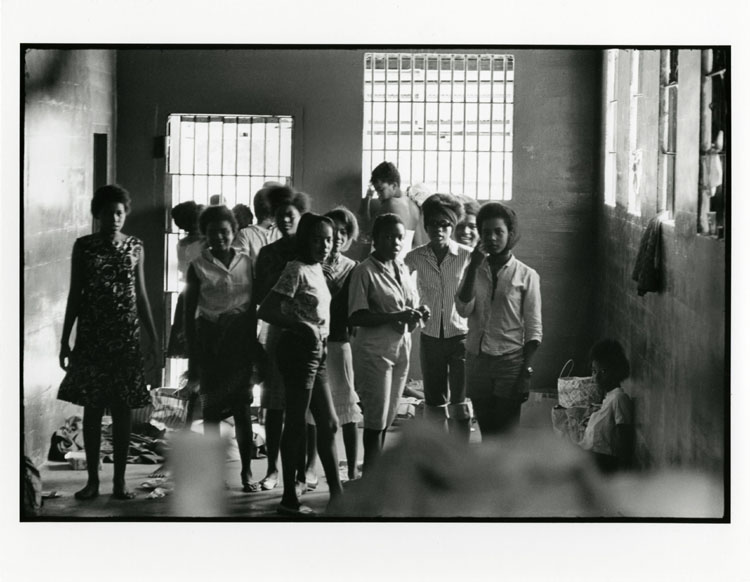

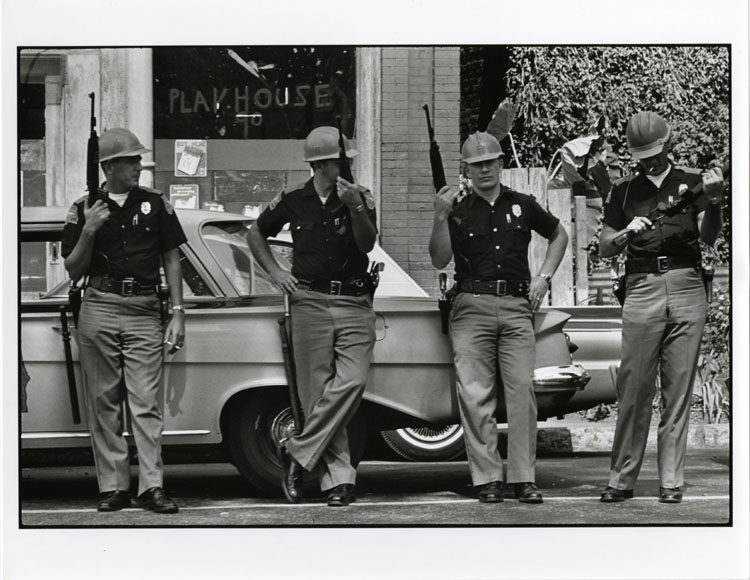




All photos: Danny Lyon © Dektol.wordpress.com. Courtesy of the Etherton Gallery
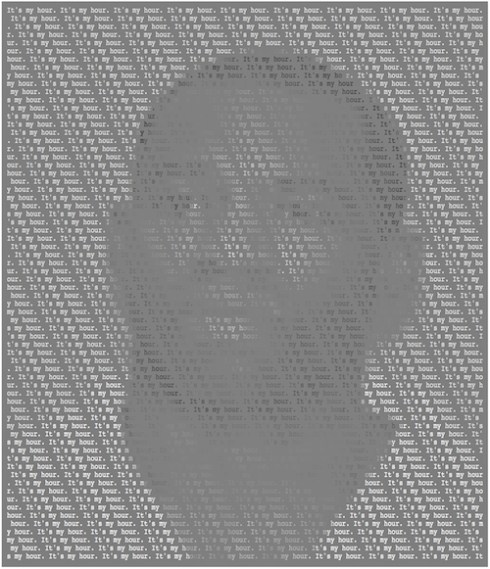
Amy Elkins‘ latest body of work Parting Words is a visual representation of every execution in the state of Texas since the ban on capital punishment was overturned in 1976.
Parting Words was just featured on the Huffington Post, for which I wrote a few hundred words. That didn’t seem enough, so I asked Amy some questions about the project to gain a fuller picture.
Q&A
Prison Photography (PP): You made Black is the Day, Black is the Night (BITDBITN). Now Parting Words. Both are about the harshest imprisonments and sentences in America. Do overlaps between the projects exist? Are the overlaps visible? If so, is the overlap in your personal politics, in the project, or in both?
Amy Elkins (AE): I started the two projects in 2009 and am still wrapping up final details with each. Black is the Day, Black is the Night came first. Through the execution of the first man I wrote with for that project, I stumbled into Parting Words.
Parting Words has taken me a few years to complete and, even now, it remains a work in progress — currently the project has 506 images but it is updated yearly, growing with each execution.
The research behind it all, especially while writing to men on death row (two of which were executed during our time of correspondence) made reading and pulling quotes from the roster of those who had been executed in the state of Texas a dark, taxing experience. Not only was I reading through all of their statements, but detouring into description after description of violent crimes that land one on death row. Honestly, it felt too heavy at times.
PP: What was the impulse then?
AE: I was intrigued that the state of Texas documented and kept such a tidy online archive for anyone to explore. As a photographer (like many, doubling as a voyeur) I already had my own connection to the subject matter through BITDBITN, and I suppose I allowed my obsessive side to surface in order to create a visual archive. It was an important story to tell.


PP: What are your thoughts on American prisons and the criminal justice system?
AE: Over several years of correspondence with five men serving death row sentences and two men serving life sentences who went in as juveniles, I have learned a great deal from the inside about what it is like to exist in the conditions of maximum security and death row units; what those units provide; and what they deny.
A system that uses long-term solitary confinement and capital punishment is broken. Housing someone in infinite isolation has been proven to be hugely damaging to one’s psychological and physical state. This type of isolation breeds behavioral and emotional imbalances that are bound to cause most to remain in a perpetual state of anxiety, depression and anger. Which means they are set up for failure. There is absolutely no way to rehabilitate in such conditions. But clearly rehabilitation isn’t what they have in mind.
I have written with one man in particular who has served 20 years in solitary confinement as part of a Life Without Parole (LWOP) sentence for a non-murder related crime he committed aged 16. He has written about going years talking through concrete walls without ever seeing the men he holds daily conversations with. He spends nearly 23 hours a day in a small cell by himself and when he is let out, he is shackled and permitted to exercise in a slightly larger room by himself for an hour. How he’s gone 20 years in these conditions and not gone completely mad is mind blowing.
That said, most men that I wrote with serving death row sentences were in fairly similar conditions, some having served onward of 16 years in solitary confinement while waiting for their execution. Two of the men I have written with have been executed and through the experience of writing letters to them and in some cases reaching out to family members leading up to such events, I have seen how capital punishment seems to create a continuous cycle of violence, pain and loss within our society. It leaves not one open wound, but several. If there’s closure for anyone, it’s temporary. And unfortunately the loss that the victims family originally endured remains. But now there is a new set of mourners in the mix. The system seems so incredibly flawed and barbaric.
PP: Do archives for last words exist for those killed in other states?
AE: I have yet to come across an archive as in-depth and publicly accessible as the one compiled by the state of Texas.


PP: Are you afraid of death?
AE: I think I’m more afraid of the physical pain associated with dying.
PP: Where do we go when our time is up?
AE: Sounds cheesy, but I think we stick around and linger in some capacity with those who love us the most.
PP: Given the images “read” very differently if the viewer is close or far away, what’s the ideal size for these works?
AE: Ideally I would like to show these images on a smaller scale but include all of them. This forces an intimacy that I want, where the viewer has to get close to each image in order to experience the depth of the project.
PP: Anything else you’d like to add?
AE: In both projects, I always remained neutral. I refrained from projecting my own feelings into whether I felt those I worked with or made work about were guilty of the crimes for which they had been convicted. Making BITDBITN, I was more interested in hearing stories from those within prison systems in America, about the psychological state they might be in while in such conditions, while potentially facing their own death. I was interested in discussing with them what it was like to be removed from the world most of us take for granted, to lose memory by being removed from the source of memory, to not always have a strong sense of self-identity. I felt I hadn’t enough information to warrant my own judgment, and so, if I had projected any, neither project would have manifested.
PP: Thanks, Amy.
AE: Thank you, Pete.

ELKINS ELSEWHERE
In December 2013, Daylight Digital published a presentation of Black Is The Day, Black Is The Night with an accompanying essay by yours truly. The 1,500 words were built upon a conversation Elkins and I began in late 2011.
Just a quick post to say …
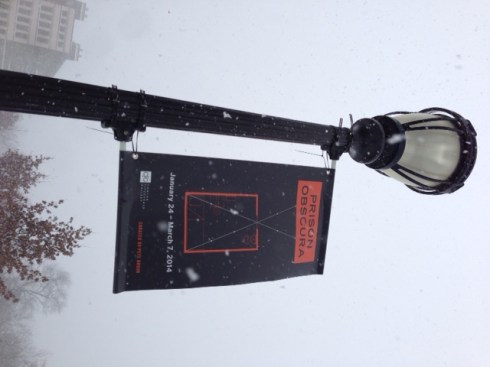
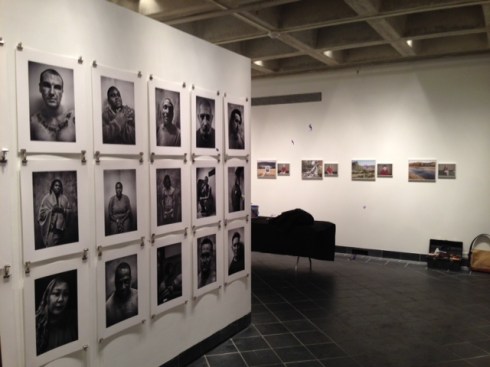
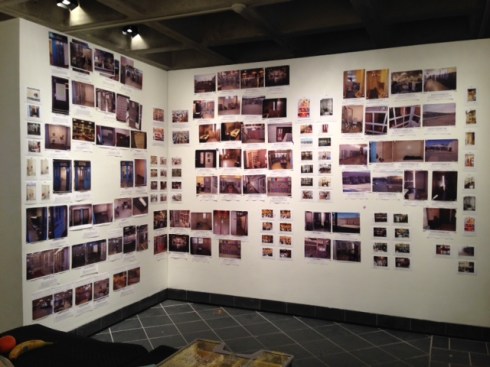
It happened. Prison Obscura opened. With a fantastic turnout. Gallery was crammed for the curator’s talk and people said many nice things. I pulled my usual trick, clocking silly hours until the early hours most of last week during install. Matthew Seamus Callinan, the Associate Director of Cantor Fitzgerald Gallery and Campus Exhibitions at Haverford College did the same. I cannot thank Matthew enough for his support throughout the creation of the show. Legend. More thanks to so many people.
I haven’t any pictures of the opening because my head was spinning. There’s some on Facebook. I’m sure others have some too (send ‘em over!) but I wanted to do a quick post with some installation shots. Taken at different points during the week during install and may not reflect exactly the final layout. (Buckets and hardware not part of the show).
Prison Obscura is up until March 7th at the Cantor Fitzgerald Gallery at Haverford College, just outside Philadelphia, PA. All you need to know about the exhibit is here.






I’m not the only one putting up a show (Prison Obscura) of imagery made in and about prisons. The Laband Gallery at Loyola Marymount University in Los Angeles opens its Voices Of Incarceration exhibition on Saturday 25th January.
It’s an interesting line up of artists that includes artists who are imprisoned and individuals on the outside who are making art about prisons. Laband says:
“Both groups bring to light the emotional costs and injustices of the Prison Industrial Complex. Voices of Incarceration also explores the rehabilitative arts programs in California prisons and the expression of the imprisoned artists’ strength and individuality through the creative process.”
KPCC, the Los Angeles NPR-affiliate has done a couple of programs recently about the small but important attempts to reintroudce arts education into California prisons:
Efforts Emerging to Bring Arts Back to California Prisons
If you’re in L.A., go check it out. It’s open until the 16th March. One last note — it’s great to see in the mix Prison Photography favourites Alyse Emdur, Richard Ross, Michal Chelbin and Sheila Pinkel.


It is with giddy, air-punching pride and mammoth-sized gratitude for those that helped me along the way that I announce the imminent opening of Prison Obscura.
This exhibition is my first solo-curating gig and reflects my thinking right now about images of and from American prisons. Prison Obscura includes works, approaches and genres that — after 5-years of looking at prison photographs — I consider most informative, responsible, challenging and useful.
Prison Obscura is on show at Haverford College’s Cantor Fitzgerald Gallery from January 24 through March 7. The CantorFitz built a remarkable Prison Obscura website to accompany the exhibition, at which you can find a lengthy 5,000-word essay as to why I have shied away from traditional documentary work and focused instead on surveillance, code, vernacular snaps, prisoner-made photographs and rarely-seen evidentiary images.
I posit that certain images can more accurately speak to political realities in America’s prison industrial complex. I also celebrate photographs that were made through processes of collaboration with prisoners and with intention to socially engage the subjects and educate audiences. I want you to wonder why you — a tax-paying, prison-funding citizen — rarely gets the chance to see inside prisons, and I want us to think about what roles existing pictures serve for those who live and work within the system.
Scroll down to learn more about the Prison Obscura artists.

Photographer Unknown. Clinical contact holding cage, Administrative Segregation Unit (ASU), C-Yard, Building 12, Mule Creek State Prison, California. August 1st, 2008. Used by law firms representing imprisoned plaintiffs in class action lawsuit against the State of California in the Plata/Coleman vs. Brown cases.

Photographer Unknown. Group holding cages, C-Yard, Building 13, Administrative Segregation Unit, Mule Creek State Prison, August 1st, 2008. Used by law firms representing imprisoned plaintiffs in class action lawsuit against the State of California in the Plata/Coleman vs. Brown cases.

Suicide watch cell, Building 6A, Facility D, Wasco State Prison, California (August 1st, 2008). This photograph document was submitted as evidence in the Brown vs. Plata class action lawsuit (Supreme Court of the United States, May 2011). Photo: Anonymous, courtesy of Rosen Bien Galvan & Grunfeld LLP.

Photographer Unknown. Reception Center Visiting / Clinician Office Space, North Kern State Prison, July, 2008. Used by law firms representing imprisoned plaintiffs in class action lawsuit against the State of California in the Plata/Coleman vs. Brown cases.
PRISON OBSCURA ARTISTS
Alyse Emdur’s collected letters and prison visiting room portraits as well as Robert Gumpert’s recorded audio stories from within the San Francisco jail system provide an opportunity to see, read, and listen to subjects in the contexts of their incarceration.
Juvenile and adult prisoners in different workshops led by Steve Davis, Mark Strandquist, and Kristen S. Wilkins perform for the camera, reflect on their past, describe their memories, and self-represent through photographs.
Prison Obscura will also feature work made in partnership with the City of Philadelphia Mural Arts Program. Men from Graterford Prison who are affiliated with both its own Restorative Justice Program and Mural Arts’ Restorative Justice Group are collaborating to create a mural for the exhibition.
The exhibit moves between these intimate portrayals of life within the prison system to more expansive views of legal and spatial surveillance in works like Josh Begley’s manipulated Google Maps’ API code and Paul Rucker’s animated videos, which offer a “celestial” view of the growth of the prison system.
Prison Obscura builds the case that Americans must come face to face with these images to grasp the proliferation of the U.S. prison system and to connect with those it confines.
Scroll down for media, details and events.
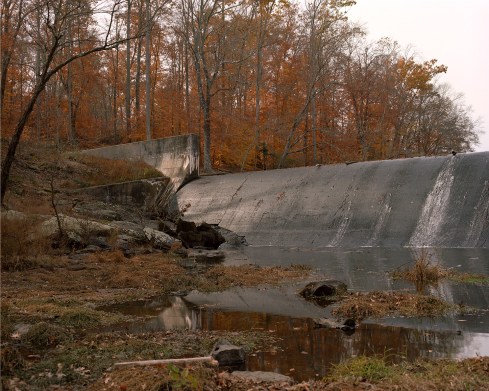
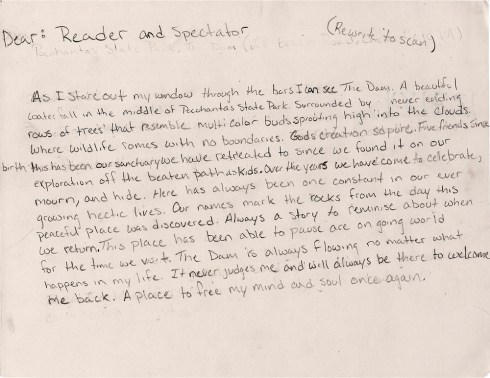
Mark Strandquist. Pocahontas State Park, Picture of the Dam. One Hundred and Thirty Days (top); text describing the scene written by a Virginia prisoner (bottom). From the series Some Other Places We’ve Missed.
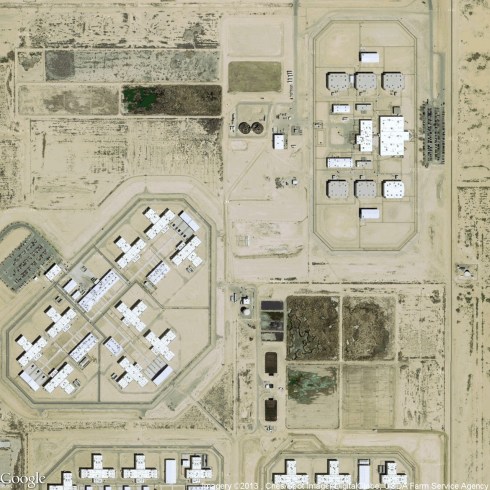
Josh Begley Facility 237. From the series Prison Map.

50 of the 5,393 facilities imaged by Prison Map, a data art project which automatically “photographs” every locked facility in the U.S. by gleaning files from Google Maps with use of code modified from the Google API code by artist Josh Begley.
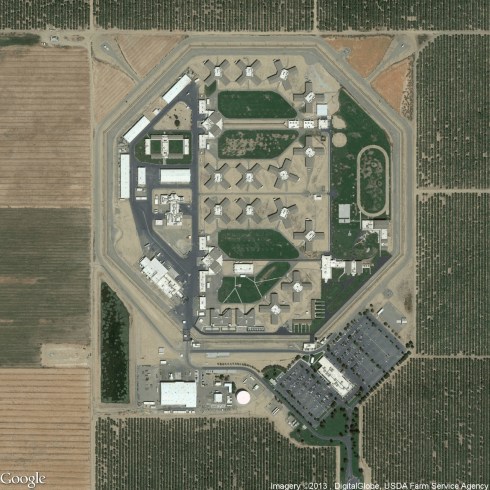
Josh Begley Facility 492 From the series Prison Map.

Photographer unknown. Incarcerated girls at Remann Hall, Tacoma, Washington, reenact restraint techniques in a pinhole camera workshop, 2002. Photo: Courtesy of Steve Davis.
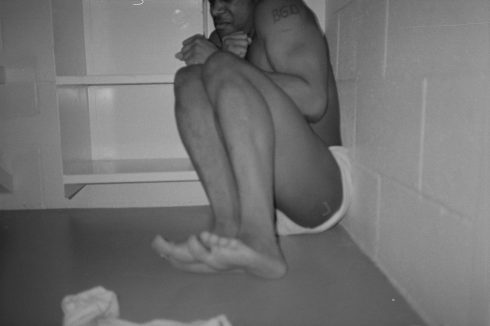
Photographer unknown: Untitled, Green Hill School, Chehalis, WA. Photo: Courtesy of Steve Davis.

Photographer unknown: Steve Davis Untitled, Green Hill School, Chehalis, WA. Photo: Courtesy of Steve Davis.

David Wells, Thumb Correctional Facility, Lapeer, Michigan. From the series ‘Prison Landscapes (2005-2011).’ Photo: Courtesy of Alyse Emdur.

Alyse Emdur. Anonymous Backdrop Painted in Woodbourne Correctional Facility, New York. From the series ‘Prison Landcapes’ (2005- 2011)

Robert Gumpert. Tameika Smith, 9 July 2012, San Francisco, CA. From the series ‘Take A Picture, Tell A Story.’

Robert Gumpert. Michael Johnson, 15 August, 2009, San Francisco County Jail 5, San Bruno, CA. From the series ‘Take A Picture, Tell A Story.’

Kristen S. Wilkins. Supplication #17 (diptych). “It might be hard to find, but it’s called Trapper Peak near the Bitterroot Valley.” From the series ‘Supplication.’

Kristen S. Wilkins. Supplication #17 (diptych). “It might be hard to find, but it’s called Trapper Peak near the Bitterroot Valley.” From the series ‘Supplication.’
EVENTS
I’ll be giving a curator’s talk in the gallery on Friday, January 24, 2014, 4:30-5:30pm, followed by the opening reception 5:30–7:30pm.
Additionally, poet C.D. Wright will be on campus for a Tri-College Mellon Creative Residency in conjunction with the exhibit, and on January 31, at 12 noon in the Cantor Fitzgerald Gallery, Wright and I will host a dialogue about Prison Obscura.
DETAILS
Prison Obscura is presented by Haverford College’s John B. Hurford ’60 Center for the Arts and Humanities with support from the City of Philadelphia Mural Arts Program.
Part of the John B. Hurford ’60 Center for the Arts and Humanities and located in Whitehead Campus Center, the Cantor Fitzgerald Gallery is open Monday through Friday 11 a.m. to 5 p.m., Saturdays and Sundays 12 p.m. to 5 p.m., and Wednesdays until 8 p.m.
Haverford College is located at 370 Lancaster Avenue, Haverford, PA, 19041.
SPREADING THE WORD
View and download press images here. For interviews or variant images contact me. Here’s a big postcard.
For more information, please contact myself or Matthew Callinan, associate director of the Cantor Fitzgerald Gallery and campus exhibitions, at (610) 896-1287 or mcallina@haverford.edu
Cantor Fitzgerald Gallery on Facebook (including installation) and Twitter.
Haverford College on Twitter.
Hurford Center for the Arts on Twitter.
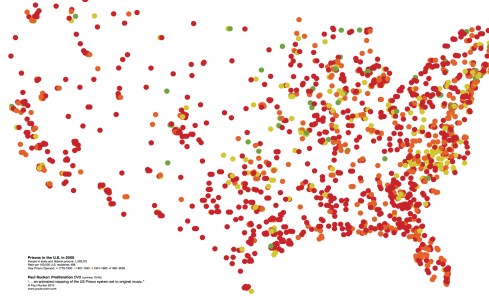
Poster showing the statistics and aesthetic of ‘Proliferation’ an animated video of prison construction in the United States (1776-2010). Image: Courtesy of Paul Rucker.
Graphic design for Prison Obscura by Ellen Gould.
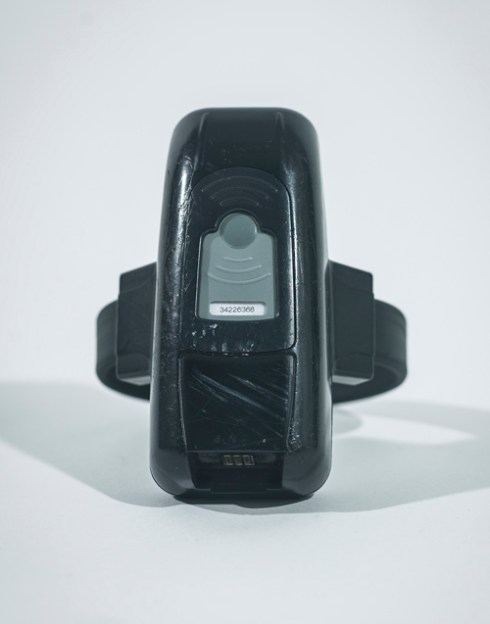
“I want this thing off today … this fucking thing is an invasion of privacy, and goes against my well-being,” said the young boy about his ankle bracelet. He was speaking to Zora Murff, a BFA photography student at the University of Iowa and also a Juvenile Tracker for the Juvenile Detention and Diversion Services (JDDS) of Linn County, Iowa.
It was only when Murff heard this complaint that he began to wonder if he and his camera could interrogate the issue of control.
“He was angry,” recalls Murff. “The more I thought about his anger, the more I pondered the concepts of privacy and control in the juvenile corrections system and the role that I play inside of those concepts. I interact with these youths at a critical point in their lives where control is an integral part of the day-to-day. My job is to be a consequence, to insert myself into their lives […] while the adolescents themselves are struggling to exert control over their development.”
Linn County JDDS provides monitoring and rehabilitation services to youths on probation. Murff has been in the job eighteen months. In mid-2013 he began to photograph his employment and construct a project for submission as part of his studies.
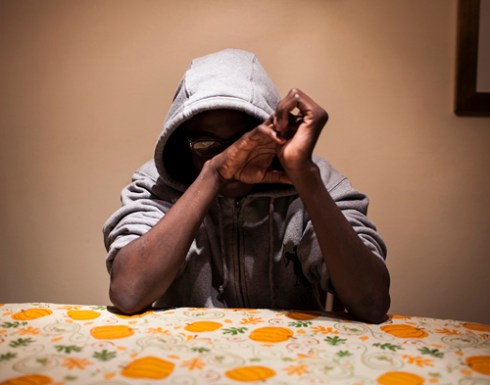
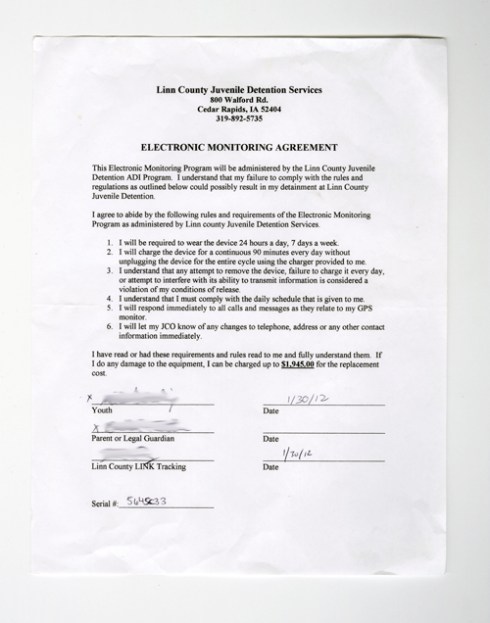
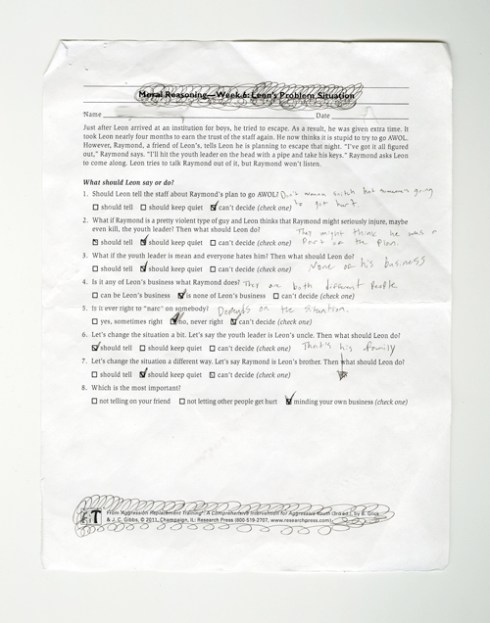
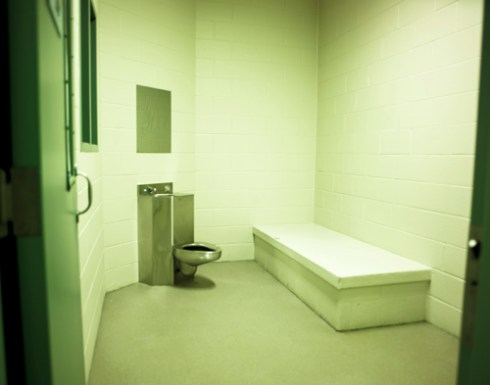
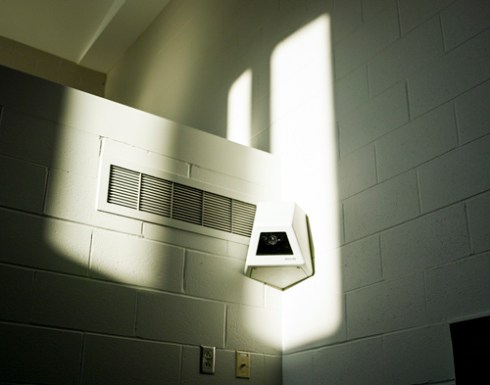
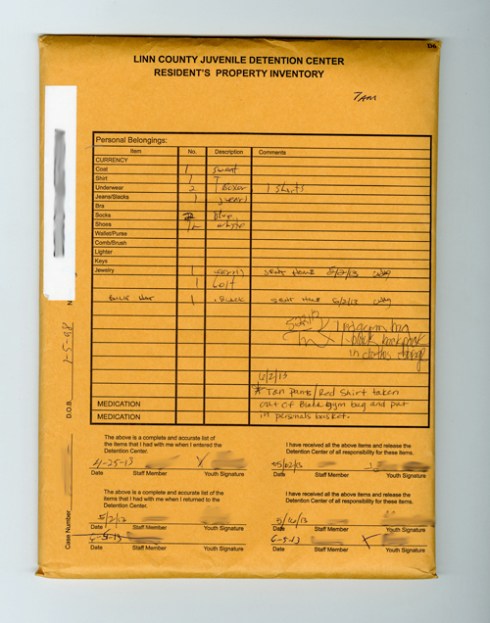
The resulting series Corrections is made up of: photographs of locations of interaction with accompanying narratives about the transgression that took place there (images below with captions); anonymous portraits of the youths; handwritten reflections of the youths; and official paperwork and service documents.
Murff published his notes during the series on the Corrections Tumblr. He has self-published a limited edition book (Murff welcomes interest from publishers to do a larger run). Murff is taking a temporary hiatus from the project. Last week, my Wired colleague Jakob Schiller wrote about Corrections in the piece Peering Into the Digitally Tracked Lives of Youths on Probation. I wanted to do a bit more digging and ask Murff about the logistics, motivations and relationships inherent to the work.
Scroll down for our Q&A.


Three youths broke into an abandoned home on the northeast side of Cedar Rapids. When Cedar Rapids Police responded to the scene, two of the youths surrendered themselves, while the third attempted to hide in the basement. Officers sent in a K-9 to retrieve him. Each youth was charged with criminal trespassing and disorderly conduct.
Q&A
Prison Photography (PP): Can you start by describing your work?
Zora Murff (ZM): Tracking is one of the diversion programs that JDDS offers. Diversion refers to the youth being able to stay in the community, rather than being placed in detention or in a different type of placement like residential treatment. My primary responsibility is monitoring youths on probation. I have face-to-face contact with youths on a regular basis to ensure that they are complying with the expectations of their probation. This may entail electronic monitoring, urinalysis, school follow-up, transportation to therapies (substance abuse, sexual offense, anger-replacement), and other things like completing community service hours. My caseload fluctuates – I believe the lowest number I had was nine youths and I have had up to twenty-one.
PP: Would you have managed to gain access if it weren’t for your job?
ZM: When I pitched the idea to my supervisor, she was very intrigued, but being an insider definitely gave me a leg up, and I was very lucky to have that level of access. My supervisor had a few specific guidelines, but gave me free reign, so I had a wide creative space to work with. I think there was a level of trust there, which made Corrections possible.
PP: How did you come to be studying photography if you’re also a probation service employee?
ZM: I started my degree in psychology. My professional background in human services started when I replied to an ad on a campus bus. I needed a job. I started in disability services working with a wide population of people. Those experience helped me get a job with juvenile criminal justice. I didn’t necessarily have a desire to work in this specific area, but it has been a great experience to watch the youths grow throughout the probation process.
I love my work but I have always felt I was missing out on a need to create, a desire to teach, and a love of the photograph. That is where my education in photography comes into play.
PP: Juveniles under the control of the state are vulnerable young adults. What sort of assurances did you have to provide for your employer, the children and the parents/guardians?
ZM: I have noticed that when working with any population in human services, it all comes down to trust. The real question is how do you build that trust with the people that you serve. I think that this can vary with any worker, but I usually broach this by being available and consistent. Having trusting relationships with the youths that I photographed was key to working on this project.
The biggest assurance that I had to provide was anonymity. It was also important to explain my project to them, which isn’t always easy to do, especially when I was starting out because I wasn’t sure where the project was taking me.



PP: Is Corrections about delinquency or about control; about youth or about state?
ZM: All of the above. The youths do delinquent things that warrant some type of intervention and I wanted to document their experiences once they become a part of the juvenile corrections system. Youths are attempting to control their lives while workers are trying to exert some sort of control over it for them. There’s a dynamic at play between the two.
The use of narratives and documents add context to the project. I felt that portraits of the youths, while the most important component of Corrections, would have told an entirely different story if they were to stand alone.
PP: Is Corrections a voice for you or for your subjects?
ZM: I wouldn’t say that Corrections is my voice personally. The youths are allowing me to show them through their portraits and through some of their writing. My intent was to approach it from an ‘anthropological’ standpoint if you will, almost as if I am a recording device. I felt that it was important to provide a window into this world without editorializing, even though I am embedded in the system.
I feel that when it comes to children on probation a lot of stereotypes are thrown around and it would have been easy to fall into tropes. I want viewers to see inside of the system and draw their own conclusions.
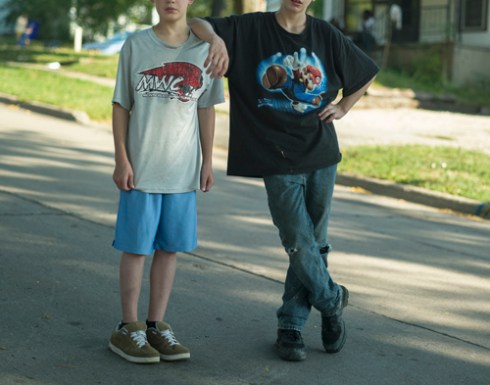


While hanging out with friends, a youth started verbally harassing a peer walking home from school. The youth started to follow the peer and punched him from behind in the side of the face. The youth continued to assault his victim until a car pulled up in the alley. While fleeing the scene, the youth kicked his victim in the head. The youth decided to turn himself in when the story aired on the local evening news, and told Cedar Rapids Police that he had no justification for the assault, that he was just, “mad at the world.” The victim was hospitalized for two days with a broken jaw, two teeth knocked out, and a severed facial nerve. The youth was convicted of felony charges and placed at the Eldora State Training School.
PP: How has the project effected your relationships?
ZM: In human services, the work is about the person that you’re serving, not about you, and typically sharing personal information is discouraged. However, I feel that opening up about my passion for and education in photography bought me a little more trust with some of the clients. It was kind of odd, really. The kids were either totally interested and invested in the project, or completely indifferent. When I walk through the detention center, one or two kids will ask if I’m still working on the project or what was my grade in my photo class. I have also earned the moniker, “that guy with the camera.”
PP: Any particular stumbling blocks?
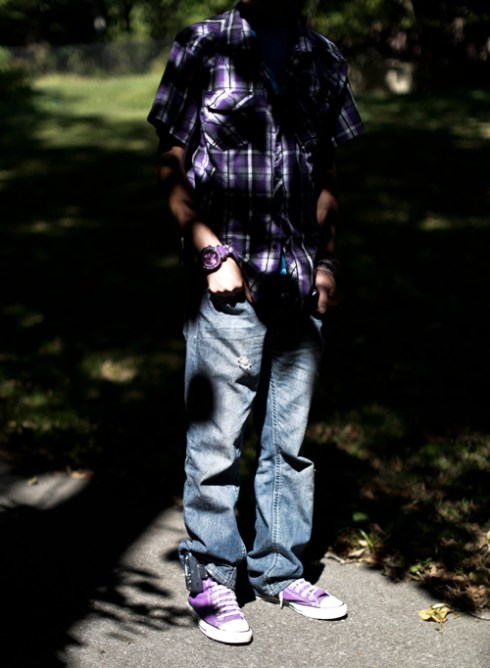
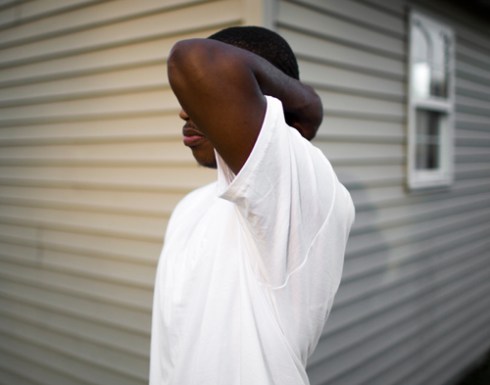
ZM: My biggest barrier was not being able to photograph faces – I didn’t want to blur out faces or put bars over them. It almost became a game figuring out how to make faces unidentifiable and have the photographs be meaningful.
PP: Any pleasant surprises?
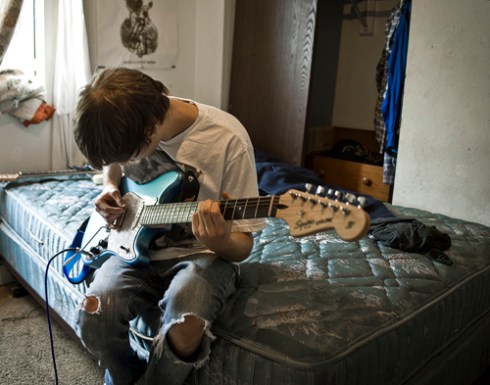
ZM: A number of the compositions happened by accident – a kid blocking the sun from his eyes, or deciding to sit in a certain spot. There is one photograph of a youth playing guitar in his bedroom. While we were taking the photograph, the youth’s friend came to the bedroom window and had a perplexed look on his face when he noticed me with the camera. The youth told his friend that he had just been signed to a record label and that I was from Rolling Stone Magazine. We all had a good laugh about that – and it was a welcome change from the more difficult interactions that I have.
PP: What has been the reaction so far to the work?
ZM: So far, reactions have all been pretty positive. I was part a group exhibition for the class Corrections was completed for, and a number of people drew some sort of sentiment from the photographs. I also had a portfolio review at Midwest SPE last year, and the project was received well. However, I understand that working with a vulnerable population, specifically youths, can be a contentious territory so I have been a pretty hard critic on myself about the work.



PP: Do you plan to continue photography and/or work in criminal justice?
ZM: I would like to teach photography as a means of creative expression to youths at the detention center, but that is just a lofty idea at this point.
PP: It would be wonderful if you could achieve those types of workshops.
ZM: There are definitely some barriers. The biggest obstacles would be finding the time to teach a course, funding for materials, developing a curriculum, and figuring out when it would work into the residents’ schedule as their day at the detention center is very structured.
PP: What makes you think photography is useful for the youths? What skills does it teach? What can be achieved with photographic education, particularly to at-risk youth?
ZM: Any creative outlet is useful to children. I remember having a drawing journal when I was a teenager, and the amount of things I was able to work through by drawing.
Photography could be a good outlet for youths in the detention center as I feel that visually investigating their surroundings would allow them to build a sense of self-awareness, getting them to really consider where they are in life and where they would like to go.
Also, with the concept of control again, a number of the interactions that I have are usually based upon the youth feeling that they don’t have a say with what is going on in their lives and they are being told all of the things that they cannot do, the places that they cannot go, the people that they cannot hang out with. My hope is that by introducing them to photography this will provide them with a chance of self-expression – they can decide what they want to photograph and how they want to photograph it, getting some semblance of control back.
PP: What else are you up to?
ZM: I’ll continue Corrections until I reach a place where I feel that it is as complete as possible, but I am taking a break from it for the time being. I have an idea for a more intimate project, a case study of sorts, following the story of one individual on probation. I’m gearing up to start shooting for this project in the next few months, and have a youth interested in being a part of it, so I’m ironing out details.
PP: Is the camera a security device or an artistic tool?
ZM: Part of my statement for Corrections is how I, as a Tracker, am required to impose on these youths. This was problematic for me at times because by pointing my camera at them I was imposing upon them in an additional way, but it is important to understand the difference. The cameras that we use to surveil youths are all there in a reactionary capacity in order to provide some sort of control. With my camera, I too am recording, but my camera is there in a collaborative capacity – I feel that the youths have taken back a level of control as they have allowed me to portray them and document their experiences.
PP: Thanks Zora.
ZM: Thank you.


 Prison Photography