
You are currently browsing the category archive for the ‘Institutional’ category.

A temporary gig as a set photographer took Jordana Hall to San Quentin State Prison; her heart and consciousness propelled countless return visits. She has worked particularly closely with men who were convicted when juvenile (under 18) and were sentenced to life in prison.
Hall has worked as a volunteer in existing programs; launched her own project that melds poetry, family letters, snapshots and her own portraits; and visited the hometowns and families of prisoners. The ongoing body of work Home Is Not Here is part of Hall’s senior thesis exhibition. It will be on show – beginning April 2013 – at the Corcoran Gallery of Art in Washington, DC.
I wanted to learn more about Hall’s motives and discoveries.
– – – – – – – – – – – – – – – – – – – – – – – – – – – – – – – – – – – – – – – –
Prison Photography (PP): How did you get access to San Quentin State Prison?
Jordana Hall (JH): My work at San Quentin started in June 2011. I was hired as the set photographer for a documentary (working title, Crying Sideways) by SugarBeets Productions. The documentary details the stories of a group inside San Quentin called KIDCAT (Kids Creating Awareness Together).
PP: KIDCAT is a group of lifers sentenced as juveniles, correct?
JH: Yes, you can follow KIDCAT on Facebook.
PP: They describe themselves as “men who grew up in prison and as a group have matured into a community that cares for others, is responsible to others, and accountable for their own actions.”
JH: I began attending KIDCAT’s bi-weekly group meetings as a volunteer. During this period of volunteering, I developed a working relationship with the members of KIDCAT. Showing up when I said I would, being accountable, and most of all keeping an open mind and heart while inside re-assured the men of KIDCAT that I was a trustworthy member.
Then in June 2012, I started working on my senior thesis for my Photojournalism BFA at the Corcoran College of Art and Design. I approached Lieutenant Sam Robinson, Public Information Officer at San Quentin, with the idea of starting the “Home Is Not Here” project. If I had not had the relationship that I do with the men of KIDCAT, Sam would not have been so willing to help. It really is this relationship that I have with the group that has allowed me so many opportunities to continue my work there. I’ve been going into San Quentin for a year and a half now, and have only been able to bring my camera three times.
To be granted access to San Quentin – even minimal access – requires a lot of work. There needs to be a legitimate return for the prison community. In my case, publishing my work to Young Photographer’s Alliance, posting to my website, and eventually in an exhibition at the Corcoran Gallery of Art was enough justification for the prison to allow me to continue working inside.
I never take my access for granted.
There are strict rules about what you can and cannot do, wear and say. If I slip up – even just a little – my access is on the line.

PP: Why did you take on the project?
JH: After hearing the inmate’s stories during the documentary filming, I realized that all of them were just teenagers who were dealt a bad hand. This is not to say they don’t take responsibility for what they did. They definitely do. Their stories resonated to my core; the stories would impact anyone who heard them. I left the prison gates that day realizing that they could be my brother, father, or best friend. I began to think about their families. Most of the men in the group are in their mid-thirties; they have spent more than half of their lives in prison. I thought about how they struggle to keep working relationships with their loved ones for so many years through the prison walls. That wondering led me to my senior thesis project.
Home Is Not Here documents the relationships between an incarcerated person and his family. I seek out the ways in which their relationship can be kept when there are so many barriers involved.
PP: What have you learnt?
JH: I’ve learned that the families of incarcerated people are the least documented victims of crime. Communities shun them for “raising a criminal.” There are limited resources available for them to get help. These families mourn the loss of their loved one’s free life with little to no support.
I learned the truth in the statement, “When one person is incarcerated, at least five people ‘serve the time’ with them.” I have seen family members go about their daily lives with a piece of their heart locked away in prison.
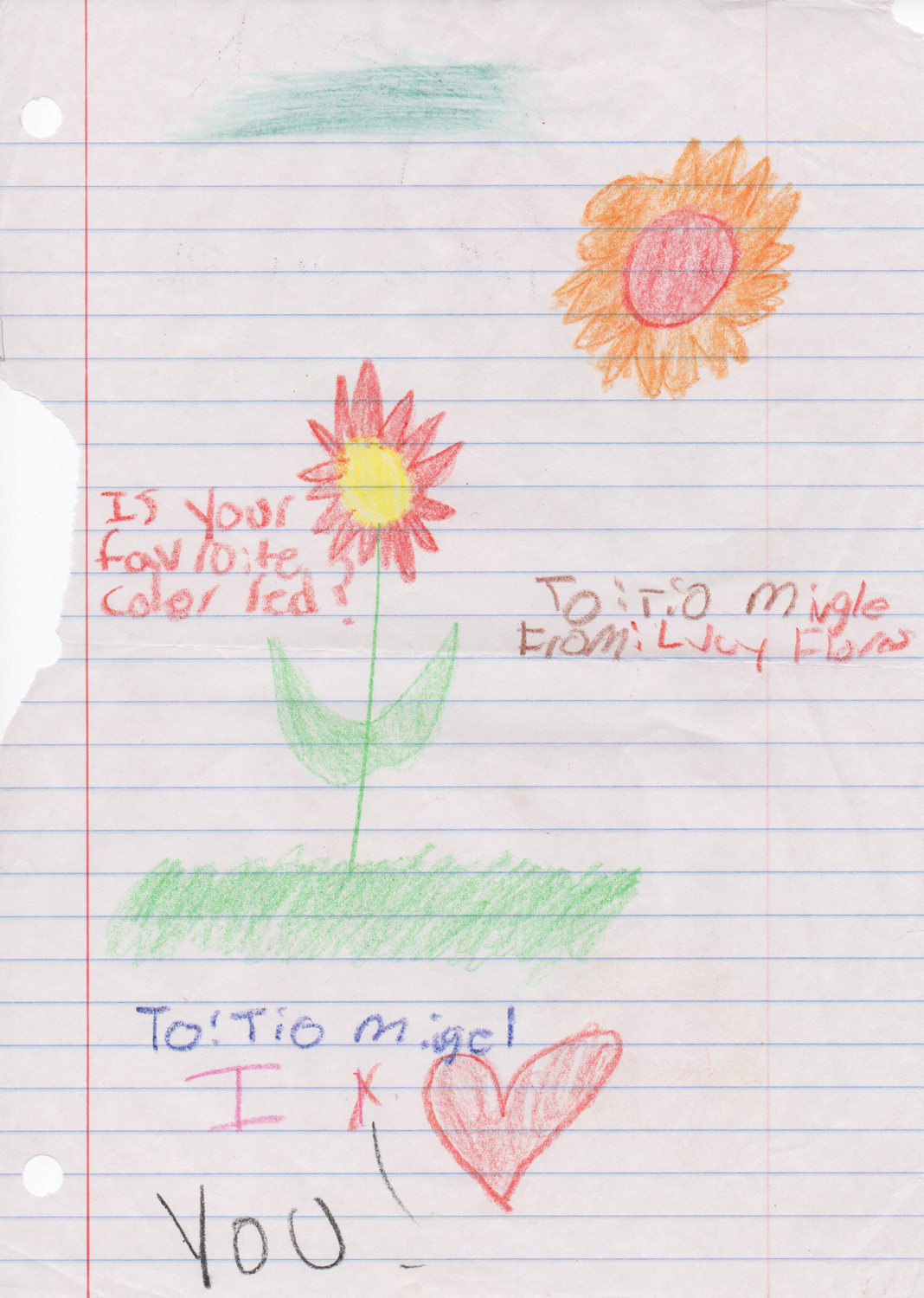
JH: I learned that letters from a child to their “Tio Miguel” (who they have never met outside of prison visitations) would break your heart. I learned that even the toughest looking men still get tears in their eyes when you ask about their family.
I am still learning.
PP: What did the prisoners think of being photographed?
JH: The first day they were most interested in seeing how a digital camera works. I am very hands-on with my subjects, and with the permission of Lt. Sam Robinson, I handed my second camera body to the guys to play with on the breaks during filming. It was both funny as well as saddening to watch their amazement at the foreign device.
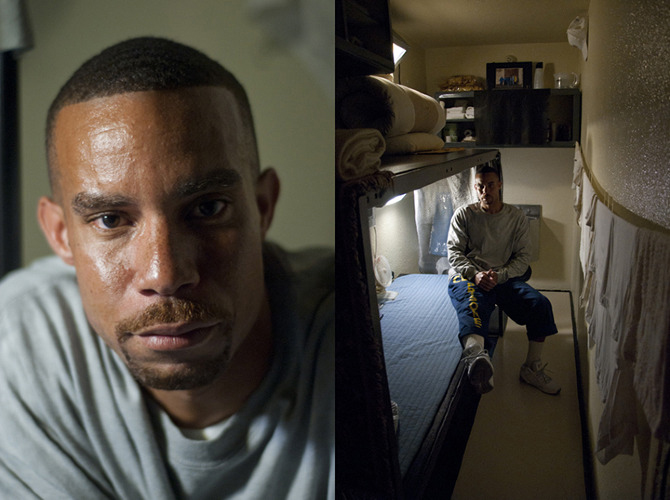
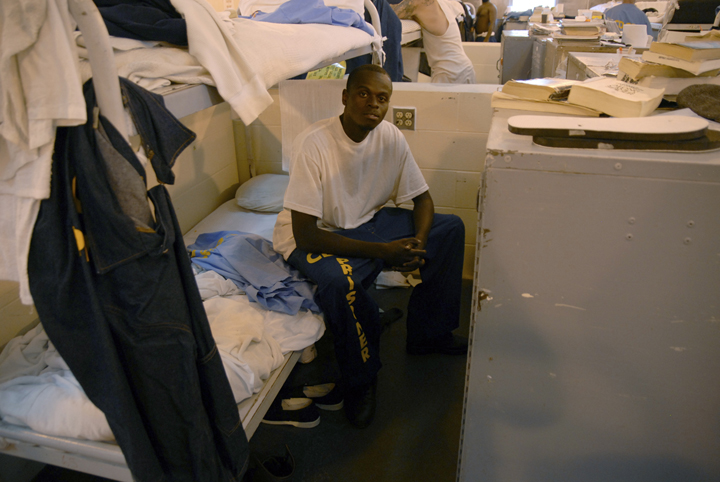
The first time I went in, I asked to see an inmate’s cell. The guys all looked at each other, waiting for someone to volunteer. One by one they denied my request to see their space. We ended up going to a stranger’s cell, just so I could poke my head in from the door. Soon after, I fully realized the shame that comes over them when asked about their cells. It is the only space that is their own, but it also the cage they are locked in at night. These 6 x 12 cement cages are a place both of safety and of degradation.
After I stuck around for a year, I approached the cell situation, again. This time they were excited to show me their space. Their family photos on the wall, bookshelf with notebooks, sketchbooks, and wall markings left from previous inmates. “Stay Focused” was scrawled into the yellowed paint next to the metal bunk. It took some time and a lot of trust building for me to get on that level with them.

PP: Did you give the men prints?
JH: Giving the guys the prints is absolutely one of my favorite parts!
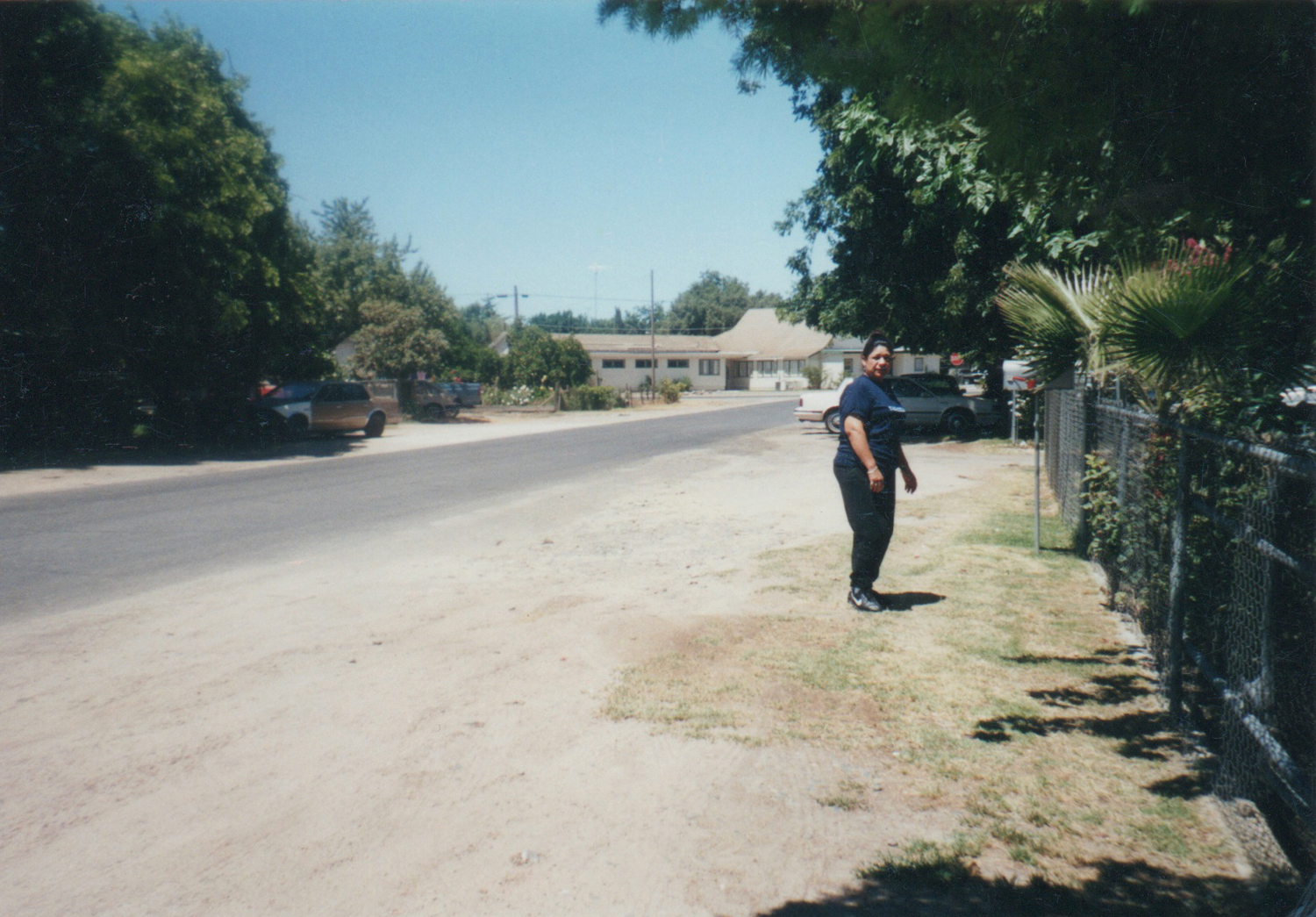
The Home Is Not Here project had me traveling to the hometowns of three men. I went with only small clues of what and where to photograph – “The Dairy Queen where I took my first girlfriend on my first date,” or “The restaurant named after the city in Vietnam where my family was from.”
When I brought back prints from my trips, the guys were blown away by how much had changed, and how much had stayed the same.
I was asked by one inmate to visit the grave of his grandmother. They were extremely close and she passed away while he was in prison. When he saw the photograph I took there, he began to cry. It was almost as if I had delivered him a physical place to grieve her passing.
I try to give back to my subjects as much as I can. I try not to be that photographer that comes in, gets the story, and never comes back. They give so much of themselves when they allow me to photograph them, giving prints to them is the least I can do.
PP: What did the staff think of being photographed?
JH: I never photographed the staff, although some day I hope to see some really thorough work done about the people who work in prisons. It would be a fascinating story.
PP: I agree. I’ve yet to see a photography project that suitably deals sympathetically and deeply the complex and stressful dynamics of correctional officers’ work and lives.
PP: Could photography serve a rehabilitative role, if used in a workshop format in prisons?
JH: I think a workshop on photography in a prison would be an incredible idea. These men are so introspective and have so much to offer, creatively. The documentation of life inside prison by an inmate could offer such insight for us all.


PP: Are prisoners invisible?
JH: Yes, I believe prisoners are invisible. Everything about the prison system is set up for them to be invisible, and stay invisible. To be silenced, and out of sight. What I aim to do with this project is to shed some light on a piece of an inmate’s life that is not seen. When people think prison photography they think of hardened criminals, drug addicts, grimy hands gripping cell door bars, and the underbelly of society. I am offering the alternative viewpoint, which is the humanity inside. These men are fathers, sons, brothers, friends, and they all have people who care about them. They also have built communities of support for each other, inside.
PP: What’s been the feedback to your the work?
JH: As I work I like to get feedback from my peers. A lot of people who see photographs of inmates and due to their preconceived notions will shake their head and walk away thinking, “What monsters…” but with the work I do, I try to side step this notion and say, “No, look closer.”
No matter what I do, some people will never see it the way I’d like them to, but for people who can be open-minded, the work gives an inside look to the humanity that exists inside prison, and awareness of the struggles of their families.
PP: Anything else you’d like to add?
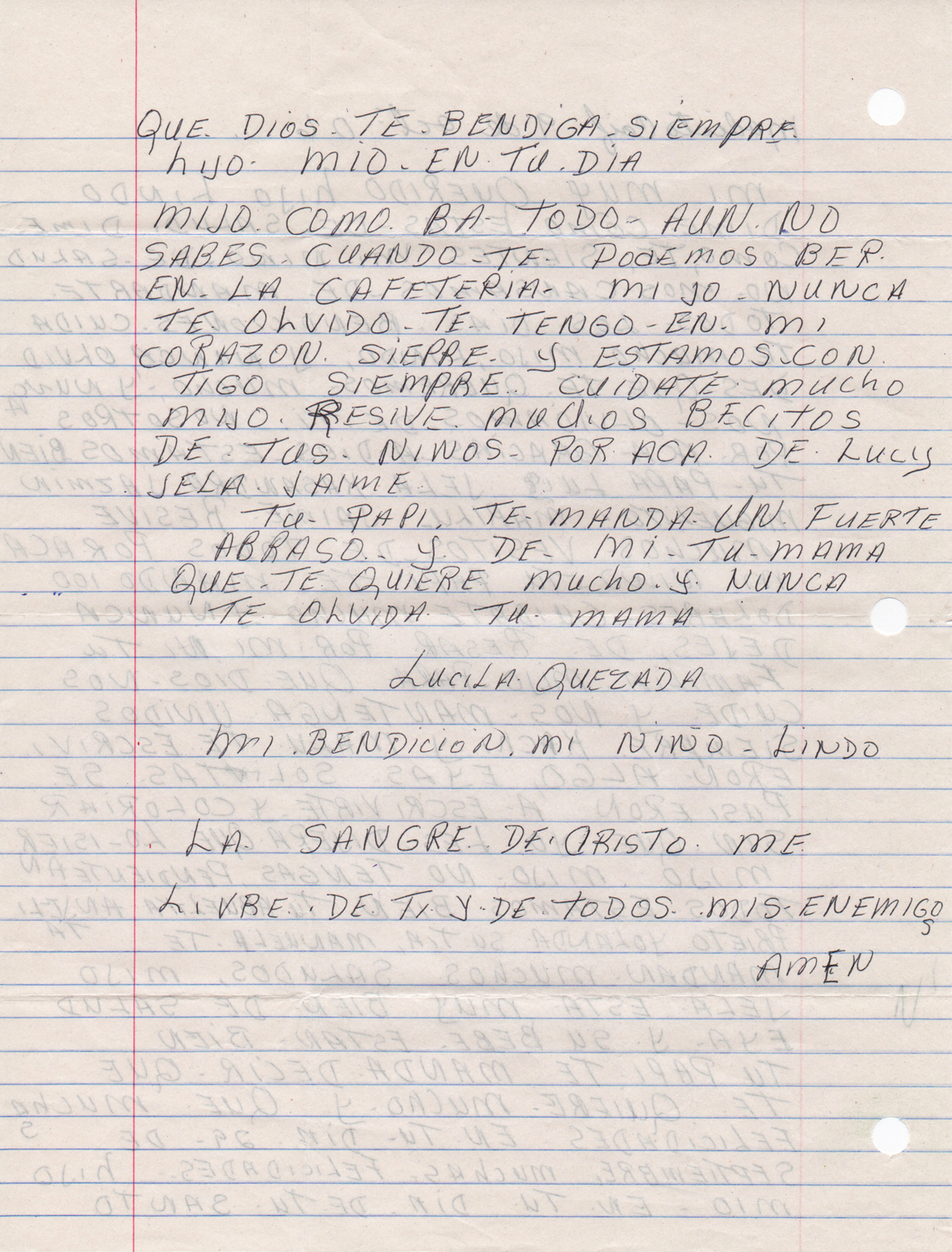
JH: As I move forward in my thesis, I am turning my focus to just one inmate in particular, Miguel Quezada. This is the working statement:
“Estamos Contigo (We Are With You)” – Miguel Quezada (below) was incarcerated at age 16. Now 31, he has spent half of his entire life in prison. Due to a harsh judicial decision that he should serve his sentences consecutively, his first parole hearing is not until the year 2040. He will be 60 years old. Home, for Miguel, rests between the realities of life at San Quentin Prison today, memories of his childhood cut short, and dreams of a faraway tomorrow. His family shares this stress, mourning the loss of their loved one’s free life. From the part of South Modesto, California known for its lack of sidewalks and high crime rate, Miguel grew up in poverty with his parents who immigrated from Mexico. His mother and father, Arturo and Lucila, are almost completely illiterate, so writing letters takes a lot of time and energy. Miguel appreciates it when they do write, but loves when they send photographs. His nieces and nephew, who he has never met outside of prison visitations, write him frequently and give him a sense of connectivity to the outside world. Miguel is one of hundreds of men in the state of California with similar stories – serving life for a mistake made as a teenager. The barriers of the prison walls will never restrain the emotional longing of one human being to be with another.
PP: We look forward to checking in again soon. Thanks, Jordana.
JH: Thank you.



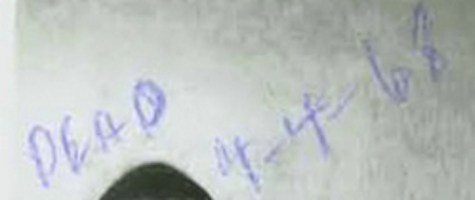
I’ve seen Martin Luther King’s mugshot many times (last year, on MLK Day I posted this same mugshot), but I had not noticed the scrawls upon it. Robert Gumpert pointed them out to me.
Someone accessed the police archive following MLK’s death to struggle with a biro pen in writing the date of his assassination.
We all know the famous photograph by Charles Moore of MLK’s arrest in Montgomery, Alabama and perhaps one or two photographs of MLK imprisoned in Birmingham Jail; MLK’s letters and the civil rights education have made the narrative and context for MLK’s arrests well known.
That is why I think an intimate tale into the biography of this mugshot would be fascinating. Through whose hands has it passed? How has it’s meaning changed? Is the copy with the scrawls the only original copy? Where are the original prints now archived?
The answers are probably easy to find and I’m just thinking out loud here.
THOUGHTS ON MUGSHOTS
This blog-post is just yet another seedling to a potential chapter of a potential book on mugshots.
I don’t think I’m the one to write a book about mugshots but a few trends make it a visual territory in rapid flux. The current racket and sleazy business opportunities they afford; the mugshot as ubiquitous as Facebook profile pics; their role as photobook Objet d’art; and mugshots’ new-found glory as consumer items, all point toward changing ideas toward – and uses of – this old photographic form.

What’s the difference between us and them? What distinguishes those labelled as criminals from those without the label? The law has it’s definitions; sentences – in the sense of legal scripts and prison terms – can give us details and legally defined facts, but other factors are at play. What role do images, particularly publicly available images, play? What about portraits? What about mugshots?
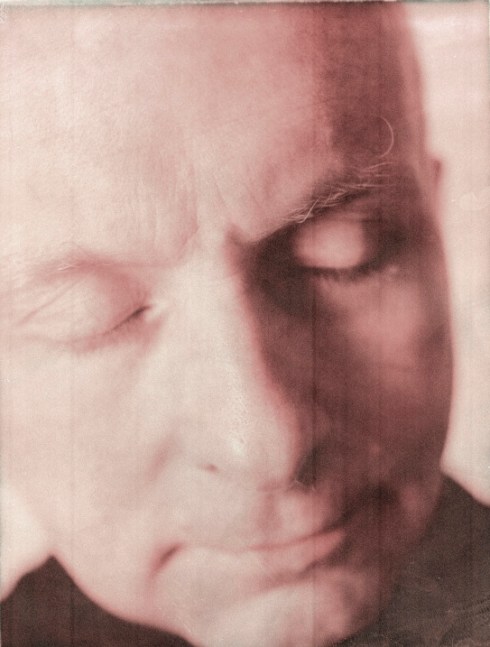
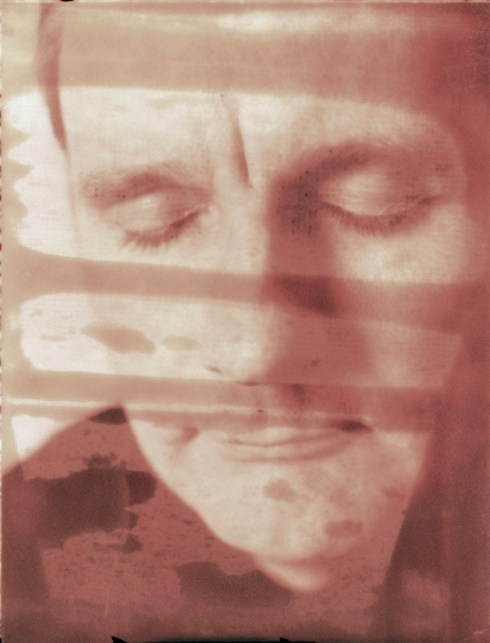
UK photographer and artist, Jenny Wicks – working as an artist in residence at The Scottish Centre for Crime and Justice Research (SCCJR) at Glasgow University, the largest centre for criminological research in Scotland – spent nine months trying to answer these questions through her photography. And she challenged the mugshot.
Wicks’ research broadly titled Working Spaces, Punishing Spaces: The Meaning and Construction of Place through Criminological Research includes site (prison) visits, audio interviews, documentation, portraiture, a book (in process) and an exhibition (ongoing). I’ll write more about her documentary work in the coming weeks, but I wanted to introduce her work with her Polaroid-backing portraits, which I feel are the most nuanced approach to the critical framework she takes on.
(For a fuller view of the series, titled They Are Us And We Are Them, read Wicks’ blog posts from June here, here, here and here, and from August here.)
Keep reading below.
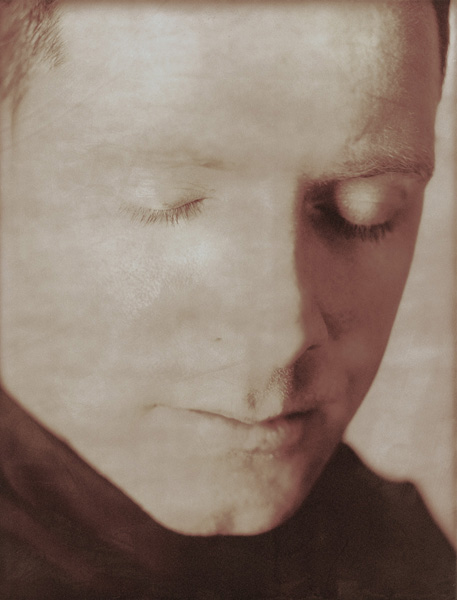
Reading through Wicks’ insightful blog Punishing Photography where she has traced her efforts this year, it is clear Wicks is troubled by the mugshot. The mugshot is a space in which the power dynamic between subject and camera-operator is drastically unequal; it could be argued that the mugshot even plays its role in “condemning” the individual. “The mugshot is an image that is taken to indicate criminality,” writes Jonathan Finn in his book Capturing the Criminal Image.
“My portraits are an attempt to challenge the boundaries between them and us […] The mugshot is the first significant, visual display of power where judgment is cast on that person and [it is where subjects] re-cast themselves,” writes Wicks. And, “my portraits attend to the internal spaces within each of us which harbour many unresolved emotions.”
Q: How does Wicks challenge boundaries exactly?
A: She puts her subjects – regardless of their status as prisoners, prison officers or criminologists – under the same gaze and into the same process.
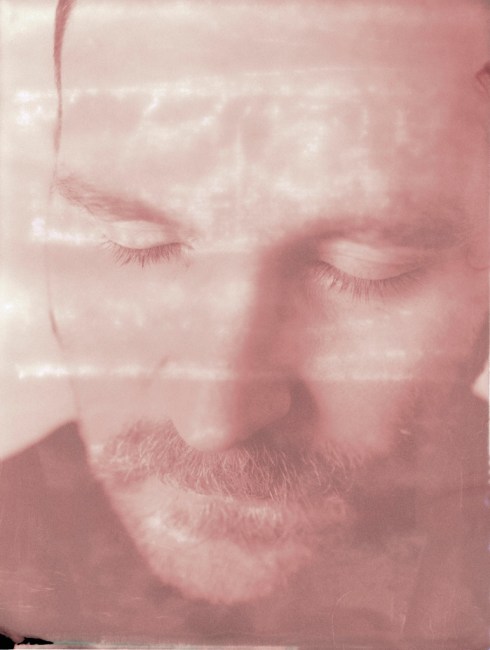
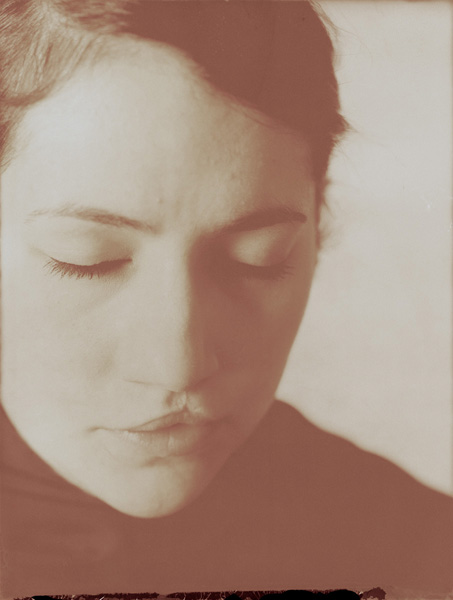
They Are Us And We Are Them has no captions. We are left to guess who and what these people are. Which side of the law are they? We must bring our discriminations and our own judgements to They Are Us And We Are Them. This is a fraught starting point for the viewer; the portraits raise instant questions that are all self-created by the viewer. “Unresolved emotions” indeed.
Brilliantly, Wicks’ aesthetic proposal contrasts with the techno-fetishism of the predominant surveillance culture that is creeping toward widespread use of facial recognition, retinal scanning, iris prints, biometrics and DNA coding.
The closed-eyes motif “is a leveller” says Wicks. In short-shrift, her subjects that appear to be sleeping evoke 19th century photography, of pictoralism and of a reverence attendant in photography (think memento mori photography) before its morph into a medium used increasingly in the 21st century for control and discipline.
“I didn’t want to accept the objectification of the traditional mugshot; the concept was to challenge it. But, nor did I want to deliberately “humanize” the subject, as they would tend to become too meretricious. I did want to present sensitive portraits,” writes Wicks, whose interest spans mugshot aesthetics, history, meaning and the theories of the ate 19th century criminologists Cesare Lombroso and Alphonse Bertillon.
Keep reading below.
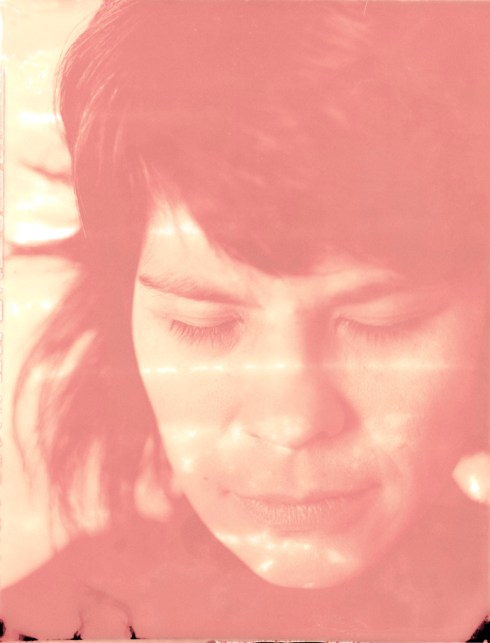
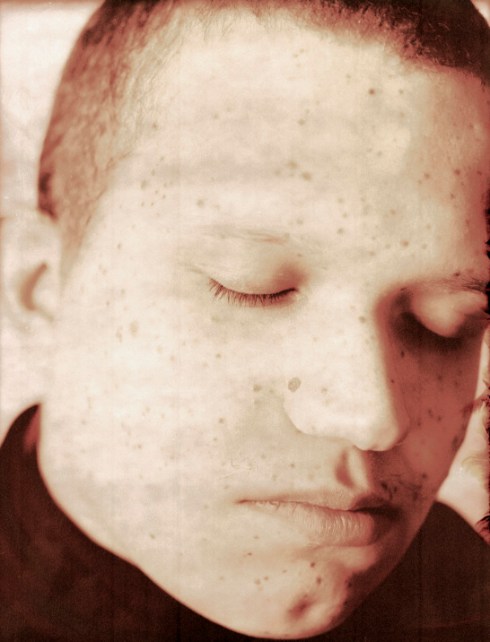
Visually, They Are Us And We Are Them riffs on – and works within – Wicks’ historical considerations. The sepia tones of the retrieved and scanned Polaroid backing sheets help frame each of her subjects in a space free of the mugshot associations of contemporary crime and of contemporary time.
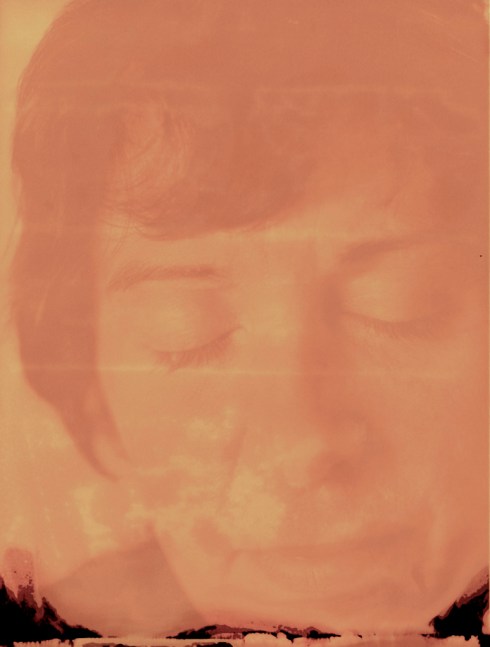
Wicks used Polaroids to sure-up composition and to use as reference for developing. Even though she made her *proper* portraits on rolls of film, Wicks kept hold of the Polaroid-backing byproducts and extracted negative images from them.
She describes the extraction of the negative image as “unstable, messy and laborious” but feels the visual counterpoints of Polaroid negative images add “an ethereal element” to her body of work. “I have essentially produced two quite different pieces of work at the same time,” Wicks says.
All in all, They Are Us And We Are Them is about exposing the positives and the negatives and about challenging binaries. Between definitions of good and bad, between criminal and non-criminal, between now and them, between us and them, between black and white, there are many shades of grey.
Wicks appreciated a viewer’s description of these negative images as “womb-like.” I’ve offered my thoughts, but what do you think? Wicks is eager for feedback.


MORE?
For a fuller view of the series, titled They Are Us And We Are Them, read Wicks’ blog posts from June here, here, here and here, and from August here.
WHAT’S IN A NAME?
Interestingly, the title They Are Us And We Are Them comes from a quote by John Laub, renowned Professor fo Criminology and the current Director of the National Institute of Justice appointed in 2010 by President Obama. Laub spoke to Fergus McNeill in the excellent documentary film The Road From Crime, about learning about breaking recidivism from the behaviours of Scottish ex-cons who’ve left the life of crime, who’ve “gone straight.”
EXHIBITION
Working Spaces, Punishing Spaces: The Meaning and Construction of Place through Criminological Research, a multi-media installation of audio, fine art photography and object sculpture/environmental art was on show at HMP Barlinnie in November 2012. It is a pioneering exhibition given the rarity art shows are mounted within prisons. Very special. In early 2013, Working Spaces, Punishing Spaces will be exhibited in three other Scottish prisons. The show will go on public view at The Briggait gallery, Glasgow in February 2013.
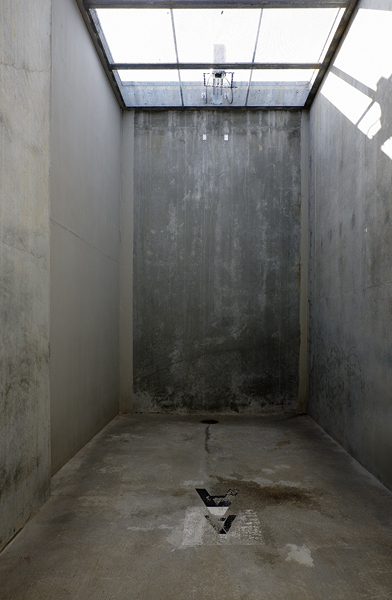
Isolation exercise yard, Security Housing Unit, Pelican Bay, Crescent City, California, a supermax-type control, high security facility said to house California’s most dangerous prisoners. © Richard Ross
Solitary confinement is in the news … for lots of reasons – a lawsuit brought by prisoners against the Federal Bureau of Prisons; a lawsuit brought by 10 prisoners in solitary against the state of California; a June Senate hearing on the psychological and human rights implications of solitary confinement in U.S. prisons (which included the fabrication of a replica sized AdSeg cell in the courtroom); an ACLU report pegging solitary as human rights abuse; a NYCLU report showing arbitrary use of solitary, a NYT Op-Ed by Lisa Guenther; the rising use of solitary at immigration detention centres; and the United Nations’ announcement that solitary is torture.
Recently, journalists from across America have contacted me looking for photographs of solitary confinement to accompany their article. I could only think of three photographers – one of whom wishes to remain anonymous; another, Stefan Ruiz is not releasing his images yet; which leaves Richard Ross‘ work which is well known.
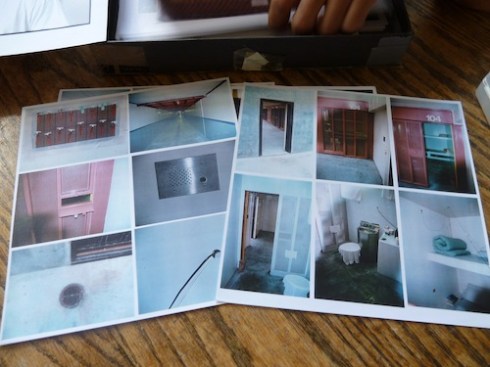
Stefan Ruiz’ photographs of Pelican Bay State Prison, CA made in 1995 for use as court evidence. (See full Prison Photography interview with Ruiz here.)
With a seeming paucity, I went in search of other images. I found an image of a “therapy session” by Lucy Nicholson from her Reuters photo essay Inside San Quentin. A scene that has been taken to task by psychologist and political image blogger Michael Shaw.
Shane Bauer took a camera inside Pelican Bay for his recent Mother Jones report on solitary confinement.
Rich Pedroncelli for the San Francisco Chronicle.
Pelican Bay has been hosting media tours and welcoming journalists in the past year – partly due to public pressure and partly through a strategic shift by the CDCR to appear to be responding to public outcry. Maybe the courts have had a say, too?

© Lucy Nicholson / Reuters. Prisoners of San Quentin’s AdSeg unit in group therapy. (Source)
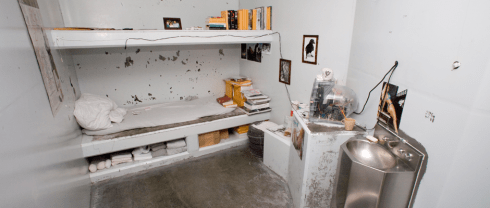
© Shane Bauer. Pelican Bay SHU cell. (Source)

© Shane Bauer. CA CDCR employees show investigative journalist Shane Bauer the Pelcian Bay SHU “Dog run.” (Source)

Correctional Officer Lt. Christopher Acosta is seen in the exercise area in the Secure Housing Unit at the Pelican Bay State Prison near Crescent City, Calif., Wednesday, Aug. 17, 2011. State prison officials allowed the media to tour Pelican’ Bay’s secure housing unit, known as the SHU, where inmates are isolated for 22 1/2 hours a day in windowless, soundproofed cells to counter allegations of mistreatment made during an inmate hunger strike last month. Photo: Rich Pedroncelli, AP/SF (Source)
The amount of visual evidence still seems limited. It’s not that reporting on solitary confinement is lax or missing. To the contrary, I’ve listed at the foot of this piece some excellent recent journalism on the issue form the past year. We lack images.
Look Inside A Supermax a piece done with text and not images is typical of the invisibility of these sites. National Geographic tried a couple of years to bring solitary confinement to a screen near you. ABC News journalist Dan Harris spent the “two worst days of his life” in solitary to report the issue.
Why do we need to see these super-locked facilities? Well, depending on your sources there are between 15,000 and 80,000 people held in isolation daily (definitions of isolation differ). My conservative estimate is that 20,000 men, women and children are held in single occupancy cells 23 hours a day.
Gabriel Reyes, prisoner at Pelican Bay SHU writes about his experience for the San Francisco Chronicle:
“For the past 16 years, I have spent at least 22 1/2 hours of every day completely isolated within a tiny, windowless cell. […] The circumstances of my case are not unique; in fact, about a third of Pelican Bay’s 3,400 prisoners are in solitary confinement; more than 500 have been there for 10 years, including 78 who have been here for more than 20 years.”
Solitary confinement is a “living death”; an isolating “gray box” and “life in a black hole.” Imagine locking yourself in a space the size of your bathroom for 23 hours a day. As James Ridgeway, currently the most prolific and reliable reporter on American solitary confinement, writes:
“A growing body of academic research suggests that solitary confinement can cause severe psychological damage, and may in fact increase both violent behavior and suicide rates among prisoners. In recent years, criminal justice reformers and human rights and civil liberties advocates have increasingly questioned the widespread and routine use of solitary confinement in America’s prisons and jails, and states from Maine to Mississippi have taken steps to reduce the number of inmates they hold in isolation.”
The over zealous and under regulated use of solitary confinement to control risk and populations within U.S. prisons is a cancer within already broken corrections systems. I’m posting a few more image that Google images afforded me – but I urge caution – these are just a glimpse and may not be indicative of solitary/SHU conditions. Windows are a rarity in solitary despite three images below showing them.
The main reason I’m posting here is to ask for your help in sourcing all the photography of U.S. solitary confinement we can. Please post links in the comments section and I’ll add them to the article as time goes on.
SELECT IMAGES

© Alice Lynd. Front view of cell D1-119. Todd Ashker has been in a Security Housing Unit (SHU) for more than 25 years, since August 1986, and in the Pelican Bay SHU nearly 22 years, since May 2, 1990. “The locked tray slot is where I get my food trays, mail.” (Source)
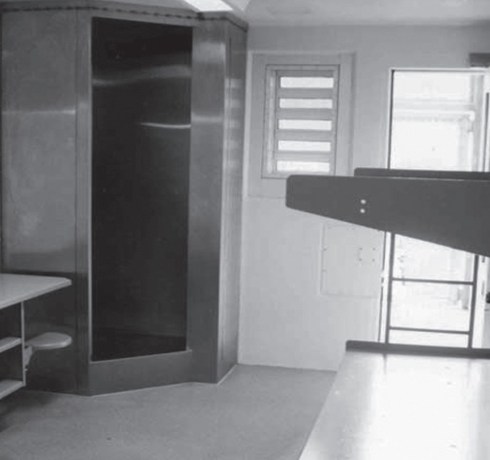
A typical special housing unit (SHU) cell for two prisoners, in use at Upstate Correctional Facility and SHU 20.0.s in New York. Photo: Unknown. (Source)

Bunk in Secure Housing Unit cell, Pelican Bay, California © Rina Palta/KALW. (Source)

Solitary Confinement at the Carter Youth Facility. Since the arrival of the girls’ program at Carter, the administration has created a new seclusion cell. This cell contains no pillow, sheet, pillow case or blanket. In fact, there is nothing in the cell other than a mattress, which was added after numerous requests from the monitor. Girls are routinely placed in this room for “time out.” Photo: Maryland Juvenile Justice Monitoring Unit. (Source)

© Rina Palta, KALW. “More than 3,000 prisoners in California endure inhuman conditions in solitary confinement.” This photo, taken in August 2011 of a corridor inside the Security Housing Unit (SHU) at Pelican Bay State Prison, illustrated Amnesty’s report. (Source)

© National Geographic. In Colorado State Penitentiary 756 inmates are held in “administrative segregation” alone in their cells for 23 hours a day. 5 times a week they are allowed into the rec room where they can exercise and breath fresh air through a grated window. (Source)
FURTHER READING
Eddie Griffin, prisoner in s Supermax prison in Marion, IL writes about “Breaking Men’s Minds” [PDF.]
Boxed In NYCLU campaign and report with resources and video against use of solitary confinement. HIGHLY RECOMMENDED
The Gray Box, an investigative journalism series and film about solitary across the U.S., by Susan Greene. (Dart Society) HIGHLY RECOMMENDED
ACLU – Stop Solitary Confinement – Resources – HIGHLY RECOMMENDED
ACLU _ State specific reports on solitary confinement
Andrew Cohen’s three part series on “The American Gulag” (Atlantic)
Atul Gawande’s take on the psychological impacts of solitary confinement (New Yorker)
Sharon Shalev, author of Supermax: Controlling Risk Through Solitary Confinement, here writes about conditions. (New Humanist)
The shocking abuse of solitary confinement in U.S. prisons (Amnesty)
SOLITARY ELSEWHERE ON PRISON PHOTOGRAPHY
Interview with Isaac Ontiveros, Director of Communications with Critical Resistance, about Pelican Bay solitary and community activism.
The invention of solitary confinement.
RIGO 23, Michelle Vignes, the Black Panthers and Leonard Peltier
Chilean Miners, Russian Cosmonauts and 20,000 American Prisoners
Robert King, of the Angola 3, writes for the Guardian

For Three Strike, Northern Irish photographer Adam Patterson made portraits of men who had been sentenced to term-to-life sentences under Three Strikes Laws. The men have in common the fact all their releases were secured due to the work of the Stanford Three Strikes Project.
Patterson writes, “In 1997, William Anderson stole a dollar in loose change from a parked car. He was arrested and sentenced under California’s voter-approved “three strikes and you’re out” law. Mr Anderson’s two previous convictions of daylight residential burglary in 1985 now accounted for his first two strikes, allowing his petty theft from the car to trigger the hammer blow—the third strike. He was sentenced to 25 years to life in state prison. A number of states in the US have the three strikes law, under which criminals who persistently offend are given increasing penalties. Yet in California there remains one glaring difference that many believe is a catalyst for continued injustice. While the first two strikes must be “serious or violent” crimes, the third strike does not. This discrepancy has allowed criminal prosecutors to press for a variety of life-crippling sentences for the most minor of offences.”
Three Strike is four images.
VIDEO
Journalists Kelly Duane de la Vega and Katie Galloway‘s must-see multimedia documentary Three Strikes Of Injustice appeared on the New York Times website recently.
Three Strikes Of Injustice opens with an apology by Judge Howard Broadman, made to Shane Taylor. Broadman sentenced Taylor to 25-to-life for a non-violent offense fifteen years ago. It was Taylor’s third conviction. Taylor speaks from prison over the telephone and his family is interviewed. It’s very hard to disagree with Taylor’s tearful 19-year-old daughter who observes the absurdity of a 25-to-life sentence.
Duane and Galloway had long standing interest interest in prisons (they released Prison Town in 2007) but like Patterson was drawn to the work of the Stanford Three Strikes Project and specifically their 2010 study that showed that more than 4,000 inmates in California are serving life sentences for nonviolent offenses under the three-strikes law.
BIOGRAPHIES
Adam Patterson (b. 1982), received a postgraduate bursary in 2008 from the Royal Photographic Society to undertake a project on youth gang culture in London. He holds an MA in Photojournalism and Documentary Photography from the London College of Communication. He has worked with the BBC Panorama documentary team in Dubai, Chile and the UK and on documentary projects addressing issues such as the slave labor trade in Dubai and the rise of cheap heroin in Wales. He helped smuggle a digital camera to Chilean miner Edison Pena, who then photographed underground conditions while trapped during the Copiapó mining accident between August and October 2010,
– – – – – – – – – – – – – – – – – – – – – – – – – – – – – – – – – – – – –
Kelly Duane de la Vega and Katie Galloway received the best documentary screenplay award this year from the Writers Guild of America, West, and the Gotham Independent Film Award for best documentary last year, for their film Better This World.
Three Strikes Of Injustice was partly funded by David W. Mills, a Stanford law professor who supports Proposition 36 and has advocated reform of California’s three-strikes law.
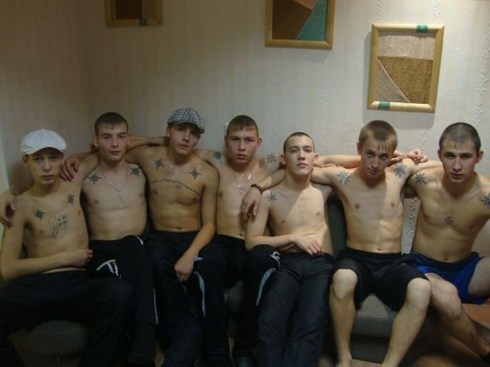
Young Russian Prisoners. Source.
Last week, TIME’s Lightbox published Michal Chelbin’s portraits from Russian and Ukrainian prisons.
Michal Chelbin‘s work includes adults and juveniles, but there is a strong persuasion in her work to consider youth and beginnings. Much of Chelbin’s past work depicts children who are fighters, gymnasts, miners or contemporary dancers – it as if they’ve been fast-tracked to adult lives of graft, competition and discipline. In that regard, her portraits of imprisoned children continues a theme and I’d argue we are not only presented with the seriousness of their confinement but also glimpse the awareness these children have of their deprivation.
On top of those winning elements (in terms of hooking the viewer) there is the obvious exotic; Chelbin communicates the exotic – and manipulates it too – with clear emphasis on, as Lightbox lists, “tropical wallpapers, lace-covered tables, furniture painted in glossy blues and greens […] floral house-dresses, cloth jackets and rubber sandals common to village life in the region. Religious icons seem as ubiquitous as tattoos.”
Fair enough. But let us not just subscribe to Chelbin’s heavily constructed view. A few months ago a friend sent me a link to the spuriously titled and information-vacant Young Gangstas. I think you’ll agree, the images catch the eye. First, because of their novelty and second because these are self-representations.
People aren’t going to be swayed toward feeling empathy for these posturing “gangstas” as they may for Chelbin’s maudlin subjects and even though Chelbin worked fast on the single days she had access to prisons it doesn’t mean she didn’t work fast to create a myth. In a previous conversation with Prison Photography, she described her approach:
“While I shoot almost all my work in Russia or the Ukraine, I feel that my interest is not social or geographical, but rather a mythological one. I return to these countries because they provide me with the visual contrasts that are the basic set up I am searching for – between old and new, odd and ordinary, as well as fantasy and reality. When I record a scene, my aim is to create a mixture of plain information and riddles so that not everything is resolved in the image.”
How different is this to the self-made camera phone photographs? In their naive posturing, and certainly in their tattoos, the young Russian prisoners are pushing their own mythology. One cannot know what the “photographer” holding the mobile phone had in mind, or if any of the subjects would expect their snaps to make it onto the web for a foreign audience.
If riddles are Chelbin’s game, and mystery her currency, maybe she’s found a match in these anonymous camera phone portraits? Forget about the gulf in aesthetic intent and you quickly realise there are as many unanswered questions, as many riddles about the cameras’ presence, and the photographer-subject relationships in the two bodies of work.
It might just be that Chelbin’s serves a much more palatable representation (for Western audiences). And that’s why her images are on a gallery wall right now.

Sergey, imprisoned for violence against women, juvenile prison, Russia © Michal Chelbin
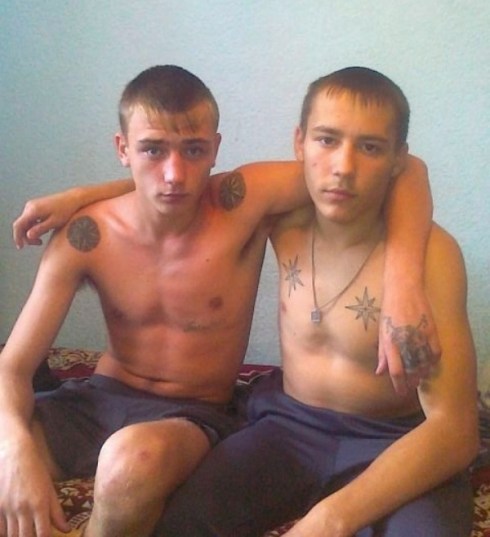
Young Russian Prisoners. Source.

© Michal Chelbin
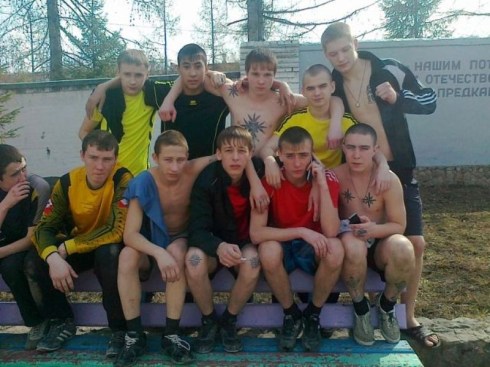
Young Russian Prisoners. Source.

In the kitchen of his Brooklyn home, Ruiz flicks through his “portfolio” of prison images.
Stefan Ruiz has made photographs inside San Quentin State Prison, Soledad Prison and the notorious maximum-security Pelican Bay State Prison. His photography from within California’s prisons was not accomplished by conventional methods; at no time was Ruiz on press assignment; making documentary work or running a photography workshop.
Ruiz worked for seven years as an art instructor at San Quentin, during which time he regularly made photographic records of individual artworks. He took some portraits of his students on the side. He got inside Pelican Bay as a court-appointed photographer making photographs for use as trial evidence.
It’s a bit of a family affair. Ruiz’s mother, a professor at UC Santa Cruz, was teaching art at Soledad. Ruiz had studied Islamic art in West Africa and went to deliver a talk to Muslim prisoners at Soledad. He delivered the same lecture later at San Quentin, at which time he was introduced to the art program coordinated by the William James Association.
Ruiz’s father is a criminal defense attorney, who in the mid nineties represented a prisoner at Pelican Bay. Ruiz was the case-for-defense’s chosen photographer, documenting conditions the of client’s confinement.
In addition to his photography, Ruiz made sketches, collected his students’ artwork, and acquired objects typical of prison culture. When he showed me a photograph of a DIY prison tattoo gun, I asked, “Is that something an inmate showed you or is it something that had been confiscated?”
“It’s something I have,” Ruiz replied.
The first photos Ruiz made inside were portraits of Soledad prison-artists holding their work. He took six rolls of film. At the age of 23, Ruiz began teaching art at San Quentin. One of his students had been a student of his mother’s at Soledad years prior. Prison-art hangs in Ruiz’ house and he has collected mug-shots for years.
In the mid-nineties, Ruiz cobbled together a photo “notebook” of his pictures of people and vernacular art. He keeps it in an old Fujifilm box bound with packing tape. “I used to take this with me everywhere; it was my portfolio.”
From humble and organic beginnings, Ruiz is now one of the most respected portrait and editorial photographers in America. Until recently he had never spoken about his experiences in California’s prisons. We sat down in his kitchen to unpack his memories and his homebrew portfolio.
Q&A
PP: Your mother introduced you to prison-life?
SR: My mother organized exhibitions of the prisoners’ artwork. I helped out by taking photos of the artwork and making slides of their work. Some of that would go to William James Association to help them appeal for funding or for entry into competitions. That’s how I got cameras into the prison at first. Whenever I took a camera into a prison it was legal, and it was generally to photograph some type of art object.
PP: Of your prison work, it is your portraits that are known, however minimally, in the public sphere. I wasn’t aware of them until you were featured on VICE TV’s Picture Perfect.
SR: There are more photographs than just portraits. I taught at San Quentin for so long, and my boss had such a good relationship with the officials that gave access, that we were allowed to do quite a few things.
The first portraits I did were of the guys in my mother’s art class at Soledad who were to be involved in an exhibition. The way we were allowed to make portraits was to say, since they couldn’t make it to their show, their portrait would.
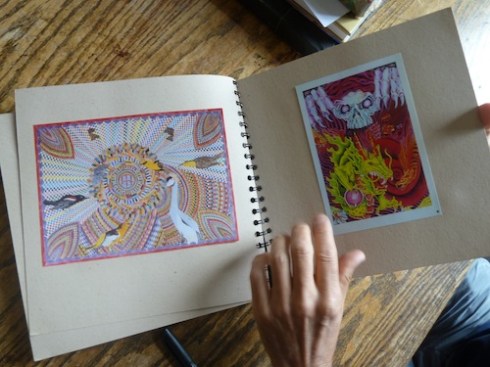
Prisoner art

Prisoner art
PP: Describe the art program.
SR: My boss played bass and the main emphasis of the art class was music but there were two visual artists who taught and I was one. The other was Patrick Maloney, who I guess is still teaching there. Patrick would also teach on Death Row. Sometimes, I would fill for him or accompany him on Death Row.
PP: How did you find working on death row?
SR: You move along the tiers and talk [through bars] to students individually, whereas on the mainline they come out their cells and they come to you.
There are two different sections of death row. In the first, there are a couple of tiers of just death row inmates. You’d need the key to get on the tier, and then you’d go from cell to cell, depending on who was part of the program. There might be three or four guys on a single tier. They had to buy their own supplies but through William James we also gave them supplies. Mostly you’d spend time talking to them. Each day, they might get half an hour outside their cell.
In the other section, the prisoners could leave their cells and go to a common space with some tables. There you could have two or three people in the class. That seemed like a better place to be on death row. The tiers are quite dark. Five tiers. And the other side is just open. One of our students was executed. He had killed a shopkeeper and his wife robbing a store in Los Angeles. He was a good student.
PP: Your mother was a professor at Santa Cruz, teaching art classes at Soledad. Those two institutions have a long and significant relationship going back to the protests and counter culture of the late sixties, Black Pantherism, and the book Soledad Prison: University of the Poor (1975) which was a collaboration between UCSC students and prisoners at Soledad.
PP: You gave a talk to Muslim students at Soledad, then to Muslim students at San Quentin and then you began in the art program. That trajectory explains your path but not your motivations. Why did you decide that leading arts education with prisoners was something you wanted to commit to multiple times a week, and eventually over seven years.
SR: Because it is interesting. I have to say; I think I learnt more from them than they learnt from me.
My father is a lawyer in criminal defense and labor law. His family is Mexican and he’s pretty liberal, so I grew up with that element too. Teaching art in prison was an activity that brought together both sides of my family.
PP: A context in which prison teaching is not a radical act?
SR: My mother was more or less a hippie. My father couldn’t really be one, he was just trying to assimilate, but he was definitely liberal. Growing up in Northern California at that time it was more of a norm than not to be on the left. To do things such as teaching in prison was not considered wild. There was no whole movement about victims’ rights as there is now.
Fair enough. There’s a lot of bad people in prison and some people who deserve to be there but …
When I was a kid, my parents were involved in a free school. We grew up in the country growing organic food. That was way before the trends of today. We composted everything; we weren’t allowed to have plastic bags for lunch. We had wax paper and baked our own bread.
The thing is the prison was interesting to me. At San Quentin they allowed me to take keys. The room where I taught art used to be a laundry room. There was a bunch of people that got murdered there, I guess in the seventies or eighties so they closed it down and eventually opened it up as an art room.
There was never a guard in our room. It was two levels but we would teach on the lower level. The closest guard was in what we would call the max-shack – a checkpoint, probably about 30 yards outside the door. I was really young when I was teaching there and a lot of the guys were way bigger than me. It was interesting to learn how to navigate that. There were anywhere from 5 to 15 people in my class. 15 would be a little bit hectic. Often we’d just get someone from the yard and have him come and sit. Students who wanted could draw him, and if not, they could work on other projects.
PP: Were any of them reluctant to paint or draw other prisoners? My experience teaching art in prison was that collectively they decided it was “suspect”, for want of a better term, to spend the time and energy painting another prisoner. Most of them made portraits of wives, girlfriends or children in a devotional way so to paint another prisoner made no sense to them and was in fact considered strange. They felt other prisoners would misconstrue it as a gesture of adoration or romantic attraction to the subject and that is something most guys wanted to avoid.
SR: No, most of them were into it. They didn’t have to do it but one thing is that since cameras aren’t allowed in prison you can make money if you can draw well, by drawing portraits, usually by copying photographs of prisoners’ family members. If you’re good you can make money. It’s like a throwback to an era before the camera; I can draw fairly realistically and that kind of saved me when I was in there because …
PP: … there’s a lot of respect attached to that ability.
SR: Yes. They’d give me a lot of shit and then we’d start drawing and it’d be fine. I generally had quite a few lifers in the class, because they are the ones who are more serious – eventually they decide to try and use their time. Young guys, who were only in for a little while, might joke around. The older guys kept the class in order.
PP: At what other times did you use your camera?
SR: There’s some really famous murals in San Quentin. I photographed them all.
PP: Was that the San Quentin administration that asked you to do that, or was it William James or was it self-initiated?
SR: My boss, Aida de Arteaga and I, decided it was a good thing to do. There are four dining halls. It used to be one huge one but it was divided because they were worried about riots. Three walls. Six sides on which the murals were painted. A Mexican-American inmate who had been busted, I think, for selling heroin painted the murals in the fifties. When I was still there, he came back to San Quentin, for the first time since his incarceration.

Photos from the San Quentin Prison dining halls. One of Ruiz’ students stands in front of the famous murals.
PP: In Photographs Not Taken you close with a bittersweet statement in which you said while you managed to take photos you still thought about the ones you weren’t allowed to take in such a “visually rich environment.” Did the staff or inmates think of their environment as visually rich?
SR: Obviously, most of the prisoners wanted to be out of there. I’m sure quite a few of the guards would like to have taken photos. Some did. Various guards had cameras for different reasons.
PP: What reasons?
SR: To photograph events. I photographed some of those too. We had concerts in the main yard, which is pretty impressive at San Quentin when you are down there with all the inmates. One time we had Ice Cube come in. On that billing, they had a white performer, a Hispanic performer and Ice Cube was the black performer. The administration has to play it like that.
Ice Cube performed in one of the dining halls and that was pretty crazy. You could see the guards were quite nervous. Some of the inmates were getting fired up. I don’t think they had another concert like that.
The prison liked the art program quite a lot and there were some guards who were supportive of our classes. Guards will either make things easy or hard for you. Basically, I think we were lucky for a lot of the time; we had people who were kind, trusted us, let us do more.
The thing about being there for so long is that you got know people fairly well. Especially being in a classroom when you’re with students for three or four hours at a time just drawing and talking. The thing that struck me was that I had a few guys who were lifers and had been in for 20 to 25 years; that’s a pretty crazy concept, especially now given all the changes that have happened, specifically with technology. I am sure – unless they were using them with their jobs within the prison – none of them had used a computer.
PP: Did you ever think there was an opportunity for you to do a photography workshop?
SR: The administration didn’t want us to do that at all. Even toward the end, they started to question me taking drawings out of the prison because many of them were realistic to the point that you could identify people in the drawings!
PP: What did the administration think of the portraits you did manage to take?
SR: They didn’t see most of them. They had signed-off on me doing photography, but they didn’t necessarily see the photographs. We got releases form the guys too. Guards might follow me round for a while, but I can take photos for days and bore the shit out of anyone. [Laughs].
I’ve probably got one of the best [records of the murals]. They were done on 4×5. I even did some on 8×10. I got in there at different times. Once, I’d used a Linhof 617 lens and camera on a commercial job, then I got access and so I used it in the prison.
PP: Did I hear that the Smithsonian has come to some sort of agreement, where by if and when San Quentin is demolished, they’ll remove and preserve the murals?
SR: They’ve been saying that for years, but I don’t know. The murals depict the history of California. The prisoners love the cable-car because the perspective is right so as you walk around it works.

“This guy before he took his shirt off warned me that his tattoos were considered some of the most racist in the prison. There’s the SS helmet skeletons.” Tattoos read ‘100% Honky’ and ‘Aryan’.

Ruiz used a chalkboard as a backdrop, “I liked the color and I liked the reference to education.” Some prisoners shaved their heads ready for the shoot. “They knew I was bringing in the camera so they prepared,” says Ruiz.
PP: It seems like the prison administration’s policy toward camera use was ad hoc?
SR: I photographed in Pelican Bay and Tehachapi, but I actually did that through a court order. My father was representing a prisoner who the CDC said was one of the heads of the Northern Mexican mafia and that he was ordering murders from his cell in Pelican Bay.
In Pelican Bay I had to use the prison’s cameras; they wouldn’t let me take in any of my own equipment, except film. This was 1995. They held on to the film, processed it, and then gave everything to me, negatives and all. The images are a bit … the lenses were a bit crazy. It’s not what I would’ve used but it was fine.
In Tehachapi, I got to use one camera and one lens. Both were mine.
PP: What was your brief for the court order?
SR: I had to photograph the cells and so the reason these photos are joined together is that they only allowed me the one lens.
Ruiz photographs of Pelican Bay State Prison, CA made in 1995 for use as court evidence.

4/4/95, Pelican Bay – “The defendant was in one of these cells.”
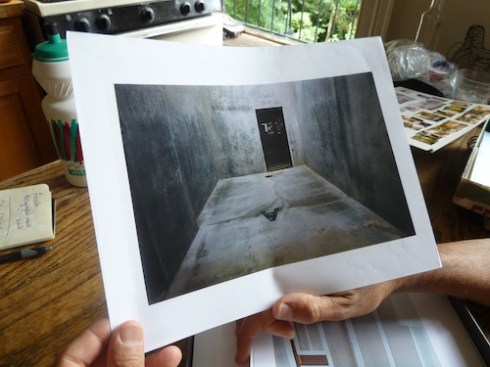
“Pelican Bay is obviously freaky.”
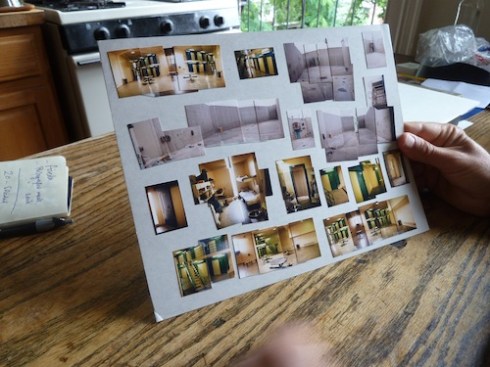
“This is the yard at Tehachapi. This is a common area, these are the cells.”
PP: It’s because of the connection through your father that you got the court ordered gig?
SR: As a defense attorney, he was allowed to bring in his own photographer. As an art teacher, I’d actually spent more time inside of prisons than my father had. Normally, he would only go to a visiting room where he would talk to his client. Whereas, I used to go on tiers, I went in cells. There were times at San Quentin when I was totally unsupervised and there were times it felt a little freaky.
PP: Were any limits placed or pre-agreements made by the courts on your photographs to limit their circulation, or are they just yours?
SR: They’re just mine.
PP: Is there a reason why you’ve not shared them widely yet?
SR: There are some that I considered might be a bit sensitive and I didn’t want to get my boss into trouble in any way. The photographs from Pelican Bay and Tehachapi are fine. The ones from San Quentin; she’d help me get the camera in. We had an understanding. I wasn’t going to screw her over.
It’s more important for me to be cool with her than it is to profit from the photos. I’ve done fine with photography without having ever shown these. I probably could’ve done a book with these and with some of the writing and artwork I have a long time ago, but I’ve never been about just promoting myself at all costs without taking others into consideration.
By now, enough time has passed. I’m going through everything. I think I have enough for a book. I have boxes of stuff that just accumulated.
PP: How did all of this work and exposure across three Californian prisons inform the rest of your career?
SR: I always knew I was going to do art. I didn’t know I was going to do photography. I always thought I’d be a painter. The thing that I learned? I learnt that if I couldn’t take any photos, I would collect things!
I took my portfolio everywhere. I got jobs off of the stuff but I never let it out of my hands. You’re the first person to have photographed it, with the exception of the VICE crew who put it in their video. I’m okay with that now. I always guarded it.
I met the guys who were doing COLORS magazine in the late nineties and it definitely influenced them. It influenced their ‘Prison’ issue (June, 2002). I was actually supposed to go to Gaza for COLORS, but the Israelis had bombed the prison right before I was due to leave, so the trip was cancelled. So, I’ve definitely used this stuff to my advantage.
PP: Did you ever give prints to the prisoners?
SR: I’d give them stuff but we kept it low key because I didn’t want any trouble for the program.
PP: Did the guys you taught appreciate that San Quentin had more programs than most prisons?
SR: They liked San Quentin. It’s an old prison. It has a lot of nooks and crannies. There are weird things that go on there that you wouldn’t get in a modern prison.
There was the old hospital built in the 19th century and out of brick. It was structurally unsound after the earthquake and left empty. They’d let certain prisoners go in there at their own risk. The deputy warden or someone in authority allowed one of my students to set up an art studio in there. And he had it for a couple of years! You wouldn’t get that at a lot of other places.
PP: Your photographs form a weird mix.
SR: I’ve always thought it was valid because it was about what I could get and how I could get it.

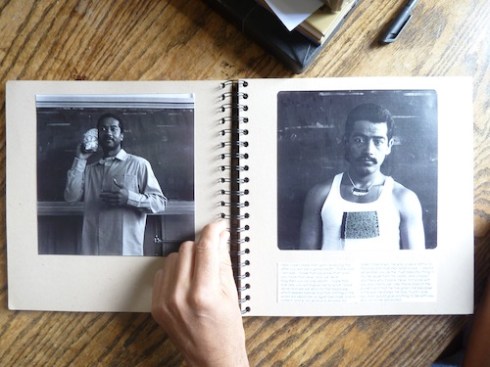
Soledad prisoners.
PP: Do you think prison systems in the U.S. are racist?
SR: If 11% of California’s population is Black but then at least 36% of the prison population is Black something’s not proportional. That says something about this society. Obviously the system can be racist, but it is also classist. You have a hell of a lot more poor people in prison than you do wealthy people and that’s because wealthy people can afford lawyers.
There weren’t many well educated guys in my classes. They’re obviously smart guys who could do all sorts but they weren’t well educated. I had a blonde white guy who I asked him to read something one time, not even thinking that he didn’t know how to read. It was a horrible thing for him and, of course, for me. I didn’t expect it at all. After that he started taking some of the high school classes and learnt to read.
Prisons are a control thing. [Upon release] if you have people who can’t travel, can’t get housing and can’t vote you can keep a whole population controlled. You can keep a whole population one little step away from being thrown straight back into prison.
PP: So the prison system is failing?
SR: I definitely think some people should be in prison.
There was a child molester who was quite collectible. People like to collect his art. He creeped me out. He made drawings of the kids he had killed from newspaper clippings. I took photographs of them, but I didn’t know that’s what they were until he explained them to me later. He had a scrapbook and the first 20 pages were pictures of Hillary Clinton smiling and then after that it was all these pictures of kids. Innocent pictures – many of them from National Geographic, but when you know what he was about, it’s pretty disturbing.
There’s some fucked up people in the world.
But I also saw, all the time, guys in prison for stupid drugs convictions and I think that is just a waste. The three strikes law was foolish. Keeping someone in prison, which at the time cost something like $30,000 – I’m sure it’s more now – is just a waste of money. You can give people education with that money to help them get better jobs.
I used to go to the visitor center a lot. You’d see the damage being done when families would come up from Los Angeles for the day. Wives would go in and the kids would stay in the guesthouse for the day. The separation of families when they have to travel so far [to where loved ones are imprisoned] is harsh.
Obviously, I believe in education over other things. Otherwise, I wouldn’t have done what I did.

Stefan Ruiz
Ruiz was born in San Francisco, and studied painting and sculpture at the University of California (Santa Cruz) and the Accademia di Belle Arti (Venice, Italy). He took up photography while in West Africa, documenting Islam’s influence on traditional West African art. He taught art at San Quentin State Prison from 1992-1998, and began to work professionally as a photographer in 1994. He has worked editorially for magazines including Colors (for whom he was Creative Director, 2003-04), The New York Times Magazine, L’uomo Vogue, Wallpaper*, The Guardian Weekend, Telegraph Magazine and Rolling Stone. His award winning advertising campaigns include Caterpillar, Camper, Diesel, Air France and Costume National.

I recently visited the International Center for Photography (ICP). I was encouraged to see a photo from Abu Ghraib alongside one of Robert Capa’s Normandy landing photos and Margaret Bourke-White’s photographs from a liberated Nazi concentration camp. All were featured in the enjoyable and current A Short History of Photography exhibition, showcasing works acquired during the tenure of outgoing Director Willis “Buzz” Hartshorn.
Just as Capa and Bourke-White’s photographs are iconic of the WWII conflict, the Abu Ghraib digital photos are iconic and the images of America’s War On Iraq.
Both Capa and Bourke-White, in these instances, were photographers in the thick of it, in the moment, to deliver important news of the day to corners of the globe. Of course, the rise of citizen journalism has put pay to the idea that roving career photographers are now the first to a scene of international significance.
Without doubt the Abu Ghraib images – given their historical and cultural significance and dissemination – are rightfully in the ICP collection. That is not the issue; my questions were about the label:
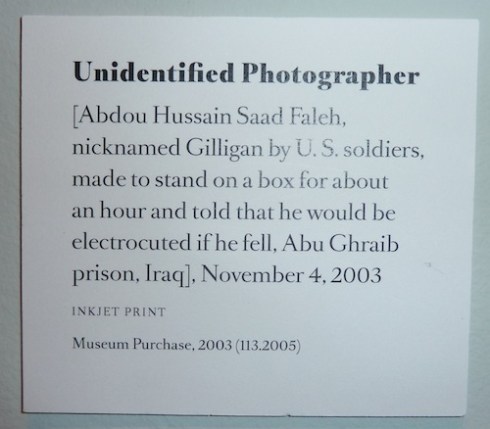
Unidentified Photographer: [Abdou Hussain Saad Faleh, nicknamed Gilligan by U.S. soldiers, made to stand on a box for about an hour and told that he would be electrocuted if he fell, Abu Ghraib prison, Iraq], November 4, 2003. INKJET PRINT. Museum Purchase, 2003 (113.2005)
Museum purchase? Who would be a recipient of payment for the image? I suspected it might be a case of language and not action. Ever interested by provenance and the accession of items into museum collections, I emailed ICP the following questions:
– Is “Museum Purchase” just a standard note you attach to works or did ICP actually hand over money to someone or some body for the image?
– Did ICP print it off the internet?
– When deciding to acquire it into the collection, what decisions were made about the file, the printing, the paper, the ink?
Kindly, Brian Wallis, the Deputy Director/Chief Curator at ICP responded:
The Abu Ghraib photograph now included in the “A Short History of Photography” was originally printed for the ICP exhibition “Inconvenient Evidence: Iraqi Prison Photographs from Abu Ghraib” (Sept. 17-Nov. 28, 2004).
At the time, only about twenty JPEGs were available, either on the Internet or from files supplied by the New Yorker.* We printed all images then available for the exhibition. They were printed on a standard Epson office printer, on standard 8½” x 11″. office paper, and pinned directly to the wall in the exhibition, in part to emphasize the ephemerality and informational nature of the pictures.
They were printed directly from the web with the understanding that these photographs, taken by U.S. government personnel, were in the public domain. We did not pay for them. The credit line in the current exhibition describes them as “museum purchase” in part because there is no other official museum description for how we obtained them; one could say we purchased the supplies used to print them.
So, no money exchanged hands. A relief of sorts. What one would expect.
I suppose ultimately, I have to give ICP some recognition for its 2004 reflex response to the pressing visual culture issue of the day; for presenting a set of images that for all intents and purposes falls outside of the normal acquisition avenues of major institutions.
ICP’s home-brew solution to show the Abu Ghraib, non-rarefied, non-editioned and thoroughly contemporary set of images is against the grain of many other museums chasing gate receipts through edutainment.

Left: Photo of allied forces landing on Normandy beaches, by Robert Capa; right: Photo of torture at Abu Ghraib, by unknown photographer.
– – – – – – – –
*Seymour Hirsch, who wrote Torture at Abu Ghraib (May, 2004) for the New Yorker, also provide the text for ICP’s Inconvenient Evidence exhibition – the catalogue for which you can download as a PDF
– – – – – – – –
All images: Pete Brook and taken without permission.

 Prison Photography