flagprison

I took some flak for questioning America’s Day of Independence celebrations. I suggested that flag-waving is sometimes an empty exercise and distracts society from scrutiny of serious problems.

To support the point, I stated some positions:

America is the only Western nation in the world to execute human beings.
America has 1 in 30 adults locked up in prisons (4 times the amount of any other Western state).
America’s middle class has fled to the banality of the suburbs and hung its public school systems out to dry.
America has 50 million medically uninsured people, including 11 million children.

America has embraced the privatisation of prisons and stockholders profit from the incarceration of men, women and children.
America’s drug war is in fact a war on the lower classes, who are predominantly minority groups.

As if on cue, these three things have fallen into my lap in the intervening 72 hours.

Schools

The Economist reports on the US’ private school sector; a sector totally unaffected by the recession. Amanda Uhry of Manhattan Private Schools Advisors speaks brutality and unabashedly about the robustness of the private school sector. It’s success is based on fear, individualism, constant educational benchmarks set from the earliest of grade levels, and a severe lack of imagination; “America has fallen far, far behind other nations in providing public education”.

Prisons

I hope most Americans would prefer not to be number one in this country-by-country comparison.

PrisonStatsCountry

And, just in case you’re wondering, the US is 4th most frequent executioner of its citizens. The other countries making up the top five are the often vilified and demonised China, Iran, Saudi Arabia and Pakistan.

Hospitals

My family in the UK is an average bunch. Nevertheless, three of the five of us have required major surgery (all three more than once). The NHS provided – in every case – timely and impeccable care. Taxes aren’t a burden, they are peace of mind.

As John Pilger puts it, “The way the National Health Service is represented in the United States is truly scandalous. That word ‘Socialist’ is pulled out; it’s kind of infantile almost. Well, if Socialist is taking away the fear of being denied health care, then yes it is.”

As I refer to it, the cushty-cell-theory, that is to say, the idea that prisoners shouldn’t be any better off than the worst off in open society is common. But, it is not an argument; rather it is an extension of bitterness and misinformation.

It makes no sense to hold the conditions of a single institution, the prison, to the lowest identifiable standards of society elsewhere. To do so is prejudice.

The following passage from the provocative and authoritative The Oxford History of the Prison (Norval & Rothman, eds.) sets out to explain this idea:

Inmates are the best and the worst among us. They include Mahatma Gandhi, Martin Luther King, Nelson Mandela, Thomas More, Oscar Wilde, Bertrand Russell – a very mixed group but not lacking in virtue – and a long list of highly principled dissenters. There is no point in cataloguing the worst. Prisoners are ourselves writ large or small. And, as such, they should not be subjected to suffering exceeding fair expiation for the crimes which they have been convicted. Below that admittedly vague ceiling of suffering, they are entitled to a reasonably safe, clean environment. They must be spared cruelty, cruelty being defined as violations of their bodily and psychological integrities beyond the legitimate necessities of their punishment.

There is one theme, however, that has complicated this whole analysis of appropriate prison conditions – the alleged principle of “less eligibility.” It is the idea, which dates back to at least the nineteenth century, that the prisoner’s condition must not in any particular be preferable, more comfortable, or more adequate than those of the worst off members of the community who have not been convicted of a crime. Otherwise, it is suggested, a positive incentive is created for those worst-off citizens to commit crime so as to improve their conditions. This is a daft idea, but it captures men’s minds. Happily, it is not taken seriously by prison administrators who know that if they are not to operate death camps, their prisons must be run by consent. The administrators hold the ultimate power at the periphery, but within the walls power lies with the prisoners. In the end, the prison embodies the largest power the state exercises over its citizens in time of peace. If the balance between authority and autonomy is struck fairly here, it is not likely to go far wrong elsewhere.

[Emphasis mine]

To postpone all standards for society’s incarcerated class is to distinguish oneself from them. It becomes an “Us & Them” scenario, in which abuses are tolerated or ignored.

I chose to focus on this repugnant prejudice-masked-as-theory for Wednesday Words because I have been troubled for many years at the acceptance and even casual sadistic humour in mainstream society regarding prison violence.

The illicit manufacture of tools by prisoner piqued Marc Steinmetz‘s curiosity. He called around German prisons to inquire if they were still in possession of particularly ingenious contraband tools and escape devices.

Santa Fu, Celle, Wolfenbuttel and Ludwigsburg prisons all welcomed Steinmetz to view their collections. (The historical objects of Stammheim and Hohenasperg prisons were part of the Ludwigsburg collection.)

Steinmetz’s photographs were used in a German magazine editorial, but I have seen similar series of object types displayed as fine art.

When photographers set up objects (food, seeds, dead birds, insects, fish, etc) it is usually to draw extended attention to common characteristics and impose drama upon ‘the ordinary’. Against a white backdrop and removed form the clutter of daily life, it is intended that these objects can (if only briefly) transcend their functional purpose and be appreciated within the discourses of beauty and/or high art.

Steimetz wanted to highlight the ingenuity and intelligent design of these objects, and I’d like to do the same.

I have included some weapons here and omitted others. I deliberately omitted crude weapons for this post as they are hardly novel … anything with any weight becomes a dangerous weapon, right? On the other hand, I included guns and rifles as I never thought they could be manufactured from scratch. I was particularly impressed by the electrical items.

Below are Prison Photography‘s pick of the bunch with Steinmetz’s own captions. Thereafter is a brief Q & A with Steinmetz.

flucht_pistole

DOUBLE-BARRELED PISTOL This gun was found along with other homemade firearms in the cell of two Celle prison inmates on November 15, 1984. The weapons had been made in the prison’s metal workshop. They were loaded with pieces of steel and match-heads.

flucht_tattoo

TATTOOING NEEDLE made from a toothbrush handle, a ball pen and an electric motor; confiscated in ‘Santa Fu’ prison in Hamburg, Germany. Tattooing instruments are a popular and common source of income among inmates but are banned as ‘illegal objects’ due to the danger of infection (Aids, Hepatitis, etc.).
flucht_grill

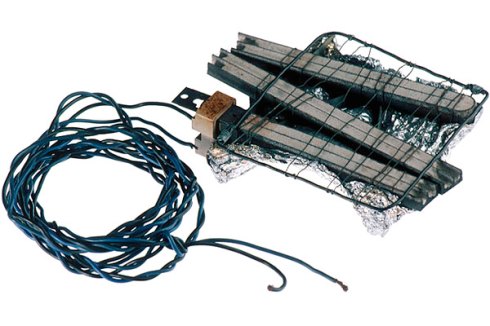
STOVE / GRILL / TOASTER An inmate of Ludwigsburg prison, Germany, botched together this multi-purpose tool from wire, a broken heating rod and some tin foil. It was found in his cell and confiscated sometime in the mid-eighties.
flucht_tube

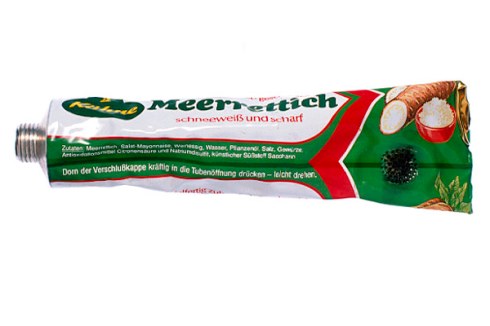
HASH PIPE fashioned from an empty horseradish tube; confiscated in ‘Santa Fu’ prison in Hamburg, Germany. Bongs are the most common of all forbidden items in prisons. The range of materials they are made of mirrors the inmates’ great imagination. And their prior needs.

flucht_wanze

RADIO TRANSMITTER / BUG made of radio recorder parts by an inmate of Wolfenbüttel prison, Germany (battery is missing). Prisoners occasionally manage to install gizmos like this one in guard-rooms to be prepared for upcoming cell searches. Also suitable as a means of cell-to-cell communication among inmates. A standard radio serves as a receiver.

flucht_tauchsieder

IMMERSION HEATER made from razor blades; found in a cell in ‘Santa Fu’ jail in Hamburg, Germany. Jailbirds use these tools to distil alcoholic beverages forbidden in prisons. Your typical inmate’s moonshine still includes a plastic can containing fermented fruit mash or juice, an immersion coil of some sort, a rubber hose, and a plastic receptacle for the booze.

flucht_buch

RADIO RECEIVER Sometime in the seventies an inmate of Ludwigsburg prison, Germany, built this radio on the sly and hid it inside an encyclopedia. It was probably commissioned by another inmate who had no electronic expertise himself.
flucht_gewehr

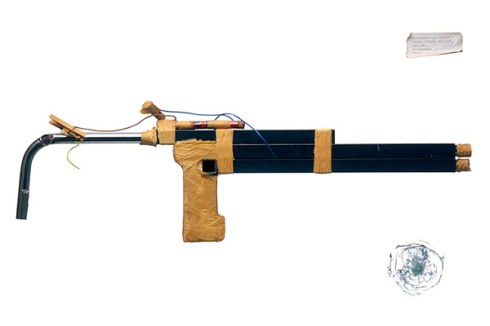
SHOTGUN made from iron bedposts; charge made of pieces of lead from curtain tape and match-heads, to be ignited by AA batteries and a broken light bulb. On May 21, 1984 two inmates of a prison in Celle, Germany, took a jailer as a hostage, showed off their fire power by letting go at a pane of bullet-proof glass, and escaped by car.

________________________________________________________

Q & A

When did you complete this project and why did you take on this subject?

I shot the whole project in April and May 1999. I had read a magazine article about a prisoner in Berlin who had whittled a key to his cell from a toilet seat. Unfortunately, prison officials in Berlin weren’t cooperative, so I wasn’t allowed to take a picture of that key for ‘security reasons’. (Can you believe that?).

But it nevertheless provided the key to the story and got me interested. Süddeutsche Zeitung Magazine editors [provided a catalyst] too – they bought the story.

The objects range in date from the 70s through to the mid 90s and from multiple German prisons. How and where did you source the objects?

Prisons often have a collection of items which were secured from inmates’ cells or after attempts at escape.

I did my research exclusively by phone and located a handful of prisons which seemed worth a visit. I decided then and there which objects to photograph.

Much of your previous photography has been about complex scientific experimentation and grand research. Was this project a departure?

Not at all. I have always been interested in the uncommon or even bizarre.

What about the objects is of interest to you?

Ingenuity of improvisation. Intelligence. Purposefulness.

In my work, not everything depends on meticulous planning, but to a great extent on chance and my ability to improvise. Therefore I can relate to these escape tools. I admire their no-nonsense design, their simplicity. Even if their escape attempts fail, these guys cross boundaries in that they find uses for things other than what they were made for.

What do your photographs of the objects add to the stories objects?

To me, they communicate intelligence and the flexibility of the human mind under adverse conditions. I wanted to share my surprise: ‘What the … ?’

Did this project inform or reflect your understanding of German prisons, prison history and/or current prison politics?

Not really. I wasn’t interested in the political or social aspects of the subject matter. It was an interesting experience, though, to get to peek inside these facilities even though I had no contact with any of the inmates.

To compensate for that and to communicate credibility, I tried to collect as much information about the objects as I could. I felt they should be preserved the same way that archaeological artifacts are.

What are you working on now?

Currently, I am working on an independent project which is called ‘Toter Winkel’. I am still searching for an international title which works both in German and English, even though I focus exclusively on Germany.

I started wondering about what cars have done to our cities. I ended up doing night shots of elevated roads with a 4×5″ field camera. It’s hard to believe what monstrosities have been erected for the sake of misconceived mobility!

But this is more of a long-term fine art project than an editorial piece. Fieldwork is completed, but post-production will take a few more months, I’m afraid.

Thank you, Marc

________________________________________________________

Marc Steinmetz is a photographer specialising in Science and Technology stories. Prison Photography recommends his work on Plasticination, Karakarum – The Archaeology of Genghis Kahn’s Empire and his series on Drinking Water. An extended interview with Marc, is here.

flucht_milch

DUMMY PISTOL from blackened cardboard; found on June 23, 1988, in an inmate’s cell in Stammheim prison, Germany, after a fellow prisoner tipped off the jailers. The dummy was hidden in an empty milk pack and was most probably intended to be used for taking hostages in an escape attempt.

________________________________________________________

All images © Marc Steinmetz.

I originally came across Steinmetz’s work at Accidental Mysteries – a blog I highly recommend for its polished curatorial eye of surprising, inventive and humourous human interventions.

Samuel F. B. Morse's Daguerreotype Equipment, by Thomas Smillie, 1888, Smithsonian Institution Archives

Samuel F. B. Morse's Daguerreotype Equipment, by Thomas Smillie, 1888, Smithsonian Institution Archives

Source, and more here.

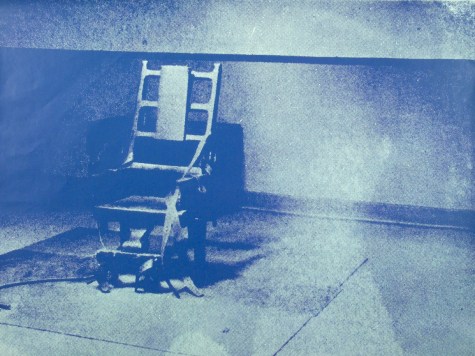
Little Electric Chair. Andy Warhol, 1965

Little Electric Chair (Detail). Andy Warhol, 1965

Merry A. Foresta, Director Smithsonian Photography Initiative, informs,

“In addition to being the Smithsonian’s first staff photographer, Thomas Smillie was also the institution’s first photography curator. Interestingly, in 1896 when a formal Section of Photography was established Smillie was titled “Custodian” and the first objects he collected – bought for the sum of $23 – were the daguerreotype camera and photographic apparatus used by Samuel Morse, one of the first Americans to experiment with photography…”

When I saw the deathly familiar blue of Smillie’s cyanotype, I was thrown back to the electric hues of one of Warhol’s many electric chair prints.

From the rarest, unique image to the mass produced commodity. Both images of apparatus; both apparatus a steal on time and both definitively (institutionally) American.

The Smithsonian has operated Click! Photography Initiative for a couple of years now. They publish sporadically on The Bigger Picture Blog with a variety of essays about every imaginable application and interpretation of photographic culture in society. Contributors include high school kids to photography greats such as Robert Adams and a wealth of respected curators and educators including Wendy Ewald and Sandra Phillips. There’s even space for you if you wish to try you hand.

The project also nudged me back into the mind space and work of Bay Area heroine Carla Williams. Read her blog and your life will be better.

In photography Cornell Capa has huge renown. In prisons, Attica has a huge renown. It is therefore, expected that I’d transcribe Capa’s testimony to the McKay Commission (New York State Special Commission on Attica) Hearings.

After the text I shall offer my opinion.

TEXT

Cornell Capa: I was asked eventually by Arthur [Liman, Counsel] if I would want to look at Attica for the reasons that he mentioned, that photography and a photographer may have something to contribute …

As a human being and a photographer, my personal and professional and civic feeling was to look into it and – as my professional life is involved in understanding human condition – try to perceive what it is all about.

I think photography can serve a most useful role in an investigation and that’s exactly what I consented to do.

I [have] submitted 26 photographs which I will be showing to the commission and I have submitted equally a very short written statement and captions for the photographs.

I would like to really just read my written statement and following that as the photographs go by, I will do the captioning job for them.

At Attica: A Photographic Report.

Recently I spent three days at Attica, having been asked by the McKay commission to take a look at the institution and bring back my visual report.

During the visits to Attica I was, at all times, accompanied by a correction officer and a member of the Commission staff; all persons recognizable in these photographs consented to be photographed.

My photographs and their captions constitute my report for the commission. There is just a little more to add.

A feeling of nervous expectation seems to pervade Attica. Everybody is waiting the result of the work of the Commission’s investigations on the causes of the explosion which occurred there six months ago, and their recommendations for the future avoidance of such a tragedy in the future. Both sides, inmates and guards expect some new things to evolve from the findings – some kind of miracle which will transform the institution into a place where the Biblical lion and lamb will better live together peacefully.

The only hitch: each side has its very own view of the meaning of peaceful and better coexistence, and how to achieve it.

From the outside, Attica situated in the rolling farmland in western New York, has a Disneyland-like appearance, especially at night.

Attica’s inmates are all locked in their cells from approximately 5pm until 7am the next morning. Officers on the night shift make lonely rounds checking the count six times a night.

All movement in Attica is limited by locks. At night the duty officer must carry with him all the keys he will need on his nightly round of inspection

Confined to their 4 x 9 cells, inmates may talk to one another across the cellblocks and play music instruments until 8pm.

Locked in a cell a mirror is an inmates eyes to the rest of his gallery, and whenever something happens, the mirrors appear as if on cue.

After 8pm talking and noise  are not permitted. There is little to do until lights out at 11pm except read, write letters or listen to one of the three channels of the prison radio which plays music, sports and the audio portion of TV shows.

In E Block, Attica’s medium security prison with the maximum-security walls, a small group of inmates in special programs are permitted to remain at night in the blocks day room to watch television, play cards or talk.

Corrections officers on the day shift leave homes in the town of Attica and surrounding communities and report for roll calls at 7am, 9.20am, 3pm and 11pm to receive their assignments.

These are the guns and smoke parts etc, what [sic] they keep  in the armory for emergency use only.

These are the keys, which they use, the whole system is based on keys. This is just a very small selection of all the keys that open all the doors in Attica

On signal the cells open and inmates in each company line up in two’s to be escorted down one of the endless corridors to the mess hall for breakfast

In his daily movements throughout the institution, an inmate must pass through several times through ‘Times Square’ where the corridors leading from the four main cell blocks converge and gates point in four directions.

Many inmates spend up to five hours a day working in one of the prison industries, the largest of which is a large metal shop, where inmates build steel cabinets and office furniture for state institutions.

For a few hours each day, inmates are allowed to go into their cellblock’s yard for outdoor recreation

The sports facilities, always limited, have been even more curtailed since September. For most inmates the yard means walking around and around or standing around.

The only opportunity for most inmates to watch TV is outside in the yard. Due to the winter climate and the meager daytime TV schedules, few are interested.

While some are out in the yard, others return to their cellblocks. In some areas there are improvised meeting rooms where a few inmates can pursue simple hobbies and handicrafts.

For the rest it is back to the cells to pass the hours until supper. The site of disembodied hands outside the bars playing cards is not unusual here.

Some play chess but the opponent remains unseen.

There is so much idle time; one of the most common activities is preparing legal paper for appeals and writs.

9.30 to 3.30 every day are visiting hours. Those inmates whose families live nearby or who can afford the long journey to Attica may receive a visit. Visits take place in a large room, under the watch of officers and a wire screen separates the inmates from his visitor.

An inmate’s personal touch, often his own creation, is the difference between one cell and another.

One of the statewide changes since the riot is the creation of inmate liaison committees at each institution.

The committee at Attica was elected last month, has adopted a constitution and has begun the task of drawing up projected reforms.

Although life at Attica is again becoming routine, grim reminders of what happened there are everywhere.

This is the round State Shop in damaged condition beyond repair.

Two of the cells blocks were destroyed beyond repair and are still unoccupied. D Block yard on which the eyes of the world were focused for four days last September is deserted now. The trench is filled in but remains visible like a scar reminding one of the great illness which fell upon Attica seven months ago.

[END]

_____________________________________________________

Capa’s review is a rather bland description of everyday life in the prison. This comes as quite a disappointment; I had expected a rousing polemic against the unsuitable conditions of mammoth prisons and their effect on the will of man.

These words seem particularly tame when one considers the magnitude, violence and precendence Attica has in the history of prison resistance. The words are detached from the extremely graphic photographs [WARNING] documenting the riot and its bloody remnants. Capa’s words are the epitome of obsolescence.

Attica was a disaster.

On Sept. 13, [1972] in upstate New York, a four-day standoff at the Attica Correctional Facility ended when 500 state troopers attacked the prison compound, firing 2,200 bullets in nine minutes. The raid killed 29 inmates and 10 guards held as hostages, while wounding at least 86 other people. The orders came from Gov. Nelson Rockefeller.

Capa’s words fall short of the strength needed to describe the institution six months on from disaster.

I encourage you all to browse Attica Revisited an encyclopaedic resource of official papers, oral history video and photography.

Book Cover

Cornell Capa, to some extent, lived in the shadow of his older brother Robert. I guess, it is easy for complacent men to adore the still and fallen martyr than to keep apace with a passionate and piqued practitioner. Cornell’s and Robert’s legends are one; Cornell ceaselessly fought his brother’s corner authenticity debate surrounding The Falling Soldier.

Cornell’s indebtedness to his brother was fateful and self-imposed:

“From that day,” Mr. Capa said about his brother’s death, “I was haunted by the question of what happens to the work a photographer leaves behind, by how to make the work stay alive.”

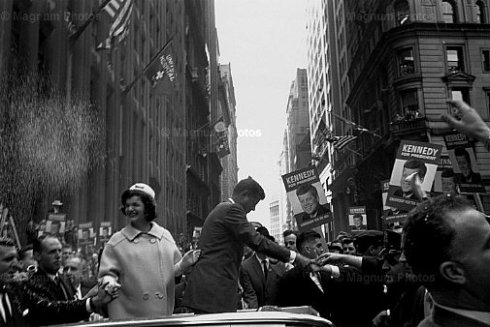
Disappointingly, it is only in extended surveys of Cornell Capa’s career that mention of his fifties photojournalism in Central and Southern America arises. Otherwise, Cornell is celebrated for his political journalism and particularly his campaign coverage of Adlai E. Stevenson, Jack and Bobby Kennedy. Cornell’s photographs from Latin America are often neglected, even demoted.

RobertKennedy

NYC19480

The Kennedys were the foci of American progressive attitudes, and so, in the sixties, Cornell documented the concerned politician. Cornell was (not in a negative way) passive and the sixties were not formative. It was in the fifties that he actively worked to define the persona, the ideal: ‘The Concerned Photographer’.

Family Planning Honduras

Tractor

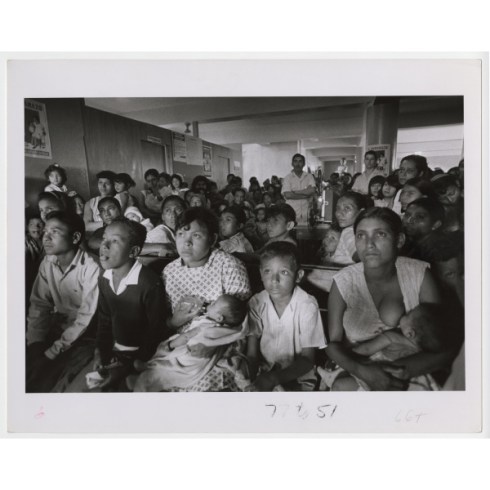
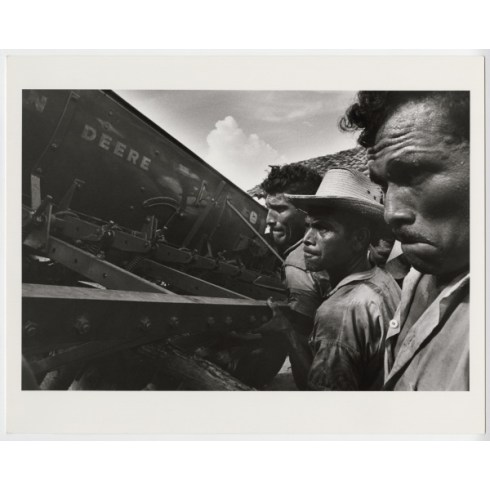
Cornell’s work in Latin America:

Beginning in 1953, Capa traveled regularly to Central and South America. He focused extensively on the explosive politics of the region, particularly issues such as elections, free speech, foreign investments, and workers’ rights. His first trip was to Guatemala for Life. Capa photographed banana workers and peasants, and the complicated relationship and struggle for power between the local leftist leaders, President Jacobo Arbenz and the U.S.-owned United Fruit Company. In his most dynamic news story, he covered the collapse and fiery aftermath of the regime of dictator Juan Peron in Argentina in 1955. A year later he photographed in Nicaragua following the assassination of dictator Anastasio Somoza.

In 1956, he was sent to Ecuador by Life to cover the brutal murder of five Christian missionaries. This was to be a life changing experience. Typical of the way Capa was to engage with his subjects over many years, rather than taking the photographs and leaving the scene, he continued to photograph the story over time. In particular, he focused on one of the widows, Betty Elliot, and her extraordinary, understanding relationship with the Indians with whom she and her young daughter lived for several years, as she pursued her missionary work and research into the native language and customs.

In 1956, Cornell was in Nicaragua reporting on the assassination of President Anastasio Somoza García. Somoza was shot by a young Nicaraguan poet; the murder only disrupting slightly the Somoza dynasty that lasted until the revolution of 1979 (that’s where Susan Meiselas picks up).

In the aftermath of the assassination over 1,000 “dissidents” were rounded up. The murder was used as an excuse and means to suppress many, despite the act being that of one man.

capa_cornell_life_011

Nicaragua Prison

I have no knowledge of what happened to these men after Cornell photographed them and I am sure you haven’t the patience for speculative-art-historio-speak.

I do wonder … if having witnessed revolution, early democracies, military juntas, coups, communism, social movements, grand narratives and oppression in various forms, if Cornell picked his subjects with discernment back in the United States.

As early as 1954 Cornell was working on a story for Life about the education of developmentally disabled children and young adults. Up and to that point in time, the subject had been regarded by most American magazines as taboo. The feature was a breakthrough.

In 1966, in memorial to his brother, Robert, and out of his “professed growing anxiety about the diminishing relevance of photojournalism in light of the increasing presence of film footage on television news” Cornell founded the Fund for Concerned Photography. In 1974, this ideal found a bricks and mortar home on 5th Ave & 94th Street in New York: The International Center for Photography.

Attica Chess

This institutional limbo that eventually gave rise to one of the world’s most important photography organisations was not a quiet period for Cornell. In 1972, he was commissioned to Attica, NY, to document visually the conditions of the prison. Capa presented his evidence to the McKay report (PDF, Part 1, pages 8-14) the body investigating the cause of the unrest. Cornell narrates his personal observations while showing his photographs to the commission.

Moving Prisoners, Attica

Yard, Attica

At a time when, the photojournalist community seems to have crises of confidence and purpose at an alarming rate, it would be wise to embrace his spirit in full recognition his slow accumulation of remarkable accomplishments.

Rest In Peace, Cornell.

Coffin

PHOTO CREDITS.
Robert F. Kennedy campaigning in Elmira, New York, September 1964. Accession#: CI.9685
New York City. 1960. Senator John F. KENNEDY and his wife, Jackie, campaigning for the presidency. NYC19480 (CAC1960014 W00020/XX). Copyright Cornell Capa C/Magnum Photos
Three men pushing John Deere machine, Honduras, 1970-73. Accession#: CI.3746
Watching family planning instructional film at Las Crucitas clinic, Tegucigalpa, Honduras], 1970-73. Accession#: CI.8544
Political dissidents arrested after the assassination of Nicaraguan dictator, Anastasio Somoza, Managua, Nicaragua, September 1956. The LIFE Magazine Collection. Accession#: 2009.20.13
NICARAGUA. Managua. 1956. Some of the one thousand political dissidents who were arrested after the assassination of Nicaraguan dictator Anastasio Somoza. NYC19539 (CAC1956012 W00004/09). Copyright Cornell Capa/Magnum Photos
Prisoners escorted from one area to another, Attica Correctional Facility, Attica, New York, March 1972 (printed 2008). Accession#: CI.9693
Two men walking around prison courtyard, Attica Correctional Facility, Attica, New York, March 1972. Accession#: CI.9689
Inmates playing chess from prison cells, Attica Correctional Facility, Attica, New York, March 1972. Accession#: CI.9688
Man on scooter carrying coffin, northeastern Brazil, 1962. Accession#: CI.8921

All photos courtesy of The Robert Capa and Cornell Capa Archive, Promised Gift of Cornell Capa, International Center of Photography. (Except for ‘The Concerned Photographer’ book cover; the Jack Kennedy photograph; & the second Nicaragua prison photograph.)


If I ever have kids I’ll read them Naomi Klein’s Shock Doctrine at bedtime. I’ll use Klein’s words as proxy for my own in imparting the necessary cautions of governments and guns in our f*#ked up world.

(Hold up, there’s reason enough why not to have kids.)

Chapters two and three deal with the growth of Chicago School economics and its pernicious experiments and infiltration into the ‘Southern Cone’.

Throughout the 60s and 70s, the US & the CIA facilitated right-wing opposition movements, juntas, military coups and consequent torture programs in Chile, Brazil, Uruguay and Argentina.

During this time between 100,000 and 150,000 people were killed or ‘disappeared’. Estimates are wide and varied because the murders were out of control, accountability suspended and the terror doled out faster than it could be monitored.

During the Dirty War in Argentina, the terror of each night repeated the previous; a seven-year state-sanctioned massacre that bled into every neighbourhood under the cover of darkness.

The inhumanity is incomprehensible, but Klein attempts to describe the various methods used at times by different forces in each of the countries. Uruguay had a particular penchant for isolation;

Prisoners in Uruguay’s Libertad Prison were sent to la isla, the island: tiny windowless cells in which one bare light bulb was illuminated at all times. High value prisoners were kept in absolute isolation for more than a decade.

“We were beginning to think we were dead, that our cells weren’t cells but rather graves, that the outside world didn’t exist, that the sun was a myth,” one of these prisoners, Mauricio Rosencof, recalled. He saw the sun for a total of eight hours over eleven and a half years. So deprived were his senses during this time that he “forgot colors – there were no colors.”

(Page 93)

In a foot-note Klein remarks:
‘The prison administration at Libertad worked closely with behavioral psychologists to design torture techniques tailored to each individual’s psychological profile – a method now used at Guantanamo Bay.’

Once, as a 15 year old, I sat naked on the edge of the bath covered in piss and vomit after drinking myself silly. Apparently, I told my mum – who was wracked with worry – to “chill out”. I delivered this line with assurance proving how far gone I was; how unable I was to see my pathetic situation and how unable I was to connect with reality.

I don’t remember any of the actual episode (I was too blotto) but the shame and necessary reparations afterward meant I have constructed a memory which feels as visceral as any Proustian recall.

Sergey Maximishin‘s photograph, Sobering Up Station, puts a pit in my stomach.

Sobering-up station, St.-Petersburg, January, 2003. (c) Sergey Maximishin

Sobering-up station, St.-Petersburg, January, 2003. (c) Sergey Maximishin

Sites of incarceration are sites of tragedy. They exist because of the saddening (sometimes necessary) control of pathetic, violent, misunderstood, abusive or abused individuals.

Prisons and jails are architectures of failed human interaction and the friable psychologies of man. Where many folk are fearful of those behind bars, I am generally pitiful.

How many of you have behaved like the “classic drunk”? How many of you have even remembered your foolish confidence? How many of you have still insisted (even down to your underwear) that there’s something to do, other than sleep it off?

Sobering Up Station is a document of failed interaction, of brilliant human inadequacies and of all the unavoidable mess that exists (one way and at one time or another) in all of our lives.

Maximishin – Bio: Born in 1964. Grew up in Kerch, the Crimea. Moved to Leningrad in 1982. Served in the Soviet army as a photographer the Soviet Military Force Group on Cuba from 1985 to 1987. Graduated from Leningrad Politechnical Institute in 1991 with a B.A. in Physics. Worked in the laboratory of scientific and technical expertise in the Hermitage Museum. Graduated from St-Petersburg Faculty of photojournalism in 1998. From 1999-2003 was a staff photographer for the “Izvestia” newspaper. Since 2003, has worked for German agency “Focus”.

EMAIL

prisonphotography [at] gmail [dot] com

Prison Photography Archives

Post Categories