One conscientious dude

Joerg just celebrated a decade of blogging. That is one hell of an effort! Trumpets and fanfare for the Blogfather.

In his tenth anniversary post, Joerg discusses how photography online has changed – the main conclusion being that photography has moved from difficult-to-find to impossible-to-ignore:

What seems to be happening right now is that not only can you see everything that has been produced, but you will pretty much see everything that has been produced.

It’s a point I agree with.

Often people bemoan the flood of photos online, are turned off by PR, and despair at how difficult it can be to make any sort of living. These are genuine concerns, but should not be confused for the idea that photography has lost its soul, or worse still, is on the decline.

I reckon the photography-ecosystem has never been livelier. Everything is up for grabs (that might explain at lot of the hopeful PR) and those that make the good work and back it up with sincere and targeted correspondence will thrive.

I’m only on the writing side of photo-industrial-polygon, so I can’t fathom accurately what it is like to create and invest in image-making in the current climate, but I can say I’m not short of things to write about.

There’s no need to panic. Like Joerg says:

Photography on the internet is not being handed down to us by powers beyond our control. Instead, it is being created by each and every one of us, one photograph (or article) at a time.

Don’t worry about the flux and unknowables around us but focus energy the things we can shape and nurture.

Alec Soth thinks raising a blog is like raising a child. “Both take a ton of time and energy and the rewards, while significant, are oblique,” says Soth. I’ll take his word for it as I am not a parent, but I know how much time I spend on writing – some which is well-received and some of which is passed over. Recognition is only part of the reward; that which Joerg’s received has been well-earned. He has raised a healthy 10-year-old and is looking forward to ten more years of nurturing, one post at a time. As ever, I’ll be following his lead.

I raise a glass an Old Fart mug to Joerg’s ten years of conscientious thinking and writing.

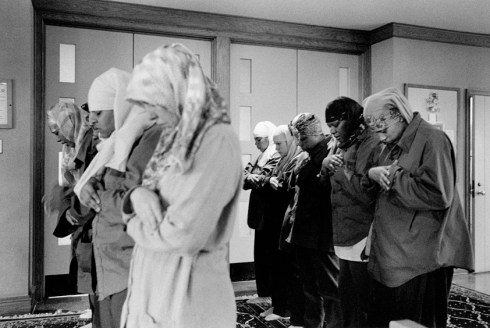
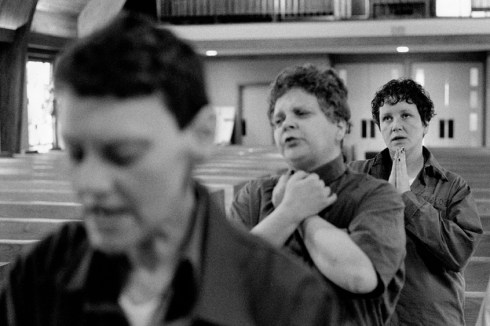
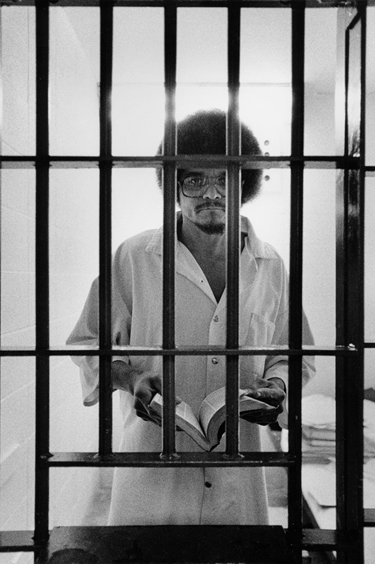
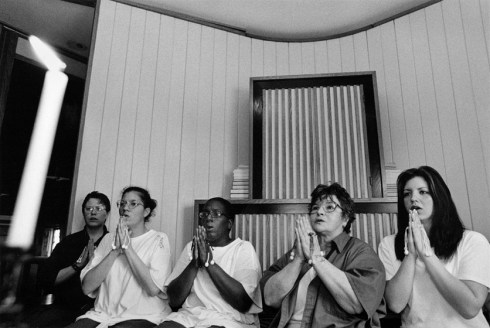
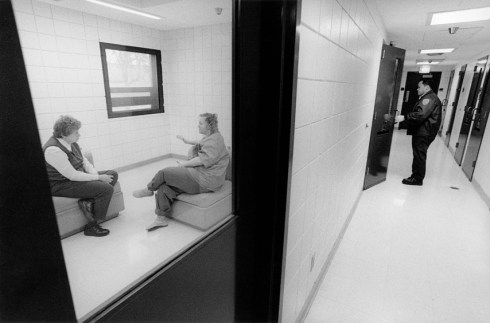
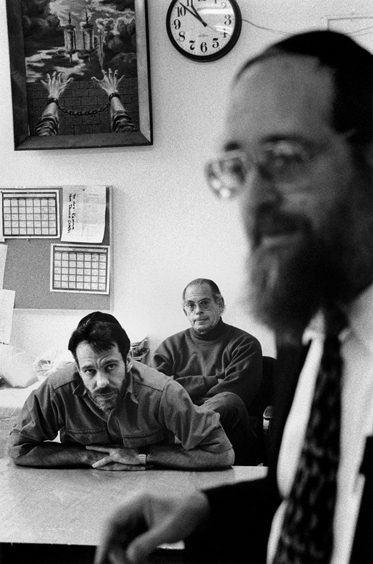
Between 2002 and 2003, New York based photographer Serge J-F. Levy, visited six maximum security prisons across multiple states. The series is called Religion in Prisons.

I am decidedly ambivalent about the role of religion within prisons – it can be a force for good and for positive change, but it can also be reductive in scope and used for manipulation. I wanted to ask Serge a few questions to see if he could help me, and us, through some of the issues and interactions religions bring about in prison environments.

Q&A

Prison Photography: Tell us about your approach.

Serge J-F. Levy: When I did the project, I did my best to approach each individual (inmate) tabula rasa. I did everything within my power to try and understand who they were in the moment I met them and to understand who they wanted to be from that moment onward. In most cases I did not know what each person was punished for.

Though I feel a general compassion for humanity and a desire to understand troubled people, I also understand that the acts of many of the people I photographed often had dire and unimaginable consequences on the lives of their victims and the victim’s families. So, my compassion and understanding is measured with an awareness of the distinct nature of my relationship to my subjects.

It seems like you’ve been to a few states. Which prisons have you photographed in and in what time period?

I started in Greenhaven Maximum Security in New York State. I went on to photograph at the Muncy Women’s Unit in Pennsylvania, MCF (Minnesota Correctional Facility) – Stillwater, MCF-Oak Park Heights Super Maximum, MCF- St. Cloud, and Angola in Louisiana.

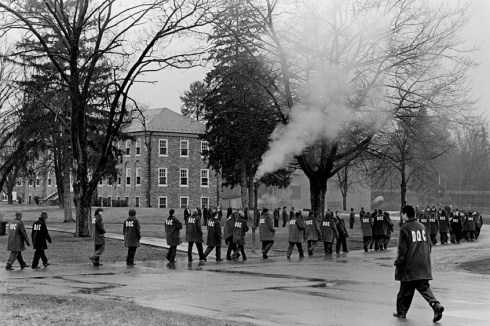
What attracted you to prisons and specifically religion in prisons?

When an accused criminal is locked away, we, as a country and a society, have assumed the inmate will be experiencing some degree of “rehabilitation.” Instead, it would appear these environments quite often breed further damage, dysfunction, and pathology. I became interested in how inmates used their time to pursue a form of healing outside of the prescribed forms of daily routine. Through religious communities, inmates were often seeking a form of spiritual rehabilitation. This spiritual rehabilitation often provided the inmates a way to metaphorically experience a freedom beyond the obvious confinement and constraint they experience in their present lives. Religion also provides many adherents a lasting form of reflection and cleansing to purge the remains of unresolved tragedy from their pasts. So you asked why I was attracted to this project? Because I feel the literal experience of being imprisoned, stripped of freedom, and confined in a den of thieves (and murderers, etc.), is a powerful figurative example of aspects of the more general human experience. The ability to find a way to transcend the reality of one’s current circumstances and experience a healing and freedom through the channels of spirituality and reflection… that’s a valuable tool.

How did you negotiate access? Did different DOCs react to your request differently?

I got access through the most classic technique I know of; I met someone in the mailroom who introduced me to someone who worked on the second floor who introduced me to the fourth floor and on up the chain until I had an endorsement to enter my first prison. After working in Greenhaven Maximum Security Prison for several visits, I had created a body of work that would encourage future prisons of the valuable intentions and ideas behind my work.

And related to the last question of how I got access, the work I was doing was not much of a security risk for prison administrations as I was mostly working in areas and in ways that could only make the prison system and its staff look good. However, I guess there was always the risk that I could have turned my camera in a different direction and as was the case in many instances, I was left alone with inmates long enough that I could have seen more than I was potentially supposed to. But that’s not who I am or how I work.

Any memorable interactions?

One warden in Texas suggested we grab tea and beer when I made it down. I never made it down but I was always interested in whether that was an obscure Texan custom.
Is photography a security risk for prison administrations?

I just don’t know the nuances of security well enough to weigh in on that question. I could imagine that with a particular intention, a photographer may be able to provide the necessary coverage to develop a plan, but I am mostly constructing this from my avid movie watching hobby!

Some of the services/prayer/rituals you’ve photographed seem quite involved. How much time did prisoners spend involved in religious observance? Were their other outlets available to them for self-reflection and improvement, e.g. sports, industries, education, group counseling, libraries?

I found it interesting how religion served multi-faceted functions for the inmates. On the most direct level, it was a form of spiritual cleansing and growth that would happen in services and weekly or daily gatherings and meetings in chapels and make-shift religious venues. But beyond these formal locations, religion becomes an identity and an opportunity to develop a social circle; a comparison to how gangs function in prison might be an apt comparison because as I understand it, competing religions would at times seek to sabotage the work of each other. One such case was how the baptism tank had to be replaced by a laundry cart because it would constantly develop mysterious holes at Stillwater Maximum Security Prison in Minnesota.

But religion was also practiced in the art inmates created; from sculptural effigies to paintings and drawings of religious scenes, the hobby shops and prison cells often contained quite a bit of religious memorabilia. There were several outlets for inmates to reflect and experience spirituality; the arts, group meetings of various sorts (including therapy), formal religious gatherings, one-on-one consultations with chaplains, and library hours.

Policies varied from prison to prison and in each case I would hear inmates express grievance as to the limitations that were imposed upon them. I was only there for small slices of time and generally wasn’t able to get a more holistic sense of what the greater experience was like.
What did the prisoners think of your presence?

I think the inmates respected the integrity of my stated goals and the ideas I had for my work. I also think, rightfully so, many inmates were skeptical as to my intentions and my affiliation with the media. After all, many of the people I worked with were directly featured and often intensely maligned in the media during their prosecution and processing through the judicial system.

What did the correctional officers think of your presence?

The correctional officers, were largely very helpful but also insistent upon reminding me of the omnipresent dangers. On more than one occasion I was told that a particular inmate was trying to con me into believing one story or another. I generally felt that the correctional officers had seen or heard quite a bit during their time working inside.

Were their any days and/or experiences with the prisoners that shocked, surprised or delighted you?

Kneeling in a small room for Friday Jumma with 300 Muslim inmates listening to and responding to the call of Allah Oh Akbar is something that can’t be explained but only felt. Same for a Baptist or Pentecostal service.

On one occasion, I sat in a room of 10 women gathered with a Catholic chaplain, and listened to one woman recount her experience of being raped and simultaneously attacked by a dog. Sometimes, it was more important for me to listen, feel and internalize the moment without the filter of photography.

Do you follow a creed or religion?

I don’t follow any particular religious path. I lead a life that is guided by principles that I have culled from religious practice and ideas that have resonated with me over time. My “religion” is constantly evolving. The sources behind my spirituality that I can identify are Buddhism, Judaism, Islam, Christianity, and many other faiths and disciplines I have encountered throughout my life.

What has been the reception to these images?

I think people like it. But due to the limited exposure these images have had, I have yet to hear strong dissenting opinions if there are any.

How do you think your images fit into the visual landscape of prisons and prisoners in America. Do they confirm or counter stereotypes or common narratives?

I am seeking to provide a record of the people practicing religion in prison. Of the work I have seen done in prisons, much of it addresses religion as a component of life inside, and therefore seems to be geared toward molding the religious component of prison life into a greater aesthetic and narrative whole.

My work is more thorough in exploring this particular [religious] angle of prison life. Of course, I could be very wrong about the full breadth of quality work done on this specific topic.

Thank you for your time Serge.

BIOGRAPHY

Serge J-F. Levy’s work is represented by Gallery 339 in Philadelphia and has been exhibited at the Philadelphia Museum of Art, Schroeder Romero Gallery in Chelsea, and The Leica Gallery (New York City and Tokyo) among many other national and international solo and group exhibitions. In 2011 the Princeton University Press published a book of Serge’s photographs made during his yearlong photography fellowship at the Institute, along with essays by Institute members. Serge’s magazine photography has appeared in The New York Times Magazine, Life, ESPN The Magazine, and Harper’s Magazine among others.. For over 10 years Serge has been on the faculty at the International Center of Photography in New York City where he is a seminar leader in the documentary/photojournalism program and teaches street photography, editing, portraiture, and several other courses. In addition to his street photography practice, he is an avid draftsman and painter. Serge lived in New York City for his whole life … until recently moving to the Sonoran Desert.

MORE ON RELIGION ON PRISON PHOTOGRAPHY

Body vs. Structure: Islam in Prisons
Dustin Franz’s ‘Finding Faith’
Andrew Kaufman and the Incarcerated “Jesus Freaks”
Photog Searches for Healing on Texas’ Deathrow

I recently visited the International Center for Photography (ICP). I was encouraged to see a photo from Abu Ghraib alongside one of Robert Capa’s Normandy landing photos and Margaret Bourke-White’s photographs from a liberated Nazi concentration camp. All were featured in the enjoyable and current A Short History of Photography exhibition, showcasing works acquired during the tenure of outgoing Director Willis “Buzz” Hartshorn.

Just as Capa and Bourke-White’s photographs are iconic of the WWII conflict, the Abu Ghraib digital photos are iconic and the images of America’s War On Iraq.

Both Capa and Bourke-White, in these instances, were photographers in the thick of it, in the moment, to deliver important news of the day to corners of the globe. Of course, the rise of citizen journalism has put pay to the idea that roving career photographers are now the first to a scene of international significance.

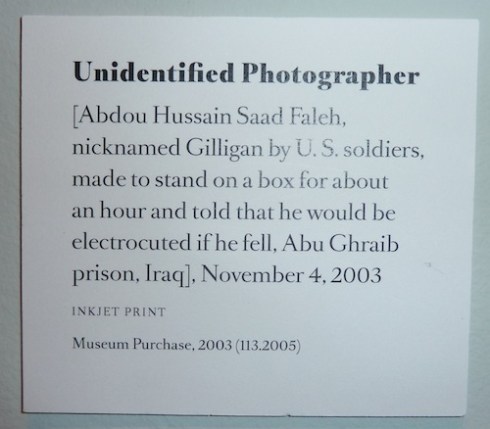
Without doubt the Abu Ghraib images – given their historical and cultural significance and dissemination – are rightfully in the ICP collection. That is not the issue; my questions were about the label:

Unidentified Photographer: [Abdou Hussain Saad Faleh, nicknamed Gilligan by U.S. soldiers, made to stand on a box for about an hour and told that he would be electrocuted if he fell, Abu Ghraib prison, Iraq], November 4, 2003. INKJET PRINT. Museum Purchase, 2003 (113.2005)

Museum purchase? Who would be a recipient of payment for the image? I suspected it might be a case of language and not action. Ever interested by provenance and the accession of items into museum collections, I emailed ICP the following questions:

– Is “Museum Purchase” just a standard note you attach to works or did ICP actually hand over money to someone or some body for the image?
– Did ICP print it off the internet?
– When deciding to acquire it into the collection, what decisions were made about the file, the printing, the paper, the ink?

Kindly, Brian Wallis, the Deputy Director/Chief Curator at ICP responded:

The Abu Ghraib photograph now included in the “A Short History of Photography” was originally printed for the ICP exhibition “Inconvenient Evidence: Iraqi Prison Photographs from Abu Ghraib” (Sept. 17-Nov. 28, 2004).

At the time, only about twenty JPEGs were available, either on the Internet or from files supplied by the New Yorker.* We printed all images then available for the exhibition. They were printed on a standard Epson office printer, on standard 8½” x 11″. office paper, and pinned directly to the wall in the exhibition, in part to emphasize the ephemerality and informational nature of the pictures.

They were printed directly from the web with the understanding that these photographs, taken by U.S. government personnel, were in the public domain. We did not pay for them. The credit line in the current exhibition describes them as “museum purchase” in part because there is no other official museum description for how we obtained them; one could say we purchased the supplies used to print them.

So, no money exchanged hands. A relief of sorts. What one would expect.

I suppose ultimately, I have to give ICP some recognition for its 2004 reflex response to the pressing visual culture issue of the day; for presenting a set of images that for all intents and purposes falls outside of the normal acquisition avenues of major institutions.

ICP’s home-brew solution to show the Abu Ghraib, non-rarefied, non-editioned and thoroughly contemporary set of images is against the grain of many other museums chasing gate receipts through edutainment.

Left: Photo of allied forces landing on Normandy beaches, by Robert Capa; right: Photo of torture at Abu Ghraib, by unknown photographer.

– – – – – – – –

*Seymour Hirsch, who wrote Torture at Abu Ghraib (May, 2004) for the New Yorker, also provide the text for ICP’s Inconvenient Evidence exhibition – the catalogue for which you can download as a PDF

– – – – – – – –

All images: Pete Brook and taken without permission.

David Adler has been collecting prisoner made portraiture since 2006.

Adler’s work is very similar to Alyse Emdur‘s Prison Landscapes (readers will know Emdur is a favourite of mine.) But in fact, Adler and Emdur approach the visual culture and the act of collecting the photos very differently. I’ll be publishing an interview with Adler shortly, but to summarise, Emdur is thinking about social justice whereas Adler is thinking about the economics of the system. Both consider the painted backdrops as significant contributions to American artistic production.

Adler thinks of his work as a theoretically infinite, open-source project, that anyone could take on. Conversely, Emdur considers her presentations as collaboration with each of her subjects.

More to come.

Meanwhile, if you’re in NYC, Adler’s exhibition Prisoner Fantasies: Photos from the Inside is showing at the Clocktower Gallery in Lower Manhattan, until the end of August. Also, you can read a brief interview with Adler, by Harry Cheadle for VICE.

[Yes, the visual similarity between this post and the last was intentional.]

I Heart Gordon Stettinius’ humour. Especially in light of the horrendous Olympian portraits, this work seems like a good time to reflect on why and how we make (bad) portraits.

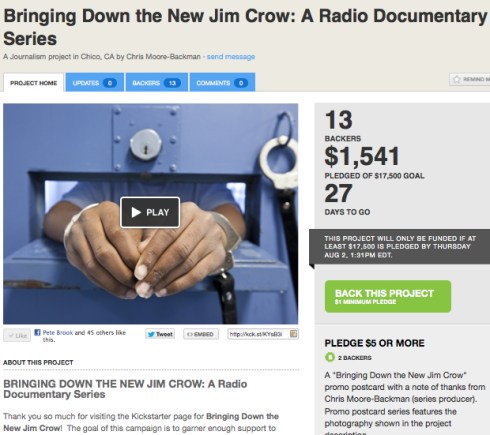
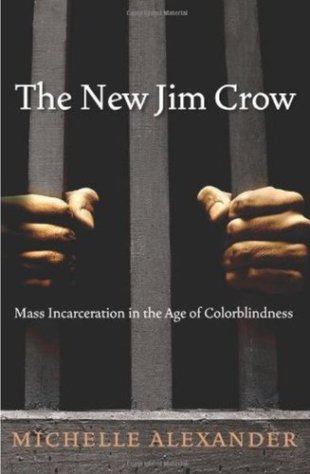
Measured by any metric, Michelle Alexander’s The New Jim Crow: Mass Incarceration in the Age of Color Blindness is a scathing and utterly contemporary critique of American laws.

Now, a crowdfunding effort wants to bring the bestseller to the airwaves.

Alexander has argued that the confluence of many new sentencing laws in recent decades has created an inescapable web of penalty, deprivation and economic traps against the poorest Americans. As we know a disproportionate number of poor Americans are black and brown. A pervasive racial bias in law, particularly Drug War legislation has hit minority groups and resulted in stark, debilitating and unjust institutional racism.

NPR set up its interview with Alexander as follows:

“Alexander argues many of the gains of the civil rights movement have been undermined by the mass incarceration of black Americans in the war on drugs. She says that although Jim Crow laws are now off the books, millions of blacks arrested for minor crimes remain marginalised and disenfranchised, trapped by a criminal justice system that has forever branded them as felons and denied them basic rights and opportunities that would allow them to become productive, law-abiding citizens.”

More here, here, here and here.

In a March OpEd for the New York Times, Alexander highlighted the story of her friend Susan Burton, a criminal justice activist and formerly incarcerated African American woman, who has suggested that defendants demand trials in order to clog up the courts system.

She’s incendiary … and she’s closer to the truth than most commentators dare to believe.

A NEW MEDIUM

Wanting to propel the message and capitalise on the unusually wide appeal of a book on criminal justice, radio documentarian Chris Moore-Backman wants to produce five radio documentaries, and to publish and promote a CD box set of the series along with a companion discussion guide.

Moore-Backman plans the following five hour long episodes for the series Bringing Down the New Jim Crow:

(1) Frat Row vs. Skid Row: The Racial/Socio-Economic Disproportionality of Drug Law Enforcement;
(2) Living with the New Jim Crow: Conversations with Loved Ones of Incarcerated Men and Women of Color;
(3) The War On Drugs: Human Rights Nightmare on Both Sides of the Border;
(4) Still At It: Veterans of the African-American Freedom Movement on the New Jim Crow;
(5) White Allyship in the Era of Mass Incarceration

KICKSTARTER

If this is something you’d like to help get off the ground and hear the product, please consider donating.

– – – –

Chris Moore-Backman is a radio documentarian, nonviolence educator/trainer, musician and father. He is based in Chico, California.

Michelle Alexander is a highly acclaimed civil rights lawyer, advocate, and legal scholar. As an associate professor of law at Stanford Law School, she directed the Civil Rights Clinic and pursued a research agenda focused on the intersection of race and criminal justice.

In 2005, Alexander won a Soros Justice Fellowship that supported the writing of The New Jim Crow and accepted a joint appointment at the Kirwan Institute for the Study of Race and Ethnicity and the Moritz College of Law at The Ohio State University. Prior to joining academia, Alexander engaged in civil rights litigation in both the private and nonprofit sector, ultimately serving as the director of the Racial Justice Project for the ACLU of Northern California, where she helped lead a national campaign against racial profiling. Currently she devotes her time to freelance writing, public speaking, consulting, and caring for her three young children.

Alexander is a graduate of Stanford Law School and Vanderbilt University. She has clerked for Justice Harry A. Blackmun on the U.S. Supreme Court and for Chief Judge Abner Mikva on the D.C. Circuit of the U.S. Court of Appeals, and has appeared as a commentator on CNN and MSNBC, among other media outlets. The New Jim Crow is her first book.

For more information, visit www.thenewjimcrow.com

Jon Lowenstein

This is the third and final post about Photoville. We’ve had the beginning, the middle and so now, the end.

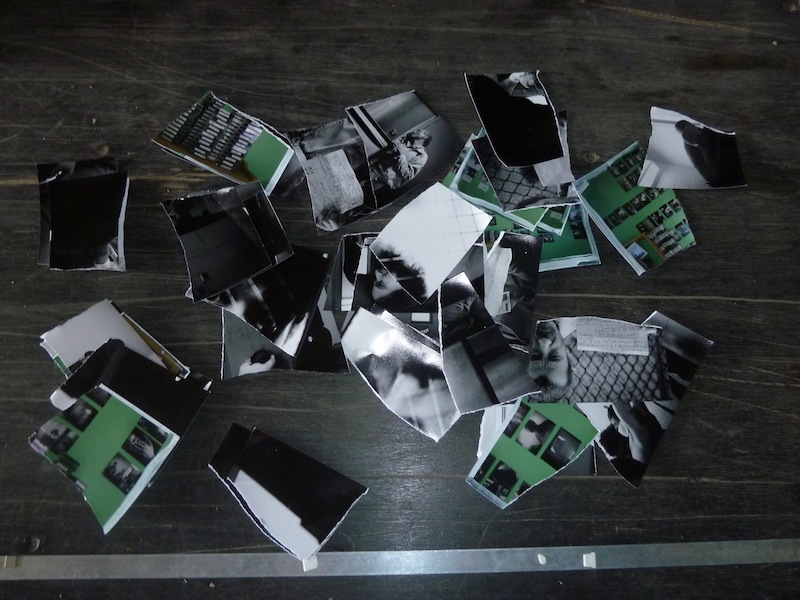
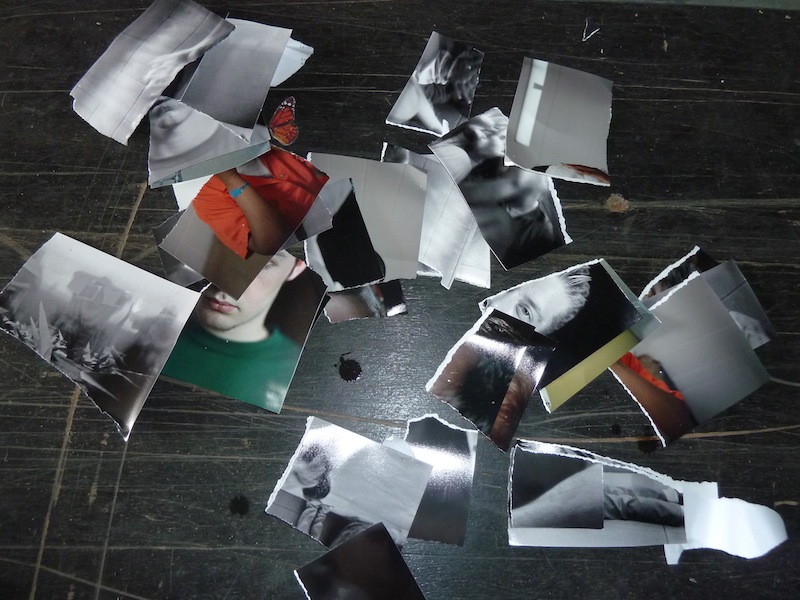
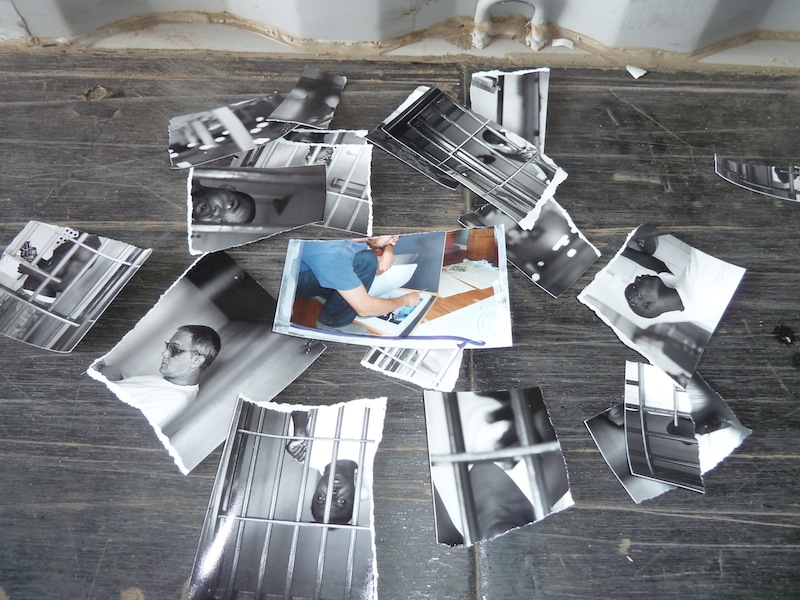
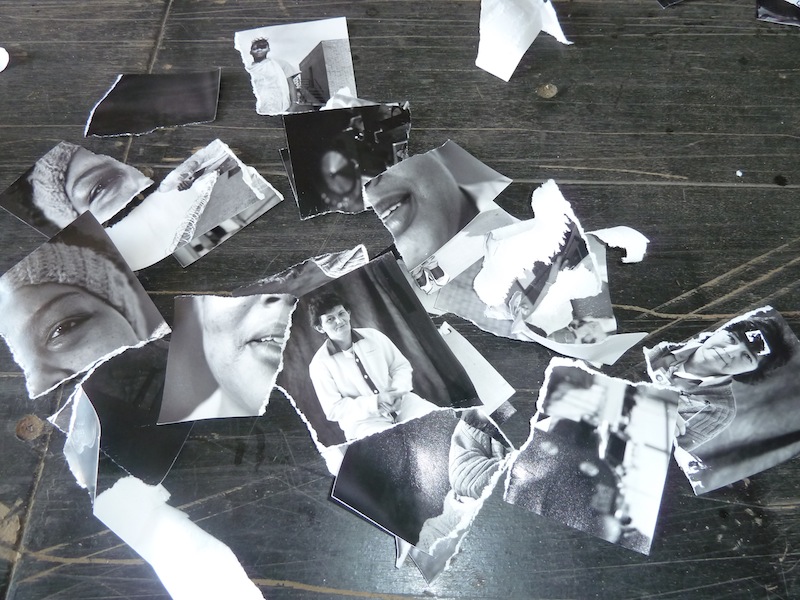
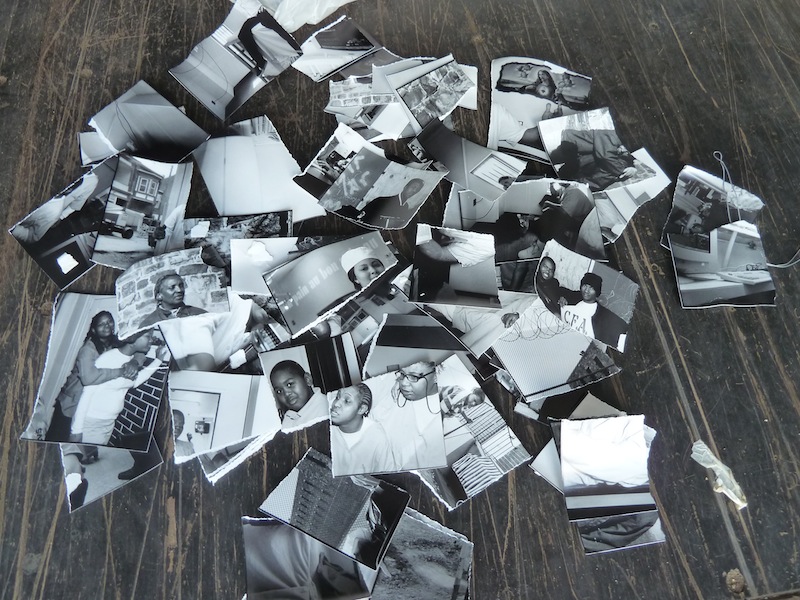
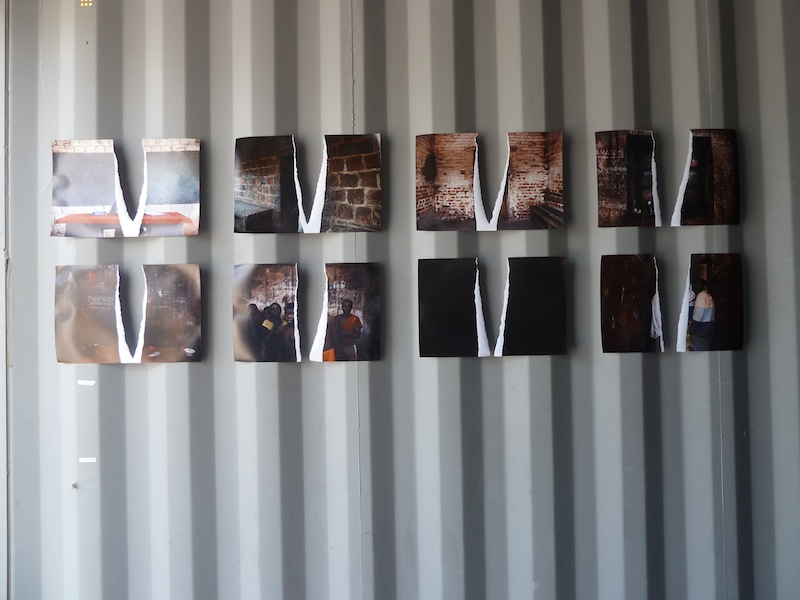
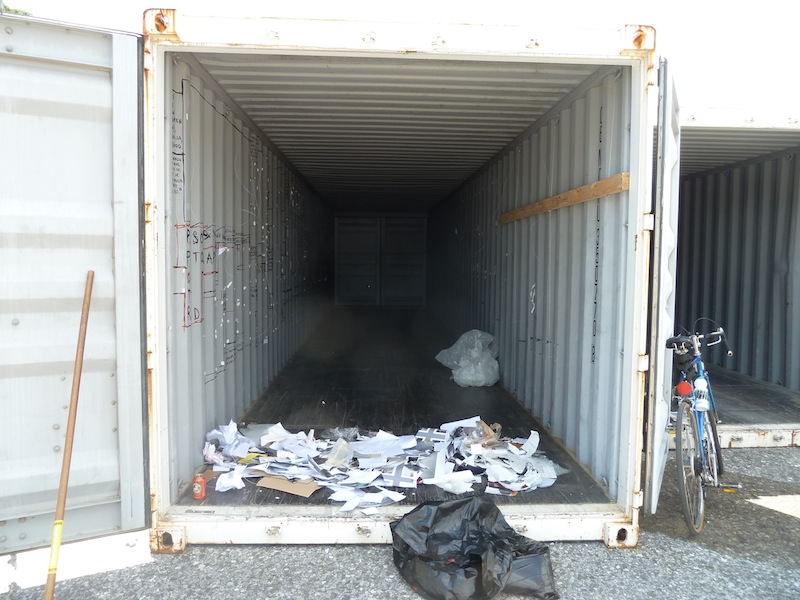
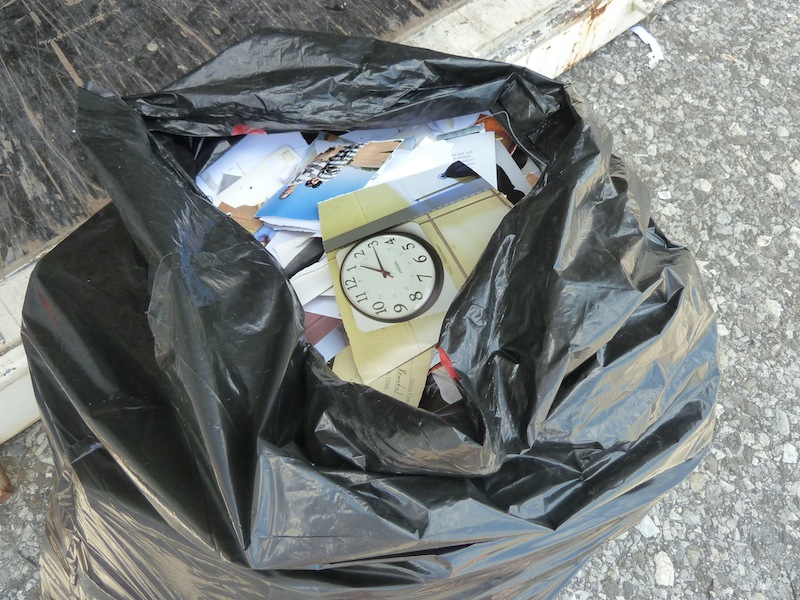
Of the two dozen photographers in the show, only three had actual objects (Sye Williams’ darkroom prints, Jane Lindsay’s bottle caps and Deborah Luster’s tintypes). Given the cost and hassle of shipping, it was decided that the re-used Noorderlicht exhibition prints would not be returned.

I was given instructions to destroy all prints.

It occurs to me that a lot of people don’t talk about this aspect of contemporary exhibition-making. It’s not really sad to see them go, because they never belonged to anyone. They only belonged to the show. And besides, knowing they were to be destroyed, I put most of them up with double sided sticky tape, so there was no preserving them after that ultra-adhesive abuse anyway.  Super-strong magnets are hardly kind to bare prints either!

We do plan to travel Cruel and Unusual (make Hester, Noorderlicht and I an offer!) and as such we’ll see shiny versions printed again.

Until then, think on these images of photogaeddon, wanton destruction and image massacre.

Araminta de Clermont

Stephen Tourlentes

Jenn Ackerman

Steve Davis

Richard Ross

Jeff Barnett-Winsby

Tim Gruber

Yana Payusova

Lori Waselchuk

Joseph Rodriguez

Adam Shemper

Sean Kernan

Marilyn Suriani

Scott Houston

Lloyd Degrane

Harvey Finkle

Lizzie Sadin

Nathalie Mohadjer

Brenda Ann Kenneally

Alyse Emdur

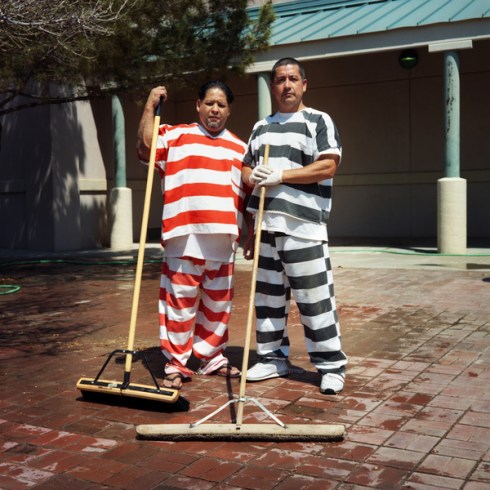
Tommy and Joe. © Roger Kisby

Roger Kisby, a NYC-based photographer and a friend of a friend, and I chatted briefly during my recent trip to New York. He mentioned he had photographed some prisoners.

It wasn’t your typical situation. Roger decided to get out from under his contract work and leap into the unknown with a road trip. It was intended to test his skills, hone his techniques, and grow his portfolio.

Judging by the results – showcased today on The Awl – Roger succeeded. I like the diversity of personalities in the edit and I like the fact a prisoner double portrait slips seemlessly into the selection too. On this American holiday, it seems a fitting bunch of Americans – of all shapes and stripes (excuse the pun) – to reflect upon. Prisoners are us.

QUICK Q&A

Some photographers are shy about approaching strangers to make portraits. Was this ever a problem for you? Was this any different when approaching inmates?

To some degree, I am always nervous about asking a stranger for his or her portrait. If there wasn’t that element of getting over my fear I don’t think I’d get as much satisfaction as I do when I get a good portrait. It helped that I had a quick pitch about my road trip project. Most people were receptive to it and those that weren’t simply said no and that was that. Even with the ones that said no I still had good conversations. That was the point of the project; for me to engage with people along my trip.

In this case with Tommy and Joe, I was driving out of Marfa, TX when I saw them. I remember distinctly having a conversation with myself about whether I should turn around. I didn’t know if I was legally allowed to take photos of prisoners. I didn’t know how the inmates would react. I didn’t know if it was safe. Ultimately, I realized it would have bugged me for the rest of the trip if I didn’t at least try.

What were they doing?

As I walked up they were doing some grounds-keeping in front of the courthouse. They had someone monitoring them but it wasn’t a guard. Or at least he didn’t seem like one to me. It all seemed very relaxed except for the chains around their ankles.

What do you think they thought about having their picture made?

I wasn’t sure who to ask so I directed my question to all three. The monitor gave permission and the inmates were very much into the idea. I went back to my car grabbed my camera and set up. I tried to work quickly to not take up too much of their time which in retrospect seems silly now; they obviously had time and were happy to do the photos. Honestly I think I was just nervous.

Did you get any of their story?

A little. Tommy had 9 months left for possession. Joe mentioned something about being deported and had 6 months left on an 8 month sentence. One thing I loved was they both asked me if I could send copies of the photo to their moms and gave me their addresses. Which I am doing.

– – –

Roger Kisby is an editorial and portrait photographer who lives in Brooklyn. You can see more road trip photos at his Tumblr and on Instagram. You can also follow him on twitter.

EMAIL

prisonphotography [at] gmail [dot] com

Prison Photography Archives

Post Categories