You are currently browsing petebrook’s articles.
In photography Cornell Capa has huge renown. In prisons, Attica has a huge renown. It is therefore, expected that I’d transcribe Capa’s testimony to the McKay Commission (New York State Special Commission on Attica) Hearings.
After the text I shall offer my opinion.
TEXT
Cornell Capa: I was asked eventually by Arthur [Liman, Counsel] if I would want to look at Attica for the reasons that he mentioned, that photography and a photographer may have something to contribute …
As a human being and a photographer, my personal and professional and civic feeling was to look into it and – as my professional life is involved in understanding human condition – try to perceive what it is all about.
I think photography can serve a most useful role in an investigation and that’s exactly what I consented to do.
I [have] submitted 26 photographs which I will be showing to the commission and I have submitted equally a very short written statement and captions for the photographs.
I would like to really just read my written statement and following that as the photographs go by, I will do the captioning job for them.
At Attica: A Photographic Report.
Recently I spent three days at Attica, having been asked by the McKay commission to take a look at the institution and bring back my visual report.
During the visits to Attica I was, at all times, accompanied by a correction officer and a member of the Commission staff; all persons recognizable in these photographs consented to be photographed.
My photographs and their captions constitute my report for the commission. There is just a little more to add.
A feeling of nervous expectation seems to pervade Attica. Everybody is waiting the result of the work of the Commission’s investigations on the causes of the explosion which occurred there six months ago, and their recommendations for the future avoidance of such a tragedy in the future. Both sides, inmates and guards expect some new things to evolve from the findings – some kind of miracle which will transform the institution into a place where the Biblical lion and lamb will better live together peacefully.
The only hitch: each side has its very own view of the meaning of peaceful and better coexistence, and how to achieve it.
From the outside, Attica situated in the rolling farmland in western New York, has a Disneyland-like appearance, especially at night.
Attica’s inmates are all locked in their cells from approximately 5pm until 7am the next morning. Officers on the night shift make lonely rounds checking the count six times a night.
All movement in Attica is limited by locks. At night the duty officer must carry with him all the keys he will need on his nightly round of inspection
Confined to their 4 x 9 cells, inmates may talk to one another across the cellblocks and play music instruments until 8pm.
Locked in a cell a mirror is an inmates eyes to the rest of his gallery, and whenever something happens, the mirrors appear as if on cue.
After 8pm talking and noise are not permitted. There is little to do until lights out at 11pm except read, write letters or listen to one of the three channels of the prison radio which plays music, sports and the audio portion of TV shows.
In E Block, Attica’s medium security prison with the maximum-security walls, a small group of inmates in special programs are permitted to remain at night in the blocks day room to watch television, play cards or talk.
Corrections officers on the day shift leave homes in the town of Attica and surrounding communities and report for roll calls at 7am, 9.20am, 3pm and 11pm to receive their assignments.
These are the guns and smoke parts etc, what [sic] they keep in the armory for emergency use only.
These are the keys, which they use, the whole system is based on keys. This is just a very small selection of all the keys that open all the doors in Attica
On signal the cells open and inmates in each company line up in two’s to be escorted down one of the endless corridors to the mess hall for breakfast
In his daily movements throughout the institution, an inmate must pass through several times through ‘Times Square’ where the corridors leading from the four main cell blocks converge and gates point in four directions.
Many inmates spend up to five hours a day working in one of the prison industries, the largest of which is a large metal shop, where inmates build steel cabinets and office furniture for state institutions.
For a few hours each day, inmates are allowed to go into their cellblock’s yard for outdoor recreation
The sports facilities, always limited, have been even more curtailed since September. For most inmates the yard means walking around and around or standing around.
The only opportunity for most inmates to watch TV is outside in the yard. Due to the winter climate and the meager daytime TV schedules, few are interested.
While some are out in the yard, others return to their cellblocks. In some areas there are improvised meeting rooms where a few inmates can pursue simple hobbies and handicrafts.
For the rest it is back to the cells to pass the hours until supper. The site of disembodied hands outside the bars playing cards is not unusual here.
Some play chess but the opponent remains unseen.
There is so much idle time; one of the most common activities is preparing legal paper for appeals and writs.
9.30 to 3.30 every day are visiting hours. Those inmates whose families live nearby or who can afford the long journey to Attica may receive a visit. Visits take place in a large room, under the watch of officers and a wire screen separates the inmates from his visitor.
An inmate’s personal touch, often his own creation, is the difference between one cell and another.
One of the statewide changes since the riot is the creation of inmate liaison committees at each institution.
The committee at Attica was elected last month, has adopted a constitution and has begun the task of drawing up projected reforms.
Although life at Attica is again becoming routine, grim reminders of what happened there are everywhere.
This is the round State Shop in damaged condition beyond repair.
Two of the cells blocks were destroyed beyond repair and are still unoccupied. D Block yard on which the eyes of the world were focused for four days last September is deserted now. The trench is filled in but remains visible like a scar reminding one of the great illness which fell upon Attica seven months ago.
[END]
_____________________________________________________
Capa’s review is a rather bland description of everyday life in the prison. This comes as quite a disappointment; I had expected a rousing polemic against the unsuitable conditions of mammoth prisons and their effect on the will of man.
These words seem particularly tame when one considers the magnitude, violence and precendence Attica has in the history of prison resistance. The words are detached from the extremely graphic photographs [WARNING] documenting the riot and its bloody remnants. Capa’s words are the epitome of obsolescence.
Attica was a disaster.
Capa’s words fall short of the strength needed to describe the institution six months on from disaster.
I encourage you all to browse Attica Revisited an encyclopaedic resource of official papers, oral history video and photography.

Cornell Capa, to some extent, lived in the shadow of his older brother Robert. I guess, it is easy for complacent men to adore the still and fallen martyr than to keep apace with a passionate and piqued practitioner. Cornell’s and Robert’s legends are one; Cornell ceaselessly fought his brother’s corner authenticity debate surrounding The Falling Soldier.
Cornell’s indebtedness to his brother was fateful and self-imposed:
Disappointingly, it is only in extended surveys of Cornell Capa’s career that mention of his fifties photojournalism in Central and Southern America arises. Otherwise, Cornell is celebrated for his political journalism and particularly his campaign coverage of Adlai E. Stevenson, Jack and Bobby Kennedy. Cornell’s photographs from Latin America are often neglected, even demoted.

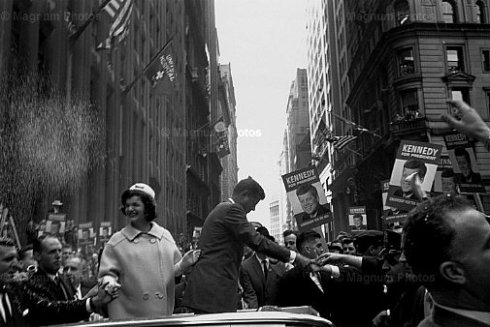
The Kennedys were the foci of American progressive attitudes, and so, in the sixties, Cornell documented the concerned politician. Cornell was (not in a negative way) passive and the sixties were not formative. It was in the fifties that he actively worked to define the persona, the ideal: ‘The Concerned Photographer’.
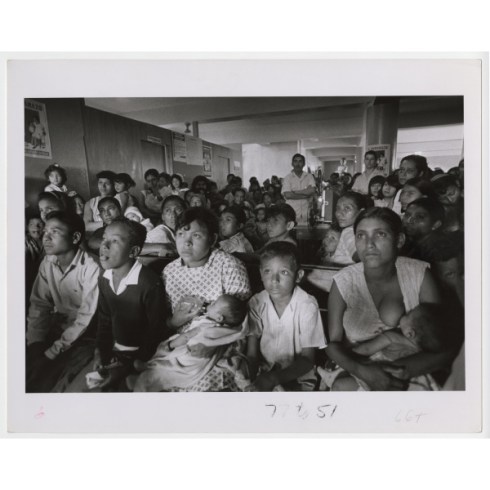
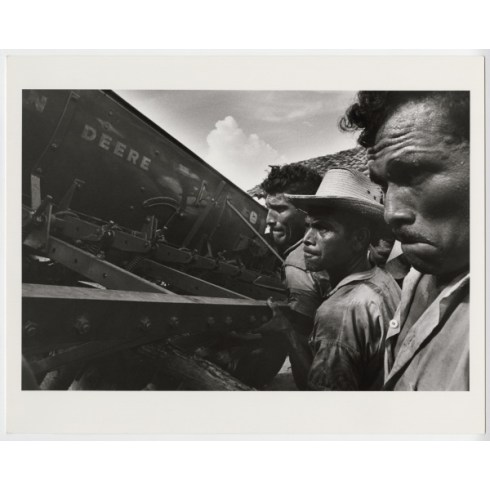
Cornell’s work in Latin America:
In 1956, Cornell was in Nicaragua reporting on the assassination of President Anastasio Somoza García. Somoza was shot by a young Nicaraguan poet; the murder only disrupting slightly the Somoza dynasty that lasted until the revolution of 1979 (that’s where Susan Meiselas picks up).
In the aftermath of the assassination over 1,000 “dissidents” were rounded up. The murder was used as an excuse and means to suppress many, despite the act being that of one man.


I have no knowledge of what happened to these men after Cornell photographed them and I am sure you haven’t the patience for speculative-art-historio-speak.
I do wonder … if having witnessed revolution, early democracies, military juntas, coups, communism, social movements, grand narratives and oppression in various forms, if Cornell picked his subjects with discernment back in the United States.
As early as 1954 Cornell was working on a story for Life about the education of developmentally disabled children and young adults. Up and to that point in time, the subject had been regarded by most American magazines as taboo. The feature was a breakthrough.
In 1966, in memorial to his brother, Robert, and out of his “professed growing anxiety about the diminishing relevance of photojournalism in light of the increasing presence of film footage on television news” Cornell founded the Fund for Concerned Photography. In 1974, this ideal found a bricks and mortar home on 5th Ave & 94th Street in New York: The International Center for Photography.

This institutional limbo that eventually gave rise to one of the world’s most important photography organisations was not a quiet period for Cornell. In 1972, he was commissioned to Attica, NY, to document visually the conditions of the prison. Capa presented his evidence to the McKay report (PDF, Part 1, pages 8-14) the body investigating the cause of the unrest. Cornell narrates his personal observations while showing his photographs to the commission.


At a time when, the photojournalist community seems to have crises of confidence and purpose at an alarming rate, it would be wise to embrace his spirit in full recognition his slow accumulation of remarkable accomplishments.
Rest In Peace, Cornell.

PHOTO CREDITS.
Robert F. Kennedy campaigning in Elmira, New York, September 1964. Accession#: CI.9685
New York City. 1960. Senator John F. KENNEDY and his wife, Jackie, campaigning for the presidency. NYC19480 (CAC1960014 W00020/XX). Copyright Cornell Capa C/Magnum Photos
Three men pushing John Deere machine, Honduras, 1970-73. Accession#: CI.3746
Watching family planning instructional film at Las Crucitas clinic, Tegucigalpa, Honduras], 1970-73. Accession#: CI.8544
Political dissidents arrested after the assassination of Nicaraguan dictator, Anastasio Somoza, Managua, Nicaragua, September 1956. The LIFE Magazine Collection. Accession#: 2009.20.13
NICARAGUA. Managua. 1956. Some of the one thousand political dissidents who were arrested after the assassination of Nicaraguan dictator Anastasio Somoza. NYC19539 (CAC1956012 W00004/09). Copyright Cornell Capa/Magnum Photos
Prisoners escorted from one area to another, Attica Correctional Facility, Attica, New York, March 1972 (printed 2008). Accession#: CI.9693
Two men walking around prison courtyard, Attica Correctional Facility, Attica, New York, March 1972. Accession#: CI.9689
Inmates playing chess from prison cells, Attica Correctional Facility, Attica, New York, March 1972. Accession#: CI.9688
Man on scooter carrying coffin, northeastern Brazil, 1962. Accession#: CI.8921
All photos courtesy of The Robert Capa and Cornell Capa Archive, Promised Gift of Cornell Capa, International Center of Photography. (Except for ‘The Concerned Photographer’ book cover; the Jack Kennedy photograph; & the second Nicaragua prison photograph.)
If I ever have kids I’ll read them Naomi Klein’s Shock Doctrine at bedtime. I’ll use Klein’s words as proxy for my own in imparting the necessary cautions of governments and guns in our f*#ked up world.
(Hold up, there’s reason enough why not to have kids.)
Chapters two and three deal with the growth of Chicago School economics and its pernicious experiments and infiltration into the ‘Southern Cone’.
Throughout the 60s and 70s, the US & the CIA facilitated right-wing opposition movements, juntas, military coups and consequent torture programs in Chile, Brazil, Uruguay and Argentina.
During this time between 100,000 and 150,000 people were killed or ‘disappeared’. Estimates are wide and varied because the murders were out of control, accountability suspended and the terror doled out faster than it could be monitored.
During the Dirty War in Argentina, the terror of each night repeated the previous; a seven-year state-sanctioned massacre that bled into every neighbourhood under the cover of darkness.
The inhumanity is incomprehensible, but Klein attempts to describe the various methods used at times by different forces in each of the countries. Uruguay had a particular penchant for isolation;
Prisoners in Uruguay’s Libertad Prison were sent to la isla, the island: tiny windowless cells in which one bare light bulb was illuminated at all times. High value prisoners were kept in absolute isolation for more than a decade.
“We were beginning to think we were dead, that our cells weren’t cells but rather graves, that the outside world didn’t exist, that the sun was a myth,” one of these prisoners, Mauricio Rosencof, recalled. He saw the sun for a total of eight hours over eleven and a half years. So deprived were his senses during this time that he “forgot colors – there were no colors.”
(Page 93)
In a foot-note Klein remarks:
‘The prison administration at Libertad worked closely with behavioral psychologists to design torture techniques tailored to each individual’s psychological profile – a method now used at Guantanamo Bay.’
Once, as a 15 year old, I sat naked on the edge of the bath covered in piss and vomit after drinking myself silly. Apparently, I told my mum – who was wracked with worry – to “chill out”. I delivered this line with assurance proving how far gone I was; how unable I was to see my pathetic situation and how unable I was to connect with reality.
I don’t remember any of the actual episode (I was too blotto) but the shame and necessary reparations afterward meant I have constructed a memory which feels as visceral as any Proustian recall.
Sergey Maximishin‘s photograph, Sobering Up Station, puts a pit in my stomach.

Sobering-up station, St.-Petersburg, January, 2003. (c) Sergey Maximishin
Sites of incarceration are sites of tragedy. They exist because of the saddening (sometimes necessary) control of pathetic, violent, misunderstood, abusive or abused individuals.
Prisons and jails are architectures of failed human interaction and the friable psychologies of man. Where many folk are fearful of those behind bars, I am generally pitiful.
How many of you have behaved like the “classic drunk”? How many of you have even remembered your foolish confidence? How many of you have still insisted (even down to your underwear) that there’s something to do, other than sleep it off?
Sobering Up Station is a document of failed interaction, of brilliant human inadequacies and of all the unavoidable mess that exists (one way and at one time or another) in all of our lives.
Maximishin – Bio: Born in 1964. Grew up in Kerch, the Crimea. Moved to Leningrad in 1982. Served in the Soviet army as a photographer the Soviet Military Force Group on Cuba from 1985 to 1987. Graduated from Leningrad Politechnical Institute in 1991 with a B.A. in Physics. Worked in the laboratory of scientific and technical expertise in the Hermitage Museum. Graduated from St-Petersburg Faculty of photojournalism in 1998. From 1999-2003 was a staff photographer for the “Izvestia” newspaper. Since 2003, has worked for German agency “Focus”.
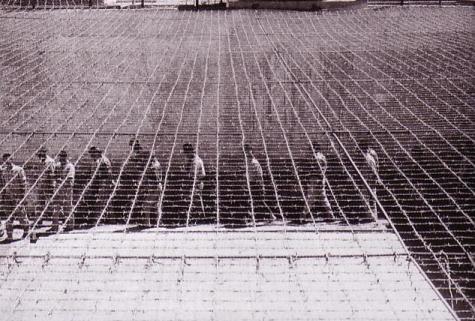
High Security Prison, Beit Lid, Israel, 1969. © Micha Bar Am
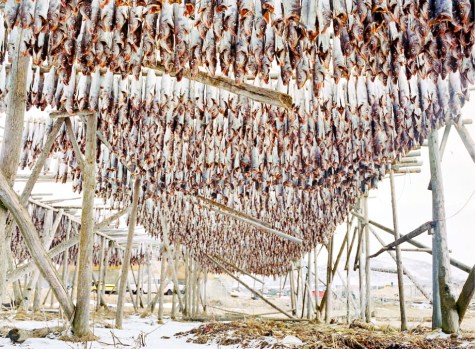
Hyse (from the Fish Work Norway series) © Corey Arnold 2009
Convergences Archive
“The Gay Essay is comparable in magnitude to Robert Frank’s ‘The Americans’…the exhibit in its entirety is amazingly strong. And for the most part the photographs are singularly beautiful in execution.”
San Francisco Art Week, 1973

Sun Reflections on Wave, Zuma Beach, CA, 2000. Anthony Friedkin. Photography - Silver Print. 16 x 20 inches.
This weekend is Pride and today (Sunday) the 40th anniversary of the Stonewall Riots; an event generally regarded as the beginning of the modern gay rights movement. To mark the occasion DRKRM Gallery in Los Angeles is exhibiting Anthony Friedkin’s Gay, A Photographic Essay 1969 – 1972.
Friedkin isn’t your run of the mill photographer. He’d likely balk at the top-heavy marketing necessary by the individual photographer to survive in today’s game. He doesn’t seem to have searched out publicity or reviews and never chased the recognition of the fine art world. There’s next to nothing written about him on the internet which supports my theory that he is of a different generation and different ethos.
He is a name not commonly known. This, of course, is our loss and not his.

Woman by the Pool, Beverly Hills Hotel, CA, 1975. Anthony Friedkin. Photography - Silver Gelatin Print. 16 x 20 inches

Dan, Male prostitute, San Fernando Valley. Anthony Friedkin. 1972
Friedkin is as “California” as Henry Wessel. He is as culturally vital to the West Coast gay communities as Leigh Bowery was to London’s. Friedkin’s fascination with the couture and characters of subculture in the American West is on a par with that of Richard Avedon.
Friedkin was a one man Hamburger Eyes long before the zygote of Hamburger Eyes’ uncowed lens fell down the photo community fallopian tube.
Friedkin’s projects include The Gay Essay done in San Francisco and Los Angeles in 1969 and 1970; The Beverly Hills Essay shot in 1975; The Hollywood Series began in 1978 continues to this day; and The Ocean-Surfing Essay which explores Friedkin’s intimate, intensely personal relationship with the surf and waves. For most of his life he has been photographing Los Angeles creating an unparalleled body of work informed by his love of the diverse conurbation.
Of all his major photographic series, only one documents life outside the Golden State (New York City Brothels).
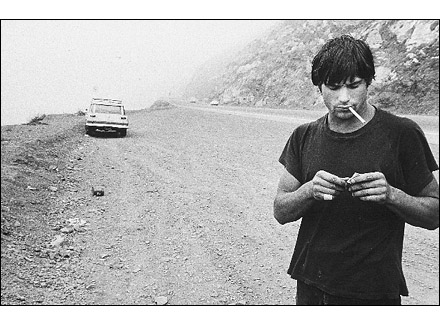
Clockwork Malibu, Rick Dano on the Highway, Malibu, CA. Anthony Friedkin. 1977. Photography - Silver Print. 16 x 20 inches

Debbie with her Head in the Sand, Venice, CA. Anthony Friedkin. 1980. Silver Print. 11 x 14 inches
Prison Photography is particularly interested in Friedkin’s photographic record of California Prisons and their inmates. The only image I have to present here is Four Convicts, Folsom Prison, CA (1991) [bottom].
California Prisons includes sensitive portrait shots of incarcerated teenagers, as well as the many typical representations of machismo and gang affiliated men.
I do not know if the series includes photographs of female prisoners, but this and many other unanswered questions now await a curious future…
I’d be very interested to hear from readers who’ve attended exhibition of the work and have any lasting impressions.

Android Sisters, Universal Studios, Hollywood, CA. Anthony Friedkin. 1978. Silver Print.

Jaws, Universal Studios, Hollywood, CA. Anthony Friedkin. 1978. Photograph. Silver Print.
It is Friedkin’s devotion to the unexpected that distinguishes his work. He disarms the extraordinary and educates his audience. Friedkin presents outlying cultures without a second thought; he surrounded himself with these people and paid them total respect.
As objective as the camera can be, it was so when in Friedkin’s hands and directed at people. Particularly, in documenting Gay culture, Friedkin was never reductive; he photographed the ‘wide-ranging composite … young hustlers, drag queens, transsexuals, San Francisco entertainers; a Gay Liberation parade in Hollywood; two lesbian women very much in love; effeminate boys growing up in an environment of machismo and the religious subculture typical of East Los Angeles.’

Four Convicts, Folsom Prison, CA. Anthony Friedkin. 1991. Silver Print. 16 x 20 inches.
Friedkin’s close tie to California, and especially Los Angeles, is conspicuous in his work as a still photographer for the movie industry. He makes the distinction himself between the circles of Hollywood and the tradition gallery circuit as evidenced by his use of ‘Tony’ Friedkin for movie credit-lines. Work on Crips and Bloods: Made in America and an appearance as himself in Dog Town & Z-Boys tie Friedkin indelibly to the California cultures of today and yesteryear.
Anthony Friedkin has over forty years experience as a professional photographer. He started out as a photojournalist working as a stringer for Magnum photos in Los Angeles. For the past twenty-five years Anthony Friedkin has lived and worked out of his apartment studio in Santa Monica. Currently, he is preparing a book of his Ocean-Wave photographs. Friedkin’s photographs are included in major Museum collections including the Museum of Modern Art, the Los Angeles County Museum of Art, San Francisco MoMA and The J. Paul Getty Museum. His work has been published in Japan, Russia, Europe, in many Fine Art publications in America and in magazines such as Rolling Stone, Newsweek, French Zoom and Malibu Magazine. For a full resume click here.
We are all agreed: Michael Jackson’s death is a sad event. Firstly because he was young, secondly because he runs through our cultural DNA and thirdly because we never really managed to fully understand him.
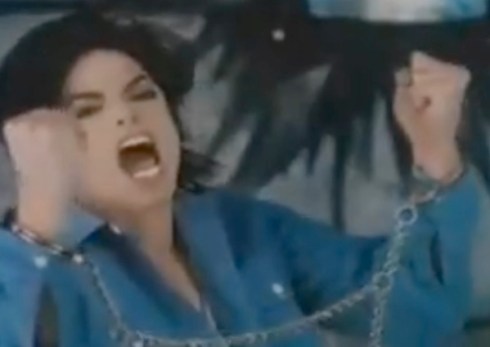
Jackson’s life and work were wrapped up in the confuddling of race and the obliteration of its prerequisites for discussion. I am not talking only about his self-manipulated skin colour. I am talking about the fact he was accused of antisemitism for contested lyrics in the 1996 release They Don’t Really Care About Us and the fact he was accused of exploiting the poor of Rio de Janeiro for its music video.
This song is only one time Jackson was simultaneously cast as victim and perpetrator by the media and public all making use of his eccentricity to grind their own agendas.
The controversy led Jackson (for the only time in his career) to film a second video for one of his songs, taking his crotch grabs off the favela streets and into the prison chow hall. One or both of the versions was banned by MTV – I am not quite sure, but it doesn’t matter.
Jackson threw enough contorted imagery at these two videos to satisfy a life’s worth of political action. The prison version is a montage of famous photojournalist and media images; death, natural disaster, street brutality, Vietnam napalm, hate crimes, Rodney King, African pestilence, riots, nuclear detonation and the Ku Klux Klan?
I am undecided as to how Jackson’s convolution of imagery helps an informed debate on inequality in society. How much does a famine of the 80s in an unnamed African nation have to do with US urban riots?
It should be said, that for his manic prison tableaux, Jackson did accurately reflect reality in the casting of a disproportion number of men of colour.