LAPD State of Incarceration

If you’re in NYC make like a bandit down to the Queens Museum which is hosting the first ever East Coast performance of State of Incarceration (2010-ongoing) by the activist collective Los Angeles Poverty Department (LAPD).

I’ve been thinking a lot about how gallery spaces can work to induct audiences into a topic as fraught as prisons. Partly because talking about prisons is a two-part process. First, one must explain clearly what problems exist, how deep they run and from where they originated. Second — and usually because the first part is so overwhelming — you need to provide audiences an immediate stimulus to care. (I don’t worry about action at this early stage; if you succeed in getting someone to care, then action will follow later if it is to at all).

Normally, for the second part, a description of deplorable conditions will offend audiences and have them ready to care. But, for me, that’s not enough. It presumes the answer might be the eradication of bad conditions. I don’t want better prisons. I want fewer prisons.

State of Incarceration does an excellent job in jolting people because it describes the tortuous power relations and the dire psychological conditions within prisons. Shouting, noise and continual face-offs between characters amp up the negative energy. There’s no escape and audiences are put literally inside and on top of it all from among the “prison” bunks, and confronted by the illogic of the prison system in the form of maddening cacophony and maneuver.

LAPD1

I’m not usually one for understanding theatre but this direct performance makes sense. It’s made in California, which runs a prison system that makes less sense.

State of Incarceration is a performance space filled wall-to-wall with 60 triple-bunked beds, performers and audience share overcrowded conditions akin to a California state prison. One-third of the state’s parolees settle in the 55 square blocks of Los Angeles known as Skid Row, and State of Incarceration—developed collaboratively by LAPD’s Skid Row artists and in dialogue with organizers and recent parolees—powerfully examines the consequences of California’s penal system on individuals, families and communities. Outlining a ritual of incarceration from entry to release and re-integration, State of Incarceration constructs a complex challenge to the societal perceptions and fear-based policies of a nation with the highest rate of incarceration in the world.

It’s FREE with no reservations necessary!

Performances:
Friday, January 31st, 7:30pm
Saturday, February 1, 7:30pm
Sunday, February 2, 5pm

Curator and artists’ gallery talk:
Sunday, February 2, 3pm

A free shuttlebus will be making loops between under the 7train CitiField/Willets Point stop and the museum from 2-8pm.

State of Incarceration is staged as part of Do You Want the Cosmetic Version or the Real Deal?: Los Angeles Poverty Department, 1985 – 2014, an exhibition on view at the Queens Museum through May 11.

photo 1

Just a quick post to say …

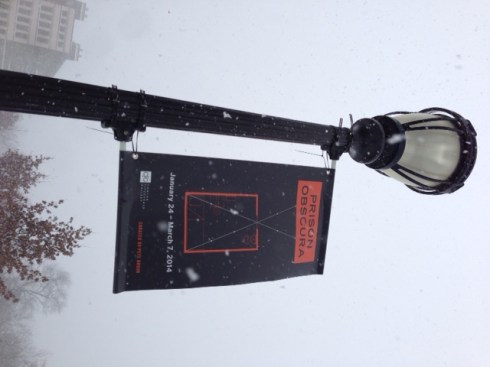
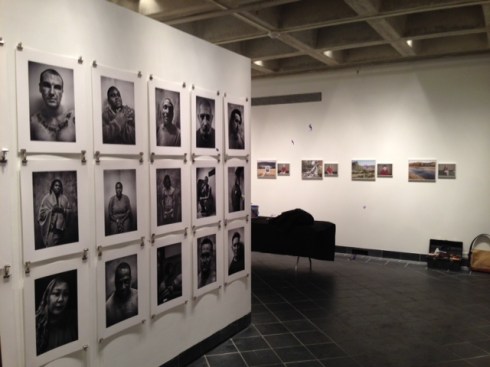
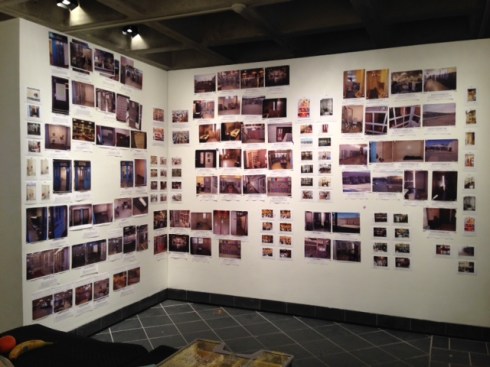
It happened. Prison Obscura opened. With a fantastic turnout. Gallery was crammed for the curator’s talk and people said many nice things. I pulled my usual trick, clocking silly hours until the early hours most of last week during install. Matthew Seamus Callinan, the Associate Director of Cantor Fitzgerald Gallery and Campus Exhibitions at Haverford College did the same. I cannot thank Matthew enough for his support throughout the creation of the show. Legend. More thanks to so many people.

I haven’t any pictures of the opening because my head was spinning. There’s some on Facebook. I’m sure others have some too (send ‘em over!) but I wanted to do a quick post with some installation shots. Taken at different points during the week during install and may not reflect exactly the final layout. (Buckets and hardware not part of the show).

Prison Obscura is up until March 7th at the Cantor Fitzgerald Gallery at Haverford College, just outside Philadelphia, PA. All you need to know about the exhibit is here.

photo 4

photo 1 copy

photo 3 copy

photo 2 copy

photo 3

photo 1

photo 1

photo 5

photo 1

photo 4

photo 4

photo 3

photo 2

photo 2

photo 4

photo 5

photo 2

photo 2

photo 2

VOI1

I’m not the only one putting up a show (Prison Obscura) of imagery made in and about prisons. The Laband Gallery at Loyola Marymount University in Los Angeles opens its Voices Of Incarceration exhibition on Saturday 25th January.

It’s an interesting line up of artists that includes artists who are imprisoned and individuals on the outside who are making art about prisons. Laband says:

“Both groups bring to light the emotional costs and injustices of the Prison Industrial Complex. Voices of Incarceration also explores the rehabilitative arts programs in California prisons and the expression of the imprisoned artists’ strength and individuality through the creative process.”

KPCC, the Los Angeles NPR-affiliate has done a couple of programs recently about the small but important attempts to reintroudce arts education into California prisons:

Making Art in Prison

Efforts Emerging to Bring Arts Back to California Prisons

If you’re in L.A., go check it out. It’s open until the 16th March. One last note — it’s great to see in the mix Prison Photography favourites Alyse Emdur, Richard Ross, Michal Chelbin and Sheila Pinkel.

VOI2

 PrisonObscura title_AC copy

It is with giddy, air-punching pride and mammoth-sized gratitude for those that helped me along the way that I announce the imminent opening of Prison Obscura.

This exhibition is my first solo-curating gig and reflects my thinking right now about images of and from American prisons. Prison Obscura includes works, approaches and genres that — after 5-years of looking at prison photographs — I consider most informative, responsible, challenging and useful.

Prison Obscura is on show at Haverford College’s Cantor Fitzgerald Gallery from January 24 through March 7. The CantorFitz built a remarkable Prison Obscura website to accompany the exhibition, at which you can find a lengthy 5,000-word essay as to why I have shied away from traditional documentary work and focused instead on surveillance, code, vernacular snaps, prisoner-made photographs and rarely-seen evidentiary images.

I posit that certain images can more accurately speak to political realities in America’s prison industrial complex. I also celebrate photographs that were made through processes of collaboration with prisoners and with intention to socially engage the subjects and educate audiences. I want you to wonder why you — a tax-paying, prison-funding citizen — rarely gets the chance to see inside prisons, and I want us to think about what roles existing pictures serve for those who live and work within the system.

Scroll down to learn more about the Prison Obscura artists.

Clinical contact holding cage, Administrative Segregation Unit (ASU), C-Yard, Building 12, Mule Creek State Prison, California. August 1st, 2008

Photographer Unknown. Clinical contact holding cage, Administrative Segregation Unit (ASU), C-Yard, Building 12, Mule Creek State Prison, California. August 1st, 2008. Used by law firms representing imprisoned plaintiffs in class action lawsuit against the State of California in the Plata/Coleman vs. Brown cases.
Group holding cages, C-Yard, Building 13, Administrative Segregation Unit, Mule Creek State Prison, August 1st, 2008
Photographer Unknown. Group holding cages, C-Yard, Building 13, Administrative Segregation Unit, Mule Creek State Prison, August 1st, 2008. Used by law firms representing imprisoned plaintiffs in class action lawsuit against the State of California in the Plata/Coleman vs. Brown cases.
4BrownVsPlata copy
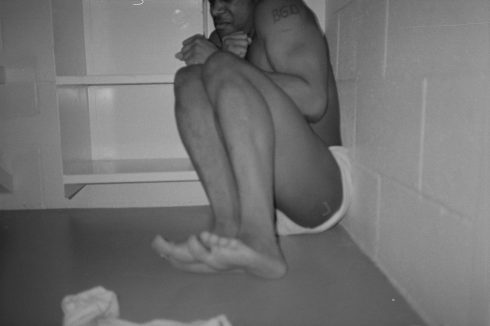
Suicide watch cell, Building 6A, Facility D, Wasco State Prison, California (August 1st, 2008). This photograph document was submitted as evidence in the Brown vs. Plata class action lawsuit (Supreme Court of the United States, May 2011). Photo: Anonymous, courtesy of Rosen Bien Galvan & Grunfeld LLP.
Reception Center Visiting : Clinician Office Space, North Kern State Prison, July, 2008
Photographer Unknown. Reception Center Visiting / Clinician Office Space, North Kern State Prison, July, 2008. Used by law firms representing imprisoned plaintiffs in class action lawsuit against the State of California in the Plata/Coleman vs. Brown cases.

PRISON OBSCURA ARTISTS

Alyse Emdur’s collected letters and prison visiting room portraits as well as Robert Gumpert’s recorded audio stories from within the San Francisco jail system provide an opportunity to see, read, and listen to subjects in the contexts of their incarceration.

Juvenile and adult prisoners in different workshops led by Steve Davis, Mark Strandquist, and Kristen S. Wilkins perform for the camera, reflect on their past, describe their memories, and self-represent through photographs.

Prison Obscura will also feature work made in partnership with the City of Philadelphia Mural Arts Program. Men from Graterford Prison who are affiliated with both its own Restorative Justice Program and Mural Arts’ Restorative Justice Group are collaborating to create a mural for the exhibition.

The exhibit moves between these intimate portrayals of life within the prison system to more expansive views of legal and spatial surveillance in works like Josh Begley’s manipulated Google Maps’ API code and Paul Rucker’s animated videos, which offer a “celestial” view of the growth of the prison system.

Prison Obscura builds the case that Americans must come face to face with these images to grasp the proliferation of the U.S. prison system and to connect with those it confines.

Scroll down for media, details and events.

2MarkStrandquist
Strandquist text
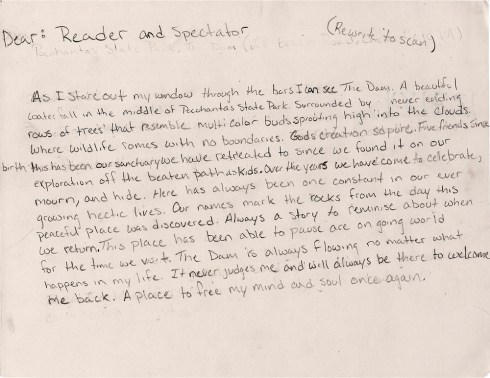
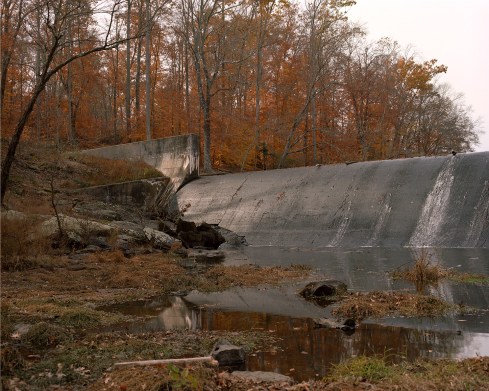
Mark Strandquist. Pocahontas State Park, Picture of the Dam. One Hundred and Thirty Days (top); text describing the scene written by a Virginia prisoner (bottom). From the series Some Other Places We’ve Missed.
Begleyfacility237
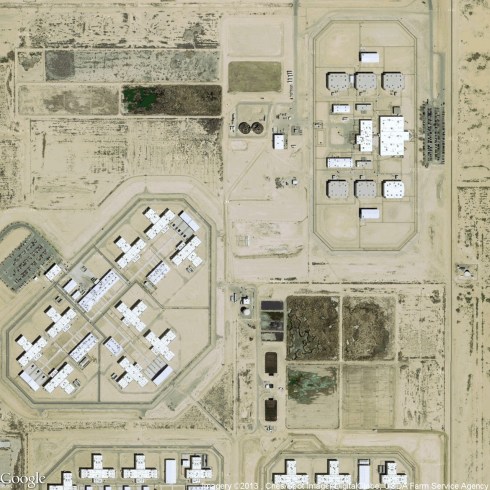
Josh Begley Facility 237. From the series Prison Map.
5JoshBegley
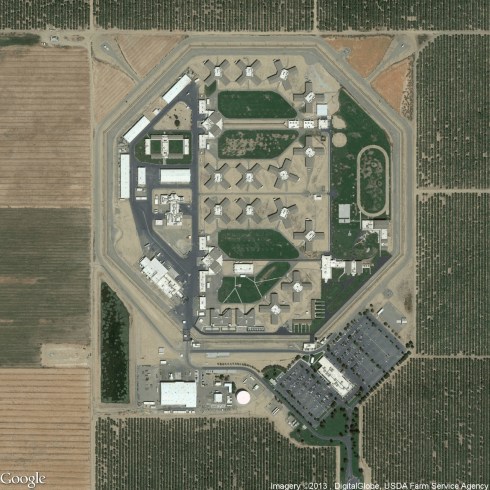
50 of the 5,393 facilities imaged by Prison Map, a data art project which automatically “photographs” every locked facility in the U.S. by gleaning files from Google Maps with use of code modified from the Google API code by artist Josh Begley.
Begleyfacility492
Josh Begley Facility 492 From the series Prison Map.
6SteveDavis copy
Photographer unknown. Incarcerated girls at Remann Hall, Tacoma, Washington, reenact restraint techniques in a pinhole camera workshop, 2002. Photo: Courtesy of Steve Davis.
Davis
Photographer unknown: Untitled, Green Hill School, Chehalis, WA. Photo: Courtesy of Steve Davis.
Davis2
Photographer unknown: Steve Davis Untitled, Green Hill School, Chehalis, WA. Photo: Courtesy of Steve Davis.
0833_PrisonLandscapes_ins.55.indd
David Wells, Thumb Correctional Facility, Lapeer, Michigan. From the series ‘Prison Landscapes (2005-2011).’ Photo: Courtesy of Alyse Emdur.
Emdur_Woodbourne
Alyse Emdur. Anonymous Backdrop Painted in Woodbourne Correctional Facility, New York. From the series ‘Prison Landcapes’ (2005- 2011)
7RobertGumpert copy
Robert Gumpert. Tameika Smith, 9 July 2012, San Francisco, CA. From the series ‘Take A Picture, Tell A Story.’
Robert Gumpert
Robert Gumpert. Michael Johnson, 15 August, 2009, San Francisco County Jail 5, San Bruno, CA. From the series ‘Take A Picture, Tell A Story.’

supplication017

Kristen S. Wilkins. Supplication #17 (diptych). “It might be hard to find, but it’s called Trapper Peak near the Bitterroot Valley.” From the series ‘Supplication.’

supplication017LAND

Kristen S. Wilkins. Supplication #17 (diptych). “It might be hard to find, but it’s called Trapper Peak near the Bitterroot Valley.” From the series ‘Supplication.’

EVENTS

I’ll be giving a curator’s talk in the gallery on Friday, January 24, 2014, 4:30-5:30pm, followed by the opening reception 5:30–7:30pm.

Additionally, poet C.D. Wright will be on campus for a Tri-College Mellon Creative Residency in conjunction with the exhibit, and on January 31, at 12 noon in the Cantor Fitzgerald Gallery, Wright and I will host a dialogue about Prison Obscura.

DETAILS

Prison Obscura is presented by Haverford College’s John B. Hurford ’60 Center for the Arts and Humanities with support from the City of Philadelphia Mural Arts Program.

Part of the John B. Hurford ’60 Center for the Arts and Humanities and located in Whitehead Campus Center, the Cantor Fitzgerald Gallery is open Monday through Friday 11 a.m. to 5 p.m., Saturdays and Sundays 12 p.m. to 5 p.m., and Wednesdays until 8 p.m.

Haverford College is located at 370 Lancaster Avenue, Haverford, PA, 19041.

SPREADING THE WORD

View and download press images here. For interviews or variant images contact me. Here’s a big postcard.

For more information, please contact myself or Matthew Callinan, associate director of the Cantor Fitzgerald Gallery and campus exhibitions, at (610) 896-1287 or mcallina@haverford.edu

Cantor Fitzgerald Gallery on Facebook (including installation) and Twitter.
Haverford College on Twitter.
Hurford Center for the Arts on Twitter.

8PaulRucker

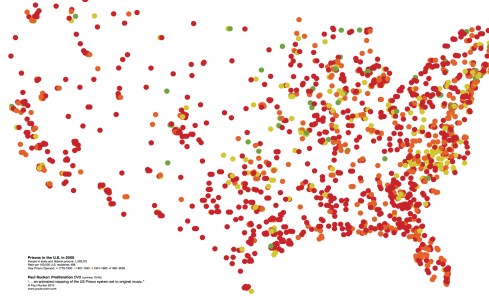
Poster showing the statistics and aesthetic of ‘Proliferation’ an animated video of prison construction in the United States (1776-2010). Image: Courtesy of Paul Rucker.
PrisonObscura intro vinyl_MA copy
Graphic design for Prison Obscura by Ellen Gould.

c3

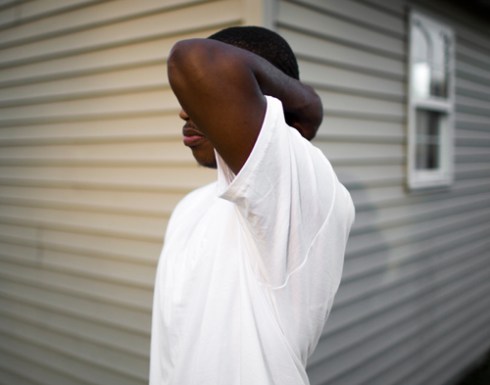
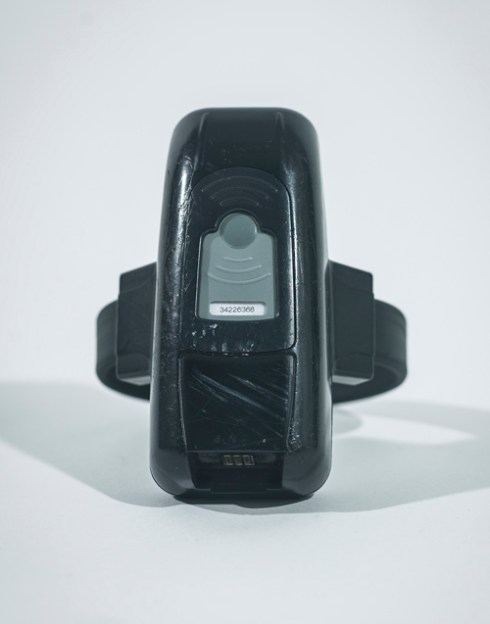
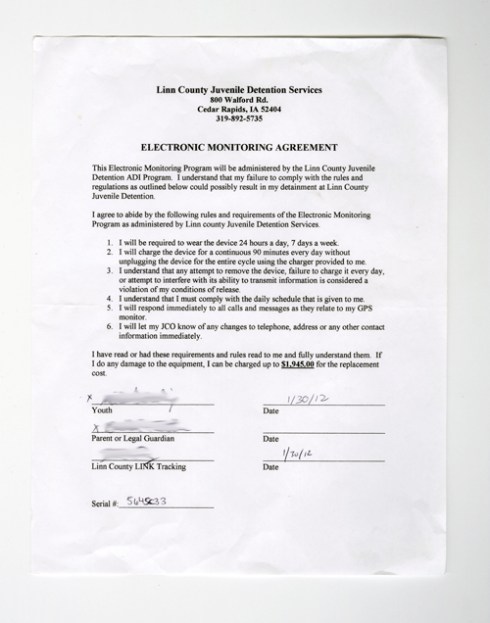
“I want this thing off today … this fucking thing is an invasion of privacy, and goes against my well-being,” said the young boy about his ankle bracelet. He was speaking to Zora Murff, a BFA photography student at the University of Iowa and also a Juvenile Tracker for the Juvenile Detention and Diversion Services (JDDS) of Linn County, Iowa.

It was only when Murff heard this complaint that he began to wonder if he and his camera could interrogate the issue of control.

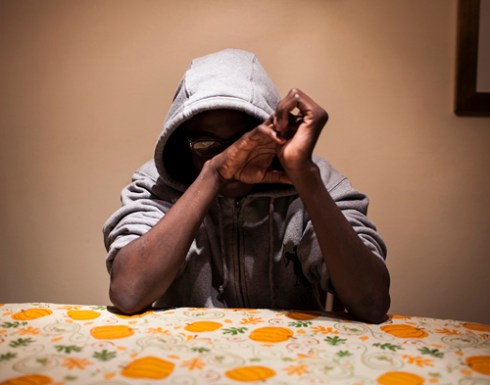
“He was angry,” recalls Murff. “The more I thought about his anger, the more I pondered the concepts of privacy and control in the juvenile corrections system and the role that I play inside of those concepts. I interact with these youths at a critical point in their lives where control is an integral part of the day-to-day. My job is to be a consequence, to insert myself into their lives […] while the adolescents themselves are struggling to exert control over their development.”

Linn County JDDS provides monitoring and rehabilitation services to youths on probation. Murff has been in the job eighteen months. In mid-2013 he began to photograph his employment and construct a project for submission as part of his studies.

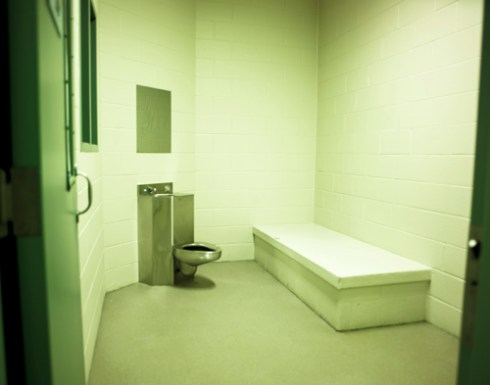
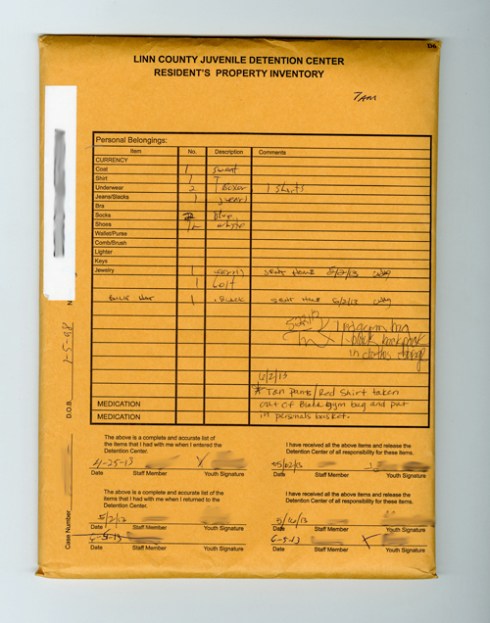
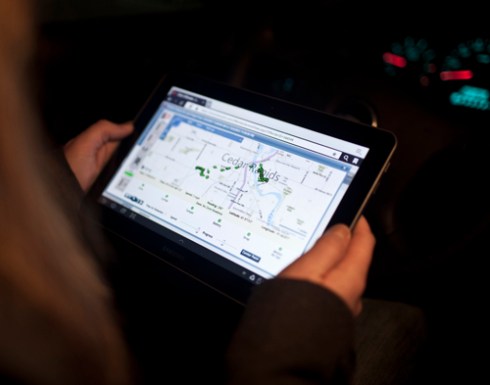
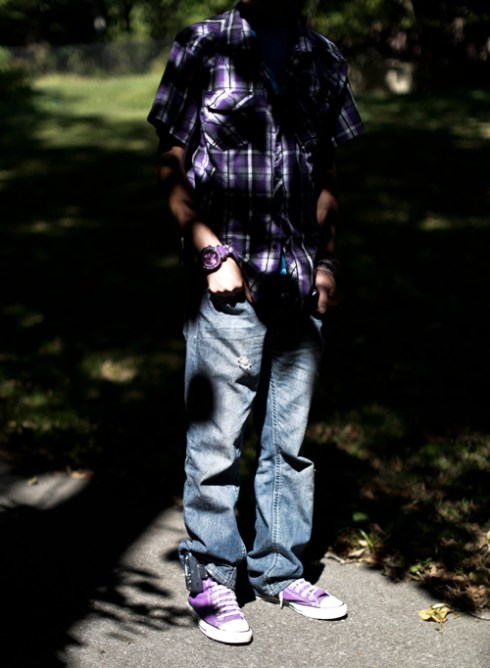
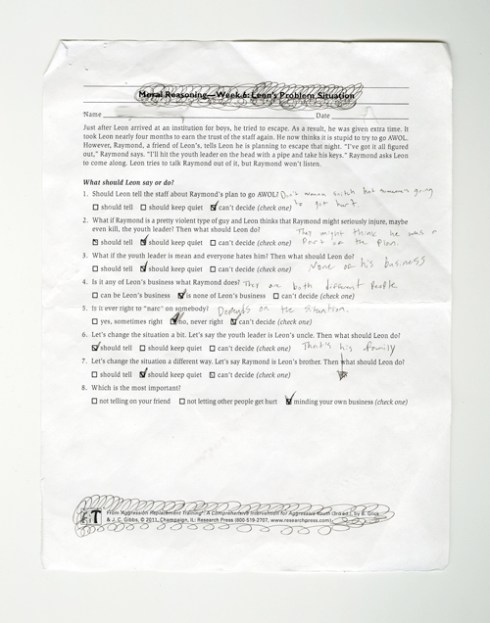
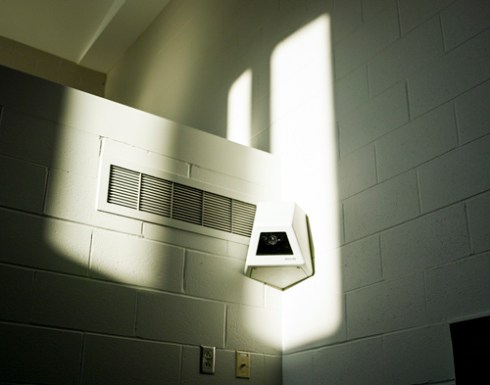
The resulting series Corrections is made up of: photographs of locations of interaction with accompanying narratives about the transgression that took place there (images below with captions); anonymous portraits of the youths; handwritten reflections of the youths; and official paperwork and service documents.

Murff published his notes during the series on the Corrections Tumblr. He has self-published a limited edition book (Murff welcomes interest from publishers to do a larger run). Murff is taking a temporary hiatus from the project. Last week, my Wired colleague Jakob Schiller wrote about Corrections in the piece Peering Into the Digitally Tracked Lives of Youths on ProbationI wanted to do a bit more digging and ask Murff about the logistics, motivations and relationships inherent to the work.

Scroll down for our Q&A.
c9 c11

Three youths broke into an abandoned home on the northeast side of Cedar Rapids. When Cedar Rapids Police responded to the scene, two of the youths surrendered themselves, while the third attempted to hide in the basement. Officers sent in a K-9 to retrieve him. Each youth was charged with criminal trespassing and disorderly conduct.
c13

Q&A

Prison Photography (PP): Can you start by describing your work?

Zora Murff (ZM): Tracking is one of the diversion programs that JDDS offers. Diversion refers to the youth being able to stay in the community, rather than being placed in detention or in a different type of placement like residential treatment. My primary responsibility is monitoring youths on probation. I have face-to-face contact with youths on a regular basis to ensure that they are complying with the expectations of their probation. This may entail electronic monitoring, urinalysis, school follow-up, transportation to therapies (substance abuse, sexual offense, anger-replacement), and other things like completing community service hours. My caseload fluctuates – I believe the lowest number I had was nine youths and I have had up to twenty-one.

PP: Would you have managed to gain access if it weren’t for your job?

ZM: When I pitched the idea to my supervisor, she was very intrigued, but being an insider definitely gave me a leg up, and I was very lucky to have that level of access. My supervisor had a few specific guidelines, but gave me free reign, so I had a wide creative space to work with. I think there was a level of trust there, which made Corrections possible.

PP: How did you come to be studying photography if you’re also a probation service employee?

ZM: I started my degree in psychology. My professional background in human services started when I replied to an ad on a campus bus. I needed a job. I started in disability services working with a wide population of people. Those experience helped me get a job with juvenile criminal justice. I didn’t necessarily have a desire to work in this specific area, but it has been a great experience to watch the youths grow throughout the probation process.

I love my work but I have always felt I was missing out on a need to create, a desire to teach, and a love of the photograph. That is where my education in photography comes into play.

PP: Juveniles under the control of the state are vulnerable young adults. What sort of assurances did you have to provide for your employer, the children and the parents/guardians?

ZM: I have noticed that when working with any population in human services, it all comes down to trust. The real question is how do you build that trust with the people that you serve. I think that this can vary with any worker, but I usually broach this by being available and consistent. Having trusting relationships with the youths that I photographed was key to working on this project.

The biggest assurance that I had to provide was anonymity. It was also important to explain my project to them, which isn’t always easy to do, especially when I was starting out because I wasn’t sure where the project was taking me.
c19

c21

c18

c14

PP: Is Corrections about delinquency or about control; about youth or about state?

ZM: All of the above. The youths do delinquent things that warrant some type of intervention and I wanted to document their experiences once they become a part of the juvenile corrections system. Youths are attempting to control their lives while workers are trying to exert some sort of control over it for them. There’s a dynamic at play between the two.

The use of narratives and documents add context to the project. I felt that portraits of the youths, while the most important component of Corrections, would have told an entirely different story if they were to stand alone.

PP: Is Corrections a voice for you or for your subjects?

ZM: I wouldn’t say that Corrections is my voice personally. The youths are allowing me to show them through their portraits and through some of their writing. My intent was to approach it from an ‘anthropological’ standpoint if you will, almost as if I am a recording device. I felt that it was important to provide a window into this world without editorializing, even though I am embedded in the system.

I feel that when it comes to children on probation a lot of stereotypes are thrown around and it would have been easy to fall into tropes. I want viewers to see inside of the system and draw their own conclusions.
c16

c36

c8

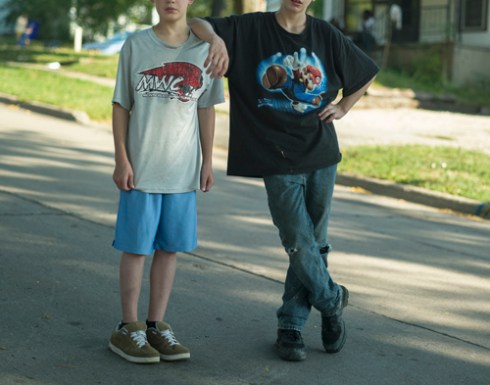
While hanging out with friends, a youth started verbally harassing a peer walking home from school. The youth started to follow the peer and punched him from behind in the side of the face. The youth continued to assault his victim until a car pulled up in the alley. While fleeing the scene, the youth kicked his victim in the head. The youth decided to turn himself in when the story aired on the local evening news, and told Cedar Rapids Police that he had no justification for the assault, that he was just, “mad at the world.” The victim was hospitalized for two days with a broken jaw, two teeth knocked out, and a severed facial nerve. The youth was convicted of felony charges and placed at the Eldora State Training School.

PP: How has the project effected your relationships?

ZM: In human services, the work is about the person that you’re serving, not about you, and typically sharing personal information is discouraged. However, I feel that opening up about my passion for and education in photography bought me a little more trust with some of the clients. It was kind of odd, really. The kids were either totally interested and invested in the project, or completely indifferent. When I walk through the detention center, one or two kids will ask if I’m still working on the project or what was my grade in my photo class. I have also earned the moniker, “that guy with the camera.”

PP: Any particular stumbling blocks?

ZM: My biggest barrier was not being able to photograph faces – I didn’t want to blur out faces or put bars over them. It almost became a game figuring out how to make faces unidentifiable and have the photographs be meaningful.
c34

c35

c23

PP: Any pleasant surprises?

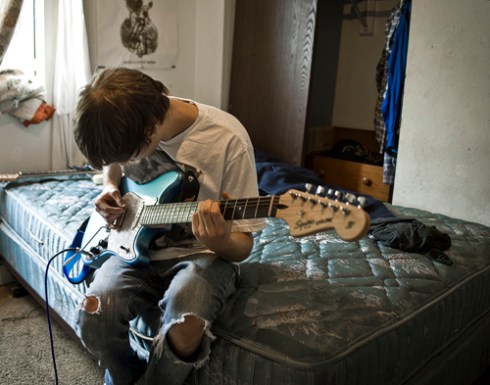
ZM: A number of the compositions happened by accident – a kid blocking the sun from his eyes, or deciding to sit in a certain spot. There is one photograph of a youth playing guitar in his bedroom. While we were taking the photograph, the youth’s friend came to the bedroom window and had a perplexed look on his face when he noticed me with the camera. The youth told his friend that he had just been signed to a record label and that I was from Rolling Stone Magazine. We all had a good laugh about that – and it was a welcome change from the more difficult interactions that I have.

PP: What has been the reaction so far to the work?

ZM: So far, reactions have all been pretty positive. I was part a group exhibition for the class Corrections was completed for, and a number of people drew some sort of sentiment from the photographs. I also had a portfolio review at Midwest SPE last year, and the project was received well. However, I understand that working with a vulnerable population, specifically youths, can be a contentious territory so I have been a pretty hard critic on myself about the work.

c17

c31

c33

c30

c1

PP: Do you plan to continue photography and/or work in criminal justice?

ZM: I would like to teach photography as a means of creative expression to youths at the detention center, but that is just a lofty idea at this point.

PP:  It would be wonderful if you could achieve those types of workshops.

ZM: There are definitely some barriers. The biggest obstacles would be finding the time to teach a course, funding for materials, developing a curriculum, and figuring out when it would work into the residents’ schedule as their day at the detention center is very structured.

PP: What makes you think photography is useful for the youths? What skills does it teach? What can be achieved with photographic education, particularly to at-risk youth?

ZM: Any creative outlet is useful to children. I remember having a drawing journal when I was a teenager, and the amount of things I was able to work through by drawing.

Photography could be a good outlet for youths in the detention center as I feel that visually investigating their surroundings would allow them to build a sense of self-awareness, getting them to really consider where they are in life and where they would like to go.

Also, with the concept of control again, a number of the interactions that I have are usually based upon the youth feeling that they don’t have a say with what is going on in their lives and they are being told all of the things that they cannot do, the places that they cannot go, the people that they cannot hang out with. My hope is that by introducing them to photography this will provide them with a chance of self-expression – they can decide what they want to photograph and how they want to photograph it, getting some semblance of control back.

PP: What else are you up to?

ZM: I’ll continue Corrections until I reach a place where I feel that it is as complete as possible, but I am taking a break from it for the time being. I have an idea for a more intimate project, a case study of sorts, following the story of one individual on probation. I’m gearing up to start shooting for this project in the next few months, and have a youth interested in being a part of it, so I’m ironing out details.

PP: Is the camera a security device or an artistic tool?

ZM: Part of my statement for Corrections is how I, as a Tracker, am required to impose on these youths. This was problematic for me at times because by pointing my camera at them I was imposing upon them in an additional way, but it is important to understand the difference. The cameras that we use to surveil youths are all there in a reactionary capacity in order to provide some sort of control. With my camera, I too am recording, but my camera is there in a collaborative capacity – I feel that the youths have taken back a level of control as they have allowed me to portray them and document their experiences.

PP: Thanks Zora.

ZM: Thank you.
c27

c2

c37

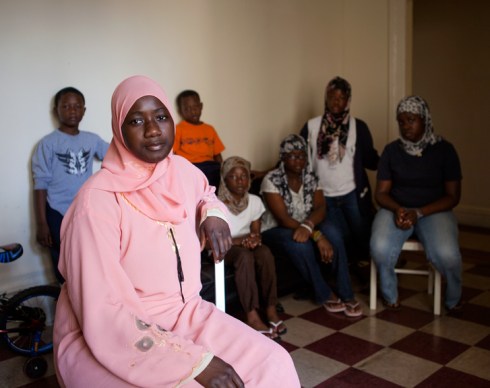
Fatoumata, The Bronx, NYC. 2013

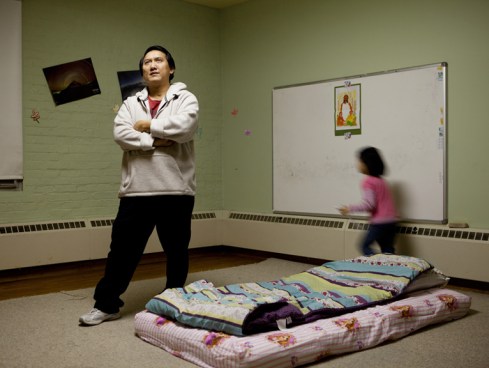
Last week, photographer Graham MacIndoe and writer Susan Stellin were awarded a $20K Alicia Patterson Fellowship for their joint project The UnAmericans: Detained, Deported and Divided.

The project is “a series of interviews and photographs documenting the stories of immigrants who have been ordered deported from the U.S. as well as their family members — often, American citizens — who suffer the consequences of harsh punishment of exile. The stories illustrate the wide range of people locked up while caught up in deportation proceedings: not just individuals who crossed the border illegally but asylum seekers, legal permanent residents and immigrants trapped int he bureaucracy of adjusting a visa.”

Immigration and deportation, are arguably, one of the most pressing human rights issues on American soil. Many people subject to immigration and deportation proceedings are not hardened criminals, they are not violent, nor are they a threat to public safety. The long reach of ICE can collar Green Card holders who have lived in the U.S. for years or decades and who have raised families, paid taxes and abided the law. It can take only a small misdemeanor. Frequently, there is no recourse. Loving spouses are separated and society is asked to assume responsibility for children whose parents are sent half-way across the globe. The collateral effect of inflexible deportation laws on families and communities is considerable. MacIndoe and Stellin’s subjects have lived firsthand at edge of legal territory where resources are squeezed, timelines are shortened and due process is compromised; it is here where we can fathom our health, or lack of it, as a just nation.

Stellin and MacIndoe are both seasoned storytellers and their fusion of text and image is a huge advantage when making connection with audiences. The work is needed and it will shock you.
Dante's-Paperwork

INVISIBLE PROCEDURES

I’ve barely talked about Immigration & Customs Enforcement (ICE) prisons here on the blog because they are very, very rarely photographed. ICE detention facilities are as unseen as ICE surveillance is broad.

Due to extended legal definitions and new laws, President Obama is deporting more people than any previous president. ICE facilities are often strategically hidden, nondescript buildings in urban hinterlands. ICE facilities also oversee near-permanent media shut out. With access so problematic, Stellin and MacIndoe’s decision to meet, interview, photograph and tell the stories of those who’ve been imprisoned is both wise and practical. The prison conditions will be described through first-hand testimony as opposed to literal photographic description. MacIndoe’s respectful and intimate portraits are our starting point.

Stellin brings years of reporting experience which has recently turned toward stories about Homeland security, border technology & search and the legal grey area for Green Card holders with minor offenses.

KNOWING YOUR SUBJECTS

MacIndoe was once subject himself to the Kafkaesque immigration and deportation system. I contend that from personal insight may grow public awareness.

Stellin and MacIndoe have already met, photographed and interviewed subjects. Many are fearful to go public. Scottish-born MacIndoe understands why non-citizens may be reticent but he has the personality to reassure, and understands the small margins on which our comfort rests. MacIndoe has become a friend and mentor to some of the family members he has met in the preliminary stages of the work. He understands that current immigration policy — in it’s inability to be flexible case-by-case —  impacts step-children, the poor and the already marginalized more than other groups. He knows that gay couples have not the same legal qualification and therefore protection. MacIndoe and Stellin are looking to hold a mirror to everyday people that have been harshly punished by very new laws. The laws are young, somewhat clumsy, inelegance and overly punitive.

The tumorous growth America’s prison industrial complex goes back four decades whereas the focus of The UnAmericans: Detained, Deported and Divided — the establishment of an extended archipelago of Immigration and Customs Enforcement (ICE) detention facilities — is a much more recent, post 9/11 phenomenon. MacIndoe and Stellin’s work is utterly contemporary and it meets the desperate need for journalism that probes ICE procedures.

Highland-Park-NJ

All images: Graham MacIndoe

photoeye

bestbooks2013_cover

Photobook “Best-Of” lists sprout like wild-cakes this time of year. Among selections, we are not always guaranteed variety, but we are guaranteed quantity.

Aperture tends to preempt many of the main runners and riders in the autumn with its shortlists for the Aperture/Paris Photo Book Awards (30 books total). Then the deluge beings.

A deluge that which Photolia has made an inventory. It’s a list of Photobook “Best-Of-2013” lists; a list of 80+ lists!

Furthermore, QT Luong at Terra Galleria has taken all the individual titles of those 80+ lists, broke down the votes and constructed a meta-list that cumulates each book’s number of votes. Some titles have votes in double figures, and the “winner” Lieko Shiga’s Rasen Kaigan has 22 votes.

By years end, Best-Of lists had been written and checked twice by Wired, American Photo, Time, Mother Jones, New York Times, Dazed DigitalLens Culture, Washington Post, Brain PickingsTom ClaxtonMicrocordEric GundersenConscientiousTim ClarkMonsters & MadonnasValerian and Discipline and Disorder just to name a few.

The Guardian made two lists — one for best indie books and one for offerings by established photobook publishers. Not to mention Alec Soth and Martin Parr‘s eagerly anticipated annual dispatches. Roger May shifted the formula and picked his favorite book purschases . The Artists Book Cooperative maintained their cheeky approach with the year’s worst photobooks.

So what does all this mean? Head to Blake Andrew’s analysis of the best of the “Best-Of photobook lists. Hilarious.

Well, who am I to reject this ubiquity of Photobook “Best-Of” lists? A few weeks ago, I was asked by Photo Eye to name my highlights for the PhotoEye Best Photobooks 2013 feature. I picked seven titles. Here they are. And, below they are.

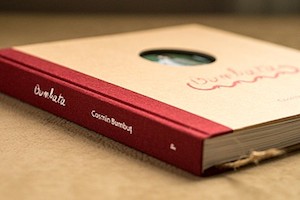
Bumbata, Cosmin Bumbuţ (Punctum)

bumbutBeyond the prison subject matter which is, of course, very appealing to me, Cosmin Bumbuţ’s book is the best of design with beautiful binding, a punctured front cover, and thoughtful essay. Those elements compliment pictures that are, frankly, some of the closest, least judgmental I have seen of incarcerated peoples. Bumbuţ spent 3 years visiting a single prison. The portrait he paints is of a closed but relatively stable environment with equal representation. Staff and prisoners feature in similar amounts. The variety and color is something beyond that of most American prison photographers. Here is a documentarian who has worked hard to form an understanding with his subjects.

In December, I spoke at length with Bumbuţ about his project and the book.

Tales From The City Of Gold, Jason Larkin (Kehrer Verlag)

larkinIt is astonishing that with such a distinct and consistent approach to image-making that this is Jason Larkin’s first monograph. His work seems so familiar. Once more, the Englishman Larkin has entered (with his 4×5) a peculiar faraway place with peculiar and depressing social and environmental history. Johannesburg is one of the world’s most successful mining cities but waste dumps litter the landscape. South Africans have built communities in the mines’ hinterlands. The price of gold is spiking and the lives of people who live and work in the region is tied to our global commodities market. Larkin casts a curious but not a judgmental eye over our priorities at the dusty and noisy point at which commerce and daily life intersect.

Photojournalists On War, Mike Kamber (University of Texas Press)

kamberEnd of year lists often prioritize photo books with fancy design elements; books that are small run, hand-sewn delicate things. But what about those books about photography that are a bit bigger? What about books put out by a large press, such as UT Press, say? And what about books with more text than image? Photojournalists On War is a brick of a book. Mike Kamber interviewed 89 photographers who covered the War on Iraq. If we are to understand the nature of that flawed conflict then we should pay attention to the journalists whose activities were meant to makes sense of it at the time; make sense of it for us. But, what sense do they make of it now? By virtue of the breadth of opinion and depth of questions, Photojournalists On War is THE reference book for any discussion of the War on Iraq and photography. In much the same way as Photographs Not Taken in 2012 delivered us personal reflections and new entry points to photographic thinking, so Photojournalists On War in 2013 surprises and delights with the first-hand and imperfect narratives. Truth is not usually found in a photograph, but perhaps it can be found in a photographer’s words?

Swell, Mateusz Sarello (Instytut Kultury Wizualnej)

sareeloSea foam smells, threatening birds, big clouds. Swell is a rough experience. As was Mateusz Sarello’s break-up. This book is in two halves. Each half is a visit to the Baltic Sea — the first with his girlfriend, and the second without as part of some therapeutic turn. So different are the images and mood of the images it’s effectively two books in one. Both books’ exposed spines reflect the vulnerability Sarello has embraced in creating a book about his crushed love-life. 88 pages of fragile hand-made loveliness. Handle with care. Given the proliferation of east-of-Western-Europe sea photography projects (think Petrut Calinescu, Rafal Milach, Mila Teshaeiva, Mikhail Mordasov and even Rob Hornstra), it’s tricky to do something novel in this sub-sub-genre, but Sarello pulls it off with focus on the hyperpersonal. And he’s not afraid to use Instax Fujifilm either. I was skeptical at first, but later blown over by the earnestness of the well-edited and understated grouping of images.

Rasen Kaigan, Lieko Shiga (AKAAKA)

shigaBetween 2006 and 2012, Lieko Shiga lived and worked in the region of northeast Japan worst hit by the 2011 Tsunami. Shiga is part photographer and part conceptual artist, so it makes sense that these images (many of which abandon formal photographic considerations) look nothing like the photojournalism we saw in the aftermath of the Tsunami. Darkness, hard-flash, plants, flowers, sweaters, sand and minerals. It’s all very earthy … and strange. But then again, that region is a geography and a collective psychology transformed. Despite Shiga’s camera experiments, we are still presented images of Japanese communities on the mend, making do, building up, tilling the land and doing the simple things that they must. Big disasters are met with small victories. Shiga’s volatile approach is a reminder that the uncomplicated things she photographs only exist because of massive tectonic force.

What might be otherwise read as an assault on the senses is a celebration of the senses — a celebration of life and of living.

Control Order House, Edmund Clark (HERE Press)

clarkThe images are boring; but the concept is exhilarating — which is exactly the point. Edmund Clark photographed the interior of a “home” inhabited by a UK terror suspect under house arrest. A dull suburban 3-bed semi in no-name Britain. Clark worked within pre-agreed, tightly controlled parameters set out by the UK Home Office. Clark and HERE Press include scans of his contracts and official correspondence. The act and the access is more important than the images; the images are only evidence that Clark made a sortie into this never photographed territory before. (In April, I wrote about Control Order House for Wired.)
So many projects these days comment on control from the outside, but here we see images from from within, and according to, control.

Two Rivers, Carolyn Drake (Self-published)

tworiversCarolyn Drake’s photography has long impressed me, so I’m not surprised her first book is a triumph. Dutch book-designer Sybren Kuiper brought considerable style to Two Rivers. Apparently, it was Kuiper who proposed starting the book’s sequence at where the two rivers appear to end versus Drake’s original idea to begin where the rivers originate high in the mountains. Drake has visited the vast expanse of central Asia that lies between the Amu Darya and Syr Darya rivers 15 or more times in recent years. Judging by the images, it remains a region that beguiles Drake. Two Rivers abandons traditional documentary sequencing and reveals the creators own feelings, uncertainties, awe and brief encounters. One slimmer book is words and notes for the chapters in the other larger book containing pictures of fuzzy narrative, refused objectivity and love. The wrap of images around the Japanese style bound pages is stunning.

Merry Holidays. There’s an angle of fun for everyone this time of year. Even atheists can crack a smile.

For the past couple of Christmases, I’ve posted my favourite selection of slightly-off yuletide related images from the bowels of the internet (2011 and 2012, if you’re interested). I couldn’t repeat that a third year running so I went in search of the foolish, the brilliant, the inspired and the irreverent in the world of music.

There’s a ridiculous amount of bonkers songs and mixes out there. This list is the opposite of definitive.

Let’s start with a couple of messages.

Iggy Pop thinks of you from his lovely, lonely festive luxury.

Nirvana love Christmas … and Ru Paul.

The Sonics are less fond of Christmas.

Sticking it to Fox News. Santa is black.

“Kids, just leave cookies, save the joint. ” Apparently, santa doesn’t deliver presents if he’s high.

Please don’t fight this yuletide.

Ah, the joy of getting.

This is Cyndi Lauper’s worst song.

Iron Maiden bring it. “You’ll be rocking, in your stocking.”

But not as much as No Doubt, a band that have threatened to be a bit daring and maybe good. Here they absolutely are. Oi!

RUN DMC “An ill reindeer.”

And another classic from RUN DMC. “Give up the dough on Christmas, yo. […] Fight poverty, give to the needy; don’t be a grinch, don’t be greedy.”

Tom Waits. Enough said.

Bing and Bowie, of course.

One for the lonely hearts. #sexytime

Grandma Got Run Over By A Reindeer by Elmo & Patsy.

Sweet-Tee: “Snow is fallin’, Relatives callin’; it’s Christmas. Have a ballin'”

Santa Claus, Go Straight To The Ghetto, by James Brown, from his Funky Christmas album.

Same song title. Very different song. Snoopy Doopy Dogg-Dogg performs with Daz Dillinger, Nate Dogg, Bad Azz, and Tray Dee.

From the 1996 release Christmas on Death Row.

One of Steve Coogan’s more short-lived characters, Tony Ferrino: “Bigamy at Christmas, what should I do? Spend it with the family? I cam’t I’ve got two.”

Dana Dane Is Coming To Town

This parody of Sabbath’s Iron Man is so good Ozzy Osborne makes a cameo at the end of the video to fire a rifle at the TV.

John Denver inhabits a small child’s body and begs you not to drink and drive.

Beyonce and friends singing about material goods.

But I guess demanding goes decades back. Here a 10-year-old demands a large mammal. “Only a hippopotamus will do.”

You can’t go wrong with Patti Smith.

Silent Night Skank. Fantastic.

If Reggae Christmas is your thing, check out this list of over 200 tunes from Rasta Claus!

Also, my buddy Blake Andrews hosts a Eugene, Oregon local radio show. He sent over the screengrab below, so you’ve got hours more googling there too!

HAPPY HOLIDAYS!

XmasBlakeAndrews

EMAIL

prisonphotography [at] gmail [dot] com

Prison Photography Archives

Post Categories

RSS PETE BROOK’S TUMBLR ‘PHOTOGRAPHY PRISON’

  • An error has occurred; the feed is probably down. Try again later.