
You are currently browsing the category archive for the ‘Amateur’ category.

Manchester Evening News published a right-objectionable story that’s probably going to get some blood boiling. Thanks to Steve Silberman for alerting me to this via his virtuoso twitter feed (fine editorial nous).
In America there are gangsta’s, crack heads and wild kids. In Britain there are thugs, scallies and pill-poppers – these are broad categories and don’t describe much, but my effort is to say that the two countries have different types of criminal. It is my feeling that the extreme inequalities of American cities breed a certain type of hardened criminal, whereas Britain’s subtler inequalities breed a certain type of hardened idiot.
Few violent offenders have a sociological grasp on why they’ve made the choices they have and often their bare-faced contempt is hard for most folk to stomach. Kane Barratt is a case in point.

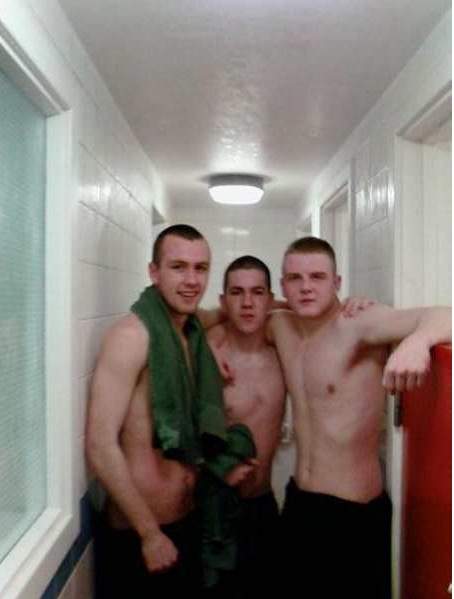
This week, after recent sentencing for 5 and a half years, Barratt used a mobile phone to update his Facebook profile from his cell. He changed his staus, chatted with friends and posted two photos. After the Manchester Evening News told the Ministry of Justice about Barratt’s activity the page disappeared from Facebook. The phone was later confiscated.
I don’t want to glorify Barratt’s actions; he is a violent offender who wielded a machete and held it to his victim’s throats. Barratt shows no remorse only bravado in his Facebook antics. Paul Dillon, Barratt’s last victim pondered, probably quite accurately, “He’ll probably come away from this with all his mates thinking he’s some kind of hero.”
That said, Prison Photography‘s charge is to discuss all modes of photographic production within sites of incarceration: “If a camera is within prison walls we should always be asking; How did it get there? What are/were the motives? What are the responses? (Prison Photography ‘About’ page)
Well, Barratt’s camera phone got there because it was not confiscated . One presumes he wasn’t searched at a key moment. I’d suggest the motive was to stay in touch with his friends outside, take the piss (to a degree) and generally showboat when oversight was lax. Predictably, victims and authorities were left aggrieved, offended and embarrassed.
In Britain, as in America, mobile (cell) phone use is banned behind bars. Wired with the aid of Andrew Hetherington recently ran an article on the smuggling and underground economy of cell phones in California. As did Newsweek. I theorised that prisoners strategic adoption of cellphones is the most serious threat AND damaging maneouver to decades of prison management policy. Mobile communications render obsolete much of the advantages brought to controlling prison populations by segregation.
I teach at a Washington State prison and I am generally disheartened by the lack of access prisoners have to books. By law, state departments of corrections must provide access to libraries, but opening hours and actual physical access (within the institutional regimen) are not consistent. Even when prisoners can get to the library, nearly all learning is self directed. Prisons offer GED programs but only one prison in Washington State (Monroe) offers college courses. I believe only one prison in California (San Quentin) offers college courses.
Nowadays, access to a computer is as essential as access to a library for learning. So, while I understand the need to confiscate phones, I don’t want to see all internet connectivity denied. Ideally, internet would be available to prisoners without compromising security. Social networking would certainly be ruled out.

But even if correctional departments could tailor their own prison firewalls, the structure of Web2.0 – and its embedded networking functions – would still allow manipulation by the minority of seditious prisoners. The likelihood of widespread internet access in US prisons is very small.
This situation alone is cause for some chagrin. If one accepts that computers and networks are essential components of contemporary life then their absence within sites of incarceration forges yet another chasm between the life inside and the life of anticipated release.
But then again, in a week when I had glue sticks confiscated on entering the prison, speculation on the provision of internet in prisons is far from the realities of prison life and, regretably, far from relevant …

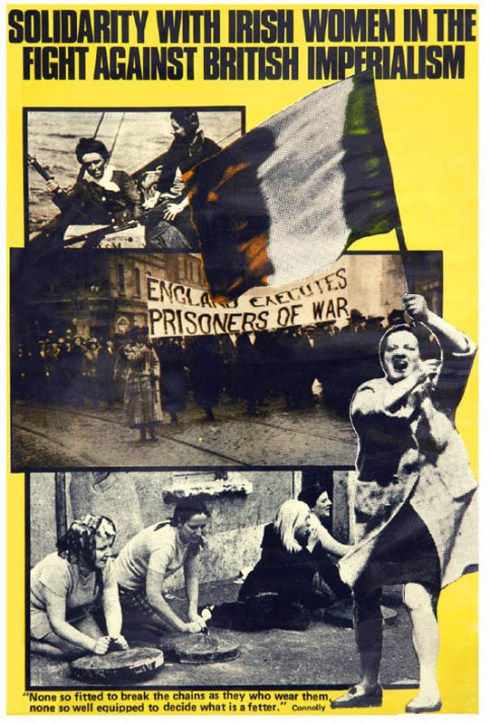
The inspiring Just Seeds Collective which peddles art to fund prison rights activism pointed me via its blog toward the Poster Film-Collective of London.
The Poster Film-Collective is a unique archive of graphics for African, Cultural, International, Irish, British and Women’s causes. With direct politics and robust graphics, poster arts are a nostalgic favourite for many art historians.

‘The Troubles’ of Northern Ireland are a very difficult topic for me to discuss; but not because I am close or emotionally compromised and not because I know or knew anyone involved. I grew up just the other side of the Irish Sea, but Belfast may as well have been the other side of the world to me. I was raised Catholic and my Mum’s family are from the Republic of Ireland. Yet, as a child my family rarely discussed the situation in Northern Ireland. Even in 1996, when the IRA bombed the Arndale shopping centre in Manchester (just down the M61 from my home town) the conflict was still too abstract and ancient for my teenage mind to comprehend.
I think any political labels or alliances that would fall upon my family were deflected by a distant dismay at the violence of the time. ‘The Troubles’ of Northern Ireland are not something I feel comfortable idealising; rather limply I retreat to the cliche that one man’s terrorist is another’s freedom fighter. All sides (there were more than two) were guilty of arrogance, obstinacy and extreme violence. The ideological brutality played out on the streets was matched by that meted out in the prisons, most notably Long Kesh, later renamed The Maze.

It is a lingering guilt for me that ‘The Troubles’ have always been historical … historicised. It is this guilt that accounts for the fact I’ve not before discussed Donovan Wylie’s The Maze on Prison Photography. Wylie is saturated in Irish history – it is his life’s vocation. On the other hand, I would be a fraud if I attempted to summarise the complex events of a physically-close-culturally-distant conflict.
It is with similar guilt I refer readers – in the first instance – not to news reports or academic reflection but to a 2008 film. But, I do so because Steve McQueen’s Hunger is a breath-taking portrayal of a life-taking episode in the history of Maze prison. It is a wonderful observation of British prisons, Irish Republican solidarity and inmate management in the face of political protest.
McQueen, in his directorial debut, specialises in long uninterrupted shots which grip time (and all its anguish) and forces the politicised narratives through the mangle. He flattens and simplifies the visuals drawing out the incredible fragility of human skin, snow-flake, fly, lamb, ribcage … McQueen is surely a great photographer too.

Through Donovan Wylie’s work I learnt of Dr. Louise Purbrick’s excellent continuing research “concerned above all with the meanings of things and how those meanings are contained or revealed, experienced and theorised.” Purbrick wrote the essay for Donvan Wylie’s book, Maze. That was in 2004. In 2007, Purbrick extended the survey, jointly editing the book Contested Spaces. It analysed the “divided cities of Berlin, Nicosia and Jerusalem, the borderlands between the United States and Mexico, battlefields in Scotland and South Africa, a Nazi labour camp in Northern France, memorial sites in Australia and Rwanda, and Abu Ghraib.”
Purbrick worked with another academic Cahal McLaughlin on the oral history & documentary film project Inside Stories featuring Irish Republican Gerry Kelly, Loyalist Billy Hutchinson and ex-warder Desi Waterworth. And it is here I start (and I encourage you to start), with personal testimony when trying to understand ‘The Troubles’.
Donovan Wylie has continued his visual archaelogy of Irish history with Scrapbook.
 Born in Belfast in 1971, DONOVAN WYLIE discovered photography at an early age. He left school at sixteen, and embarked on a three-month journey around Ireland that resulted in the production of his first book, 32 Counties (Secker and Warburg 1989), published while he was still a teenager. In 1992 Wylie was invited to become a nominee of Magnum Photos and in 1998 he became a full member. Much of his work, often described as ‘Archaeo-logies’, has stemmed primarily to date from the political and social landscape of Northern Ireland.
LOUISE PURBRICK is Senior Lecturer in the History of Art and Design at the University of Brighton, UK. She is author of The Architecture of Containment in D. Wylie, The Maze (Granta, 2004) and, with John Schofield and Axel Klausmeier, editor of Re-Mapping the Field: New Approaches to Conflict Archaeology (Westkreuz-Verlag, 2006). She also works on the material culture of everyday life and has written The Wedding Present: Domestic Life beyond Consumption (Ashgate, 2007) (Source)
CAHAL McLAUGHLIN is Senior Lecturer in the School of Film, Media and Journalism at the University of Ulster. He is also a documentary filmmaker and is currently working on a Heritage Lottery Funded project, ‘Prison Memory Archive’.

Reading the Goethe-Institut Fashion Scene article about Haeftling designers in Berlin, I thought it was an Onion style send up. “Prisoner chic” sounds like something straight out of satire, but I guess I was snoozing when this hit the news wires in 2003.
Haeftling (translated as ‘Prisoner’) employs inmates across Europe to manufacture clothing and housewares inspired (they say) by prison life, “The garments are highly functional and have a classic and timeless cut. Only high-grade, rugged fabrics are used in manufacturing.”
Well, whatever you say. I actually don’t mind how they market it, I am just pleased they support prison reform, the abolition of the death penalty, political prisoners rights and a philosophy of rehabilitative justice.
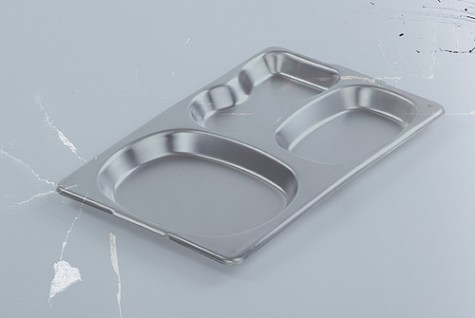
Haeftling Tray
But let’s not kid ourselves. This project was borne of commercial interests. “It began in the JVA (Justizvollzugsanstalt/prison) Tegel and developed into an international undertaking. More and more prisons have joined and today production is even taking place elsewhere in Europe. One Bavarian prison supplies honey from its own two colonies of bees; a prison in Switzerland even has its own vineyard and exports its own red (Pinot Noir) and white wine (Müller Turgau).” (source)
Karola Schoewe, Haeftling’s PR & communications manager says, “On the whole, the prisons are all very helpful,” says “There are some prisons that have very good production capacities for making homeware.”
Schoewe then marries the business speak to social responsibility speak, “Through its production, Haeftling is creating measures that help to support rehabilitation processes.”

Haeftling Espresso
Without seeing Haeftling’s account-books or sitting in on a board meeting, I have no way to tell if resources and profits are divvied up in a way that benefits prisoners more then in the state run prison industries. This was the situation in July 2003
(Author’s Note: €12.50 is substantial pay compared to American prisons.)
Prison industries are a divisive issue. For some they are the perfect use of prisoners’ time and energies developing job skills, work community & self-esteem. To others prison industries are a modern slave labor exploiting societies’ self-created incarcerated class.
Both viewpoints have legitimacy, but the first makes a prior assumption that could be misleading – that work programs are the only means to provide skills, community or self-worth. Education does this too.
But educating someone instead of putting them to work is going to cost a prison authority rather than generate it wealth.

Generally, I am unnerved by the disconnect between the reality of incarceration and its representation to consumers,
Then again, Klaus-Dieter Blank, of Berlin’s Tegel Prison states the success of the label’s online store has meant that people are beginning to understand “what goes on behind the walls”. Haeftling features on the Tegel Prison website.
Is there too much space here for consumers to create their own version of prison life? What is included and/or played down in the minds of consumers? Are they being coerced and sold a disingenuous view along with that ‘rugged’ product?

"Justiz 82" Scratchy Blanket. Haeftling Product
We can assess this a number of ways – rehabilitative worth, public awareness worth, benefits to state finances, tax-payer savings, external benefits of development in social entrepreneurship.
But essentially, we must ask, “Does this enterprise help reduce prison populations by reducing recidivism? It MUST be compared to other rehabilitative programs. The purpose of prisons the world over should be to create societies where prisons are no longer necessary.
How do you judge this type of enterprise?
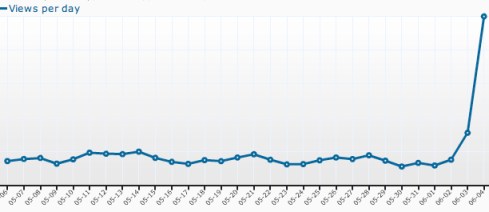
This week, Metafilter – among others – threw a stats-bomb at my wordpress account. The lure? Uncredited, amateur, pinhole photographs. No name … no logo.
The photography was by Girls in the Remann Hall Juvenile Detention Center, Tacoma, WA during a 2002 Steve Davis arts workshop.
These pictures really struck a chord. I am left to wonder what sort of interpretations are being made by viewers?
One thing I know is that a big CV, a big camera and fancy digijournalist turns may not be enough to secure soul-grabbing images. In fact, I’d argue it probably isn’t possible to compete with those nameless girls of Remann Hall.
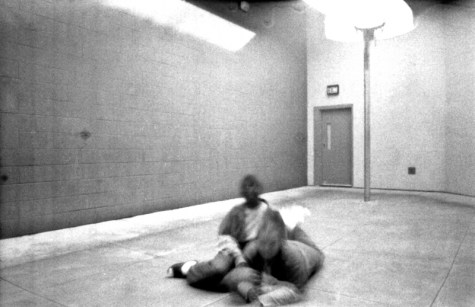
Remann Hall girls 2002. Image created as part of a Steve Davis workshop. Pinhole camera.
Please contact Steve Davis for inquiries about image use and reproduction.
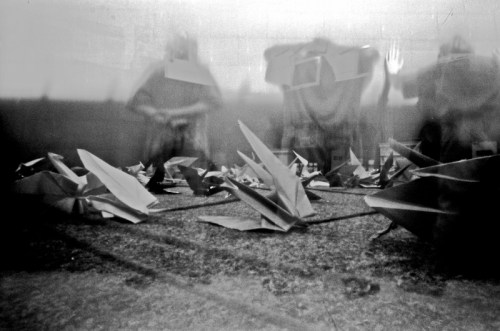
These images are the result of a collaboration between photographer Steve Davis and the girls of Remann Hall Juvenile Detention Center, Tacoma, Washington State in the US.
Davis was forced to think of the camera as a tool for different ends, essentially rehabilitative ends. For legal reasons and the protection of minors, Davis and his female students were not allowed to photograph each others faces. It became an exercise in performance as much as photography.
We see portraits of the girls with plaster masks, heads in their hands. The girls limbs outstretched made use of evasive gesture. The long exposures of pinhole photography resulted in conveniently blurred results.


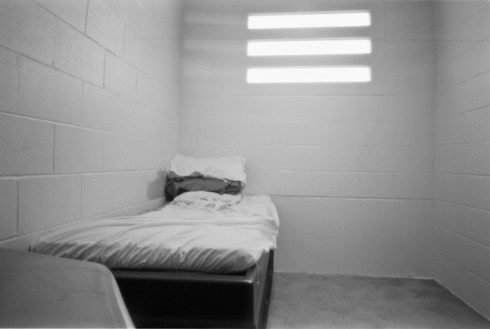

PINHOLE PHOTOGRAPHY vs ROTE DOCUMENTARY MOTIFS
Photography in sites of incarceration often depicts amorphous, vanishing forms within stark cubes; it is usually black & white, and often from peep-hole or serving-hatch vantage points. When this vocabulary is used and repeated by photojournalists, visual fatigue follows fast.
Heterogeneous architecture doesn’t help the documentary photographer. Limited and repetitious visual cues make it tough to work in prisons. Images, shot through doors, by visitors only on cell-wings by special permission, are dislocating and sad indictments of systems that fail the majority of wards in their custody.
I celebrate all photography shining a light on the inequities of prison life. Having said that, very occasionally – only very occasionally, do I wish a “prison photographer” had expanded, waited or edited a prison photography project a little longer … but I do wish it.
Photojournalism & documentary photography have taken a battering from within and been asked some serious reflective questions. I don’t want to accuse photographers of complacency. To the contrary, my complaints are aimed at prison systems that so rarely allow the camera and photographer to engage with daily life of the institution.
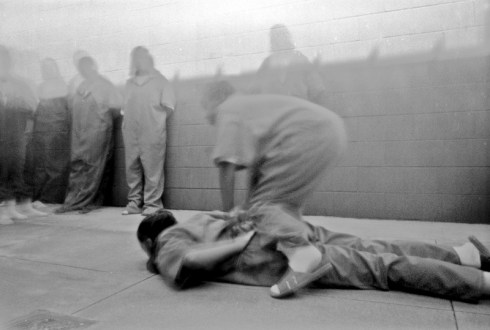
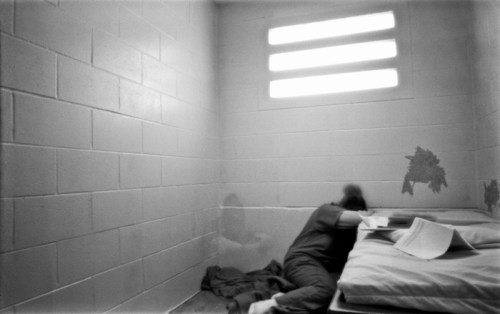
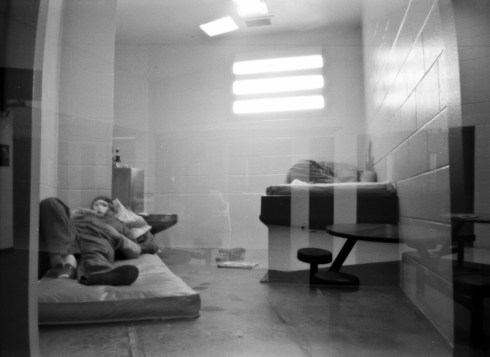
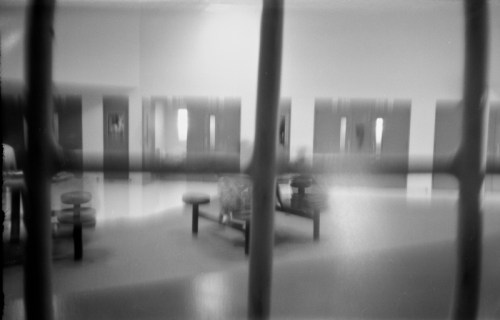

Therefore, I stake two positions on the issue of motif/cliché. First, repeated clichés have developed in the practice of photography in prisons. Second, prison populations have had little or nothing to do with the creation, continuation or reading of these clichés.
As a general criticism, I would say photographers in prisons struggle to achieve original work. But, prisoner-photographers – whose experience differs vastly from pro-photographers, custodians and visitors – cannot be held to that same criticism.
WHEN THE PRISONER CONTROLS THE CAMERA
These images by the girls at Remann Hall are distinguished from the majority of prison documentary photography, because the inmate is holding the camera. When an inmate repeats a motif it is not a cliché.
These are images of all they’ve got; concrete floors, small recreation boxes, steel bars, plastic mattresses and chrome furniture … all the while lit brightly by fluorescent bulbs and slat windows. These aren’t images taken for art-careerism, journalism or state identification. These are documents of a rarefied moment when, for a while – in the lives of these girls – procedures of the County and State took back seat.
When a member from within a community represents the community, the representation is above certain criteria of criticism. A prison pinhole photography workshop has very different intentions than any media outlet. Cliche is not a problem here; it is a catalyst.
The simulation and reclamation of visual cliche (in this case the obfuscated hunched detainee) is doubly interesting. Why the frequent use of the foetal position? Why did the girls choose this vulnerable pose to represent themselves? Was it on advice? Was it mimicry? Was it part of a role they view for themselves? Why don’t they stand? Emotionally, what do they own?
As in evidence in some images, one hopes that some of these girls are friends. This selection of shots share a single predominant common denominator; the psychological brutality of cinder block spaces of confinement. Companionship seems like a small mercy in those types of space.


These photographs should knock you off your chair. I am in doleful astonishment. In the absence of faces, how powerful and essential are hands?
For now, consider how visual and institutional regimes square up.
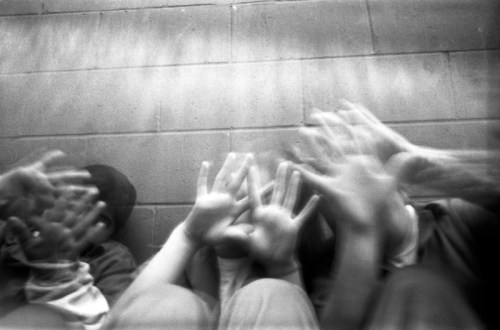

Since the original publication of these images, they have been viewed tens of thousands of times. More than any other photographer – famous or not – these images by anonymous teenage girls have been by far the most popular ever featured on Prison Photography. That appetite shows that when prisons and struggle and creativity are presented in a meaningful way, images can be used as a segue into wider discussion of the underlying issues.
The Remann Hall project was done as a part of the education department program at the Museum of Glass in partnership with Pierce County Juvenile Court. This comment sums up the importance but also the fiscal fragility of these arts based initiatives:
“The Remann Hall project was an incredible project, which culminated in an outdoor installation at the museum and many of the participants coming to volunteer and participate in education programs at the museum after they were released. It was one of the many incredible programs I was lucky enough to be part of there. A book of poetry, artwork (and I think some of the photos in that link) was produced as well. The whole program was a great model for how arts organizations can do meaningful outreach in their communities. Unfortunately, the program was cut one year before the planned completion, due to budget concerns.”
[My bolding]

Guantanamo © Chris Maluszynski/Agence VU

Guantanamo Map http://www.cubafutour.de/Karte%20Guantanamo%20Provinz.jpg

Guantanamo Bay Tents. Courtesy of The Department of Defense Visual Information Center
I am very happy with the way Prison Photography is progressing. I have done interviews with some outstanding photographers and artists. I have offered opinion where I think there’s something to be said. The most satisfying work on the blog is that contributed by guest bloggers, comment-makers and interviewees. Photographers have contacted me and I have been eager to comment upon their work.
But, there is one audience I never anticipated – The Google Image Search Audience. I get many hits for searches on Guantanamo, Guantanamo video, Iraq prison, Abu Ghraib, Abu Ghraib Images of Prisoners, etc, etc – which is strange because these are topics that many people have grappled over with more proficiency and depth than I am likely to.
It is obvious that there is a need for fast access to images of America’s sites of torture and incarceration, namely Abu Ghraib and Guantanamo. I certainly don’t wish to fuse the two institutional histories so I shall deal only with Guantanamo Bay.
Louie Palu
Walrus Magazine. 8 of Palu’s photographs and accompanying article.
The Atlantic. 6 of Palu’s photographs.
Private galleries. Palu’s Photoshelter profile offers three separate galleries, but they’re password protected. Contact the photographer directly.
NPR Interview. Palu offered insight into his experience and impressions of Guantanamo.
Christopher Sims
Mother Jones. 15 images of daily life outside of the prison complex.
Civilian Arts Project. 25 images of a bizarrely serene Guantanamo Naval Base.
BBC, The Other Side of Guantanamo. Article about Sims’ series.
Daylight Magazine. 4 minute audio of Sims’ experiences on project.
Chris Maluszynski
Agence VU/Moment. Twenty-six images exhibited. Likely more on file at the agency.
Cesar Vera
Guantanamo Prison. 18 Black & White images. 3 Colour.
Joint Task Force (JTF)
Many of the photographs shown in the press over the last few years were taken by members of the Navy’s own Joint Task Force. When press photographers visited the JTF vetted all images before release.
Boston Globe. 30 Hi-Res images.
Repeat of above selection. 20 Hi-Res images selected.
JTF Photo Galleries. 22 months (July 2007 – May 2009). Hundreds of images. Official photography.
Miami Herald
Description of the 8 different camps at Guantanamo
Explanation of the Legal contexts: Key defendants, the judges, the defense and prosecution counsel.
Cursory look at Art influenced by Guantanamo
Magnum
Bruce Gilden. Guantanamo Bay. Enemy Combatant Camps, 2003
Paolo Pellegrin. Guantanamo Detainees, 2006
Stuart Franklin’s work Cuba, 2003, included images from Guantanamo and you’ll need to search the Magnum website for images.
McClatchy
An eight-month McClatchy investigation of the detention system created after the Sept. 11 terrorist attacks has found that the U.S. imprisoned innocent men, subjected them to abuse, stripped them of their legal rights and allowed Islamic militants to turn the prison camp at Guantanamo Bay, Cuba into a school for jihad.
Intro. Text and 11 minute video.
Photos. Detainees held at Guantanamo Bay
Photos. Faces of Guantanamo Detainees. Part one.
Photos. Faces of Guantanamo Detainees. Part two.
Photos. Detainees held in Afghanistan.
Eyeballing
Comprehensive overview of base using Google Maps, official photographs. Details structures, uses and topography of naval base.
Camp America, Camp Delta, Camp V and Administrative & Court building.
Camp X-ray and construction of later detention camps.
Associated Press
Images of facilities and interiors of various detention blocks and camps.
Stars & Stripes “The Independent News Source for the U.S. Military Community”
Work at Guantanamo
Education at Guantanamo
Recreation at Guantanamo
Artistic Turns
David Hicks. Virtual Guantanamo Cell
Penny Byrne. Porcelain Guantanamo Detainee Figurines
Gregor Schneider. 21 Cells, Bondi Beach, Australia
Legofesto. Guantanamo reconfigured with Lego men and Lego pieces and Wired Interview
Flickr – Protest Images
Amnesty International. Guantanamo Protests
Various Photographers. 100 Days to Close Guantanamo and End Torture.
James M. Thorne. Protest images.
Miscellaneous Media
Prisoners of War. 2004 article by the San Francisco Gray Panthers with images of US airforce transporting detainees and early 2003 images of Camp X-Ray.
BBC. Life in a Guantanamo Cell

Rendition. Photographer Unknown
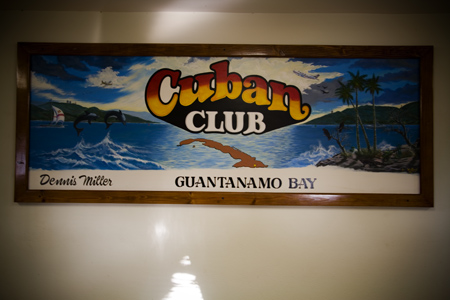
© Cesar Vera

Guantanamo Bay Navel Base with a New Commander-in-Chief. Photographer Unknown. http://www.obamalouverture.com/f39/guantanamo-bay-switch-bush-photo-obama.html
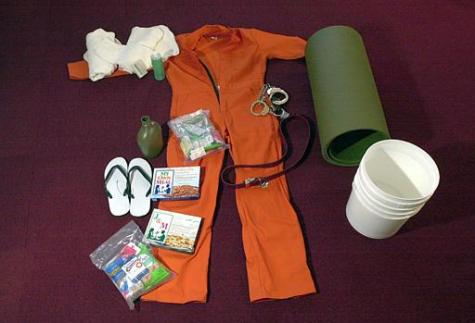
The standard issue of clothing, sleeping mat, food, sandles, canteen, soap, and buckets for detainees of Camp X-Ray is pictured in Camp X-Ray at the U.S. Navy Base at Guantanamo Bay, Cuba, on Wednesday, Feb. 20, 2002. © Tomas van Houtryve/AP Photo
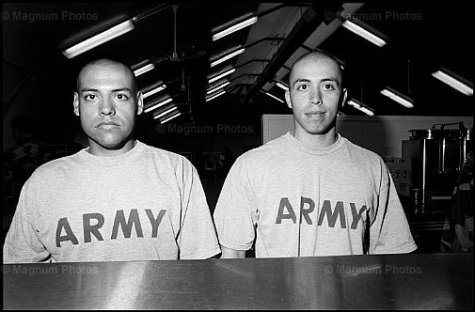
CUBA. Guantanamo Bay. 2003. Soldiers wait for their meals before a prayer breakfast at Camp America. Photo: Bruce Gilden/Magnum
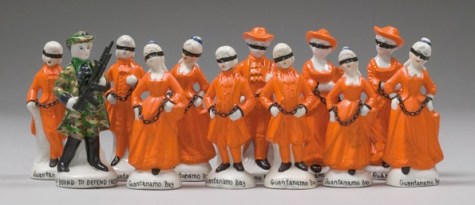
Penny Byrne Guantanamo Bay Souvenirs 2007, vintage figurines, metal chains, epoxy resin, plastic, re-touching medium, powder pigments, 14 x 32 x 10 cm.
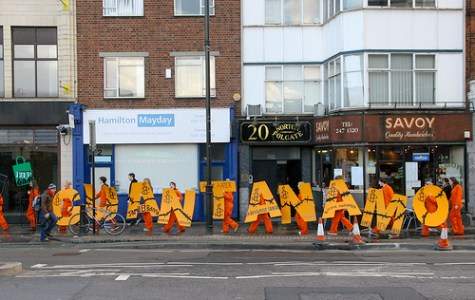
Photo: Jon McClean. http://www.flickr.com/photos/jonmclean/410055117/
IF YOU HAVE ANY RESOURCES TO SUGGEST,
PLEASE CONTACT ME AND I’LL ADD THEM TO THIS LIST.
Note: This one’s off topic, but I’ll be coming back with prison related visual critique sooner than you can say “Jack Lemon”.
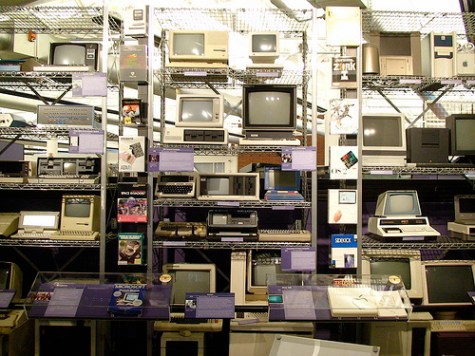
The Computer History museum in Mountain View, California. Credit: David Glover
How do museums and galleries use online media to promote themselves?
I have been required to think about “The Museum” and it’s engagement with public and web2.0 audiences recently. If you look about you’ll find really good uses and catastrophic uses of web2.0 by museums and galleries alike. I don’t want to beat up on small galleries for their ill-advised, tweeting non-personas nor criticise lackadaisical irregular blog posting; both of these activities are for the intern. I’d really complain if I thought someone was getting paid to stumble through blog posts and ideas after a full day educating outreach audiences.
I do think the MoMA and San Francisco MoMA are fair game though.
Let’s start with the good.
MoMA: A delicate, understated film-short, with good production values. Some might argue it’s over sentimental and panders to arty self obsessions, but the MoMA is the beacon of an art world, art market and art-as-brand that has Western obsessions about the object at its core. I’ll allow it to veil this truth and remould it as individual yearning.
Click on the image below to view the video at The Contact Sheet blog.

Still from MoMA's promotional video "I See"
And now, to the bad.
SFMoMA: Apparently inspired by the White House launch of Obama coverage on Flickr, the San Francisco MoMA launched its own stalking eye upon director Neal Benezra. They call it Director Cam.

Benezra at press preview, being interviewed by Don Sanchez for ABC7, in the SFMoMA rooftop sculpture garden.
Now, I am all for transparency, informality, familiarity and all that, and, to be fair, SFMoMA has done this reasonably well with its other Flickr sets (although I’d prefer less high-society party coverage and more high-school outreach coverage).
However, Director Cam just rubs me the wrong way. I don’t want to see the privileged folk of the museum-world lording over its institutions, I want to see public audiences getting knee deep in collections & archives and mixing it up a bit. I want to see Flickr used as a means to entice people into the museum not as a mirror for already existing (and exclusive) engagements.

Neal talking with Exhibitions Design Manager / Chief Preparator Kent Roberts. With Chuck Schwab, chairman of the board of trustees (center) and Catherine Kuuskraa (right). In the background on the left wall you can just slightly see the new bridge commission, by Rosana Castrillo-Diaz.
BLDGBLOG (via Twitter) this week called for an alternative narrative of the built environment.
As I understood this, it is a theoretical proposal that would include interviews and testimonies of electricians, security guards and the fixers that keep the nuts and bolts in place while arty self-obsessed types flit about amid well-maintained frameworks.
After the white-collar fraudulent dismantling of the city, there is no better time to call for an alternative version of urbanity. A blue-collar city narrative.
With these thoughts looming, it is not Benezra that interests me, rather Kent Roberts, Exhibitions Design Manager and Chief Preparator at SFMoMA. Bring on ‘Museum Preparator Cam’!
All of this throws up more unanswered questions about the role of new media in the operations of museums and galleries. Fortunately, I recently discovered Nina Simon’s Museum 2.0 blog which provides some riposte.
___________________________________________________________
Images. Computer History Museum by David Glover. As well as his Computer History Museum Set, you should check out his Byte Back Set.
Of all the accounts, of all the testimonies, of all the confused interactions, bumbling application of draconian laws – THIS ONE takes the biscuit.

Hammersmith Police Station. Photo Credit: George. http://picasaweb.google.com/george.sapnatech/GeorgeeeeUKTrip04#5124127843534510386
Edward Denison was photographing the Hammersmith Police Station for a book about McMorran & Whitby, one in a series about post-war British architects jointed supported by the Royal Institute of British Architects, The Twentieth Century Society and English Heritage. Denison knew the law:
The laws of this free and democratic country permit members of the public to photograph any building, as long as the photographer is standing on a public right of way when taking the photograph. I know this because a very professional and courteous member of the City of London Police explained it to me when I was photographing its headquarters at 37 Wood Street (completed in 1966) and the extension to the Central Criminal Courts on Old Bailey (completed in 1972), both designed by the architectural firm McMorran & Whitby.
He was also conscious of others’ needs for explanation:
Although I am not legally obliged to do so, as a matter of courtesy I always (if possible) seek to explain what I am doing to the occupants of any building I am photographing before I leave. At Hammersmith, I went to the reception located inside the public entrance, to be met by two quizzical officers.
Denison goes on to explain that the officers told him he couldn’t photograph. He told them he could and they acquiesced with the retort “For now.” Shortly before leaving Denison crossed the road to take a picture of an architectural detail. At this point two officers ran down the street, commanding him to cease photographing and then detained him for 45 minutes despite his full credentials, letters of recommendation and helpful explanation of his project and sponsors. Only after word was received that his name wasn’t on the suspected terroist list was he free to leave, albeit with a completed 5090(X) form.

Busted! Credit: Phil Clements. An example of a 5090(X) form. http://www.flickr.com/photos/71492355@N00/3151511295/in/pool-police_form_5090x/
A little irony is that the architect, McMorran, is Denison’s grandfather. Denison already had architectural plans and elevations in his possession. He knew the building better than any officer inside! Denison is as exasperated as the rest of us with a robotic police force that acts upon its role play training and not the evidence at hand in a particular situation:
But do the police really need to be trained to recognise that in the age of the mobile-phone camera (or indeed Google Earth), a man with a camera, a wide-angle lens and a fold-up bicycle openly taking photographs of a police station makes an unlikely suspect?
From reading Denison’s account, it seems he (like many others) needed to experience harassment to fully comprehend the erosion of civil liberties in the UK; to crystalise the meaning and consequences of the Prevention of Terrorism Act upon the average citizen.
Denison ends with a statement that brings home the difference between his innocuous activities and those of the past:
Real terrorists do what the Irish Republican Army did to McMorran & Whitby’s Central Criminal Court on 8 March 1973, only months after it had been opened – detonate a massive car-bomb right outside what John Betjeman called this “splendid fortress of the law”. The building survived intact. Donald McMorran had designed Hammersmith Police Station to withstand aerial bombardment, in anticipation of another kind of war.

Hammersmith Police Station, together with the plans already in Edward Denison's possession
In the past Hammersmith Police Station has veered from proactive engagement to utter neglect of the public. With officers on the street inconsistently enacting ludicrous law, it seems the Metropolitan police force – as a whole – is as schizophrenic.
___________________________________________________
For fun, you can view a 5090(X) forms Set at Flickr.

 Prison Photography
