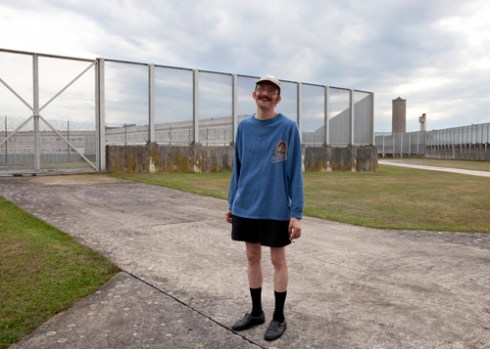
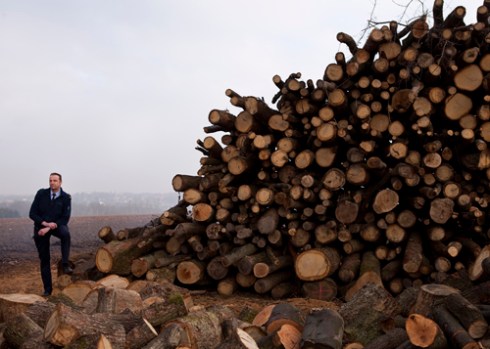
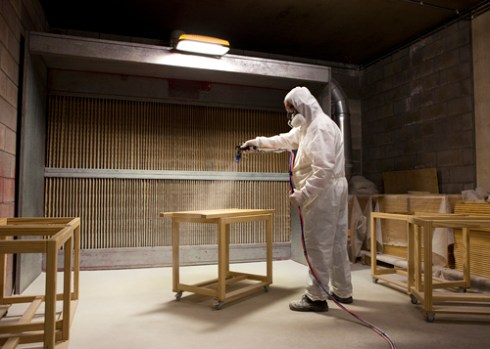
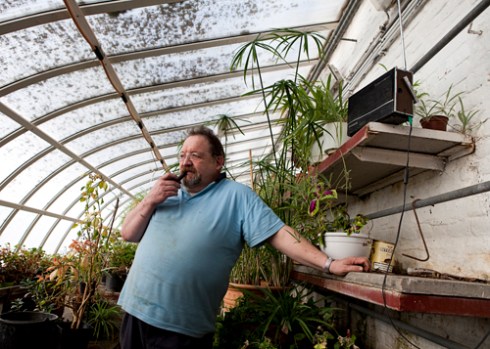
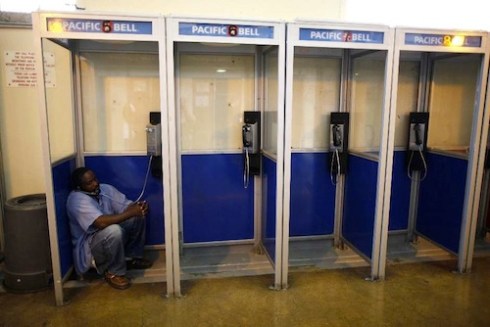
An inmate talks on the phone at San Quentin State Prison, California, June 8, 2012. © REUTERS/Lucy Nicholson

Everybody knows prisoners are routinely ripped off by the phone provider/dept. of corrections contracts across the States. Yet, it’s not something I’ve dealt with in depth here at Prison Photography (except for a brief bout of disgust toward a foolish Gaga music vid.)

Why does the cost of telephone contact matter?

Research has routinely showed that the maintenance of family ties during incarceration is the biggest factor in helping former prisoners break the cycle of recidivism and imprisonment.

“Currently, the high rates charged in most states can force the families of incarcerated people to choose between keeping in touch with a relative behind bars and putting food on the table,” says Peter Wagner, executive director of the Prison Policy Initiative.

The Prison Policy Initiative, recently published The Price To Call Home: State-Sanctioned Monopolization In The Prison Phone Industry, an extensive report on the exorbitant telephone charges levied upon prisoners. The details are shocking. Non-competitive – and arguably corrupt – agreements exist between private phone companies and the state prison systems with whom they contract.

“Prison phone companies are awarded monopolies through bidding processes in which they submit proposals to the state prison systems; in all but eight states, these contracts include promises to pay “commissions” – in effect, kickbacks – to states, in either the form of a percentage of revenue, a fixed upfront payment, or a combination of the two,” writes Drew Kukorwoski, the PPI report author.

The vast differences in phone rates is evidence enough of a piecemeal and unregulated approach. PPI details:

“In many states, someone behind bars must pay about $15 for a fifteen minute phone call. […] Rates vary widely between states — even between states that use the same prison phone company. A fifteen minute long-distance phone call from Global Tel*Link costs $2.36 in Massachusetts, but that same call costs more than $17 in Georgia. This large difference in rates originates in large part from the wide range — anywhere from 15% to 60% — in the size of kickbacks that prison phone companies pay to state governments.”

One day after the release of the PPI report, Costly Phone Calls for Inmates, a New York Times editorial noted that New York state prohibited the practice of kick backs and that the Federal prison system uses a computerised and affordable phone system. Such examples lead me to think that there is no excuse for the flagrant extortion of millions of prisoners and their families.

So, which are the companies behind this ignored corner of the prison industrial complex? What does this monopoly look like? Kukorowski for PPI:

“Over the past few years, three corporations have emerged to dominate the market. 90% of incarcerated persons live in states with prison phone service that is exclusively controlled by Global Tel*Link, Securus Technologies, or CenturyLink. The largest of these corporations, Global Tel*Link, currently has contracts for 27 state correctional departments after its acquisition of four smaller prison phone companies between 2009 and 2011. Global Tel*Link-controlled states contain approximately 57% of the total state population of incarcerated people in the United States. Government regulation was designed to control this kind of corporate domination over a captive market.”

The report was cited in a letter from Congress members Reps. Waxman and Rush to the FCC.

“Affordable phone calls home are a proven way to reduce the high social and economic costs of incarceration and recidivism. Inmates’ families have been waiting for relief for almost a decade.  It’s time for the FCC to take action,” said Rep. Waxman.

Last week, the Prison Policy Initiative mobilized the corporate accountability organization Sum Of Us to organize their members to sign a petition to the FCC.

“Tens of thousands of their members have already signed the petition, and we’ll be delivering the petitions to the FCC soon,” says Wagner

WHAT TO DO?

Take action with Sum Of Us.

Take action with Thousand Kites.

Read more at the Prison Policy Initiative.

The High Cost of Prison Phone Calls: A TakePart Infographic

Source: Take Part

Ronald Day at home getting ready to go to work. © Ron Haviv/VII Photo

– – – – – – – – – – – – – – – – – – – – – – – – – – – – – – – – – – – – – – – – – – – – – –

Think Outside The Cell, a NYC based advocacy group, and VII Photo Agency recently collaborated to make and distribute a media campaign to educate the public about the continued struggles for felons post-release. This is part-two of a five part series, Ending The Stigma Of Incarceration.

Part One: Think Outside The Cell / VII Photo Partnership
Part Three: A Conversation With Ed Kashi
Part Four: A Conversation With Jessica Dimmock
Part Five: A Conversation With Ashley Gilbertson

Ron Haviv, one of four photographers on the project, was kind enough to take a Skype call from me. Ron and Ed Kashi photographed and videoed Ronald Day‘s story.

– – – – – – – – – – – – – – – – – – – – – – – – – – – – – – – – – – – – – – – – – – – – – –

Prison Photography (PP): How did you become one of the four photographers for the VII Photo/Think Outside The Cell partnership.

Ron Haviv (RH): Ed, Jessica, Ashley and I were brought in after the project was agreed and secured. To be honest with you, we hope this project to be a long term and expansive project going beyond New York.

PP: You want to cover the issue all over the country. Why is that necessary?

RH: It’s important that not all the subjects look alike or sound alike. We must emphasize this is not a New York problem; the stigma of incarceration is a national problem. So, it is imperative that we look to … maybe not in all fifty states … but we look to get to a number of states in order to give the audience a real variety of ideas and illustrate different problems that former prisoners are going through. Some of those problems are going to be state specific; that variety is going to be an important aspect for people to understand.

PP: Let’s talk about your subject, Ronald Day. He works in advocacy and service. He has earned a Masters degree since release. He teaches at John Jay College. He has started his PhD program in Criminal Justice at CUNY/John Jay. This guy is a success story. What sort of a relationship did you develop with Ronald?

RH: Before we started photographing, we went to meet him and he was incredibly open about his life – from very basic things to personal details. When we asked him questions he was very forthcoming.

He is an incredibly articulate and smart man as proven by what he has done inside and outside of prison. Ed and I couldn’t have asked for someone better through whom to illustrate some of the issues. To think that someone of his caliber struggles, means that people that don’t have that same skill set must really struggle.

Ronald Day on his way home after work and a lecture to students. © Ron Haviv/VII Photo

PP: What did Ronald want out of the multimedia piece?

RH: Well, his job is in helping others acclimate to society; people who’ve gone through the same things that he has gone through. His whole life is directed toward helping and informing people; people like myself who know very little about the stigma that felons deal with.

Ronald is informing the public and hopefully trying to have some impact on policy-makers and lawmakers. That being said, he is absolutely not the type to sit down and preach to you. He’s more like, ‘Look at what I’m going through, look at all the hoops through which I’ve had jump to get to where I am,’ and showing us by example [what is practicable], not just railing against the system.

It’s interesting. Usually a photographer will learn about their topic, in this case criminal justice and parole, through research and secondary sources, but here, in Ronald, we had the best resource, a primary resource, someone who has lived and is living the issues wrapped up in reentry to society after incarceration.

I think he is for sure remorseful and recognizes the mistakes he made. It’s not as if he claims he is innocent or was framed, but at the same time, he sees that was a very different person who went to prison 18 years ago. He’s a different man now. He has a son who is very important to him and a mother and a sister and her kids and they’re all living in a three story home in the Bronx – a very lovely place. So he has the family components that are all vital to a successful life.

Ronald Day at home celebrating Father’s Day with family and friends. © Ron Haviv/VII Photo

PP: How often did you photograph Ronald?

RH: We did a week with him over the course of six weeks.

To be perfectly honest, we didn’t spend huge amounts of time with Ronald. We’d see him at work and in the home and for different events but there was no huge emotional crisis that Ronald was going through that Ed or I had to witness or deal with. We were there for fathers day which was lovely – lots of friends and family at his house.

PP: You were paired with Ed Kashi – you making stills and Ed making video. Similarly, Jessica [Dimmock] and Ashley [Gilbertson] followed Mercedes Smith, the female subject. Had you and Ed worked closely on anything before?

RH: No, but obviously, we are business partners in VII. This was our first collaboration, the result of which will be a mixed media piece.

PP: You said before that the issue of stigma among the formerly incarcerated hadn’t been on your radar.

RH: Correct.

PP: What have you learned?

RH: Society *says* that if you commit a crime, you pay for it by time in prison and then, once you are released you are supposed to be able to continue your life.

I’m amazed that prison continues to haunt the people coming out to the point of often driving them back because they can’t get a job or they can’t get housing or it’s very difficult for them to go to school. That was very surprising to me.

With voting [disenfranchisement], you hear a lot about whether felons can vote or not, but I didn’t realize that if you’re filling out an application to rent an apartment or trying to get just a basic job, at McDonald’s for example, that there are boxes felons must check. As soon as they do [check that box], they’re out.

There’s no home, there’s no basic job, and so when you talk about recidivism in America, well, it is very obvious why a large part of it is happening; it is because there is no way to survive on the outside. For me, that was very disturbing and something that on many levels this country needs to deal with.

PP: How did we get to this state of affairs? Is America an unforgiving society? Is it bad policy put in place by misinformed politicians and voters? Let’s be frank, many of these laws have come about recently. How is it we treat the 700,000 released prisoners per year like this?

RH: It’s a combination of a number of things. In New York, the drug laws that were passed were, are, harsh and absurd in relation to the actual crime.

Plus, the break down of the family. Parents going to prison breaks up families. Children who grow up without a father have a much higher chance of going to prison. That’s not a problem for which the system must be blamed. That comes down to individual responsibility and must be taken a lot more seriously. I think it is incredibly important but not something we discuss.

Obviously, there are laws that are causing problems but a huge reality of it is people not being responsible for their children, basically. That is not the main cause but it is a large cause. And that applies to the white community, the Black community, the Hispanic community; it’s not a racial thing, but it is definitely a gender thing. Men are just not stepping up. That’s my personal position.

PP: Do you suspect there is a crisis among men in America? Is there an issue with male identity?

RH: Absolutely. There’s a lot of factors … but, men carry a huge responsibility. It’s probably controversial [to say] but I think there’s a real problem with the use of, and ideas surrounding, birth control.

I don’t understand why people are having so many children or why fathers are so proud to say, “I’ve got three kids with that girl and two kids with that girl.” It’s ridiculous and I’m not sure what the reason for it is but it really comes down to personal responsibility. If you’re going to have children then you need to be able to take responsibility for them, and if not then there are ways to not have children.

PP: Did you have any ideas how you would shoot this story? This is an issue about emotions somewhat but also about intransigent rules. How do you photograph someone being denied food-stamps or housing? How do you photograph bureaucracy?

RH: That’s exactly why Ed’s video element of this is incredibly important. There’s certainly ways to photograph the frustrations that Ronald and other people go through but by having multiple components where you’re going to see him in action, share his voice and hear him not just reading a caption but having a conversation. The combination of audio, video and stills makes it much more powerful and dynamic – compared to a straight up photo essay with captions.

PP: I think it interesting that VII has focused specifically on reentry. My position is to look at prisons and those invisible sites and think exactly how and what power is being played out, whereas reentry goes on in “free” society and so the assumption might be it is a subject more accessible for the photographer.

PP: Is this one of the major, ongoing initiatives at VII?

RH: We have a number of different partnerships, from projects with the United Nations, to Médecins Sans Frontières, to traditional media partners – TIME, the New York Times and Vanity Fair for example, but this is definitely something we think is extremely important and we’re very excited to hopefully take it further. Right now, it is just the beginning.

PP: It sounds like you’d be interested in doing a second stint on the project?

RH: Yes, and I’m also interested in following Ronald some more. I hope to see how he does at university. We’re not going to let him go! We’re going to continue to follow his story.

– – – – – – – – – – – – – – – – – – – – – – – – – – – – – – – – – – – – – – – – – – – – – –

VII Photo: “The United States imprisons more people than any other nation in the world. For the first time US history, more than one in 100 American adults are in prison. China is second, with 1.5 million people behind bars. An estimated 700,000 people are released from prison in the United States every year. Where do they all go?”

Laure Geerts and Sébastien van Malleghem, two members of the photo collective Caravane, have been photographing in Belgium’s prisons for a little under two years. They went to seven prisons including Marneffe, an open prison; Nivelles; Paifve, a prison for the mentally ill; and the now-demolished Verviers Prison.

The series is called Destination Carcerale.

This is the second of a two-parter; yesterday, I published Belgian Prison in Grayscale a Q&A with Sébastien van Malleghem. I know very little about Belgian prisons so I asked them both some questions.

Prison Photography: Why look at prisons?

Laure Geerts: I have always been interested in people, particularly people who live on the margins of society. I want to know more about their reality.

In Belgium, we hear news every week about prisons: overcrowding, unsanitary conditions, strikes, escapes and “famous” prisoners that no one wants to see released. It’s quite a hot topic but you don’t see much documentary on that. The known images are always the same press photo with doors, big keys, guardians and prisoners with the face hidden. I am interested about the psychological aspects of a men being kept between the walls.

So, it is not the problems related to the prison, but the human side, the life stories that interest me. The issue of the prison is complex. Each individual reacts very differently to the deprivation of liberty.

PP: Despite the vibrant colours, your photographs are quite still in a way. Does the prison move slow?

LG: Yes, the prison moves slow. Everything is regulated, organized, timed … everything turns around the schedule, daily or weekly tasks to perform. This leaves little room for spontaneity, freedom of movement. It is not possible to take meals or to wash when desired. Officers dictate the rhythm with calls, opening and closing doors, distributing meals and various movements to workshops, playground or visits. If the prisoners do not get a job or a training, they stay in cell watching television, sleeping or playing with video games. Many know drugs, depression, violence and isolation. Taking drugs and medicines allows them to escape their reality and keep calm.

PP: The look of many of your images suggest you had conversations about composition and positioning of your subjects, which could almost be considered a collaboration. Do you think of your work in those terms?

LG: The images, built my way, express the deprivation of movement & freedom, but even more the loneliness of the people.
 I must say, that when we arrived on a cell wing or in a working area, we explained our project and those who agreed to be photographed sign an authorization. That meant we spend a lot of time talking before taking pictures. I also recorded sounds of the prison and what the prisoners and staff are eager to tell me, to share. The images come before, during or after the discussion.

They do not pose especially. In any case, I do not direct them. I try to capture what they give to me. So they talk and I listen and sometimes everything is just in front my lens. An important thing for me is a trust. When trust is mutual, I feel comfortable and I feel free to take any picture. It’s funny because first I though it would be more difficult; I feel less comfortable in other contexts and working with other subjects in other communities.

PP: Why the collaboration with Sébastien?

LG: We’re part of the same collective of photographers, named Caravane. We wanted to work together on a topic. His interest in prisons is, of course, a logical continuation of his work on the police. He wanted to push the analysis one step further and investigate what happens to people in prison following an arrest.

I am interested in closed universes and masculine spaces. In prison, it is the human and psychological aspects of the prisoners that I wanted to see. How does a prisoner feel during his incarceration? What links remain with the outside world? How is the social network in that closed universe ? I do not remember if it was Sébastien or I that talked about it first, but it is true that rather than taking separate steps, we could join forces. The exchange of ideas and pictures enriches the subject.

Working in the same field, we ask for good organization and good understanding of each other. We meet the same people, we visit the same places, but at the end our images are very different. Sébastien works in black and white, when I need color in photography. Sometimes I can spend time with a person while Sébastien seeks more action with a small group else where. We do not shoot at the same time at all. Given our different personalities, some inmates will go more easily to one or the other.
 It is also rich to share our impressions directly or in the car the way home and then see the pictures chosen by each of us.

PP: What did the prisoners expect of your photography and presence?

LG: Those who wanted to talk do not hesitate to criticize the system, their living conditions, daily problems and the lack of care. They took advantage of our presence to be recognized and to have a voice. Some are rather pessimistic and do not believe that our work is useful.

PP: What did the staff expect of your photography and presence?

LG: Inside the jails, we meet as many inmates, officers and social workers. Officers guided us and they sometimes talked about their work. Often the staff do not want to tell us about their experience or appear on the photos. They are often more cautious than the prisoners themselves. Those who do not accept to talk seem to be afraid of criticism and think they are victims of the bad image prison-guards may have to the public.

For them, they are seen as gatekeepers who spend the day playing cards, drinking coffee and being bored. Their everyday life is not very fun; they are somehow locked up and must also undergo regular staff shortages and insecurity. Their role is facing many limitations. They end up closing their eyes to illegal practices lacking real methods of control. Some are even tempted by little traffics to win a bit more money at the end of the month. These ones avoid us, of course, but we hear and see many things.

PP: What are your attitudes towards prisons?

LG: As in our discussions with prisoners, staff and having visited seven prisons very different in size and operation, my impressions and feelings are quite mixed. Generally, the prisons did not help to make men and women better or ready for reintegration. There are too few efforts to work in depth with everyone, to help them realize the gravity of the act for which they were punished, and especially how not to reoffend.

Society believes that to enclose a human being and deprive him of freedom for a while will be a good lesson and he will get back on track. It is complex because each person has a personal story, each case is different and it is difficult to propose a single method. Given the rate of recidivism and what I’ve seen, the prison today is not the solution.
 I have met very few inmates confessing to realize they had taken a wrong path, and that every day they had a thought for their victims.

Some are determined to use this time to learn a maximum of things through trainings, education or reading books. Others also get back in touch with religion. It takes a more prominent place than outside. They take some time to focus on God, to discover or rediscover their faith and prayers. And when the family remains, this is an essential support for the inmate.
 Otherwise, for the majority of the prisoners it is for them only waiting, complaining and dealing to improve the daily life (drugs, food, gaming & phones).

There is not enough psychological attention, motivation and education to young people and many of them do not see a bright future. Rehabilitation is difficult and the label “prison” rather indelible.

PP: Have your attitudes changed during your time working on the project?

LG: Maybe yes. It’s interesting to hear stories of many different persons and to see so many different jails. I have talked a bit with families. It’s another piece of the subject, but quite important also.

PP: Anything else you’d like to add?

LG: I would like to add a few extracts from sound recordings (translated from French):


”Look at me right in the heart. A train line in the dark. I am neither inside nor outside. It is as if I walked a life without you. I’m jealous that you are there in the country. I’m here all alone with four walls. All this time should make you forget you love me. I think about you all the time. I cry for love and boredom your face there in my head you’re very pretty nicely this is adorable. I rage and I write to you darling who are there with your great happiness when I get out of my hell but you know I love you so I would not want to seem sad but I have no sorrows not have you next to me.”

— Poem by a patient of the psychiatric prison.

“What is the most beautiful thing, the most comfortable? It is having a place in the heart of your mom. No? You’ll always get the support of your mom. Always.”

— Patient of the psychiatric prison.


”I would say there are cheaters and non cheaters, I am one of the non cheaters. In my head, I’m just a kid.”

— Patient of the psychiatric prison.

“It’s been 6 months since I arrived here. I have 69 months in total. When I have served 2/3 of my sentence, I will have 24 months until release. Otherwise, here, it goes rather well. I’m training in mathematics, computer science, French and cooking. We have two hours of yard per day. We can go to church here. I am a Catholic. 
I am 25 years old, this is my 4th time in prison. Here you can go to the gym, there is also table tennis, football, otherwise watch television. Most of the time, we remain locked in the cell. I have not told my parents. As this is the fourth time I do not want my parents to come here again. The first time they came often. I am at war with my father-in-law so I did not phone when I returned back here. The only people who are aware, it is two or three friends of mine and as they have a criminal record, they have no right to come here to visit me in prison. I’m all alone, but I came here with a friend.

I keep the spirit, even having no visits. I do not need to see my family to feel good. As I know they think of me, I am okay. It is not too hard either. The guards are friendly. I get on well with them, we laugh often. Keep up, we must say to ourselves everything okay, and we do some sport. Two years will pass quickly, I think.

Otherwise, I’m doing two or three small trainings: cooking, accounting so that when I get out I’ll try to find a job. Otherwise, I’m doing the paperwork to get an apartment . I wrote several letters, called a few places and now I’m waiting for answers.

We try to get released as soon as possible with the right conditions. I do not want to repeat the same mistakes that I made in other prisons. In other prisons, I was doing nothing I was just waiting for my pain, I got free and then I started again the bad things. Now, I have a longer sentence to do, I’ll take the time to think about what I want out for that I would not come back here again. I’m 25, I go out of here for my 27 years. I need to stop my bullshit. Otherwise, it will not be okay for my future. I want to have a wife, children and all. So I try to reinsert correctly. “

— Young prisoner in Nivelles.

“There are so many things that are officially banned in prison. There are things that are prohibited with reason, and things without reason. Forbidden things, but they are more than tolerated and demonstrate the terrible hypocrisy of the system. This is what disgusts me in prison. Here in this department, it is not very much prison. We have the doors open. We have a good comfort in our cell. I’ve lived outside with less comfort than this. Here we have everything. I have two hot plates, fridge & TV. But that gives us what? We have nothing. We are not punished, it’s true. You can live 50 years like that, we have everything we need.

That’s the hypocrisy of the system, we are put aside for a number of years. We are totally and ridiculously useless. We serve no purpose to the system, we cost money to the system. The system is not protected as when we go out, we are worse than when we got in. I’ve been in prison since 1995. I’ve seen a lot happen. I escaped. I’ve never seen anyone or very few people who amend and become nice sheep because they have been in prison. I think the system is hypocritical. Drugs are prohibited, but it is more than tolerated. Many guards – though they’d never admit it – prefer to see people smoking a joint to avoid problems. The drugs enter. I know a lot of people that do not touch any drugs outside, not even a joint or alcohol. But here they are down with hard drugs. They are not drug addicts that fall in jail but the prison can makes them addicts. Drugs are is much easier to find here than outside. “

— Prisoner in Verviers.

“What I have noticed in jail is that different social relationships we can have in jail, it creates a psychology. Most people are always stuck together, and it becomes a group. And this group has the same psychology. They all have the same social links and that’s what creates people who still hold the same discourse: officers are bad, the state is the bastard and we are the victims. And it is those people who are getting out, come back, leave, and so on.


The officers are now trained to be more social with prisoners. Before they were executioners. You have those who do not care about the prisoners, you have those who are serious and those without emotion, that do the job to get their money. “

— Young prisoner in Ittre.

BIOGRAPHY

Laure Geerts (b. 1978, Belgium) is a founding member of Belgian photo collective, Caravane. Laure studied commercial sciences in Brussels, before moving into photography in 2006 to study at the Contrast photography studio. She went from spinning images to making and challenging them and found it easier to approach strangers and subjects she’d not before encountered. Laure has exhibited at group shows in Cork, Paris, Brussels, Lille, Liege, and Bamako in Mali.

Follow Laure on Twitter and Caravane Collectif on Facebook.

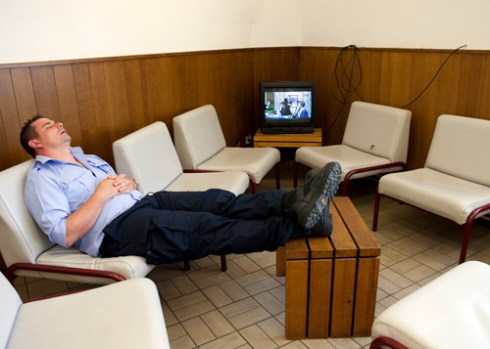
An agent is looking on his colleague during the visit of the food storage in Forest, Brussels, Belgium on Oct. 10, 2011. © Sébastien van Malleghem

Sébastien van Malleghem and Laure Geerts, two members of the photo collective Caravane, have been photographing in Belgium’s prisons for a little under two years. They went to seven prisons including Marneffe, an open prison; Nivelles; Paifve, a prison for the mentally ill; and the now-demolished Verviers Prison. The series is called Destination Carcerale.

This is the first of a two-parter – see Belgian Prison in Polychrome, Laure’s photographs and Q&A also Prison Photography.

I know very little about Belgian prisons so I asked them both some questions.

Q & A

Prison Photography (PP): Your B&W documentary approach to photography is different to Laure’s way of shooting.

Sébastien van Malleghem (SvM): Yes. I chose this approach to photography several years ago. I’m concerned by the world that surrounds us. I like to go deeper into stories and take time to do them.

PP: Why did you and Laure decide to collaborate on this project on Belgian prisons?

SvM: We’re part of a collective. Initially, we talked a lot about doing something together in photography. Laure as always been interested by strong universe (sic)*, and I wanted to continue to work on stories about criminal justice after my long documentary work, Police. (Interview about Police in French.)

It’s a challenge to do reportage together but we wanted to share a vision, and ask ourselves questions about the ways we can create photo documentary. Many documentaries are done alone. After months, it’s interesting to see the difference between our works, especially as we were at the same place all the time – Laure’s colors pictures  are different to mine. So, we are questioning objectivity in photojournalism, also.

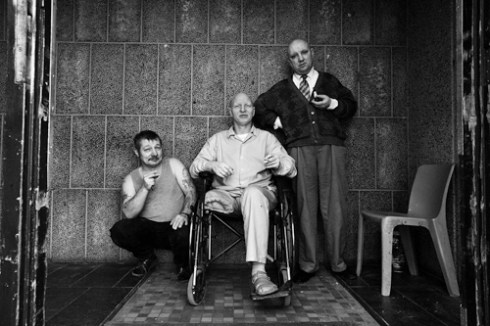
Three patients smoking at the entrance of their  ‘block’ in Paifve, Liège on Feb. 16, 2011. © Sébastien van Malleghem.

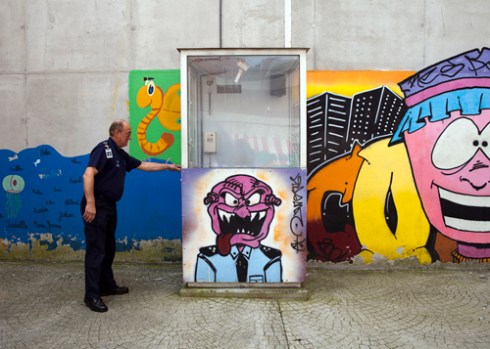
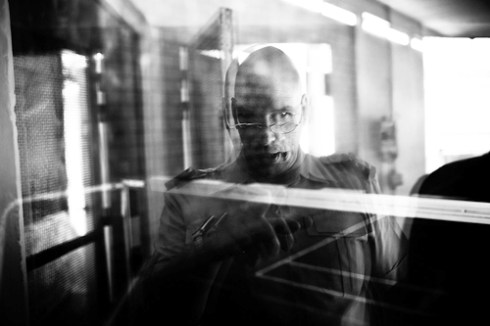
A guard is speaking behind a safety glass in Verviers, Belgium on May 6, 2011. © Sébastien van Malleghem

PP: What did the staff expect of your photography and your presence?

SvM: At first, they didn’t seem very interested in the fact we’d received the authorization of the Head Director of the Belgian Prisons, so every director at every single prison would begrudgingly say, “Okay, if you got the authorization, it’s fine.” Then, after few weeks some prison administrations became very interested in our pictures. Some directors began showing us everything inside inside their prisons as if to say, “Look how can we work in these conditions.” So we got some great access and different points of view.

PP: What did the prisoners expect of your photography and your presence?

SvM: Honestly, I don’t think that they expected anything from us. Some of them didn’t want to be seen. Some of them are playing the game of honesty [for the camera]. They expected that the prison conditions may improve. They were interested by our work because we were/are speaking about their present universe. We are showing the reality inside the prison which is not so good. In fact worse than ever in Belgium.

PP: This is a long-term and committed project. What do you hope to achieve with its completion?

SvM: We’re giving a real and true alarm signal to the authorities and to the government; they are looking on our work and they will certainly watch it in the press. 
That’s will create another debate.

And maybe, with a deep and concrete story, and by showing this work to the public and show why there are so many problems in our prisons, maybe they will get access to a more telling information than that in the daily news-feed?

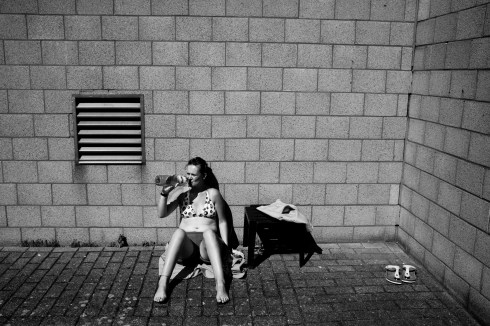
A woman is sunbathing inside the prison for women of Berkendaele on July 25, 2012. © Sébastien van Malleghem.

Women are dancing in their cells inside the prison for women in Berkendaele on July 25, 2012  © Sébastien van Malleghem.

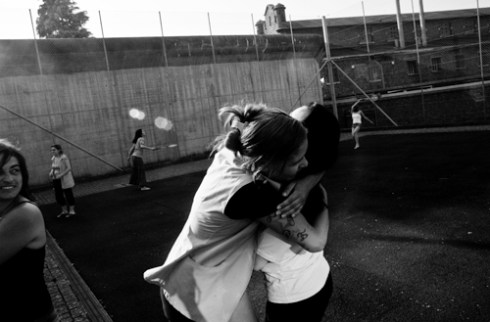
Cuddle in the courtyard of the prison for women in Berkendaele on July 25, 2012. © Sébastien van Malleghem.

View from the window of the prison in Verviers, Belgium on May 6, 2011. Verviers is one of the oldest prisons in Belgium and is currently being destroyed due to the collapsing of the walls © Sébastien van Malleghem

PP: You depict a prison being demolished. Are there more or less prisons being built/occupied in Belgium currently?

SvM: The government is destroying old prisons like Verviers and building new prisons in the north and the south of the country. The prison was not maintained during years because of budget problems. There is certainly not enough space. Inside the prisons, every inmate is a victim of our society, which is another sign of the actual crisis in our country.

PP: Anything else you’d like to add?

SvM: We should think about the ways we punish criminals in the 21st century and to help victims of crime more too. Currently, we are running with an old system of exile which doesn’t benefit anyone. The authorities remove the prisoners away from the society but put them in the middle of nothing which, seems to me, is another way to torture the spirit. They lock the gates but they are not trying to understand crime, or allieve it.

PP: Thank you Sébastien

SvM: Thanks!

– – – – – – – – – – – – – – – – – – – – – – – – – – – – – – – – – – – – – – – – – – – –

BOOK

van Malleghem’s forthcoming book Police by Yellow Now Editions (Belgium) is released in Belgium in November and will be available internationally from December onwards.

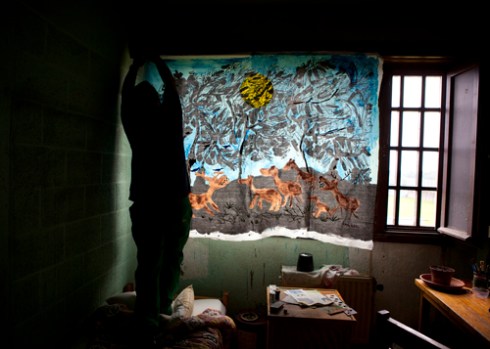
A patient inside his cell, in Paifve, Liège, Belgium on Feb.16, 2011. © Sébastien van Malleghem

Four prisoners are seen inside a cell debating reentry into society after prison. Marneffe, Belgium on Feb. 27, 2011. © Sébastien van Malleghem.

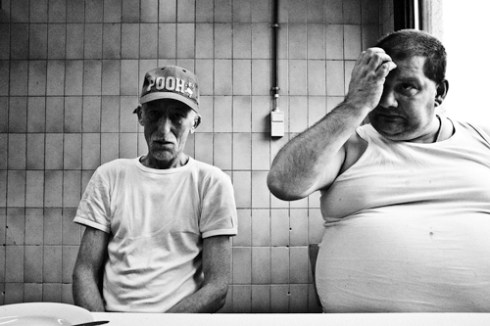
Two patients are eating their meal in the kitchen of the prison of Paifve, Liège, Belgium on March 3, 2011. © Sébastien van Malleghem

Writings made with a lighter on the ceiling are seen in a cell of Forest prison, Brussels, Belgium on Oct. 10, 2011 © Sébastien van Malleghem.

A patient pushed down the courtyard by his roommates in Paifve, Liège, Belgium on Jul. 12, 2011. © Sébastien van Malleghem.

The prisoners of Marneffe have the opportunity to play music in a band. The repetitions takes place inside a chapel inside the prison of Marneffe, Belgium on Dec. 8, 2011. © Sébastien van Malleghem

A prisoner during his daily work: preparing pieces of metal€™ in Marneffe, Belgium on Feb. 27 2012 © Sébastien van Malleghem.

Toilet for the prisoners inside the prison of Forest, Brussels, Belgium on Oct.7, 2011. © Sébastien van Malleghem.

– – – – – – – – – – – – – – – – – – – – – – – – – – – – – – – – – – – – – – – – – – – –

BIOGRAPHY

Sébastien van Malleghem is a freelance photographer (b. 1986, Belgium) who studied photography at the Ecole Superieure Des Arts De L’Image Le 75 in Brussels from 2006 to 2009. He is working on a major project about Belgian police and in line with his interest in criminal justice began documenting the Belgian prisons in January 2011.

Sébastien is a member of CARAVANE photographic collective and is personal assistant to Tomas Van Houtryve/VII. In October 2010, he was selected for the Eddie Adams Workshop, Barnstorm XXIII, and in August 2012, was an artist in residence at Halsnoy Kloster, Norway. Sébastien was awarded
the Jeune Artiste Plasticien for his work Police.

– – – – – – – – – – – – – – – – – – – – – – – – – – – – – – – – – – – – – – – – – – – –

* In editing this interview I was not sure what a fair translation of, “Laure as always been interested by strong universe.” I thought it might mean, “Laure has always been driven by strong determination”? or Sebastian was saying, “Laure has always been interested in societies’ shows of strength”? or possibly, “Laure has always been interested in oppressive places”? or maybe “Laure has always been interested in environment dominated by strong characters”? Then I realised the mistranslation is quite beautiful in itself and worth reflection. We should all be “interested in strong universe”!

Photobloggers have come out in force to deliver their tributes to photographers doing significant work. These sprawling congrats are congealing into a tasty list of practitioners who exhibit cunning, skill, bravado and novelty in their approach and product.

Colin Pantall began all these shenanigans fresh from a summer of non-blogging and sipping fines teas. He says these photographers are leading us toward “a brave new world.”

Joerg has listed the names put forward so far:

Blake Andrews: Philip Perkis

Stan Banos: Aaron Huey, Taryn Simon, Eva Leitolf, Matt Black, Brenda Ann Keneally, James Baalog, Edward Burtynsky, Bruce Haley, Daniel Shea

Harvey Benge: Paul Graham, Jason Evans, Adam Broomberg & Oliver Chanarin, Jens Sundheim & Bernhard Reuss, Collier Schorr, Antoine d’Agata, Martha Rosler

Peter Evans: Obara Kazuma

Bryan Formhals: Asger Carlsen, Jessica Eaton, Kate Steciw, Alec Soth, Paul Kwiatkowski, Vivian Maier

Julie Grahame: Michael Massaia

Tom Griggs: Bryan Graf, Amy Elkins, Paul Graham, Abelardo Morell, Jessica Eaton

Stella Kramer: Sophia Wallace

Mark Page: Mishka Henner, Philippe Spigolon, Craig Atkinson, Stuart Griffiths, TomRS

Colin Pantall: Mishka Henner, Lauren Simonutti, Stephen Gill, Tony Fouhse, Paul Graham, Claus Stolz, Olivier Jobard and others

Christopher Paquette: Zoe Strauss, Alec Soth

Andrew Phelps: Peter Miller

Heidi Romano: Taryn Simon, Myoung Ho Lee

Joerg Colberg: Thomas Ruff, Katy Grannan, Erik Kessels, Geert van Kesteren, Christian Patterson

Some superb photographer and photomanipulators. I wholeheartedly agree with choices Broomberg & Chanarin and Geert van Kesteren who have cleverly worked with archives and cell phone wartime images respectively.

I’ve got six on my list.

1.

I’ll be another to name Mishka Henner. I think his time has come. Bound to wind a few folk up, he at least steps forward to defend his use of satellite, GSV and Google Earth images. He’s forcing everyone past the unnecessary reverence we have for images as single art objects and imaginatively pointing out the visual cultures all around us.

Henner does not lazily appropriate and his next series (which I’ve seen snippets of on his iPhone) is a robust political critique of humans’ abuse of the environment. And then there is Photographers, a 10 minute montage looking at photographers on the silver screen. Surprising, fun, entertaining.

2.

It might seem strange to add a well established photographer like Jim Goldberg to this list but I’m interested in his reissue of Rich and Poor with TBW Books in Oakland, CA.

I also saw Rich and Poor at Pier24 recently and was left angered and energised; the best possible reaction to art.

Jim talked about his reasons for revisiting old work including the legendary Raised By Wolves with TIME’s Lightbox this week:

“The children in Raised by Wolves were living hard lives—lives that were leading to nowhere. So now, when I reheard a recording that Brandon the intern had found in some box, and I heard the voice of, lets say, Tweeky Dave, well that added something that would extend to the viewers experience of the project.”

It’s pretty ballsy to hand over the reigns to the intern! But great product.

3.

Alyse Emdur‘s name on the list reflects my interest in prisons, but I was impressed by her Photograph A Recruiter before she got neck deep in the visual culture of incarceration. Emdur’s correspondence with hundreds of prisoners and their donated prints reveal a specific, a widespread, but a little seen genre of vernacular American photography.

Her book is just around the corner! My interview with Alyse.

4.

Alixandra Fazzina is one of the least self-promoting documentary photographers I know. Her work about Somali refugees A Million Shillings – Escape From Somalia is one of the best pieces of social reportage from Africa in this century and the last. And the book is beautiful.

5.

The Instagramer. I’m being contrary with the inclusion of Peter DiCampo on this list, but he is young, using Instagram, and less well known than other famous photographers such as Kashi, Stanmeyer and Pinkhassov making images with their phones.

No need to argue anymore; cell phones allow us to share images instantly and there is an inherent worth to that. Peter DiCampo represents that seismic shift we’ve yet to get to grips with. See his Everyday Africa project.

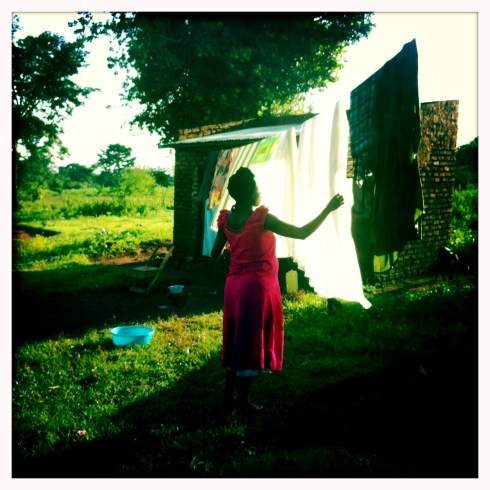
A woman hangs laundry in Takira, Uganda on May 29, 2012. © Peter DiCampo.

6.

Another recent discovery, Tomoko Sawada is a self portrait specialist. I spent ten minutes in front of Recruit/Grey knowing that they were all images of her but still unwilling to accept it. She’s a grand manipulator in the quietest way; a refreshing tonic to Cindy Sherman.

Ronald Day at his home in the Bronx, during a Father’s Day barbeque, held on June 17, 2012 in New York City. © Ed Kashi/VII Photo.

Inside and out of prison, people may think that to keep ones head down, survive America’s overly punitive prisons, and wait for release is enough. Unfortunately, it is not; for those looking to reenter society new struggles emerge. Each year 700,000 men, women and children are released from prisons and jails to face modern day laws and attitudes that marginalize them and limit their abilities to build new lives.

New York based non-profit Think Outside The Cell, a young but impressively effective organization, is bringing light to the struggles of former prisoners.

“The issue of stigma is not discussed enough but it is the issue of our time. The effects are so widely felt,” says Sheila Rule, Think Outside The Cell co-founder. Convicted felons are routinely denied employment, housing, access to college, the right to vote, and public benefits.

“The oppressive legal barriers and sanctions that undergird the stigma are the building blocks of modern-day inequality, keeping millions of deserving Americans on the fringes of mainstream society,” writes Think Outside The Cell.

Think Outside the Cell has partnered with the renowned VII Photo Agency to produce a multimedia campaign that will raise public awareness and educate media and policy wonks with persuasive storytelling.

“I knew about VII and their credibility,” says Rule. “It was a natural fit. We are both driven by storytelling. Stories change hearts and minds.”

Below is the trailer of the VII campaign video. The full 10 minute video can be seen here.

__________________________________________________________

In September 2011, Think Outside The Cell hosted A New Way, A New Day, a national symposium about mass incarceration. Speakers included Dr. Khalil Muhammad, director of Schomburg Center; Jason Davis, former Bloods gang leader and community activist; Jumaane Williams, New York City Council-member; Hon. Cory Booker, Mayor of Newark, NJ; Michelle Alexander, author of The New Jim Crow; Jeremy Travis, President, John Jay College of Criminal Justice; and Yolanda Johnson-Peterkin, director of operations, reentry services, Women’s Prison Association, among others. (View videos of the panels and presentations here.)

In the audience was Kimberly Soenen, a recent hire and Director of Business Strategies at VII Photo. Soenen knew that the issues of families, communities, criminal justice and inequality were of paramount interest to VII photographers. Rule, a retired New York Times journalist who knows the power of well-told and widely distributed stories, was open to Soenen’s approach to partner.

Soenen and VII focused on the immediate area and assigned New York and New Jersey based photographers to tell the stories of Ronald Day and Mercedes Smith. (With further funding, VII hopes to extend the campaign to other states.)

Mercedes Smith was released from prison two years ago. She begins college in January 2013 and although she struggles to find housing due to the rules of her parole she is making progress toward a stable life.

Ronald Day, 43, was incarcerated for 12 years, serving time in five NY institutions. Since his release, he has studied steadily, is employed connecting other former prisoners with access to services, is enrolled in the Criminal Justice PhD program at CUNY/John Jay College, and teaches criminal justice to graduate students at John Jay College.

Both Day and Smith have excellent relationships with their families.

Ronald Day’s story is not the typical tale, but that was precisely the point. VII and Think Outside The Cell wanted an optimistic view of how people can succeed in spite of the system.

“We’d always thought we’d follow someone as they were released and see them through the first weeks and months of difficult readjustment in the free world,” says Rule. But after some thought, Joseph Robinson, co-founder of Think Outside The Cell, Rule’s husband of 8 years, author, and current prisoner in Sullivan Correctional Facility, NY, suggested featuring someone who was, for all intents and purposes, succeeding, “Someone who everyone would think is doing okay, but who we could still show was facing Stigma,” posited Robinson.

While both imprisoned, Day and Robinson met at a National Trust for the Development of African American Men event. And, to this day, Rule often calls upon Day’s “dependable” organization skills to help plan Think Outside The Cell events. He was an obvious “messenger”.

However, for Day, the scrutiny of photojournalist cameras not surveillance cameras was a new experience.

“I’m not used to being followed by cameras continually. I guess that what reality TV is like. Children in the neighborhood called Ed and Ron ‘the Paparazzi.’ I thought that was hilarious!” says Ronald. “It’s good to know that my initial discomfort was a means to a higher purpose.”

Day’s motivation and higher purpose was to advocate for others.

“I want people to have a greater opportunity. You need to convince others that someone involved in a system has potential provided they’re given a chance. We need to take a second look at the individual, at the system, and the policies in ways which is fair and in ways which will change the laws,” explains Day. “I went online and looked at VII’s model for producing media. I realized it was a powerful way of producing journalism.”

And the issue is pressing.

Over the last 20 years, the number of major employers who screen for criminal records has grown to 90%. Laws that prohibit voting by people who have felony convictions deny an estimated 5.85 million Americans a visit to the ballot box. For people convicted of a drug felony, Congress has passed federal laws that place a lifetime ban on food stamps and cash assistance through Temporary Assistance for Needy Families (TANF). While states can opt out of or modify the ban, most states enforce it in full or in part, says the Think Outside The Cell website.

Discrimination in the workplace is no better described as the experience of a young man who lived in D.C. and worked at a temp agency. “He was so diligent he was bestowed the Temp of the Year Award and the firm wanted to hire him full time, but when they found out he was formerly incarcerated, they fired him,” says Rule.

Furthermore, this story reflects how the stigma and laws disproportionately effect people of colour.

“Trying to figure out ‘Why’ is common to the African American experience. Was it race? Often it’s not always clear, but in some instances the reasons reveal themselves,” says Rule.

The daily limitations on former prisoners leads directly to cycles of incarceration, Robinson believes.

“It’s a cycle of stigma, collateral consequences, exclusion, and recidivism,” says Robinson. “The collateral consequences are enormous and they are not theoretical; millions are effected and it results in social, political and emotional exclusion.”

“People on parole, probation and even people 10 or 15 years out encounter difficulties achieving the basic things needed to live life – things central to being American, such as working and supporting oneself,” he says.

“High hopes and dreams can often lead to disappointment,” says Robinson. “You may have a guy who has developed a business plan, but when he goes to the bank they won’t give him a loan. There are hundreds of business licenses felons are barred from. Prisoners acquire skills in electrics, masonry, metalwork, but they can’t get construction licenses so they’re relegated to working off the books. [They are not permitted] licenses in accountancy or real estate even if their crime had nothing to do with money.”

Imprisoned for 21 years and four years from eligible parole, Robinson says he has lots of time on his hands to “develop creative ideas around social entrepreneurship.” Rule puts them into practice on the outside.

“I wouldn’t be where I am, if it weren’t for Joe,” says Rule. Although physical separated, Robinson says he and Rule are “joined at the hip” in their values.

“Social entrepreneurship is not a profit driven enterprise,” says Robinson. “I’m not saying making money is a bad thing, but the goal of social entrepreneurship is to achieve maximum impact while caring for ecology, society, people. If we focus only on profit, we can do more harm than good. NGOs, businesses, councils and governments can collaborate in social entrepreneurship.”

Specifically, Think Outside the Cell has launched a End The Stigma/Break The Cycle campaign to involve incarcerated and formerly incarcerated people; probation and parole officials; legislators and government officials; civil and human rights advocates; business leaders; labor union members; private and public employers; nonprofit administrators; students; and teachers.

Robinson and Rule are also keen to engage print and screen advertisers, which shows a canny regard for how social attitudes are shaped.

“While we are building a coalition of those who effect what we decide – legislators, officials, voters – we also want to involve people who decide what we think – those in media and advertising,” says Rule.

Meanwhile, the onus is on imprisoned individuals themselves. Day often quotes to a 19th century saying he discovered in Scott Christianson’s book With Liberty for Some: 500 Years of Imprisonment in America.

‘Very few individuals are ever rehabilitated in prison, and none are truly rehabilitated by prison. But some may rehabilitate themselves in spite of prison.”

The key to Day’s shift in fortunes was education and it is a subject he speaks passionately about.

“One intervention in the cycle of crime is access to education,” he says.

But access was curtailed in 1994 when Federal law prohibited prisoners from access to Pell Grants. State laws replicated the Federal laws. And there are other laws to reverse, too. Mandatory minimum sentencing, particularly for drug crimes, was hugely damaging. Day describes the sentences resulting from new 3-strikes laws in the 1990s as “cruel” and “disproportionate” punishment.

“The war on drugs failed,” says Day. “As Michelle Alexander points out, if you put someone into a drugs program instead of imprisoning them, you get better results. You can’t incarcerate your way out of the problem. Even conservatives recognize that. This is an ideal time; this is the most pressing of times.”

His role as a VII photographers’ subject is not without its complications for Day, but the ensuing wider conversation is worth it. His students and fellow PhD classmates do not know of his former incarceration.

“Once the VII Photo begins its series, there’s a chance they’ll find out and then we’ll have that conversation,” he says. “Often people say, ‘I’d never had guessed’ and then pepper me with questions. I often find I become a resource and that really effects the conversation.”

Bring on the conversation. With wide-eyes and courage.

“Society likes to imagine these problems don’t exist. Out of sight, out of mind. We have to deal with this. Yes, these are people who have breached the social contract, but we need to think about how we treat people after they’ve served time in prison and their debt to society,” concludes Robinson.

Rule and Robinson both acknowledge their work is in its infancy but have faith in, and knowledge of, how to tell compelling stories.

“It’s been a long and enriching experience. I have no illusions, but when most people hear our stories, they say, ‘I didn’t know’. I hear it over and over again, and then I hear, ‘What can I do to help?'” says Rule.

“Some people hold the ‘Once a convict, always a convict’ attitude, but others – and I’d say this is the majority of people – don’t know about the issues for the formerly incarcerated,” says Rule. “Think Outside the Cell campaigns and describes experiences creatively. The standards methods have no effect; creativity moves the dial.”

Ultimately, VII Photo is continuing Think Outside The Cell’s track record of telling stories with compassion.

__________________________________________________________

Editor’s note: This article is the first of a five-part Prison Photography series which will examine the nature of the VII Photo/Think Outside The Cell partnership, canvas the photographers’ thoughts and hopefully add to the push toward a fairer treatment of former prisoners.

Part Two: A Conversation With Ron Haviv
Part Three: A Conversation With Ed Kashi
Part Four: A Conversation With Jessica Dimmock
Part Five: A Conversation With Ashley Gilbertson

In the kitchen of his Brooklyn home, Ruiz flicks through his “portfolio” of prison images.

Stefan Ruiz has made photographs inside San Quentin State Prison, Soledad Prison and the notorious maximum-security Pelican Bay State Prison. His photography from within California’s prisons was not accomplished by conventional methods; at no time was Ruiz on press assignment; making documentary work or running a photography workshop.

Ruiz worked for seven years as an art instructor at San Quentin, during which time he regularly made photographic records of individual artworks. He took some portraits of his students on the side. He got inside Pelican Bay as a court-appointed photographer making photographs for use as trial evidence.

It’s a bit of a family affair. Ruiz’s mother, a professor at UC Santa Cruz, was teaching art at Soledad. Ruiz had studied Islamic art in West Africa and went to deliver a talk to Muslim prisoners at Soledad. He delivered the same lecture later at San Quentin, at which time he was introduced to the art program coordinated by the William James Association.

Ruiz’s father is a criminal defense attorney, who in the mid nineties represented a prisoner at Pelican Bay. Ruiz was the case-for-defense’s chosen photographer, documenting conditions the of client’s confinement.

In addition to his photography, Ruiz made sketches, collected his students’ artwork, and acquired objects typical of prison culture. When he showed me a photograph of a DIY prison tattoo gun, I asked, “Is that something an inmate showed you or is it something that had been confiscated?”

“It’s something I have,” Ruiz replied.

The first photos Ruiz made inside were portraits of Soledad prison-artists holding their work. He took six rolls of film. At the age of 23, Ruiz began teaching art at San Quentin. One of his students had been a student of his mother’s at Soledad years prior. Prison-art hangs in Ruiz’ house and he has collected mug-shots for years.

In the mid-nineties, Ruiz cobbled together a photo “notebook” of his pictures of people and vernacular art. He keeps it in an old Fujifilm box bound with packing tape. “I used to take this with me everywhere; it was my portfolio.”

From humble and organic beginnings, Ruiz is now one of the most respected portrait and editorial photographers in America. Until recently he had never spoken about his experiences in California’s prisons. We sat down in his kitchen to unpack his memories and his homebrew portfolio.

Q&A

PP: Your mother introduced you to prison-life?

SR: My mother organized exhibitions of the prisoners’ artwork. I helped out by taking photos of the artwork and making slides of their work. Some of that would go to William James Association to help them appeal for funding or for entry into competitions. That’s how I got cameras into the prison at first. Whenever I took a camera into a prison it was legal, and it was generally to photograph some type of art object.

PP: Of your prison work, it is your portraits that are known, however minimally, in the public sphere. I wasn’t aware of them until you were featured on VICE TV’s Picture Perfect.

SR: There are more photographs than just portraits. I taught at San Quentin for so long, and my boss had such a good relationship with the officials that gave access, that we were allowed to do quite a few things.

The first portraits I did were of the guys in my mother’s art class at Soledad who were to be involved in an exhibition. The way we were allowed to make portraits was to say, since they couldn’t make it to their show, their portrait would.
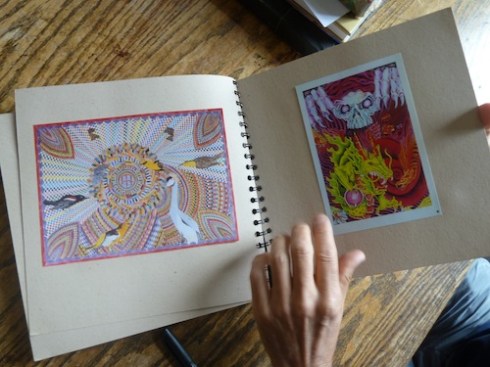
Prisoner art

Prisoner art

PP: Describe the art program.

SR: My boss played bass and the main emphasis of the art class was music but there were two visual artists who taught and I was one. The other was Patrick Maloney, who I guess is still teaching there. Patrick would also teach on Death Row. Sometimes, I would fill for him or accompany him on Death Row.

PP: How did you find working on death row?

SR: You move along the tiers and talk [through bars] to students individually, whereas on the mainline they come out their cells and they come to you.

There are two different sections of death row. In the first, there are a couple of tiers of just death row inmates. You’d need the key to get on the tier, and then you’d go from cell to cell, depending on who was part of the program. There might be three or four guys on a single tier. They had to buy their own supplies but through William James we also gave them supplies. Mostly you’d spend time talking to them. Each day, they might get half an hour outside their cell.

In the other section, the prisoners could leave their cells and go to a common space with some tables. There you could have two or three people in the class. That seemed like a better place to be on death row. The tiers are quite dark. Five tiers. And the other side is just open. One of our students was executed. He had killed a shopkeeper and his wife robbing a store in Los Angeles. He was a good student.

PP: Your mother was a professor at Santa Cruz, teaching art classes at Soledad. Those two institutions have a long and significant relationship going back to the protests and counter culture of the late sixties, Black Pantherism, and the book Soledad Prison: University of the Poor (1975) which was a collaboration between UCSC students and prisoners at Soledad.

PP: You gave a talk to Muslim students at Soledad, then to Muslim students at San Quentin and then you began in the art program. That trajectory explains your path but not your motivations. Why did you decide that leading arts education with prisoners was something you wanted to commit to multiple times a week, and eventually over seven years.

SR: Because it is interesting. I have to say; I think I learnt more from them than they learnt from me.

My father is a lawyer in criminal defense and labor law. His family is Mexican and he’s pretty liberal, so I grew up with that element too. Teaching art in prison was an activity that brought together both sides of my family.

PP: A context in which prison teaching is not a radical act?

SR: My mother was more or less a hippie. My father couldn’t really be one, he was just trying to assimilate, but he was definitely liberal. Growing up in Northern California at that time it was more of a norm than not to be on the left. To do things such as teaching in prison was not considered wild. There was no whole movement about victims’ rights as there is now.

Fair enough. There’s a lot of bad people in prison and some people who deserve to be there but …

When I was a kid, my parents were involved in a free school. We grew up in the country growing organic food. That was way before the trends of today. We composted everything; we weren’t allowed to have plastic bags for lunch. We had wax paper and baked our own bread.

The thing is the prison was interesting to me. At San Quentin they allowed me to take keys. The room where I taught art used to be a laundry room. There was a bunch of people that got murdered there, I guess in the seventies or eighties so they closed it down and eventually opened it up as an art room.

There was never a guard in our room. It was two levels but we would teach on the lower level. The closest guard was in what we would call the max-shack – a checkpoint, probably about 30 yards outside the door. I was really young when I was teaching there and a lot of the guys were way bigger than me. It was interesting to learn how to navigate that. There were anywhere from 5 to 15 people in my class. 15 would be a little bit hectic. Often we’d just get someone from the yard and have him come and sit. Students who wanted could draw him, and if not, they could work on other projects.

PP: Were any of them reluctant to paint or draw other prisoners? My experience teaching art in prison was that collectively they decided it was “suspect”, for want of a better term, to spend the time and energy painting another prisoner. Most of them made portraits of wives, girlfriends or children in a devotional way so to paint another prisoner made no sense to them and was in fact considered strange. They felt other prisoners would misconstrue it as a gesture of adoration or romantic attraction to the subject and that is something most guys wanted to avoid.

SR: No, most of them were into it. They didn’t have to do it but one thing is that since cameras aren’t allowed in prison you can make money if you can draw well, by drawing portraits, usually by copying photographs of prisoners’ family members. If you’re good you can make money. It’s like a throwback to an era before the camera; I can draw fairly realistically and that kind of saved me when I was in there because …

PP: … there’s a lot of respect attached to that ability.

SR: Yes. They’d give me a lot of shit and then we’d start drawing and it’d be fine. I generally had quite a few lifers in the class, because they are the ones who are more serious – eventually they decide to try and use their time. Young guys, who were only in for a little while, might joke around. The older guys kept the class in order.

PP: At what other times did you use your camera?

SR: There’s some really famous murals in San Quentin. I photographed them all.

PP: Was that the San Quentin administration that asked you to do that, or was it William James or was it self-initiated?

SR: My boss, Aida de Arteaga and I, decided it was a good thing to do. There are four dining halls. It used to be one huge one but it was divided because they were worried about riots. Three walls. Six sides on which the murals were painted. A Mexican-American inmate who had been busted, I think, for selling heroin painted the murals in the fifties. When I was still there, he came back to San Quentin, for the first time since his incarceration.

Photos from the San Quentin Prison dining halls. One of Ruiz’ students stands in front of the famous murals.

PP: In Photographs Not Taken you close with a bittersweet statement in which you said while you managed to take photos you still thought about the ones you weren’t allowed to take in such a “visually rich environment.” Did the staff or inmates think of their environment as visually rich?

SR: Obviously, most of the prisoners wanted to be out of there. I’m sure quite a few of the guards would like to have taken photos. Some did. Various guards had cameras for different reasons.

PP: What reasons?

SR: To photograph events. I photographed some of those too. We had concerts in the main yard, which is pretty impressive at San Quentin when you are down there with all the inmates. One time we had Ice Cube come in. On that billing, they had a white performer, a Hispanic performer and Ice Cube was the black performer. The administration has to play it like that.

Ice Cube performed in one of the dining halls and that was pretty crazy. You could see the guards were quite nervous. Some of the inmates were getting fired up. I don’t think they had another concert like that.

The prison liked the art program quite a lot and there were some guards who were supportive of our classes. Guards will either make things easy or hard for you. Basically, I think we were lucky for a lot of the time; we had people who were kind, trusted us, let us do more.

The thing about being there for so long is that you got know people fairly well. Especially being in a classroom when you’re with students for three or four hours at a time just drawing and talking. The thing that struck me was that I had a few guys who were lifers and had been in for 20 to 25 years; that’s a pretty crazy concept, especially now given all the changes that have happened, specifically with technology. I am sure – unless they were using them with their jobs within the prison – none of them had used a computer.

PP: Did you ever think there was an opportunity for you to do a photography workshop?

SR: The administration didn’t want us to do that at all. Even toward the end, they started to question me taking drawings out of the prison because many of them were realistic to the point that you could identify people in the drawings!

PP: What did the administration think of the portraits you did manage to take?

SR: They didn’t see most of them. They had signed-off on me doing photography, but they didn’t necessarily see the photographs. We got releases form the guys too. Guards might follow me round for a while, but I can take photos for days and bore the shit out of anyone. [Laughs].

I’ve probably got one of the best [records of the murals]. They were done on 4×5. I even did some on 8×10. I got in there at different times. Once, I’d used a Linhof 617 lens and camera on a commercial job, then I got access and so I used it in the prison.

PP: Did I hear that the Smithsonian has come to some sort of agreement, where by if and when San Quentin is demolished, they’ll remove and preserve the murals?

SR: They’ve been saying that for years, but I don’t know. The murals depict the history of California. The prisoners love the cable-car because the perspective is right so as you walk around it works.

“This guy before he took his shirt off warned me that his tattoos were considered some of the most racist in the prison. There’s the SS helmet skeletons.” Tattoos read ‘100% Honky’ and ‘Aryan’.

Ruiz used a chalkboard as a backdrop, “I liked the color and I liked the reference to education.” Some prisoners shaved their heads ready for the shoot. “They knew I was bringing in the camera so they prepared,” says Ruiz.

PP: It seems like the prison administration’s policy toward camera use was ad hoc?

SR: I photographed in Pelican Bay and Tehachapi, but I actually did that through a court order. My father was representing a prisoner who the CDC said was one of the heads of the Northern Mexican mafia and that he was ordering murders from his cell in Pelican Bay.

In Pelican Bay I had to use the prison’s cameras; they wouldn’t let me take in any of my own equipment, except film. This was 1995. They held on to the film, processed it, and then gave everything to me, negatives and all. The images are a bit … the lenses were a bit crazy. It’s not what I would’ve used but it was fine.

In Tehachapi, I got to use one camera and one lens. Both were mine.

PP: What was your brief for the court order?

SR: I had to photograph the cells and so the reason these photos are joined together is that they only allowed me the one lens.
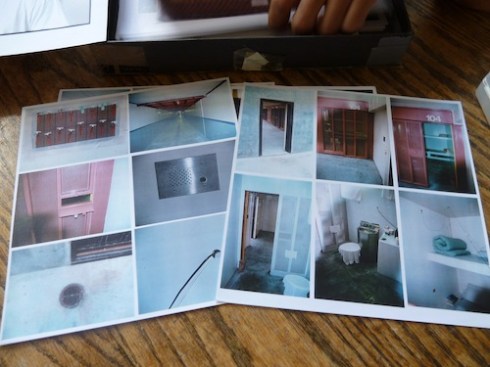
Ruiz photographs of Pelican Bay State Prison, CA made in 1995 for use as court evidence.

4/4/95, Pelican Bay – “The defendant was in one of these cells.”
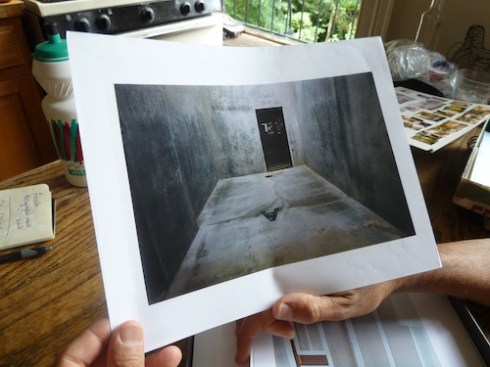
“Pelican Bay is obviously freaky.”
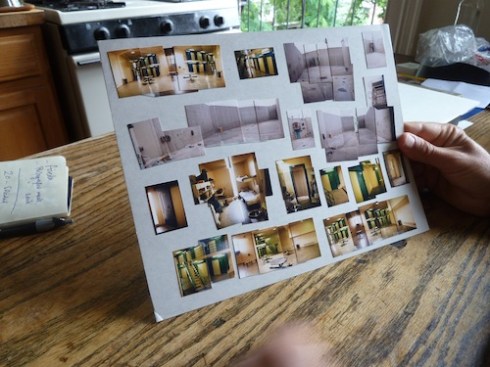
“This is the yard at Tehachapi. This is a common area, these are the cells.”

PP: It’s because of the connection through your father that you got the court ordered gig?

SR: As a defense attorney, he was allowed to bring in his own photographer. As an art teacher, I’d actually spent more time inside of prisons than my father had. Normally, he would only go to a visiting room where he would talk to his client. Whereas, I used to go on tiers, I went in cells. There were times at San Quentin when I was totally unsupervised and there were times it felt a little freaky.

PP: Were any limits placed or pre-agreements made by the courts on your photographs to limit their circulation, or are they just yours?

SR: They’re just mine.

PP: Is there a reason why you’ve not shared them widely yet?

SR: There are some that I considered might be a bit sensitive and I didn’t want to get my boss into trouble in any way. The photographs from Pelican Bay and Tehachapi are fine. The ones from San Quentin; she’d help me get the camera in. We had an understanding. I wasn’t going to screw her over.

It’s more important for me to be cool with her than it is to profit from the photos. I’ve done fine with photography without having ever shown these. I probably could’ve done a book with these and with some of the writing and artwork I have a long time ago, but I’ve never been about just promoting myself at all costs without taking others into consideration.

By now, enough time has passed. I’m going through everything. I think I have enough for a book. I have boxes of stuff that just accumulated.

PP: How did all of this work and exposure across three Californian prisons inform the rest of your career?

SR: I always knew I was going to do art. I didn’t know I was going to do photography. I always thought I’d be a painter. The thing that I learned? I learnt that if I couldn’t take any photos, I would collect things!

I took my portfolio everywhere. I got jobs off of the stuff but I never let it out of my hands. You’re the first person to have photographed it, with the exception of the VICE crew who put it in their video. I’m okay with that now. I always guarded it.

I met the guys who were doing COLORS magazine in the late nineties and it definitely influenced them. It influenced their ‘Prison’ issue (June, 2002). I was actually supposed to go to Gaza for COLORS, but the Israelis had bombed the prison right before I was due to leave, so the trip was cancelled. So, I’ve definitely used this stuff to my advantage.

PP: Did you ever give prints to the prisoners?

SR: I’d give them stuff but we kept it low key because I didn’t want any trouble for the program.

PP: Did the guys you taught appreciate that San Quentin had more programs than most prisons?

SR: They liked San Quentin. It’s an old prison. It has a lot of nooks and crannies. There are weird things that go on there that you wouldn’t get in a modern prison.

There was the old hospital built in the 19th century and out of brick. It was structurally unsound after the earthquake and left empty. They’d let certain prisoners go in there at their own risk. The deputy warden or someone in authority allowed one of my students to set up an art studio in there. And he had it for a couple of years! You wouldn’t get that at a lot of other places.

PP: Your photographs form a weird mix.

SR: I’ve always thought it was valid because it was about what I could get and how I could get it.

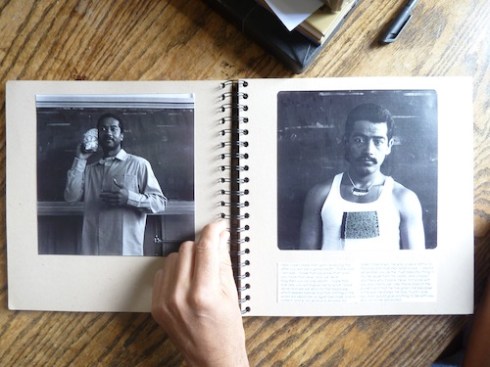
Soledad prisoners.

PP: Do you think prison systems in the U.S. are racist?

SR: If 11% of California’s population is Black but then at least 36% of the prison population is Black something’s not proportional. That says something about this society. Obviously the system can be racist, but it is also classist. You have a hell of a lot more poor people in prison than you do wealthy people and that’s because wealthy people can afford lawyers.

There weren’t many well educated guys in my classes. They’re obviously smart guys who could do all sorts but they weren’t well educated. I had a blonde white guy who I asked him to read something one time, not even thinking that he didn’t know how to read. It was a horrible thing for him and, of course, for me. I didn’t expect it at all. After that he started taking some of the high school classes and learnt to read.

Prisons are a control thing. [Upon release] if you have people who can’t travel, can’t get housing and can’t vote you can keep a whole population controlled. You can keep a whole population one little step away from being thrown straight back into prison.

PP: So the prison system is failing?

SR: I definitely think some people should be in prison.

There was a child molester who was quite collectible. People like to collect his art. He creeped me out. He made drawings of the kids he had killed from newspaper clippings. I took photographs of them, but I didn’t know that’s what they were until he explained them to me later. He had a scrapbook and the first 20 pages were pictures of Hillary Clinton smiling and then after that it was all these pictures of kids. Innocent pictures – many of them from National Geographic, but when you know what he was about, it’s pretty disturbing.

There’s some fucked up people in the world.

But I also saw, all the time, guys in prison for stupid drugs convictions and I think that is just a waste. The three strikes law was foolish. Keeping someone in prison, which at the time cost something like $30,000 – I’m sure it’s more now – is just a waste of money. You can give people education with that money to help them get better jobs.

I used to go to the visitor center a lot. You’d see the damage being done when families would come up from Los Angeles for the day. Wives would go in and the kids would stay in the guesthouse for the day. The separation of families when they have to travel so far [to where loved ones are imprisoned] is harsh.

Obviously, I believe in education over other things. Otherwise, I wouldn’t have done what I did.

Stefan Ruiz

Ruiz was born in San Francisco, and studied painting and sculpture at the University of California (Santa Cruz) and the Accademia di Belle Arti (Venice, Italy). He took up photography while in West Africa, documenting Islam’s influence on traditional West African art. He taught art at San Quentin State Prison from 1992-1998, and began to work professionally as a photographer in 1994. He has worked editorially for magazines including Colors (for whom he was Creative Director, 2003-04), The New York Times Magazine, L’uomo Vogue, Wallpaper*, The Guardian Weekend, Telegraph Magazine and Rolling Stone. His award winning advertising campaigns include Caterpillar, Camper, Diesel, Air France and Costume National.

“The world does not yet know the importance of Missy Prince’s photography,” is a tweet I sent out last month with a link to her Flickr account. Missy has only been making images earnestly for 4 or 5 years, but she’s loyal to film, has nailed down an aesthetic and (though she probably won’t acknowledge it) has nurtured an admiring photo-public.

Like most Portland photographers, I first met Missy at a Lightleak meeting. She wears cowboy boots and straight, straight blonde hair. No fuss. I don’t know what she drives but looking at Missy’s photographs you’d reckon it a Vanagon, Lincoln Towncar or a veggie-oil bus. Her wheels have to be fun as she gets out into landscape often.

Now, I’m not one to romanticise Portland or the Pacific NW, but if you are looking for a photographer who can capture the allure of the outdoors in a modest, meaningful and evergreen way then Missy’s the one. So verdant are many of her photographs, she could be a one-woman tourist-board for Oregon. Logging roads, trucker hats and fields of wildflowers; it’s the misty, damp images of the PacNW, Missy is known for but I wanted to feature some of her new stuff.

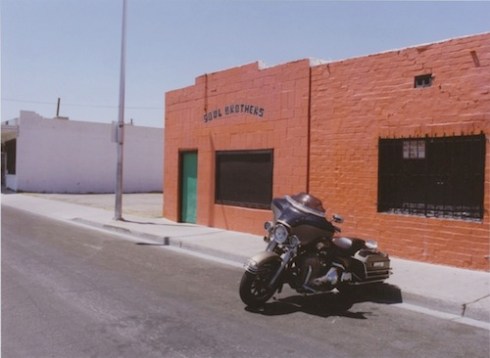
These four photos are from West Las Vegas which, remarkably, is just a stones throw from the strip. Historically it is a Black neighbourhood. It has been largely overlooked during Vegas’ tumorous, gilded growth and accommodates its fair share of the social problems that go along with economic marginalisation.

But in these images of sun-bleached streets there is the same appeal that exists in her work from Cascadia. Missy plays with time. Part of it is due to the texture of film, but part of it is her attention to the vernacular and the overlooked. Missy celebrates Americana; she does not patronise it. And, how does she always find that classic car?

Her photographs gently point out what is all around us, if we can be bothered to get out the front door. Not idealised views, not scenes intended to manipulate, just straight up, well-composed vignettes. She treats photography like an exploration and you too might encounter within it moments of discovery.

What exactly is Missy’s background? In a 2011 interview with LPV magazine, she said:

“I haven’t studied the medium’s history in any formal manner but I think I have a fair grasp of it. My intake is haphazard, I go through phases of not looking. Many of my influences are film makers. David Lynch’s take on The Pacific Northwest in Twin Peaks occupies some prime real estate in my brain. The photography of Tarkovsky and Wim Wenders have stayed with me over time. Road movies and westerns. Two Lane Blacktop, The Passenger, The Hired Hand.”

You check out her other interviews with American Elegy, Orange Juice and The Great Leap Sideways. I only had one question for her.

How do you characterise the Portland photo scene?

The photo scene in Portland is pretty vibrant. There are a lot of photographers here. There are also a lot of galleries, publishers, and events, and there are thankfully still public black and white and color darkrooms. It’s a very photography friendly city, maybe partly because it is surrounded by land that begs to be photographed. I’m probably not a very good judge of the overall scene. What largely attracts me to photography is being out in the environment I am photographing, the meditative solitary experience. Taking photos is almost secondary. I could just as easily be out there sketching what I see. I’ve only been taking photos in earnest for a few years. A little over a year ago I was invited into a collective called Lightleak, which meets once a month to share work and talk about photography in a very relaxed atmosphere. It’s probably the deepest I’ve immersed myself in the scene. The great thing about those guys is they are all fellow film devotees who print their own work. As much as I enjoy the exchange with like minds, I have not deliberately sought many other photo-centered associations. I like when connections happen naturally. So far the internet has been my main resource for looking and sharing. I’ve actually become friends with a few local photographers whom I first encountered online. Perhaps that so many online roads seem to lead back to Portland is evidence of its enthusiasm for photography.

Missy is a faithful Flickrer and has Tumblr is Sea Of Empties. You can buy prints here.

EMAIL

prisonphotography [at] gmail [dot] com

Prison Photography Archives

Post Categories